LEB6 Engine
- Engine
- 1498 cm3
- Aspiration
- Naturally aspirated engine
- Fuel
- Petrol (Gasoline)
- Fuel injection system
- Multi-port manifold injection
- Power
- 107 hp @ 6000 rpm
- Torque
- 134 Nm @ 5000 rpm
- Cylinders
- 4
- Valves
- 16, 4 per cylinder
- Cylinders position
- Inline
- Valvetrain
- DOHC, i-VTEC
- Oil capacity
- 3.3 l
- Coolant
- 4.61 l
# Vehicles powered by this engine
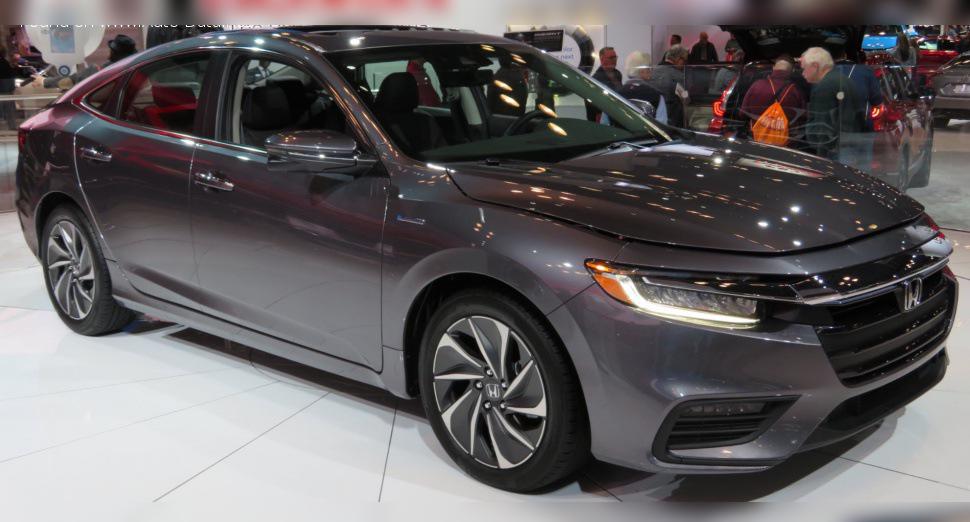
Honda LEB6 (1.5 i-MMD): Experiences, problems, fuel consumption and used car buying guide
Key points (TL;DR)
- Reliability: Extremely high. This is a naturally aspirated engine running on the Atkinson cycle, lightly stressed and built to last.
- Timing drive: Uses a timing chain, which reduces regular maintenance costs.
- Hybrid system: The engine mostly serves as a generator. The wheels are driven by the electric motor, except at higher highway speeds.
- Fuel consumption: Fantastic in the city (below 5 l/100 km), but higher on the highway because the petrol engine then takes over direct drive.
- Transmission: There is no conventional gearbox. It uses an e-CVT system (electric drive), which means no clutch or dual-mass flywheel replacement.
- Recommendation: Ideal for drivers who spend a lot of time in city and suburban driving. It’s not a sports car, but a tool for saving money.
Contents
Introduction and engine application
The engine with the code LEB6 is Honda’s answer to the need for an ultra-efficient powertrain in the era of modern hybridization. It is a 1.5‑liter four‑cylinder petrol engine operating on the so‑called Atkinson cycle. In practice, this means that “raw” power is sacrificed in favor of maximum thermal efficiency.
This engine is the heart of the third‑generation Honda Insight (and related models such as the Honda Clarity or certain Jazz/Civic hybrid versions on some markets). It’s important to understand that in this system (i‑MMD), the petrol engine most of the time does not drive the wheels directly. It behaves like a power plant – it spins a generator that charges the battery or sends electricity directly to a powerful electric motor. Only at higher speeds (highway cruising) does the clutch lock up and the petrol engine directly drive the wheels.
Technical specifications
| Feature | Value |
|---|---|
| Displacement | 1498 cc (1.5 L) |
| Power (petrol engine) | 79 kW (107 hp) @ 6000 rpm |
| Power (system – hybrid) | approx. 112 kW (151 hp) |
| Torque (petrol) | 134 Nm @ 5000 rpm |
| Torque (electric motor) | 267 Nm (available immediately) |
| Engine code | LEB6 |
| Injection type | Direct injection |
| Induction | Naturally aspirated |
Reliability and maintenance
Timing system and major service
Good news for owners is that the LEB6 engine uses a chain to drive the camshafts. Honda chains are traditionally durable and designed to last as long as the engine itself, provided the oil is changed regularly. There is no fixed interval for a “major service” as with a belt; instead, the chain is only inspected (usually at 200,000+ km) if rattling occurs.
Most common faults and issues
This engine is extremely reliable, but not completely immune to minor issues:
- Oil dilution with fuel: Although this was a major problem with the 1.5 Turbo engines, with this naturally aspirated 1.5 it is rarer, but can appear in cold climates. Since the engine often starts and stops (hybrid mode) and does not always reach operating temperature, a small amount of petrol can end up in the sump. The symptom is a raised oil level on the dipstick and a smell of petrol in the oil.
- Carbon buildup: Due to direct injection, the intake valves are not washed by fuel. Over time, carbon deposits can form, which may lead to rough running. However, thanks to the Atkinson cycle, this is less pronounced than on turbo engines.
- Auxiliary (12V) battery: As with most hybrids, if the small 12V battery weakens, the car will throw various warning lights on the dash even though the high‑voltage battery is fine.
Oil and service intervals
This engine takes about 3.3 to 3.7 liters of oil (depending on whether the filter is changed). The recommended grade is strictly 0W‑20. Because of the specific hybrid operation (frequent starts), high‑quality low‑viscosity oil is crucial.
Minor service: Recommended every 10,000 km, up to a maximum of 15,000 km or once a year. Do not wait 20–30 thousand km, especially due to potential oil dilution. Oil consumption between services is minimal and on healthy engines should not exceed 0.5 liters per 10,000 km.
Spark plugs
Iridium spark plugs are used (e.g. NGK or Denso). Replacement interval is usually long, around 100,000 to 120,000 km. If you notice hesitation when switching from electric to petrol drive, check the spark plugs earlier.
Specific parts (costs)
Dual‑mass flywheel: This engine DOES NOT have a conventional dual‑mass flywheel nor a clutch in the traditional sense, because it is paired with an e‑CVT transmission. There is a damper between the engine and the generator, but it fails extremely rarely and is not a regular maintenance cost.
Fuel injection system: It uses direct injection. Injectors are precise and generally long‑lasting. If a failure occurs (symptoms: increased fuel consumption, black smoke, warning light on the dash), replacement can be expensive (depends on the market, but expect “moderately expensive”). It is recommended to occasionally use fuel system cleaning additives.
Turbocharger: The engine DOES NOT have a turbocharger. This is a big plus for reliability, as there is no turbo, intercooler or associated hoses that can fail.
EGR and GPF filter: Models for the European market likely have a GPF (Gasoline Particulate Filter) to meet Euro 6d standards. It rarely clogs because petrol engines reach high exhaust temperatures. The EGR valve is present and crucial for efficiency; its clogging can lead to reduced performance, but cleaning is a routine job.
AdBlue: No, this is a petrol engine, there is no AdBlue system.
Fuel consumption and performance
City driving
This is where the LEB6 and Honda Insight really shine. Real‑world city consumption is between 4.0 and 5.0 l/100 km. In heavy stop‑and‑go traffic, the electric motor does most of the work, and the petrol engine only occasionally starts to top up the battery.
Is the engine “lazy”?
On paper, 107 hp seems low for a sedan, but the system output is 151 hp thanks to the electric motor. The driving feel is surprisingly lively. The electric motor delivers 267 Nm of torque instantly (from 0 rpm), so starts from traffic lights are sharp. It’s not a sports car, but it’s far from sluggish.
Highway and cruising
On the highway, at 130 km/h, the system locks the petrol engine directly to the wheels (because at that point it is more efficient than energy conversion). The engine then runs quietly. However, during hard overtakes or long climbs, the engine will rev high (“engine drone”) in order to generate enough electricity for the electric motor. Highway consumption rises to around 5.5 – 6.5 l/100 km.
Additional options and modifications
LPG conversion: Technically possible (direct injection requires a more expensive kit), but absolutely not recommended and makes no financial sense. First, the engine is already extremely economical. Second, the boot is often partially occupied by batteries, leaving no room for a tank. Third, the complex hybrid electronics and frequent engine start/stop cycles make LPG calibration a nightmare.
Remapping (Stage 1): Pointless. This is a naturally aspirated engine optimized for efficiency, not performance. Any gain would be negligible (maybe 3–5 hp), and you risk upsetting the operation of the hybrid system.
Transmission
With this engine in the third‑generation Honda Insight (and similar hybrids) there are no manual gearboxes, nor classic automatics with stepped gears.
Transmission type: e‑CVT This is not really a gearbox in the conventional sense. It is a system of gears with a fixed ratio that connects the petrol engine, two electric motors (one drive motor, one generator) and the wheels.
- Failures: The system is mechanically simpler than a conventional automatic and very reliable. There are no clutches that wear out, and no belt as in a regular CVT.
- Maintenance: The only requirement is changing the transmission fluid (Honda HCF‑2). It is recommended every 40,000 to 60,000 km (check the exact manual, but more frequent changes extend service life).
- Clutch cost: There is no cost here, as there is no clutch to be replaced as a wear item.
Buying used and conclusion
When buying a used Honda with this engine, the focus should not be only on the engine, but on the entire hybrid system.
What to check:
- Service history: Has the oil been changed on time? This is crucial for the chain and the VTC actuator.
- Hybrid battery: Although Honda batteries last a long time, check whether it charges/discharges too quickly. Test the car under load (uphill).
- Engine noise: A cold start should become smooth after a few seconds. If you hear a loud metallic rattle at startup, it may indicate a problem with the VTC actuator (variable cam timing).
- Signs of accidents: Hybrid components are expensive, so check that the car has not been heavily damaged and poorly repaired.
Conclusion:
The Honda LEB6 (1.5 i‑MMD) is an outstanding piece of engineering. It is not aimed at racers, but at drivers who value quietness, reliability and low fuel consumption. Maintenance is, paradoxically, cheaper than on ordinary diesels (no turbo, no dual‑mass flywheel, no DPF issues), and reliability is among the very best in the automotive industry. If you find a car with a clean service history – go for it.
Was this content useful to you?
Your opinion helps us to improve the quality of the content.