L15B7 Engine
- Engine
- 1498 cm3
- Aspiration
- Turbocharger, Intercooler
- Fuel
- Petrol (Gasoline)
- Fuel injection system
- Direct injection
- Power
- 194 hp @ 5500 rpm
- Torque
- 260 Nm
- Cylinders
- 4
- Valves
- 16, 4 per cylinder
- Cylinders position
- Inline
- Valvetrain
- DOHC, VTEC
- Oil capacity
- 3.5 l
- Coolant
- 6 l
# Vehicles powered by this engine
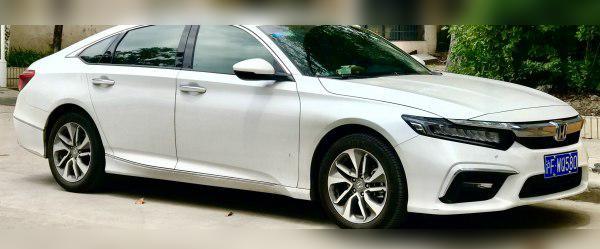
Honda 1.5 VTEC Turbo (L15B7) – Experiences, issues, fuel consumption and maintenance
The L15B7 engine is one of the most important powerplants in Honda’s modern history. It is a 1.5‑liter turbocharged petrol engine that replaced the legendary naturally aspirated larger‑displacement engines (2.0 and 2.4 liters). This engine represents Honda’s entry into the downsizing era with the application of Earth Dreams technology. The specific version we’re talking about produces an impressive 194 hp and is found in the Honda Inspire VI model (which is a technical twin of the Honda Accord for certain markets, primarily Asian).
This engine offers an excellent balance of power and fuel economy, but like every modern turbocharged direct‑injection engine, it comes with specific maintenance requirements that owners used to the “old‑school” Honda engines need to learn.
Key points in short (TL;DR)
- Excellent performance: With 194 hp, this engine delivers acceleration comparable to the old 2.4 engines, with more torque at lower rpm.
- Oil issue (Oil Dilution): A known problem of fuel mixing with engine oil, especially in cold climates and on short trips.
- Timing chain: Uses a timing chain, which is generally durable but sensitive to oil quality.
- CVT transmission: In the Inspire, it comes paired with a CVT that requires regular fluid changes (every 40,000–60,000 km).
- Direct injection: Possible carbon buildup on intake valves at higher mileage.
- Recommendation: An excellent choice for those who want both power and efficiency, provided that service intervals are followed strictly.
Contents
Technical specifications
| Parameter | Value |
|---|---|
| Engine code | L15B7 |
| Displacement | 1498 cc (1.5 L) |
| Power | 143 kW (194 hp) |
| Torque | 260 Nm |
| Fuel type | Petrol (Gasoline) |
| Injection system | Direct injection (GDI) |
| Induction | Turbocharger (single scroll) + intercooler |
| Configuration | Inline 4‑cylinder, DOHC VTEC |
Reliability and maintenance
Timing system: chain or belt?
The L15B7 engine uses a timing chain to synchronize the crankshaft and camshafts. Honda chains are traditionally reliable and designed to last the life of the engine, provided that the oil is changed regularly. There is no scheduled replacement interval; it is replaced only if noise (rattling) appears or the chain stretches, which usually happens only at very high mileage (over 200,000–250,000 km) or due to poor maintenance.
Most common issues and the “Oil Dilution” problem
The most well‑known issue with this engine is fuel mixing with engine oil (Oil Dilution). This happens because fuel injected directly into the cylinders (especially when the engine is cold) can pass by the piston rings and end up in the oil pan. Symptoms include:
- The oil level on the dipstick rises above the maximum mark.
- The oil has a strong smell of gasoline.
This is more common in cold climates and with drivers who mostly do short trips where the engine doesn’t reach operating temperature. Honda has released software updates (ECU updates) that help the engine warm up faster, but the problem has not been completely eliminated on all cars. The practical solution is more frequent oil changes.
In addition, there can be issues with the injectors and carbon buildup on the intake valves, which is a standard drawback of direct‑injection engines.
Service intervals and oil
Although the manufacturer may recommend longer intervals, for long engine life of the L15B7 (especially due to the turbocharger and the oil dilution issue), the recommendation is:
- Minor service: Every 8,000 to 10,000 km or once a year (whichever comes first). If you mostly drive in the city, shorten this to about 7,000 km.
- Major service: Since the engine has a chain, there is no “classic” timing‑belt major service. However, at around 100,000–120,000 km you should check the condition of the water pump, auxiliary belt tensioner and the auxiliary (serpentine) belt itself.
Which oil and how much? The engine takes approximately 3.5 to 3.7 liters of oil (with filter). Honda strictly recommends a 0W‑20 grade. This low viscosity is crucial for the tight internal tolerances and turbo efficiency. Do not experiment with thicker oils without consulting a specialist.
Oil consumption
In general, the L15B7 should not consume a noticeable amount of oil between services. If the oil level is dropping, this may indicate an issue with the turbocharger or piston rings. However, it is more common for the oil level to rise (due to the aforementioned fuel dilution). So a stable level or a slight increase is typical, while consumption greater than 0.5 L per 10,000 km is a warning sign.
Spark plugs and injectors
On this turbocharged petrol engine, the spark plugs are under higher thermal load. Only iridium spark plugs (NGK or Denso) are used. It is recommended to replace them every 60,000 to 80,000 km, even though the factory interval may be up to 100,000 km. Worn spark plugs can lead to pre‑ignition/knocking, which is very harmful for this engine.
The injectors are precise and expensive. They last a long time but are sensitive to poor fuel quality. Using fuel‑system cleaning additives from time to time is advisable.
Specific parts (costs)
Dual‑mass flywheel and clutch
The Honda Inspire VI with this engine comes exclusively with a CVT automatic transmission. Therefore, this car does not have a dual‑mass flywheel in the sense that diesel engines with manual gearboxes do. Instead, it uses a torque converter. This is good news for your wallet, as it eliminates one of the most expensive potential failures.
Turbocharger
The engine uses a single Mitsubishi (MHI) TD03 low‑inertia turbocharger. It is very reliable and its service life usually matches the life of the engine, provided quality oil is used and the engine is not switched off immediately after hard highway driving. Rebuilding or replacing the turbo falls into the “very expensive” category (depending on the market), but it is not a common occurrence.
EGR, DPF (GPF) and AdBlue
- EGR valve: Yes, the engine has an exhaust gas recirculation system. It is not as prone to clogging as on diesels, but the passages can get dirty from soot.
- GPF (OPF): Depending on the market and model year (especially for Euro 6d standards and the Chinese market), this model likely has a GPF (Gasoline Particulate Filter). This is the petrol equivalent of a DPF. Unlike diesels, GPF regeneration is much easier due to the higher exhaust temperatures of petrol engines and rarely causes issues in everyday driving.
- AdBlue: No, this is a petrol engine and does not use AdBlue fluid.
Fuel consumption and performance
City driving and highway
The Honda Inspire is a D‑segment sedan, which means it is not a light car. Still, the efficiency of the L15B7 engine is excellent.
- City driving: Real‑world consumption is between 8.5 and 10.5 L/100 km. This strongly depends on traffic and driving style. In winter, due to richer mixtures while the engine is cold, it can be higher.
- Highway: This is where the engine shines. Thanks to the CVT keeping revs low, consumption ranges from 6.0 to 7.5 L/100 km at speeds up to 130 km/h.
Is the engine “lazy”?
Absolutely not. With 194 hp and 260 Nm of torque available from as low as about 1,600 rpm, this engine moves the Inspire (Accord) body with ease. The 0–100 km/h time is usually under 8 seconds, which is quicker than most rivals in this class.
At 130 km/h the engine “cruises” at approximately 2,200–2,400 rpm (depending on road gradient and CVT behavior), making for quiet and economical driving.
Additional options and modifications
LPG conversion
Since the engine has direct injection, an LPG conversion is complex and expensive. It requires a “direct injection” LPG system that still uses a certain amount of petrol during operation to cool the petrol injectors, or a more advanced (and significantly more expensive) liquid‑injection LPG system. Given the relatively low petrol consumption, the cost‑effectiveness of an LPG conversion is questionable unless you drive more than about 30,000 km per year. Also, additional injectors or drilling the intake manifold can affect reliability.
Remapping (Stage 1)
The L15B7 responds very well to tuning. The stock internals (connecting rods) are known to be a weak point if torque is pushed too far, but a Stage 1 map is generally safe. You can expect an increase to around 215–230 hp and roughly 300+ Nm of torque. However, the main limiting factor here is not the engine, but the CVT transmission. Too much torque can cause belt slip inside the transmission. If you decide to do this, choose reputable tuners (such as KTuner or Hondata solutions) who respect the transmission’s limits.
Transmission
Type of transmission in the Inspire
The Honda Inspire VI with this engine comes paired with a CVT (Continuously Variable Transmission). This is not a classic automatic with fixed gears, but a transmission with variable pulleys that simulates gear shifts to provide a more natural driving feel. A manual gearbox is rare for this specific model (Inspire), although this engine can be found with a 6‑speed manual in the Civic or Accord.
CVT maintenance and failures
Honda’s modern CVT transmissions are among the best on the market, but they have one major downside: they do not tolerate neglect.
- Fluid change: The transmission fluid must be changed every 40,000 km (service recommendation for severe conditions) and at most every 60,000 km. Only genuine Honda HCF‑2 fluid should be used. Using “universal” fluids can permanently damage the transmission.
- Failure symptoms: Jerking when taking off, hesitation, a “whining” noise, or engine revs flaring without corresponding acceleration.
- Costs: Repairing a CVT is usually not cost‑effective (the whole unit is often replaced), so regular fluid changes are the cheapest insurance. The price of a fluid change falls into the “moderately expensive” category (depending on the market).
Buying used and conclusion
What to check before buying?
- Oil level and smell: Pull out the dipstick. If the level is well above the maximum and the oil smells like raw gasoline, the engine is suffering from a serious oil dilution problem.
- Transmission service history: If there is no proof that the CVT fluid has been changed and the car has more than 60,000 km – be cautious.
- Chain noise: Listen to a cold start. Any rattling in the first few seconds may indicate an issue with the chain tensioner.
- Idle quality: The engine should idle smoothly. Rough idle can point to dirty injectors or carbon deposits on the valves.
Final conclusion
The L15B7 (1.5 Turbo) engine in the Honda Inspire is a fantastic piece of engineering that offers the performance of a larger engine with the fuel consumption of a smaller one. It is aimed at drivers who want a comfortable, quiet and fast sedan and are willing to follow strict maintenance rules.
If you are looking for a “just fill it up and drive” car where you change the oil whenever you remember – skip this model. But if you are ready to change the oil every 8,000 km and take proper care of the transmission, this engine will reward you with an excellent driving experience and the reliability Honda is known for.
Was this content useful to you?
Your opinion helps us to improve the quality of the content.