J30A Engine
- Engine
- 2997 cm3
- Aspiration
- Naturally aspirated engine
- Fuel
- Petrol (Gasoline)
- Fuel injection system
- Multi-port manifold injection
- Power
- 250 hp @ 6000 rpm
- Torque
- 296 Nm @ 5000 rpm
- Cylinders
- 6
- Valves
- 24, 4 per cylinder
- Cylinders position
- V-engine
- Valvetrain
- SOHC
- Oil capacity
- 4.3 l
- Coolant
- 6.7 l
# Vehicles powered by this engine
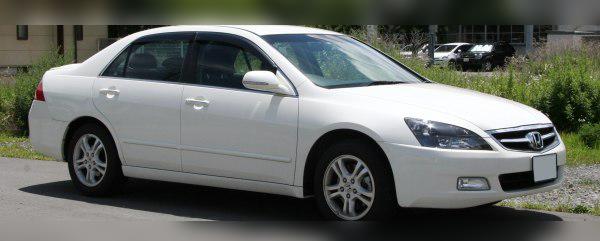
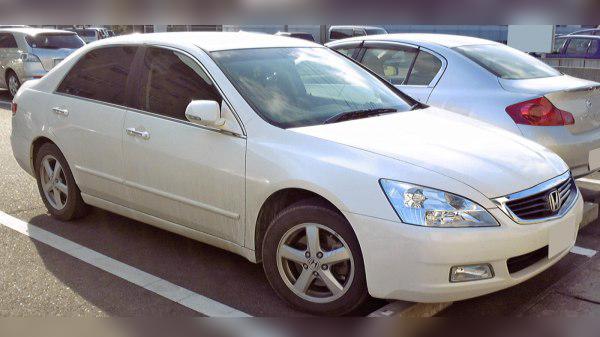
Honda J30A 3.0 V6 i-VTEC: Experiences, issues, fuel consumption and maintenance
Key points in short (TL;DR)
- Reliability: Generally a very robust V6 engine, but it requires strict maintenance.
- VCM system: The cylinder deactivation system saves fuel, but is the main cause of oil consumption and vibrations.
- Major service: Uses a timing belt. If it snaps, it causes catastrophic engine damage (interference engine).
- Transmission: Automatic transmissions are a weak point if the fluid is not changed regularly.
- Valve maintenance: Requires mechanical valve adjustment, there are no hydraulic lifters.
- Performance: 250 hp provides excellent mid-range acceleration and refined operation, ideal for cruising.
- Recommendation: An excellent choice for comfort lovers, provided you have the budget for quality maintenance.
Contents
Introduction: J30A in the Honda Inspire
Honda’s J-series engines are considered one of the best V6 families ever made. The specific variant we’re talking about, the J30A with 250 horsepower, is a special beast that was installed in the Honda Inspire IV (UC1). This is not an ordinary engine; it is Honda’s mid-2000s technology demonstrator, equipped with the i-VTEC system and advanced cylinder deactivation technology (VCM - Variable Cylinder Management).
Although it shares its base with engines from the Accord (US version) and Odyssey, the version in the Inspire is tuned for high performance while retaining economic efficiency. It is the heart of a sedan that tries to balance between a sporty character and absolute comfort.
Technical specifications
| Parameter | Value |
|---|---|
| Displacement | 2997 cc (3.0 L) |
| Configuration | V6, SOHC, 24 valves |
| Power | 184 kW (250 hp) at 6000 rpm |
| Torque | 296 Nm at 5000 rpm |
| Engine code | J30A (specifically J30A5 variant with VCM) |
| Injection | MPI (Multi-Point Injection) |
| Aspiration | Naturally aspirated |
| Camshaft drive | Timing belt |
Reliability and maintenance
Timing belt or chain?
This is a key question for every owner of a Honda J-series engine. The J30A uses a timing belt, not a chain. This is an interference engine, which means that if the belt snaps, the pistons will hit the valves, causing catastrophic damage and likely requiring a complete engine replacement. The replacement interval is usually at 100,000 km to 120,000 km or every 5 to 7 years, whichever comes first. When replacing the belt, the water pump and hydraulic tensioner must also be replaced.
Most common failures and symptoms
Although reliable, this engine has specific weak points, most often related to the VCM system (cylinder deactivation for fuel saving):
- Oil consumption and VCM: When cylinders are deactivated, a vacuum is created in the combustion chamber that can draw oil past the piston rings. Over time, the rings get dirty and stick, which permanently increases oil consumption.
- Vibrations and engine mounts: Running on 3 cylinders creates vibrations. Honda uses active engine mounts (ACM) to cancel them out. These mounts are electronically controlled, oil-filled and often fail. The symptom is strong vibration in the cabin while cruising.
- Oil leaks: Valve cover gaskets and VTEC solenoid gaskets (“spool valve”) are common leak points. If oil leaks onto the alternator, it can destroy it.
Oil and service intervals
The engine takes approximately 4.3 to 4.5 liters of oil (with filter). Honda recommends thin oils due to the VTEC system and tight tolerances, most commonly 5W-20 or 5W-30. Due to the age of these cars and potential oil consumption, a quality 5W-30 or 5W-40 (in warmer climates) is a good choice.
Oil consumption: For the J30A with VCM, consumption of 0.5 to 1 liter per 5,000 km is often considered “acceptable” by factory standards, but in practice it indicates an issue with the piston rings or the PCV valve. Regular level checks are mandatory.
Spark plugs and valves
Iridium spark plugs (NGK or Denso) are used. Replacement interval is around 100,000 km. However, due to the VCM system, the plugs on the rear cylinder bank (the cylinders that get deactivated) can get fouled with oil much earlier, leading to misfire codes (engine hesitation).
Important: This engine does not have hydraulic valve lifters. Valve clearances must be adjusted mechanically. It is recommended to check them every 40,000–50,000 km, or as soon as you hear the characteristic “ticking” from a cold engine.
Specific parts and costs
Fuel injection system and injectors
The engine uses classic MPI (Multi-Point Injection). The injectors are extremely robust and rarely cause problems if quality fuel is used. They are not expensive to clean or replace (depends on the market: generally not expensive). There are no complex high-pressure pumps like on direct injection systems.
Dual-mass flywheel and turbo
This engine does not have a turbocharger, which is a big advantage for longevity – one expensive component less to worry about. Also, since it comes exclusively with an automatic transmission, it does not have a dual-mass flywheel in the sense we know from diesel engines with manual gearboxes. Instead, it uses a torque converter, which is a long-lasting component.
EGR and emissions
The engine has no DPF filter or AdBlue system, as it is a petrol engine. However, it does have an EGR valve. On J-series engines, the EGR passages in the intake manifold often get clogged with soot. Symptoms are rough idle, hesitation and a “Check Engine” light. Cleaning the passages is a regular part of maintenance at higher mileages.
Fuel consumption and performance
Real-world fuel consumption
Don’t let the VCM system fool you – this is still a 3.0 V6 engine in a heavy body.
- City driving: Expect between 12 and 15 liters per 100 km. In heavy traffic it can go even higher.
- Highway: This is where VCM shines. With calm driving it can go down to 7.5–9 liters per 100 km.
- Combined: A realistic average is around 11 l/100 km.
Performance and driving feel
Is it sluggish? Absolutely not. With 250 hp and almost 300 Nm, the Inspire IV “flies”. Power delivery is linear. Below 4000 rpm it is tame, but when VTEC kicks in, the engine changes its sound and pulls aggressively up to the redline. On the motorway, at 130 km/h, the engine spins at quite low revs (around 2200–2500 rpm), which makes the drive quiet and comfortable.
Additional options and modifications
LPG conversion
Yes, this engine is suitable for LPG because it has indirect injection. However, there are two challenges:
- Soft valve seats: Hondas are known for this. Installing a valve lubrication system (“valve saver” or electronic equivalent) is mandatory.
- VCM system: Many LPG systems struggle with cylinder deactivation. You need an experienced installer and a quality OBD-compatible system that will follow the petrol ECU’s operation so that no errors occur when the engine switches to 3-cylinder mode.
Remapping (Stage 1)
This is a naturally aspirated engine. With a “Stage 1” remap you might gain 5 to 8 hp, which is barely noticeable in real driving. A better investment is quality maintenance or possibly disabling the VCM system via software or using an adapter (“VCM Muzzler”), sacrificing a bit of fuel economy for greater reliability and smoother engine operation.
Transmission: S-matic
Type of transmission and issues
This engine in the Honda Inspire IV comes with a 5-speed automatic transmission with manual shift mode (S-matic).
Honda automatics from this era are better than those from the late ’90s, but they still require attention. The most common issues are slipping between 2nd and 3rd gear or harsh shifts. The cause is overheating of the fluid and clogging of the internal filters (which are difficult to replace without disassembling the transmission).
Transmission maintenance
This is critical: Change the transmission fluid every 40,000 to 60,000 km. Use only genuine Honda ATF-DW1 (or the older Z1) fluid. Universal ATF often causes problems with torque converter operation. There is no dual-mass flywheel, and the cost of a transmission rebuild (if it fails) is very high (very expensive – depends on the market).
Buying used and conclusion
Before buying a Honda Inspire with the J30A engine, pay attention to the following:
- Engine sound: Listen to a cold start. Rattling can indicate poorly adjusted valves or an issue with the timing belt tensioner.
- Test drive: Drive at about 60–80 km/h with a steady throttle. If you feel vibrations that come and go, they are most likely bad active engine mounts (expensive to replace).
- Transmission: It must shift smoothly, without hesitation, both when cold and hot. Check the color of the fluid on the transmission dipstick – it must be reddish, never black or with a burnt smell.
- Smoke: Bluish smoke under hard acceleration indicates oil consumption (piston rings).
Conclusion
The Honda J30A (250 hp) is a gem of Japanese engineering, but in a package (Inspire IV) that requires a knowledgeable owner. This engine is not for someone who wants to “just fill up and drive” with minimal maintenance. It is intended for enthusiasts who want the refinement of a V6 engine, power and comfort, and are ready to pay for slightly higher registration costs and preventive maintenance (frequent oil changes in both engine and transmission). If you find a well-maintained example and possibly disable the VCM system, this engine can cover hundreds of thousands of kilometers without being opened.
Was this content useful to you?
Your opinion helps us to improve the quality of the content.