J32A1 Engine
- Engine
- 3210 cm3
- Aspiration
- Naturally aspirated engine
- Fuel
- Petrol (Gasoline)
- Fuel injection system
- Multi-port manifold injection
- Power
- 225 hp @ 5500 rpm
- Torque
- 294 Nm @ 4500 rpm
- Cylinders
- 6
- Valves
- 24, 4 per cylinder
- Cylinders position
- V-engine
- Valvetrain
- SOHC
- Oil capacity
- 4.4 l
# Vehicles powered by this engine
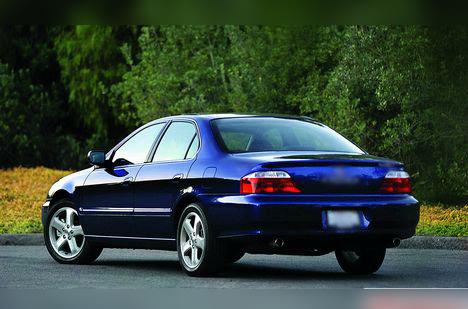
Honda J32A1 (3.2 V6) – Experiences, issues, fuel consumption and used car buying guide
If you’re looking for proper late-90s Japanese engineering, the Honda J32A1 is one of those engines that commands respect, but also caution from the inexperienced. Installed primarily in the Honda Inspire III (and the related Acura TL on the US market), this V6 unit represents the golden middle ground between performance and refinement. As your technical editor, I’ll say it right away: the engine itself is a “workhorse”, but the environment around it demands attention.
Key points in short (TL;DR)
- Exceptional engine durability: The engine block and piston assembly can easily exceed 400,000 km with regular maintenance.
- Achilles’ heel – The gearbox: The automatic transmission paired with this engine is the weakest link and prone to overheating and failure.
- Timing belt service is mandatory: The engine uses a timing belt and is interference (a snapped belt destroys the engine).
- Fuel consumption: Not for those on a tight budget. It’s thirsty in the city, but surprisingly economical on the highway.
- LPG-friendly: It handles LPG very well with a quality system, significantly reducing running costs.
- SOHC VTEC technology: A simpler cylinder head design means cheaper maintenance compared to DOHC rivals, but it requires valve adjustment.
Contents
- Technical specifications
- Reliability and maintenance
- Specific parts and costs
- Fuel consumption and performance
- Additional options and modifications
- Transmission: The biggest challenge
- Buying used and conclusion
The Honda J32A1 is a 3.2-liter V6 engine belonging to the famous Honda J-series. It was designed to be compact, light, and to deliver plenty of torque at low revs, which is atypical for Honda engines of that era that “lived” in the redline. It was installed in luxury sedans like the Honda Inspire, offering silky-smooth operation and linear acceleration. While it’s not a sports engine in the sense of the Honda NSX, this engine is a true “highway mile-eater”.
Technical specifications
| Parameter | Value |
|---|---|
| Engine displacement | 3210 cc (3.2 L) |
| Configuration | V6, SOHC (single camshaft per head) |
| Power | 165 kW (225 hp) @ 5500 rpm |
| Torque | 294 Nm @ 4500 rpm |
| Engine code | J32A1 |
| Injection type | PGM-FI (multi-point indirect) |
| Induction | Naturally aspirated |
| Valvetrain | 24v (4 per cylinder) with VTEC system |
Reliability and maintenance
Timing belt or chain?
This engine uses a timing belt. This is a crucial piece of information. The J32A1 is an interference engine, which means that if the belt snaps, the pistons will hit the valves and cause catastrophic damage that is often more expensive than the car itself. The replacement interval is usually 100,000 km to 120,000 km or every 5 to 7 years (whichever comes first). Along with the belt, you must replace the tensioner, idler pulleys and the water pump, as it is driven by the same belt.
Most common failures and symptoms
Although mechanically robust, the engine has some specific issues:
- Oil leak at the VTEC solenoid: The rubber seals (gaskets) on the VTEC solenoid housing harden over time. The symptom is an oily top of the engine or oil running down the block. It’s solved by a cheap gasket replacement.
- Clogged EGR system: The passages in the intake manifold leading from the EGR valve often get clogged with soot. Symptoms include rough idle, hesitation when you press the throttle, and the “Check Engine” light. The intake manifold needs to be physically cleaned (not just the valve).
- Engine mounts: Due to the high torque and age, the hydraulic engine mounts fail. You’ll feel strong vibrations in the cabin, especially when the gearbox is in “D” and the car is stationary at a traffic light.
Servicing: Oil, spark plugs and valves
This engine takes approximately 4.5 to 5 liters of oil (with filter). The recommended grade is usually 5W-30, although for higher-mileage engines in warmer climates, 5W-40 is a perfectly acceptable option. Do the minor service every 10,000 km or once a year.
As for oil consumption, the J32A1 is not known as an oil burner. Consumption up to 0.5 liters per 10,000 km is acceptable, but anything above that points to worn valve stem seals or piston rings (more often valve stem seals on older examples).
Spark plugs should be replaced every 100,000 km if you use iridium or platinum plugs (which is the factory recommendation). Don’t cheap out on them, because access to the rear bank of cylinders (towards the firewall) is a bit more difficult, and you don’t want to do it too often.
Important note: This engine does not have hydraulic lifters. Valve clearance must be checked and adjusted mechanically (usually every 40,000–50,000 km). If you hear a “ticking” noise from the engine when it’s cold, it’s time for an adjustment.
Specific parts (Costs)
Dual-mass flywheel: Since the Honda Inspire III with this engine came exclusively with an automatic transmission, it does not have a dual-mass flywheel. Instead, it uses a torque converter. That’s one less thing to worry about, but the transmission as a whole brings its own problems (more on that below).
Fuel injection system: The J32A1 uses classic PGM-FI injection. The injectors are extremely reliable and rarely cause issues. They are not as sensitive to poor-quality fuel as modern GDI injectors. Injector cleaning is rarely needed, except at very high mileage.
Turbo and DPF/EGR:
- Turbo: None. This is a pure naturally aspirated engine. No turbo, no intercooler, no expensive boost-related failures.
- DPF/FAP: None. That’s reserved for diesels.
- AdBlue: None.
- EGR valve: It does have one. As mentioned, the passages are prone to clogging, but the valve itself is relatively cheap or can be cleaned.
Parts costs: Prices of consumables (filters, belts, spark plugs) are average (not expensive). However, specific body or electronic parts for the Inspire model (which is rare in Europe) can be hard to source and expensive (depends on the market).
Fuel consumption and performance
Real-world fuel consumption: Let’s be honest – a 3.2 V6 automatic from the 90s cannot be economical in city driving.
- City driving: Expect between 13 and 16 l/100 km. In winter and heavy traffic, it can easily go higher.
- Highway: This is where the engine shines. At cruising speeds, consumption drops to 8 to 9 l/100 km.
- Combined: Count on around 11–12 l/100 km.
Is it “lazy”? Absolutely not. With 225 hp and almost 300 Nm of torque, this engine plays with the Inspire’s body. Throttle response is instant (no turbo lag). The engine pulls strongly from as low as 2500 rpm, and when VTEC kicks in (usually above 4500 rpm), you get that recognizable Honda “roar” and an extra punch of power.
Highway driving: This is the natural habitat of this car. At 130 km/h the engine runs relaxed, usually below 3000 rpm (depending on the gearbox, but the 4-speed automatic has long gearing). Cabin quietness and plenty of power in reserve for overtaking are guaranteed.
Additional options and modifications
LPG conversion:
YES, highly recommended. This engine is an ideal candidate for LPG. It has a metal intake manifold (on most variants) and indirect injection. With a quality sequential LPG system, the power loss is negligible, and running costs are cut roughly in half.
Tip: Although Honda cylinder heads are not particularly soft, it’s recommended to install a valve lubrication system (“drip” or electronic flashlube) as a precaution, and to regularly check valve clearances (every 30–40k km when running on LPG).
Remapping (Stage 1):
On naturally aspirated petrol engines, remapping doesn’t make much sense. You might gain 5 to 10 hp and slightly better throttle response, but you won’t see a dramatic difference like with turbo engines. It’s better to invest that money in quality tires or refreshing the suspension.
Transmission: The biggest challenge
Here we come to the most critical part. The Honda Inspire III with the J32A1 engine came with a 4-speed automatic transmission.
Automatic transmission failures:
Honda automatic transmissions from that period (late 90s, early 2000s) paired with V6 engines are notorious for failures. The problem is often overheating and poor design of the oil passages, which leads to rapid wear of the clutches inside the gearbox and issues with the torque converter.
Failure symptoms:
- “Thump” when shifting from P to D or R.
- Slipping (revs flare up but the car doesn’t accelerate), especially between 2nd and 3rd gear.
- Burning smell (burnt ATF fluid).
Transmission maintenance:
Changing the transmission fluid is MANDATORY and must be done more frequently than the factory suggests. I recommend changing it every 40,000 to 50,000 km.
IMPORTANT: Use only genuine Honda fluid (ATF-DW1, formerly Z1). NEVER do a machine flush under pressure on an old gearbox; use only the “drain & fill” method. Sometimes you need to do it 3 times in a row to replace most of the fluid.
Buying used and conclusion
When buying a Honda with the J32A1 engine, follow this procedure:
- Test drive (focus on the gearbox): Drive the car until it is fully warmed up. The gearbox must shift imperceptibly. Any jerking, hesitation or slipping is a sign to walk away from that car or prepare 1000+ EUR (depending on the market) for a rebuild.
- Timing belt: Ask for proof of replacement. If there is none, immediately factor the cost of a full timing service into the price.
- Check for leaks: Look at the engine from below and from the sides (near the wheels) to see if oil is leaking from the crankshaft seals or the VTEC solenoid.
- Electronics: Check all window regulators, AC and electric seats, as the Inspire is packed with equipment that can fail with age.
Conclusion:
The Honda J32A1 is a fantastic engine in a potentially problematic package (because of the gearbox). It is intended for enthusiasts of comfortable, quiet driving who want effortless power. If you find an example with proof of a rebuilt transmission or documented regular maintenance, you’ll get a sedan that drives better than most modern cars. If you’re looking for a cheap “A-to-B” car with no investment – skip it, because fuel consumption and a potential transmission failure can be too big of a bite.
Was this content useful to you?
Your opinion helps us to improve the quality of the content.