K20Z1 Engine
- Engine
- 1998 cm3
- Aspiration
- Naturally aspirated engine
- Fuel
- Petrol (Gasoline)
- Fuel injection system
- Multi-port manifold injection
- Power
- 209 hp @ 7800 rpm
- Torque
- 194 Nm @ 7000 rpm
- Cylinders
- 4
- Valves
- 16, 4 per cylinder
- Cylinders position
- Inline
- Valvetrain
- DOHC i-VTEC
- Oil capacity
- 4.7 l
- Coolant
- 6.4 l
# Vehicles powered by this engine
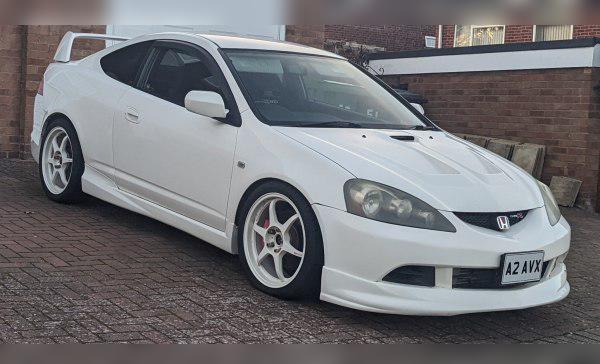
Honda K20Z1 (2.0 i-VTEC): Experiences, problems, fuel consumption and buying tips
Key points (TL;DR)
- Performance: One of the best naturally aspirated engines ever made. It “screams” up to 8,000+ rpm and offers a truly sporty experience.
- Reliability: Mechanically bulletproof if serviced regularly, but sensitive to poor-quality oil.
- Gearbox: The 6-speed manual gearbox is excellent, but the 2nd and 3rd gear synchros are a known weak point.
- Oil consumption: Expect oil consumption if you drive in the VTEC zone – it’s a characteristic, not necessarily a fault.
- Maintenance: Not cheap if you use original (OEM) parts, but there are no expensive failures like turbochargers or DPFs.
- Fun factor: Requires a driver who knows how to use the gearbox; below 6,000 rpm it’s tame, above that it turns into a race machine.
Contents
- Introduction and applications
- Technical specifications
- Reliability, Major service and Oil
- Specific parts and Fuel injection system
- Real-world fuel consumption and performance
- Tuning and LPG
- Gearbox issues
- Buying advice and Conclusion
Introduction: The heart of the Honda Integra Type S
The K20Z1 engine represents the peak of the Honda K-series evolution for the civilian market before the arrival of newer generations. It was primarily installed in the fourth-generation Honda Integra (DC5, facelift models from 2004 to 2006), better known on the US market as the Acura RSX Type-S.
This is not an ordinary 2.0-liter engine. It’s a high-revving unit that uses Honda’s legendary i-VTEC system (intelligent variable valve timing and lift). The K20Z1 is a direct successor to the K20A2, but it comes with more aggressive camshafts (taken from the Japanese Type R model), a better exhaust system and a slightly higher redline. This is an engine for enthusiasts who don’t care about comfort, but about throttle response and sound.
Technical specifications
| Parameter | Value |
|---|---|
| Engine code | K20Z1 |
| Displacement | 1998 cc (2.0 L) |
| Configuration | Inline 4-cylinder, 16-valve |
| Power | 154 kW (209 hp) @ 7800 rpm |
| Torque | 194 Nm @ 7000 rpm |
| Induction | Naturally aspirated |
| Fuel injection | MPI (Multi-Point Injection) |
| Cam drive | Chain |
Reliability and maintenance
Timing chain or belt?
The Honda K20Z1 uses a timing chain. In general, this chain is very reliable and designed to last as long as the engine itself. However, the chain is not “immortal”. Its lifespan directly depends on oil quality and oil level. If the oil is not changed regularly or the engine is driven with a low oil level, the hydraulic chain tensioner can fail, which leads to chain stretch. The symptoms are rattling at cold start or a “check engine” light indicating phase desynchronization.
Most common failures
Although the engine is extremely robust, there are some specific issues:
- VTC actuator (cam phaser): A common problem on the K-series. It manifests as a short but loud “grinding” or metallic noise immediately after a cold start (lasting 1–2 seconds). Although it sounds scary, it rarely leads to catastrophic failure, but it should be replaced.
- IACV valve (idle control): The idle air control valve can get clogged with carbon deposits, causing unstable idle (revs fluctuate up and down). Cleaning usually solves the problem.
- Oil leak at the VTEC valve: The gasket behind the VTEC solenoid hardens over time and starts to leak oil. The repair is cheap and simple.
- Oxygen sensors: The primary O2 sensor is sensitive and expensive, and a faulty one drastically increases fuel consumption.
Major and minor service
On this engine there is no classic “major service” (timing belt replacement) because it has a chain. However, at around 100,000 to 120,000 km it is recommended to thoroughly check the chain and tensioner, and to replace the auxiliary belt (alternator/AC belt), water pump and coolant.
Spark plugs: Only iridium spark plugs should be used (NGK or Denso). Replacement interval is 100,000 km, although enthusiasts often replace them more frequently (at 60–80k km) for better performance.
Oil: consumption and recommendations
The engine takes about 4.5 to 5 liters of oil (including the filter). The recommended grade is 5W-30 or 5W-40 (fully synthetic).
Does it burn oil? YES. This is a high-revving engine. When VTEC engages (usually around 5,800 rpm) and the engine spins up to 8,000+ rpm, oil consumption is inevitable.
Consumption of 0.5 to 1 liter per 2,000–3,000 km can be considered normal if the car is driven aggressively. If you drive gently, consumption should be minimal. Key warning: Check the oil level on the dipstick frequently! K20 engines do not forgive low oil level – it’s the quickest way to destroy the crankshaft bearings.
Specific parts and costs
Fuel injection system and turbo
This is a naturally aspirated engine, so it has no turbocharger. That’s a huge advantage on a used car because it eliminates potentially expensive failures of the turbo, intercooler and pressurized hoses.
The fuel system is a classic MPI (Multi-Point Injection). The injectors are extremely durable and rarely cause problems. There are no complicated high-pressure pumps like on direct injection (GDI) engines.
Flywheel and clutch
The Honda Integra Type S / RSX Type S comes from the factory with a single-mass flywheel, or at least not the typical “problematic” dual-mass flywheel found on many diesels. However, the clutch is heavily stressed due to the nature of driving. Replacing the clutch kit is a moderately expensive job (depending on the market), but it’s recommended to install a quality aftermarket kit (e.g. Exedy, which also supplies Honda with OEM clutches).
Emissions equipment (DPF, EGR, AdBlue)
Since this is an older-generation petrol engine:
- No DPF filter.
- No AdBlue system.
- It does have an EGR valve (exhaust gas recirculation system), which can clog and cause poor running, but it is relatively easy to clean.
- The catalytic converter is present and required for inspection, and is often stolen for its precious metals or removed for “tuning”.
Fuel consumption and performance
Is the engine “lazy”?
It depends how you drive. With 194 Nm of torque at a very high 7,000 rpm, the engine can feel “lazy” at low revs (below 3,000 rpm) compared to modern turbo diesels. For overtaking you need to drop one or two gears. This is not a flaw, it’s a characteristic of this engine – it needs revs to “breathe”. The Integra’s body is not very heavy, so the engine is more than adequate.
Real-world fuel consumption
- City driving: Expect between 11 and 14 l/100 km. If you frequently hit VTEC from light to light, the figure will be even higher.
- Country roads: It can go down to about 7–8 l/100 km with smooth driving.
- Motorway (130 km/h): Due to the short gearbox ratios (geared for acceleration), at 130 km/h the engine spins at a fairly high 3,800–4,000 rpm (in 6th gear). Fuel consumption is then around 8.5–9.5 l/100 km. Cabin noise is noticeable.
Additional options and modifications
LPG conversion
Technically – yes, it’s possible. The engine has MPI injection, which is suitable for LPG.
In practice – it’s not recommended for this type of car. The K20Z1 is an engine designed for high performance. LPG has a higher combustion temperature, which can be harmful to the valves at high revs (over 6,000 rpm). If you absolutely must, a valve lubrication system is mandatory, as well as regular valve clearance checks (valve adjustment) every 20,000 km, because Honda engines do not have hydraulic lifters.
Remapping (Stage 1)
Naturally aspirated engines don’t gain much power from a simple remap alone (maybe 5–10 hp). However, on K20 engines, remapping (e.g. with Hondata K-Pro or similar systems) works wonders.
The main gain is not peak power, but lowering the VTEC engagement point (for example from 5,800 to 4,500 or 5,000 rpm) and smoothing out the torque curve. This makes the car much more drivable in the mid-range. With a good intake (Cold Air Intake) and exhaust manifold, the engine is completely transformed.
Gearbox: manual and automatic
The K20Z1 in the Integra Type S / RSX Type S comes exclusively with a 6-speed manual gearbox. There are automatic versions of the base models, but they are not paired with this 210 hp Type S engine.
Most common gearbox problems
The gearbox is fantastic, precise and with a short throw, but it has one major flaw: 2nd and 3rd gear synchros.
The symptoms are grinding when shifting quickly from first to second or from second to third at high revs. Sometimes the gearbox can even pop out of third gear. This is usually the result of aggressive driving by previous owners.
Gearbox maintenance
The gearbox oil should be changed every 40,000 to 60,000 km.
VERY IMPORTANT: Use only genuine Honda MTF (Manual Transmission Fluid). Many user experiences show that other oils can worsen the synchro problem. About 2 liters of fluid are needed for a change (it’s not expensive).
Buying used and conclusion
Before buying, do the following:
- VTEC test: Warm the engine up to operating temperature. On a straight road, in 2nd gear, full throttle to the redline. You must feel and hear a clear “kick” (change in sound and power) around 5,800 rpm. If there is no change, the VTEC solenoid is dirty or faulty, or there isn’t enough oil.
- Exhaust smoke: Blue smoke when “VTEC-ing” or when downshifting indicates worn piston rings or valve stem seals.
- Gearbox: Try fast shifts from 1st to 2nd and from 2nd to 3rd at high revs. If it grinds, be prepared to pay for a gearbox rebuild (expensive).
- Cold start: Listen for chain or VTC actuator noise in the first few seconds.
Conclusion
The K20Z1 is a gem of Japanese engineering. It’s not for everyone – it requires attention, good oil and a driver who understands how to drive a naturally aspirated sports engine. If you’re looking for fuel economy and low-end torque, buy a diesel. But if you want one of the best driving experiences for (relatively) reasonable money and an engine that will easily cover 300,000+ km with proper maintenance, this is the right choice.
Was this content useful to you?
Your opinion helps us to improve the quality of the content.