K20A Engine
- Engine
- 1998 cm3
- Aspiration
- Naturally aspirated engine
- Fuel
- Petrol (Gasoline)
- Fuel injection system
- Multi-port manifold injection
- Power
- 220 hp @ 8000 rpm
- Torque
- 206 Nm @ 7000 rpm
- Cylinders
- 4
- Valves
- 16, 4 per cylinder
- Cylinders position
- Inline
- Valvetrain
- DOHC
- Oil capacity
- 4.7 l
# Vehicles powered by this engine
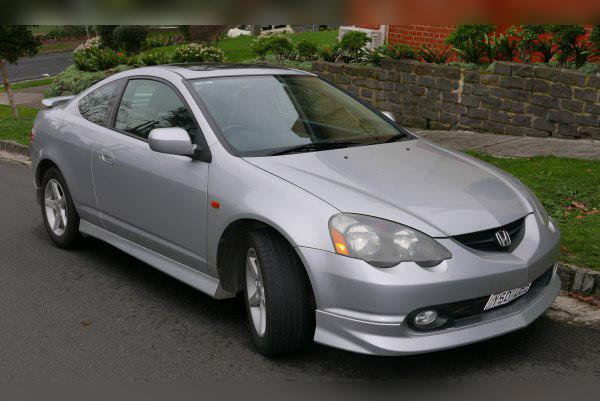
Honda K20A (220 hp) – Experiences, problems, fuel consumption and buying tips
When the code K20A is mentioned, especially in its 220-horsepower version, car enthusiasts – and Honda fans in particular – snap to attention. This is not an ordinary engine; it is one of the best naturally aspirated four-cylinder engines ever made. Primarily installed in the Japanese domestic market (JDM) Honda Integra Type R (DC5) and Civic Type R (EP3), this powerplant represents the pinnacle of engineering before the era of turbochargers and strict emissions regulations that strangled high-revving engines.
However, owning a legend comes with specific responsibilities. As a senior editor who has seen many "Type R" engines destroyed by poor maintenance, I’ll break down here exactly what you gain and what you risk by buying a car with this heart.
Key points in short (TL;DR)
- Performance: Explosive above 6,000 rpm (VTEC), but requires frequent shifting for overtaking.
- Reliability: Mechanically "indestructible" as long as it has oil, but sensitive to poor maintenance.
- Timing: Uses a chain that is generally durable, but can stretch at high mileage.
- Oil consumption: Expect it to use oil in VTEC mode – regular checks are mandatory.
- Fuel: Requires high-octane fuel (98 or 100 RON) due to high compression.
- Gearbox: Fantastic manual transmission, but 2nd and 3rd gear synchros are a weak point.
- Recommendation: An engine for enthusiasts, not for those who want cheap "A to B" transport.
Contents
- Technical specifications
- Reliability and maintenance
- Specific parts (costs)
- Fuel consumption and performance
- Additional options and modifications
- Gearbox
- Buying used and conclusion
Technical specifications
| Feature | Data |
|---|---|
| Displacement | 1998 cc (2.0 L) |
| Power | 162 kW (220 hp) at 8,000 rpm |
| Torque | 206 Nm at 7,000 rpm |
| Engine code | K20A (Type R spec - Red Top) |
| Injection type | Multipoint (PGM-FI) |
| Aspiration | Naturally aspirated |
| Compression ratio | 11.5:1 (Requires high-quality fuel) |
Reliability and maintenance
Timing system: Chain or belt?
The K20A engine uses a timing chain. That’s good news because it doesn’t require regular replacement like a belt. However, the chain is not eternal. On engines with high mileage or (more often) those with infrequent oil changes, the chain can stretch. Symptoms include rattling on cold start or a "Check Engine" light due to camshaft/crankshaft sensor desynchronization.
Most common failures and symptoms
Although the mechanicals are robust, pay attention to the following:
- VTC actuator (variable cam timing): Often you’ll hear a brief grinding or rattling noise on the first cold start of the day. This is a sign that the actuator is not holding oil pressure. While it’s not an immediate catastrophic failure, it should be addressed.
- Valve adjustment: This is not a failure, but an obligation. The K20A does not have hydraulic lifters and requires mechanical valve adjustment. I recommend checking every 40,000 km. If you hear a ticking/rocker noise, the clearance is too large. If the engine is unusually quiet and runs rough, the valves may be too tight (which is more dangerous because they can burn).
- IACV (Idle Air Control Valve): Dirt buildup can cause fluctuating idle (hunting idle). Cleaning usually solves the problem.
- Oil leak at the VTEC solenoid: The gasket behind the VTEC solenoid tends to harden and leak oil. A cheap fix.
Service intervals and oil
Forget about 30,000 km "long life" service intervals. This is a high-revving engine. A minor service should be done every 8,000 to 10,000 km at most, or once a year.
The engine takes about 4.5 to 5.0 liters of oil (with filter). As for viscosity, the factory recommended thinner oils, but considering age and driving style, 5W-40 or a quality 5W-30 (fully synthetic) are the best choices for European climates. What matters is that the oil can withstand high temperatures.
Oil consumption
Does it burn oil? Absolutely yes. If a seller tells you that a K20A doesn’t use a drop of oil, they’re probably lying or have never driven it in the VTEC range (above 6,000 rpm). Normal consumption under aggressive driving can be up to 0.5 - 0.8 liters per 1,000 km. Under normal driving, consumption should be minimal. Always keep a liter of oil in the trunk.
Spark plugs
Use only iridium spark plugs (NGK or Denso). The factory replacement interval is around 100,000 km, but I recommend changing them every 60,000 - 80,000 km to preserve performance and coil packs.
Specific parts (costs)
Flywheel and clutch
Good news: In Type R models, the K20A does not use a problematic dual-mass flywheel like many diesels do. It uses a single-mass (solid) flywheel, often lightened (chromoly) for quicker throttle response. This means clutch kit replacement is significantly cheaper than on modern diesels.
Fuel injection and injectors
The system is a classic multipoint (PFI). The injectors are extremely reliable and almost never cause issues unless very dirty fuel is used. Ultrasonic cleaning at 100,000 km is good preventive maintenance, but rarely a necessity.
Turbo, DPF, EGR, AdBlue
This engine is "old school" in the best sense:
- Turbocharger: It doesn’t have one. Power comes from high revs. That means zero turbo rebuild costs.
- DPF and AdBlue: None. This is a petrol engine.
- EGR valve: Although some Honda engines use EGR systems, K20A Type R versions often rely on valve overlap for a similar effect or have very simple systems that rarely fail and don’t choke the engine like on diesels.
Fuel consumption and performance
Real-world fuel consumption
Don’t expect miracles. This is a sports engine.
- City driving: Expect 11 to 14 liters/100 km, depending on how heavy your right foot is.
- Open road (B-roads): It can go down to about 7.5 - 8.5 liters if you drive smoothly.
- Combined: A realistic average is around 10–11 liters.
Is the engine "lazy"?
By modern driving standards (where a turbo diesel pulls hard from 1,500 rpm), this engine can feel "lazy" at low revs. With only 206 Nm of torque, up to 4,000 rpm it behaves like an ordinary 2.0 petrol. The fun only really starts above 5,800 rpm when the high-lift VTEC cam engages. Then the engine changes its sound and character and pulls aggressively to the redline (8,400+ rpm). The Integra’s body is light (around 1,200 kg), so the engine is far from weak, but it does require you to work the gearbox.
Behavior on the motorway
This is perhaps its biggest downside for everyday use. The gearbox is short-ratio for better acceleration. At 130 km/h in 6th gear, the engine spins at a high 4,000+ rpm. That means more noise in the cabin and higher fuel consumption than in standard cars. It’s not an ideal long-distance cruiser.
Additional options and modifications
LPG (autogas) conversion
I don’t recommend it. Although technically possible, the K20A is a high-performance engine with mechanical valve adjustment. LPG has a higher combustion temperature, which can lead to faster valve seat recession (the so-called VSR problem). If you absolutely must, you’ll need a top-quality system with additional valve lubrication and more frequent valve adjustments (every 20,000 km), but that defeats the whole point of a Type R.
Remap (Stage 1)
On naturally aspirated engines, a classic "Stage 1" doesn’t bring dramatic power gains (maybe 5–10 hp). However, on the K20A you do a proper ECU reflash (e.g. Hondata). The main benefit is not peak power, but lowering the VTEC engagement point (e.g. from 5,800 to 4,500 rpm). This drastically improves mid-range drivability and makes the car much faster in real-world conditions. It’s safe if the map is done by a professional.
Gearbox
Type of gearbox
With the K20A (220 hp) in the Integra Type R you get exclusively a 6-speed manual gearbox (code Y2M3) equipped with a factory LSD (limited-slip differential). There is no automatic transmission with this engine spec.
Problems and maintenance
- Synchros: The most common issue is grinding when shifting quickly from 1st to 2nd gear, and sometimes into 3rd. This is a sign of worn synchros due to aggressive driving. Repair requires opening the gearbox and is not cheap (depends on market).
- Gearbox oil: Honda is specific here. Use only Honda MTF-3 (Manual Transmission Fluid). Replacement is mandatory every 40,000 - 60,000 km, or more often if you track the car. Fresh oil often cures minor notchiness in the shifter.
- Clutch kit: Not excessively expensive (market-dependent) and lifespan depends on the driver. The OEM clutch is durable but sees a lot of stress during hard launches.
Buying used and conclusion
Before buying a car with a K20A engine, pay attention to:
- Cold start: Listen for chain or VTC actuator rattling in the first few seconds.
- VTEC crossover: The engine should clearly change its sound and pull harder at a specific rpm. If it hesitates or cuts out, the problem may be oil pressure or the solenoid.
- Exhaust smoke: Bluish smoke at high revs or when downshifting indicates worn piston rings or valve stem seals.
- Gearbox: Try fast shifts at high revs (once the oil is warm). It should not grind.
Conclusion: The Honda K20A (220 hp) is an engineering masterpiece. It’s an engine for drivers who enjoy the process of driving, the sound, and precision. It’s not for those who want comfort, silence, or low fuel consumption. Maintenance is not complicated, but it must be regular and high-quality. If you find a good example, take care of it – engines like this are no longer being made and their value is only going up.
Was this content useful to you?
Your opinion helps us to improve the quality of the content.