JNC1 Engine
- Engine
- 3493 cm3
- Aspiration
- BiTurbo, Intercooler
- Fuel
- Petrol (Gasoline)
- Fuel injection system
- Direct injection
- Power
- 507 hp
- Torque
- 550 Nm
- Cylinders
- 6
- Valves
- 24, 4 per cylinder
- Cylinders position
- V-engine
- Max engine speed
- 7500 rpm
- Valvetrain
- i-VTEC
- Oil capacity
- 7.9 l
- Coolant
- 15.5 l
# Vehicles powered by this engine
In short (TL;DR)
- Supercar pedigree: The JNC1 is a hand-assembled engine developed specifically for the second-generation Honda NSX, featuring a dry-sump lubrication system.
- Hybrid complexity: This is not just an engine, but part of a complex powertrain with three electric motors. Maintenance requires specialized technicians.
- Timing chain: It uses a timing chain, which is a plus for reliability, but the system is very complex.
- Fuel consumption: Thanks to the hybrid system, city driving can be surprisingly economical for this level of power, but under load it drinks fuel like a true supercar.
- Transmission: The 9-speed DCT gearbox is fantastic, but requires strict maintenance and regular fluid changes.
- Costs: Maintenance is very expensive (depends on the market) and the parts are highly specific. There are no "cheap" aftermarket solutions.
- Conclusion: An engineering masterpiece that offers Honda-level performance and reliability, provided you do not cut corners on maintenance.
Contents
- Introduction: The heart of the second-generation NSX
- Technical specifications
- Reliability and maintenance
- Specific parts and systems
- Fuel consumption and performance
- Additional options and modifications
- Transmission and drivetrain
- Buying used and conclusion
Introduction: The heart of the second-generation NSX
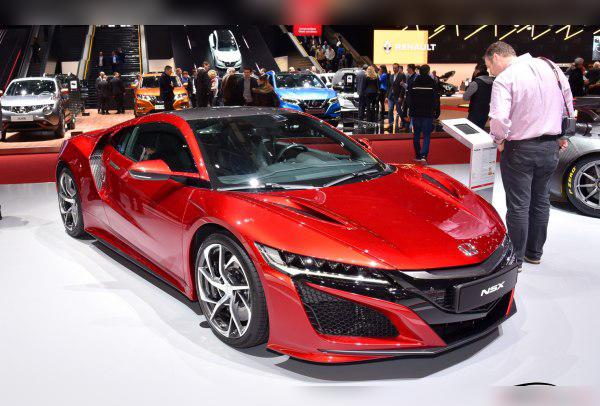
The engine with the code name JNC1 represents the pinnacle of Honda engineering in the era of hybrid supercars. Unlike the mass-produced J-series V6 engines we see in US-market Hondas, this powerplant was developed specifically for the Honda NSX II (NC1). It is a 3.5-liter V6 mounted longitudinally, with a 75-degree bank angle, two turbochargers, and a dry-sump lubrication system that allows for a lower center of gravity and proper lubrication under high G-forces.
This engine does not work alone – it is the central part of Honda’s Sport Hybrid SH-AWD system. While the JNC1 engine drives the rear wheels with the help of a single electric motor (the Direct Drive Motor), the front axle has its own two independent electric motors. However, in this text we will focus on the combustion engine itself and its characteristics, as it is still the main source of that raw power of over 500 horsepower.
Technical specifications
| Specification | Data |
|---|---|
| Engine code | JNC1 |
| Displacement | 3493 cc (3.5 L) |
| Configuration | V6, 75° bank angle |
| Power (ICE) | 373 kW (507 hp) @ 7500 rpm |
| Torque (ICE) | 550 Nm @ 2000-6000 rpm |
| Total system output (Hybrid) | 427 kW (581 hp) |
| Induction | Bi-turbo (twin-turbo), intercooler |
| Fuel injection system | Combined: direct + port injection |
| Valvetrain | DOHC, 4 valves per cylinder, chain-driven |
Reliability and maintenance
Timing system: Chain or belt?
The JNC1 engine uses a timing chain (silent chain) to drive the camshafts. Honda implemented a very robust system here, designed to withstand high revs and thermal loads. The chain is intended to last for the “lifetime of the engine”, which in practice means it does not require preventive replacement before 200,000 or 250,000 km, unless there is rattling or stretching due to poor maintenance. Considering this is a supercar that rarely covers such mileage, the chain is seldom an issue.
Most common failures
Since this is a high-end, low-production engine, large-scale failure data is limited, but real-world experience points to the following:
- Sensors and electronics: Due to the huge number of sensors monitoring the hybrid system and turbochargers, occasional faults occur on pressure or temperature sensors. The symptom is a “Check Engine” light and the car going into limp mode (reduced-power safety mode).
- Cooling system: The NSX has an extremely complex cooling system with multiple radiators (for the engine, transmission, electric motors, and batteries). Coolant leaks or failures of electric water pumps are possible. Symptoms include overheating or low coolant level in the reservoirs.
- Thermal management: Under aggressive track driving, the engine generates enormous heat. If the car is not cooled down properly (cool-down laps), rubber hoses and seals can age prematurely.
Service intervals and oil
Maintaining this engine is nothing like servicing a Civic. The engine uses a dry-sump lubrication system. This means the oil does not sit in the oil pan at the bottom of the engine, but in a separate reservoir.
- Oil quantity and grade: Due to the dry-sump system and oil cooler, capacity is large, usually around 7.5 to 8.5 liters (the exact amount depends on the draining procedure). Only high-performance fully synthetic oil is recommended, most commonly 0W-40 or 5W-40 (always check the manufacturer’s specification, e.g. Honda HTO-06 or newer NSX-specific standards).
- Minor service: Recommended every 10,000 km or once a year (whichever comes first). For cars like this, the yearly interval is usually the limiting factor.
- Oil consumption: High-performance twin-turbo engines can consume oil. Consumption of up to 0.5–0.8 liters per 1000 km under aggressive driving can be considered acceptable, but under normal driving it should not be noticeable.
Spark plugs
The spark plugs are iridium type with high heat range. Due to direct injection and turbocharging, the plugs are under heavy stress. Inspection is recommended at 50,000 km, and replacement no later than 100,000 km or every 5–7 years, although enthusiasts often replace them more frequently to preserve peak performance.
Specific parts and systems
Turbochargers and injectors
The engine uses two mono-scroll turbochargers made by Mitsubishi Heavy Industries (MHI). Their service life is long if they are properly cooled down (letting the engine idle for a minute before shutting it off after spirited driving). Failures are rare, and rebuilding or replacement is expensive (depends on the market).
The fuel injection system is sophisticated: the JNC1 uses both direct injection (into the cylinder) and port injection (into the intake manifold). This solves the problem of carbon buildup on intake valves, which is a common issue with purely direct-injection systems. The injectors themselves are very reliable.
Dual-mass flywheel and clutch
This setup is unique. Between the V6 engine and the 9-speed transmission sits the Direct Drive Motor (electric motor), which acts as a starter and alternator, but also as a flywheel that smooths out vibrations and adds torque. In other words, the classic “dual-mass flywheel” we know from diesels is replaced here by a complex assembly of the electric motor’s rotor and clutch system. Failures are rare, but if they do occur, repairs are extremely expensive and require removal of the entire powertrain.
Emissions systems (GPF/EGR)
Depending on the market (EU models), this engine may be equipped with a GPF (Gasoline Particulate Filter). Clogging issues are possible if the car is driven exclusively in the city at low revs, but given the nature of the car, this is rare. There is an EGR valve, but thanks to the combined injection system, the intake manifold remains relatively clean.
Fuel consumption and performance
Real-world fuel consumption
This is one of the brightest aspects of the hybrid system.
- City driving: Thanks to the electric motors handling initial movement and stop-go situations, consumption can be around 10–12 l/100 km, which is incredible for an engine with over 500 hp.
- Highway cruising: At steady speeds, consumption drops to 8–9 l/100 km.
- Spirited driving: When both turbos are fully on song and the engine revs to 7500 rpm, consumption easily exceeds 20–25 l/100 km.
Performance and “laziness”
Is the engine lazy? Absolutely not. Although the NSX is a heavy car (around 1750 kg) due to the batteries and motors, the system is designed so that the electric motors provide instant torque (so-called torque fill) while the turbochargers spool up. The result is brutal acceleration from a standstill and in-gear acceleration with virtually no turbo lag.
On the highway at 130 km/h in 9th gear, the engine “relaxes” at very low revs (below 2000 rpm), which makes driving quiet and comfortable in “Quiet” mode.
Additional options and modifications
Tuning (remapping)
The JNC1 engine has power reserves. With a Stage 1 remap (or by using a piggyback module such as a JB4), it is possible to increase power by around 50–80 hp and significantly raise torque. However, caution is required. Any increase in combustion-engine output must be harmonized with the hybrid system and transmission software. Excessive torque can cause issues with the DCT clutches.
LPG conversion
Not recommended. Although it might be technically possible on direct-injection engines, installing LPG on a hybrid supercar with a dry-sump system and electronics this complex is an engineering nightmare and pure sacrilege. There is no real space for a tank, and the risk of engine damage and disruption of the hybrid system is enormous.
Transmission and drivetrain
This engine is paired exclusively with a 9-speed DCT (Dual Clutch Transmission) automatic gearbox. A manual transmission is not an option.
Transmission maintenance and failures
- Reliability: The transmission is designed to handle high loads and is generally reliable. However, it is very complex.
- Most common issues: Possible software-related issues (jerkiness at low speeds) or overheating if the car is pushed hard on track without adequate cooling. Oil leaks at the seals are something that should be checked.
- Service: Changing the transmission fluid is critical. It is recommended every 40,000–60,000 km, or more frequently if the car is tracked. It uses a specific Honda DCT fluid. The replacement procedure is complicated and requires diagnostic equipment to recalibrate the clutches after the change.
- Clutch cost: Replacing the clutch pack is very expensive (depends on the market) and is only done when slipping or failure occurs, which should not happen before 100,000 km of normal driving.
Buying used and conclusion
When buying a Honda NSX with the JNC1 engine, the usual “used car checklist” does not fully apply. This is a computer on wheels.
What to check:
- Service history: It must be impeccable, exclusively from authorized service centers certified for the NSX.
- Timing chain noise: Listen to a cold start. Any chain rattling in the first few seconds is a red flag.
- Hybrid battery condition: Even though it is not part of the engine itself, battery degradation affects engine performance (because the engine has to work harder to charge it).
- Signs of leaks: Put the car on a lift. The dry-sump system has many oil lines – everything must be dry.
Conclusion: The JNC1 is a masterpiece. It is an engine that combines Honda’s legendary reliability with Formula 1 technology. It is intended for drivers who want a supercar that can be driven every day, not just on weekends. Maintenance is expensive, but that is the price you pay for owning one of the most advanced powertrains of our time. If you have the budget to buy it, make sure you also have the budget for top-tier maintenance – this engine deserves it.
Was this content useful to you?
Your opinion helps us to improve the quality of the content.