C32B1 Engine
- Engine
- 3179 cm3
- Aspiration
- Naturally aspirated engine
- Fuel
- Petrol (Gasoline)
- Fuel injection system
- Multi-port manifold injection
- Power
- 280 hp @ 7300 rpm
- Torque
- 298 Nm @ 5300 rpm
- Cylinders
- 6
- Valves
- 24, 4 per cylinder
- Cylinders position
- V-engine
- Max engine speed
- 8000 rpm
- Valvetrain
- DOHC, VTEC
- Oil capacity
- 5 l
- Coolant
- 16 l
# Vehicles powered by this engine
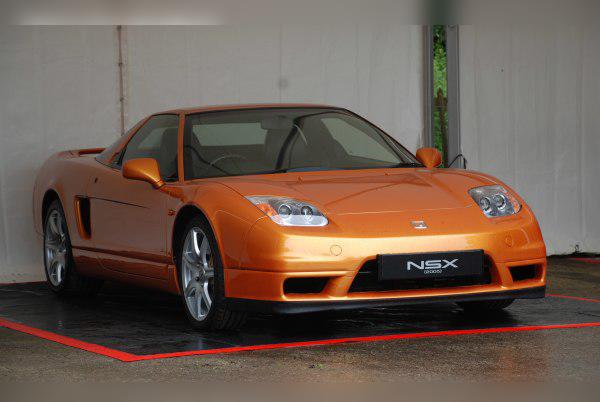
Honda C32B1 (3.2 V6 VTEC) – Experiences, problems, maintenance and used-buying guide
Key points in short (TL;DR)
- Legendary reliability: Unlike its Italian rivals from that era, this engine can cover huge mileages with regular maintenance.
- High revs: The redline starts at 8,000 rpm, and the real character (VTEC) wakes up only after 5,800 rpm.
- Timing belt: A critical maintenance item. If it snaps, the damage is total. It must be replaced on time (based on age as well as mileage).
- Manual gearbox only: The C32B1 was paired exclusively with a 6-speed manual gearbox. Automatics remained with the older 3.0 engine.
- Expensive maintenance: Even though it’s a Honda, this is a supercar. Parts are specific, rare and expensive (depending on the market).
- Oil consumption: Normal when driving in VTEC mode, requires regular level checks.
Contents
Introduction and applications
The C32B1 engine is a gem of Japanese engineering, the heart of the famous Honda NSX (NA2) after the 2002 facelift, even though the C32B technically appeared back in 1997. It is an evolution of the original C30A engine. Honda increased the displacement to 3.2 litres by using thinner cylinder walls reinforced with FRM (Fiber-Reinforced Metal) technology, which allowed for larger pistons in the same engine block.
This engine matters because it represents the peak of naturally aspirated V6 technology of its time. It is hand-assembled, has titanium connecting rods and was designed to deliver a Formula 1-like feel on the road, but with the reliability of a Honda Accord. It was installed in NSX models (Coupe and Targa) and was paired exclusively with a manual gearbox, which makes it a holy grail for purists.
Technical specifications
| Parameter | Data |
|---|---|
| Displacement | 3179 cc (3.2 L) |
| Configuration | V6 (90 degrees) |
| Power | 206 kW (280 hp) @ 7300 rpm |
| Torque | 298 Nm @ 5300 rpm |
| Engine code | C32B1 |
| Injection type | PGM-FI (multi-point indirect) |
| Aspiration | Naturally aspirated with VTEC system |
| Block/head material | Aluminium / Aluminium |
Reliability and maintenance
Timing system: belt or chain?
The C32B1 engine uses a timing belt to drive the camshafts. This is a critical maintenance item. The recommended replacement interval is usually around 100,000 km or 7 years (whichever comes first). Considering these cars are now collector’s items and rarely cover high mileages, the time interval is crucial. A snapped belt leads to piston-to-valve contact (interference engine), which means catastrophic engine damage.
Most common failures and symptoms
Although the engine is extremely robust, time takes its toll:
- LMA (Lost Motion Assembly): The springs that hold the VTEC rocker arms when they’re not in use can weaken. The symptom is a characteristic ticking noise from the cylinder head when the engine is cold or idling. It’s not fatal, but it’s annoying and requires removing the valve cover.
- Oil leaks at the VTEC valve: The seals (gaskets) on the VTEC solenoid harden from heat and age, leading to oil leaks. This is easily solved by replacing the gasket.
- Coolant hoses: The Honda NSX has long hoses running from the engine (in the back) to the radiator (up front). After 20+ years, these hoses become brittle and can burst, causing overheating. Replacing all hoses is recommended as preventive maintenance.
- Main relay: A well-known Honda issue from the 90s/00s. Cold solder joints crack, so the car won’t start when hot or may stall while driving.
Service intervals and oil
A minor service is done every 10,000 km or once a year. The engine takes about 5.0 to 5.5 litres of oil (with filter). The recommended grade is usually 5W-30 or 5W-40 (depending on climate), strictly high-quality fully synthetic. For track use, oils with higher temperature resistance are recommended.
Oil consumption
Yes, this engine consumes oil and that is by design, especially when driven in VTEC mode (over 5800 rpm). Normal consumption can be from 0.3 to 0.8 litres per 1,000 km under aggressive driving. If driven gently, consumption is negligible. An NSX owner must check the oil level at every fuel fill-up.
Spark plugs
Iridium or platinum spark plugs are used (NGK or Denso). The factory interval is 100,000 km, but due to fuel quality and age, inspection and replacement every 40,000 to 60,000 km is recommended.
Specific parts (costs)
Note on prices: Parts for the NSX are very expensive (depending on the market). Many parts are specific to this model only and are not shared with the Civic or Accord.
Flywheel and clutch
This model uses a specific clutch system with a twin-disc clutch and a flywheel designed to reduce vibrations while withstanding high revs. Although it’s not the typical “problematic” dual-mass flywheel like on diesels, replacing the clutch kit is an expensive procedure because it requires dropping the gearbox or removing the engine, and the parts themselves are exotic.
Fuel injection system
It uses classic PGM-FI injection. The injectors are extremely reliable and rarely cause problems. After 20 years they may require ultrasonic cleaning if the car hasn’t been driven regularly.
Turbo, DPF, EGR, AdBlue
- Turbo: None. This is a pure naturally aspirated engine. Engine life is longer because there is no thermal stress from a turbocharger.
- DPF/AdBlue: None. The engine is a petrol unit from the early 2000s.
- EGR: There is an exhaust gas recirculation system, but on petrol engines of this type it rarely clogs to the point of causing issues like on diesels.
Fuel consumption and performance
City driving
In the city, the C32B1 is not economical. Expect real-world consumption of 13 to 17 litres per 100 km, depending on traffic and how heavy your right foot is. Cold starts and short trips drastically raise the average.
Is the engine “lazy”?
With 280 hp pushing around 1350–1400 kg, the car is not lazy, but it does require revs. Below 4000 rpm it behaves like an ordinary Accord V6 – civilized and calm. The real power and “explosion” only come when VTEC engages. By today’s supercar standards, 298 Nm of torque seems modest, but throttle response is instant, something turbo engines can’t quite replicate.
Motorway driving
On the motorway the engine is in its element. Thanks to the 6-speed gearbox, cruising is more comfortable than in older 5-speed models. At 130 km/h in 6th gear, the engine spins at about 3,200–3,400 rpm. Highway consumption can drop to 9–10 l/100 km if you stick to speed limits.
Additional options and modifications
LPG conversion?
Technically possible, but absolutely not recommended. Installing LPG on a collector’s car like the NSX drastically lowers its value, and the engine’s high revs and specific titanium components are not an ideal environment for LPG combustion. Don’t do it.
Chip tuning (Stage 1)
On naturally aspirated engines, “chip tuning” (remap) brings minimal gains, usually 5 to 10 hp, which is barely noticeable in real driving. Stage 1 is mostly done here for better throttle response or to move the VTEC engagement point. Serious power gains only come with changes to the exhaust system (headers, catalytic converters) and intake, or with (very expensive) supercharger installation, which is a popular modification in the USA.
Gearbox
Types of gearboxes
With the C32B1 engine in the facelift NSX, there was only a 6-speed manual gearbox. Important to know: If you see an NSX with an automatic gearbox (F-Matic), it has the older and weaker 3.0 (C30A) engine under the hood, even if the car was built in 2005.
Gearbox problems
The 6-speed manual gearbox is robust. Older 5-speed models had an issue with the snap ring on a bearing (“Snap Ring” failure), but that was solved before the C32B1 engine came along. The most common problems are worn synchronizers (usually 2nd and 3rd gear) due to aggressive driving.
Gearbox servicing
The oil in the manual gearbox should be changed every 40,000 to 60,000 km. Original Honda MTF (Manual Transmission Fluid) is used. Regular changes are crucial to preserve precision and feel when shifting.
Buying used and conclusion
Before buying a Honda NSX with this engine, pay attention to:
- Proof of timing belt and water pump replacement: If there is no paperwork, immediately factor in a cost of 1000–1500 EUR (or more) for a major service.
- Engine sound: Listen to a cold start. Loud ticking can indicate an issue with LMA springs or the need for valve adjustment (they are mechanically adjusted, there are no hydraulic lifters).
- Exhaust smoke: Blue smoke at high revs (VTEC) indicates worn piston rings or valve stem seals. Although C32B cylinders (FRM) are durable, repairs are complicated because they cannot easily be sleeved or bored by a local machine shop.
- ABS pump: Check whether the ABS system works and whether you hear the pump “buzzing” too often, as overhauling it is very expensive.
Conclusion: The Honda C32B1 is an engine for true enthusiasts. It’s not the fastest by today’s standards, but it offers immediacy, sound and mechanical feel that modern cars have lost. Maintenance is expensive compared to ordinary cars, but cheap compared to Ferraris or Porsches of the same era. If you find a good example, it’s not just a car, but a safe investment.
Was this content useful to you?
Your opinion helps us to improve the quality of the content.