C30A Engine
- Engine
- 2977 cm3
- Aspiration
- Naturally aspirated engine
- Fuel
- Petrol (Gasoline)
- Fuel injection system
- Multi-port manifold injection
- Power
- 256 hp @ 6800 rpm
- Torque
- 284 Nm @ 5400 rpm
- Cylinders
- 6
- Valves
- 24, 4 per cylinder
- Cylinders position
- V-engine
- Max engine speed
- 8000 rpm
- Valvetrain
- DOHC, VTEC
- Oil capacity
- 5 l
- Coolant
- 16 l
# Vehicles powered by this engine
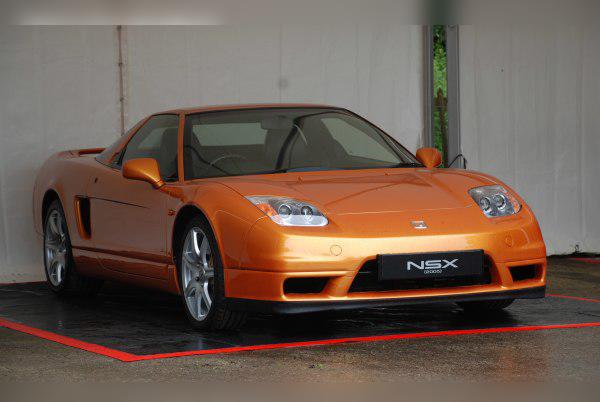
Honda C30A (3.0 V6) Experiences, Problems, Fuel Consumption and Buying Guide – NSX F-Matic
Key points in short (TL;DR)
- Legendary reliability: The C30A is an engineering masterpiece, capable of very high mileage with proper maintenance.
- Timing belt is critical: It requires strict replacement by time interval (usually every 6–7 years) because failure destroys the engine.
- F-Matic (Automatic) specifics: This variant (256 hp) is weaker than the manual version and has only 4 gears, which affects performance and fuel consumption.
- Expensive maintenance: Although it doesn’t fail often, parts are priced like those for exotic cars, not an average Honda.
- Oil consumption: Under aggressive driving in the VTEC zone, oil consumption is expected and normal.
- No turbocharger: This is a pure naturally aspirated engine that needs high revs to really “breathe”.
Contents
- Introduction and Engine Overview
- Technical Specifications
- Reliability and Maintenance
- Specific Parts and Costs
- Fuel Consumption and Performance
- Additional Options and Tuning
- Transmission (F-Matic)
- Used-Buying Tips and Conclusion
Introduction and Engine Overview
The Honda C30A engine is the heart of the first-generation Honda NSX. When we talk about the 2002 model year (facelift), we come to a specific situation. While the manual versions switched to the more powerful 3.2L (C32B) engine, the version with automatic transmission (F-Matic) kept this 3.0L unit. This is the engine that redefined the concept of a supercar – it proved that Ferrari-like performance of that era can go hand in hand with the reliability of a Honda Accord.
It is a V6 engine with VTEC technology, mounted in the middle. For the automatic version, power is slightly reduced to 256 hp to preserve the automatic transmission and provide smoother operation. This is an engine for enthusiasts who want a GT cruiser, not a hardcore track machine.
Technical Specifications
| Engine displacement | 2977 ccm (3.0 L) |
| Power | 188 kW (256 hp) at 6800 rpm |
| Torque | 284 Nm at 5400 rpm |
| Engine code | C30A (Automatic version) |
| Cylinder layout | V6 (90-degree angle) |
| Injection type | PGM-FI (multi-point indirect injection) |
| Induction | Naturally aspirated with VTEC system |
| Valves | 24 valves (DOHC) |
Reliability and Maintenance
Timing belt or chain?
The C30A engine uses a timing belt. This is a critical maintenance item. Although the belt can physically withstand high mileage, on cars like this which often sit garaged, age of the material is a bigger enemy than mileage. The recommendation is replacement every 6 to 7 years or 100,000 km, whichever comes first. A snapped belt causes piston-to-valve contact, which means total engine failure and a repair bill that costs a small fortune.
Most common failures
The engine is extremely robust, but age takes its toll. The most common issues are:
- Oil leak at the VTEC spool valve: The seals harden from heat and age, and oil starts leaking onto the alternator located below. Symptoms are a burning smell and oily traces on the engine block.
- Cooling system: Old rubber hoses are prone to cracking. The cooling system is complex because the engine is in the back and the radiator is in the front. Overheating is deadly for this aluminum block.
- Main relay: A classic Honda problem from that era. Cold solder joints crack, so the car won’t start when the cabin is hot or it stalls randomly.
- Harmonic balancer (crank pulley): The rubber that bonds the two parts of the pulley can deteriorate, causing vibrations or the pulley to slip off.
Service intervals and oil
Minor service is done every 12 months or 10,000 km (more often 5–7,000 km for enthusiasts). The engine takes about 5.0 liters of oil (with filter). The recommended grade is usually 5W-30 or 10W-30 (fully synthetic). The VTEC system depends on oil pressure, so oil level is critical.
Major service (belt, tensioners, water pump) is done at the mentioned 100,000 km or, more importantly, at a time interval of 6–7 years due to rubber aging.
Oil consumption
This engine is designed to rev high. If you drive it gently, oil consumption will be minimal. However, in VTEC mode (above 5800 rpm), oil consumption is a normal occurrence. Consumption of 0.5 to 0.8 liters per 1,000 km of aggressive driving is not a sign of failure, but a characteristic of fast-moving pistons and engine tolerances.
Spark plugs
It uses NGK or Denso iridium/platinum spark plugs. The factory interval is long (up to 100,000 km), but in practice they are replaced around 40,000–60,000 km to maintain optimal ignition performance.
Specific Parts (Costs)
Fuel injection system
The engine uses classic PGM-FI multi-point injection. The injectors are extremely durable and rarely cause problems. If an issue does occur, symptoms are rough idle or loss of power, but ultrasonic cleaning usually solves it. There are no expensive high-pressure pumps like on modern petrol engines.
Turbo, DPF, EGR, AdBlue
Good news for your wallet:
- Turbo: None. The engine is naturally aspirated.
- DPF / AdBlue: None. This is an old-school petrol engine.
- EGR valve: There is an exhaust gas recirculation system, but on the C30A it rarely causes clogging issues like on diesels. Intake manifold passages can get dirty after 20+ years, which is solved by mechanical cleaning (the part itself is not expensive, the labor is).
Dual-mass flywheel
Since this is a model with an automatic transmission (F-Matic), this car does not have a dual-mass flywheel or a conventional clutch. Instead, it has a torque converter. That eliminates one of the more expensive failures typical for manual gearboxes, but overhauling the automatic transmission itself can be extremely expensive (very costly, depending on the market).
Fuel Consumption and Performance
City driving and highway
Do not expect fuel efficiency. This is a 3.0 V6 engine paired with an old 4-speed automatic.
- City: Real-world consumption ranges from 13 to 17 liters per 100 km, depending on traffic and how heavy your right foot is.
- Open road / Highway: It can go down to about 9–10 liters with calm driving. However, because the gearbox has only 4 gears, at 130 km/h the engine revs higher than in modern cars (around 3000–3200 rpm), which increases noise and fuel consumption.
Is the engine “lazy”?
By today’s standards, where 2.0 turbo engines have 400 Nm from 1500 rpm, the C30A can feel “lazy” at low revs. The 284 Nm of torque is available only at 5400 rpm. This means that for sudden overtakes the gearbox has to kick down to a lower gear so the engine enters the VTEC zone where the real power wakes up. Still, the NSX body is light (aluminum), so the car is not slow, but it demands a decisive right foot.
Additional Options and Modifications
LPG conversion
Technically – YES, it is possible to install a sequential LPG system because the engine is naturally aspirated with indirect injection. Practically and morally – NOT RECOMMENDED. The NSX is a collector’s car. Drilling the aluminum body and intake manifold to install LPG drastically lowers the vehicle’s value and disturbs the car’s balance. Also, the high revs of a VTEC engine and LPG are not always the best combination for long valve life without additional lubrication.
Chiptuning (Stage 1)
Naturally aspirated engines, especially those that Honda has already “wrung out” from the factory, have very little potential for software-only gains. A Stage 1 tune on this engine might bring 5 to 10 hp, which is imperceptible in real driving. Any serious power increase requires mechanical changes (exhaust, intake, cams) or fitting a supercharger, which is a popular but very expensive modification.
Transmission (F-Matic)
With the C30A engine in the facelift version (2002+), the car came exclusively with a 4-speed automatic transmission with a manual shift option via a lever behind the steering wheel (F-Matic). Manual gearboxes (6-speed) were paired with the more powerful 3.2 engine.
Transmission maintenance and failures
- Reliability: The gearbox is robust but technologically outdated. It is not known for frequent failures, but it “kills” the engine’s performance compared to the manual.
- Maintenance: Transmission fluid (ATF) must be changed every 40,000 to 60,000 km or every 4 years. Use only Honda ATF-Z1 or the newer DW-1 fluid.
- Failure symptoms: Slow gear changes, slipping under acceleration, or harsh engagement when shifting into “D” or “R”. Overhaul is complicated due to the model’s specificity.
Buying Used and Conclusion
Buying a Honda NSX with the C30A engine is an entry into the world of exotics. Before purchase, be sure to check:
- Major service history: When were the timing belt and water pump last replaced? If there is no proof, immediately factor in a cost of 1000+ EUR (depending on the market).
- Exhaust smoke: Blue smoke at high revs or when lifting off the throttle indicates worn valve stem seals or piston rings.
- Cooling system: Check whether the hoses are soft or brittle and whether there are traces of coolant leaks.
- ABS system: Although not part of the engine, the ABS modulator on the NSX is an expensive failure, and the system is important for the car’s operation.
Conclusion: The C30A combined with the automatic is intended for drivers who want style, the sound of a V6 and comfort, not chasing lap times on a track. The engine is extremely reliable if maintained, but parts are expensive. This is not a “daily driver” car, but an investment and a weekend pleasure machine.
Was this content useful to you?
Your opinion helps us to improve the quality of the content.