F23A7 Engine
- Engine
- 2254 cm3
- Aspiration
- Naturally aspirated engine
- Fuel
- Petrol (Gasoline)
- Fuel injection system
- Multi-port manifold injection
- Power
- 150 hp @ 5700 rpm
- Torque
- 200 Nm @ 4700 rpm
- Cylinders
- 4
- Valves
- 16, 4 per cylinder
- Cylinders position
- Inline
- Valvetrain
- OHC
- Oil capacity
- 4.3 l
# Vehicles powered by this engine
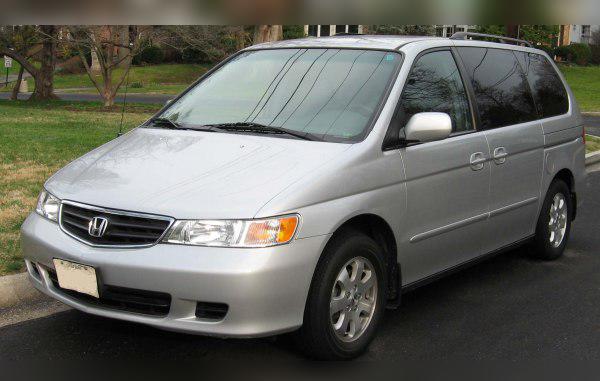
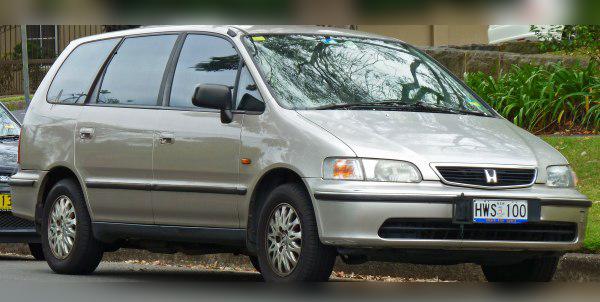
Honda F23A7 (2.3 VTEC) – Experiences, Problems, Fuel Consumption and Maintenance
This text analyzes the F23A7 engine, an inline four-cylinder that belongs to Honda’s famous F-series. Although Hondas are known for being “indestructible”, the combination of this engine with the heavy body of the Honda Odyssey (first and second generation, depending on the market) brings specific challenges. As a technical editor with years of experience, I’ll walk you through the real picture – from what awaits you under the hood to what awaits you at the service counter.
Key points in short (TL;DR)
- Engine block reliability: Extremely high. The mechanical part of the engine (pistons, crankshaft) rarely fails.
- Biggest weakness: The automatic transmission paired with this engine in the Odyssey is the “Achilles’ heel” of this powertrain.
- Oil consumption: Expected at higher mileages, especially due to valve stem seals and the VTEC system.
- Maintenance: Requires regular timing belt replacement and (mechanical) valve adjustment.
- Performance: The engine is somewhat “lazy” for the weight of the Odyssey’s body, especially under full load.
- Recommendation: An excellent choice if you find a car with a serviced transmission and a proven oil-change history.
Contents
- Technical Specifications
- Reliability and Maintenance
- Specific Parts and Costs
- Fuel Consumption and Performance
- Additional Options (LPG) and Modifications
- Transmission: Achilles’ Heel
- Buying Used and Conclusion
Technical Specifications
| Specification | Data |
|---|---|
| Engine code | F23A7 |
| Displacement | 2254 cc (2.3 L) |
| Power | 110 kW (150 hp) at 5600 rpm |
| Torque | 200 - 209 Nm (depending on market) |
| Configuration | Inline-4, SOHC VTEC (single camshaft, 16 valves) |
| Injection type | Multipoint (PGM-FI) |
| Aspiration | Naturally aspirated |
Reliability and Maintenance
The F23A7 engine is a classic example of Honda engineering from the late 90s and early 2000s. This means it is robust, but it requires specific care that modern “just fill up and drive” owners often neglect.
Timing belt or chain?
This engine uses a timing belt to drive the camshaft. In addition to the main timing belt, there is also a smaller belt for the balance shafts. This is a critical maintenance point. If the belt snaps, the pistons and valves will collide (interference engine), which means catastrophic engine damage.
Most common failures
Although the mechanicals are reliable, the peripherals can cause issues:
- Oil leaks: Most commonly from the VTEC solenoid (the gasket hardens from heat), from the distributor (O-ring), and from the valve cover. Symptoms include a burning oil smell in the cabin or oily spots under the car.
- EGR passages: The intake manifold has exhaust gas recirculation passages that gradually clog with soot. Symptoms are uneven acceleration, “stuttering” under light throttle, and the “Check Engine” light.
- IACV (Idle Air Control Valve): Due to dirt, idle can become unstable and fluctuate up and down (so-called “hunting idle”). Cleaning usually solves the problem.
- Main relay: A well-known issue on Hondas of this era. If the engine cranks but won’t start when the cabin is hot, cracked solder joints on the main fuel pump relay are the likely cause.
Major service
The major service is done every 100,000 km or every 5 to 7 years (whichever comes first). Both belts (timing and balance), tensioners, water pump, and camshaft/crankshaft oil seals must be replaced.
Oil and consumption
The engine takes approximately 4.3 liters of oil. The recommended viscosity is 5W-30 or 10W-30. As for oil consumption, the F23A7 is not immune. Consumption of 0.5 to 1 liter per 5,000 km on older engines is considered acceptable, especially if driven in VTEC mode (high rpm). The most common causes of increased consumption are hardened valve stem seals or stuck oil control rings.
Spark plugs
This is a petrol engine, so spark plugs play a major role. If you use standard (copper) NGK or Denso plugs, they should be replaced every 20,000 - 30,000 km. With iridium plugs, the interval extends to about 100,000 km. The usual recommendation is NGK ZFR5F-11.
Specific Parts (Costs)
When it comes to parts, the Honda Odyssey with this engine falls into the mid-range in terms of maintenance costs, but parts availability can vary depending on the continent.
- Dual-mass flywheel: In the Odyssey this engine is almost exclusively paired with an automatic transmission, so there is no dual-mass flywheel. It uses a torque converter instead. If you happen to come across a manual conversion, it uses a solid flywheel.
- Fuel injection system: Uses the classic PGM-FI system. Injectors are extremely reliable and rarely cause problems. It is not direct injection, which means fewer deposits on the valves and cheaper maintenance.
- Turbocharger: This engine does not have a turbocharger. It is naturally aspirated, which means one less thing to worry about (no turbo rebuilds, intercooler issues, etc.).
- DPF and EGR: There is no DPF filter (it’s a petrol engine). It does have an EGR valve which, as mentioned, usually isn’t the problem itself – the intake manifold passages leading to it get clogged. Cleaning is inexpensive (mainly labor), but it takes time.
- AdBlue: There is no AdBlue system.
Fuel Consumption and Performance
This is where we get to the reality of driving a heavy MPV (minivan) with a naturally aspirated petrol engine.
Real-world fuel consumption
Don’t expect miracles. The Honda Odyssey is a heavy vehicle, and its aerodynamics are similar to a brick.
- City driving: Expect between 12 and 14 liters per 100 km. In heavy traffic and winter, this easily goes over 15 liters.
- Highway / open road: With moderate driving (up to 90 km/h), it can drop to around 8–9 liters.
Is the engine “lazy”?
By today’s standards – yes, it is. With 150 hp and 200 Nm of torque, the F23A7 struggles with the Odyssey’s mass (curb weight is around 1.6 tons). In the city, agility is acceptable, but overtaking on country roads requires planning and a kick-down from the transmission to spin the engine into the red. When the car is fully loaded with passengers and luggage, the lack of low-end torque is noticeable.
Motorway
On the motorway the engine is noisy. Due to the 4-speed automatic transmission, at 130 km/h the engine runs at around 3,000 - 3,500 rpm (depending on the specific gear ratios). This affects both fuel consumption and comfort.
Additional Options and Modifications
LPG conversion
Yes, this engine is suitable for LPG. The intake manifold is (usually) metal, and the injection is indirect. However, there is a crucial condition: Honda engines use mechanical valve clearance adjustment. Running on LPG accelerates valve seat recession.
Advice: If you run LPG, you must check and adjust the valves every 20,000 to 30,000 km. If you neglect this, the valves will burn, leading to an expensive cylinder head repair.
ECU remap (Stage 1)
Forget about it. This is a naturally aspirated petrol engine. A remap might give you 3–5 hp at best, which is unnoticeable in real driving, and you’ll just waste money (depending on the market, the cost of a remap is not worth it). The only way to get more power is through serious mechanical modifications (cams, exhaust, intake), which makes no sense on a family minivan.
Transmission: Achilles’ Heel
This is the most important part of the text for a potential buyer. In Odyssey models, the F23A7 engine is almost always paired with a 4-speed automatic transmission.
Automatic transmission problems
Honda automatic transmissions from this era (especially those paired with heavier vehicles like the Odyssey and V6 Accord) are notorious for failures. Symptoms include:
- Slipping when shifting from 1st to 2nd gear.
- Harsh “thumps” during gear changes.
- Delay when engaging “D” or “R”.
- Flashing “D4” light on the dashboard.
The cause is often overheating of the transmission fluid and poor internal oil flow design, which leads to rapid wear of the clutch packs inside the transmission. The cost of a rebuild is very high (depending on the market, it often exceeds the value of the vehicle).
Transmission maintenance
The transmission fluid must be changed every 40,000 to 60,000 km. Use only genuine Honda ATF-DW1 (or the older ATF-Z1) fluid. Never use “universal” ATF. Many owners install an additional transmission oil cooler to extend its lifespan.
Buying Used and Conclusion
When buying a Honda Odyssey with the F23A7 engine, follow this procedure:
- Test drive (transmission): Warm the car up. The transmission must shift smoothly and almost imperceptibly. Any jerks, bangs, or slipping are signs you should walk away from that car.
- Cold start: Listen to the engine. Valve ticking is normal while cold but should disappear. Deep knocking from the bottom end indicates worn bearings.
- Exhaust smoke: Blue smoke when you blip the throttle or after idling indicates oil consumption (rings or valve stem seals).
- Oil check: Pull the dipstick. If the oil is pitch black and at the minimum, the owner didn’t care about the VTEC system, which depends on oil pressure and quality.
Conclusion
The F23A7 engine is a mechanical gem trapped in a heavy body with a problematic transmission. It’s not fast, it uses a lot of fuel in the city, but it offers that old-school Honda reliability if (and only if) the transmission is healthy.
Who is it for? Families who need a spacious and practical car for little money and are willing to tolerate higher fuel consumption in exchange for cheaper routine maintenance compared to modern diesels.
Was this content useful to you?
Your opinion helps us to improve the quality of the content.