15ZF Engine
- Engine
- 1498 cm3
- Aspiration
- Naturally aspirated engine
- Fuel
- Petrol (Gasoline)
- Fuel injection system
- Multi-port manifold injection
- Power
- 121 hp @ 6600 rpm
- Torque
- 145 Nm @ 4300 rpm
- Cylinders
- 4
- Valves
- 16, 4 per cylinder
- Cylinders position
- Inline
- Valvetrain
- DOHC, i-VTEC
- Systems
- Start & Stop System
# Vehicles powered by this engine
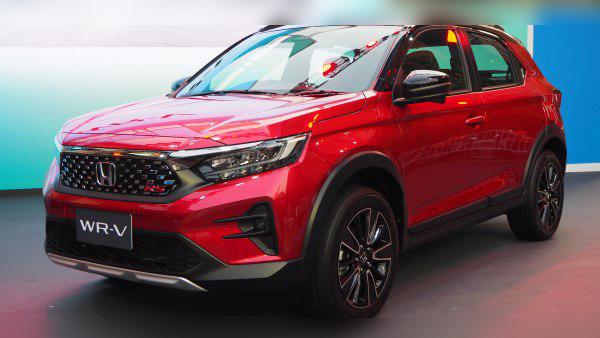
Honda 1.5 i-VTEC (15ZF) – Experiences, issues, fuel consumption and buying tips
Key points (TL;DR)
- Reliability: Extremely reliable engine, one of the best naturally aspirated petrol units in its class. “Old-school” engineering.
- Maintenance: Chain-driven timing that rarely causes problems. Requires quality oil and regular valve clearance adjustment.
- Performance: Like every Honda VTEC, it loves high revs. At low revs it can feel “sleepy” or lazy due to the lack of a turbocharger.
- Gearbox: The CVT is the most common option. It takes time to get used to the sound (“scooter effect”) and the oil must be changed strictly every 40,000 km.
- Fuel consumption: Moderate in the city, but increases on the highway due to the SUV aerodynamics (WR-V) and shorter gearing.
- Recommendation: An ideal choice for drivers who want a “fill up and drive” car and are not bothered by engine noise under acceleration.
Contents
Introduction: The last breaths of a naturally aspirated legend
The engine designated as 15ZF (part of Honda’s famous L-series engines) represents a modern evolution of the classic Japanese approach: 1.5 liters of displacement, no turbocharger, with intelligent variable valve timing (i-VTEC). This engine is primarily installed in the second-generation Honda WR-V (DG4), a compact SUV/crossover aimed at developing markets, as well as parts of Asia and South America.
Why is this engine important? In an era when everyone is switching to small three-cylinder turbo units, Honda here offers four cylinders and naturally aspirated technology. That means less stress on components, longevity and simpler maintenance, which makes it a favorite among buyers who plan to keep their car for many years.
Technical specifications
| Parameter | Value |
|---|---|
| Displacement | 1498 cc (1.5 L) |
| Configuration | Inline, 4 cylinders, DOHC |
| Power | 89 kW / 121 hp @ 6600 rpm |
| Torque | 145 Nm @ 4300 rpm |
| Engine code | 15ZF (L15 series variation) |
| Injection type | PGM-FI (Indirect/Multipoint injection) |
| Aspiration | Naturally aspirated |
Reliability and maintenance: Japanese precision
Timing system: Chain or belt?
This engine uses a timing chain. Honda is known for extremely high-quality chains which, with regular oil changes, last as long as the engine itself (often over 300,000 km). There is no scheduled replacement interval; it is replaced only if you hear rattling (on a “cold start”) or if it stretches, which is rare on this particular model before 200,000 km.
Most common issues
Although the engine is robust, there are a few small things to watch out for:
- VTC actuator (variable camshaft): You may hear a brief “snoring” or rattling sound at the first start of a cold engine. This is a common issue on Honda K and L series engines. It’s not a catastrophic failure, but the actuator should be replaced if the noise becomes persistent.
- Valve adjustment: Unlike many European engines with hydraulic lifters, this engine requires manual valve clearance adjustment. It is recommended to check it every 40,000 to 60,000 km (or when you hear “ticking”). If this is neglected, it can lead to loss of power or burnt valves (especially if the car runs on LPG).
- Carbon buildup: Although less common with PGM-FI than with direct injection, the intake manifold can get dirty if the car is driven exclusively in the city at low revs.
Service intervals and oil
Minor service: Recommended every 10,000 to 15,000 km or once a year. Japanese engines like fresh oil.
Major service: Since it has a chain, there is no “classic” major timing service. However, the auxiliary (serpentine) belt and water pump should be inspected and replaced as needed, usually around 100,000–120,000 km.
Oil: The engine takes approximately 3.5 to 3.8 liters of oil (with filter). Honda strictly recommends low-viscosity oils for fuel economy and proper VTEC operation. The best choice is 0W-20. In warmer climates 5W-30 can be used, but 0W-20 is the factory standard for the 15ZF.
Oil consumption: Modern Honda engines can consume a small amount of oil, especially if they are often driven in VTEC mode (high revs). Consumption of up to 0.5 liters per 10,000 km is completely acceptable. If it uses more than 1 liter, check the PCV valve or valve stem seals.
Spark plugs and injectors
This is a petrol engine, so it uses spark plugs. From the factory it comes with more expensive iridium spark plugs (NGK or Denso). Their replacement interval is long, usually at 100,000 km. Do not save money with cheap copper plugs, because access is sometimes more complicated and iridium ensures proper coil operation.
Specific parts (costs)
Dual-mass flywheel: This engine DOES NOT have a dual-mass flywheel. With the CVT gearbox a torque converter is used, and with the manual gearbox a conventional solid flywheel. This means significantly cheaper clutch maintenance compared to diesels.
Fuel injection system: The 15ZF engine most commonly uses PGM-FI (multi-point) port injection. The injectors here are very reliable, simple and cheap to clean or replace. They are not as sensitive to fuel quality as piezo injectors on direct-injection engines.
Turbo, DPF, EGR, AdBlue:
- Turbo: None. The engine is naturally aspirated. No turbo rebuild costs.
- DPF: None (that’s for diesels). However, depending on the market (if the vehicle is built for strict EU standards), it may have a GPF (gasoline particulate filter). In most cases for the WR-V (Asia/South America), there is no GPF.
- EGR: It has an EGR system for exhaust gas recirculation. It rarely clogs, except on engines that burn a lot of oil.
- AdBlue: None.
Fuel consumption and performance
Real-world consumption (city): In heavy city traffic, a WR-V with this engine and a CVT gearbox will use between 7.5 and 9.0 l/100 km. The CVT helps maintain efficiency, but the vehicle’s weight and stop-and-go driving take their toll.
Is the engine “lazy”? With 145 Nm of torque at a high 4300 rpm, this engine is no racer. In the city it feels lively thanks to throttle response, but on climbs or when the car is fully loaded, you need to rev it above 3500 rpm to get it to pull. To drivers used to diesels (where torque comes in immediately) it will feel weak. To Honda drivers it will feel normal.
Highway: This is not the WR-V’s natural habitat. Due to poorer aerodynamics (boxy shape) and the naturally aspirated engine, at 130 km/h the engine spins at about 3000–3500 rpm (depending on the CVT ratio at that moment). Fuel consumption then rises to around 7–8 l/100 km, and cabin noise becomes noticeable.
Additional options and modifications
LPG installation:
Yes, this engine is an excellent candidate for LPG, especially in the version with indirect injection (which the 15ZF is). However, there is a key note: Honda engines have “soft” valve seats. If you install LPG, it is essential to also install a valve lubrication system (“valve saver”) or to set up software “split-fueling” (to inject a bit of petrol at high revs). Also, the valve adjustment interval is then reduced to 30,000 km!
Chiptuning (Stage 1):
Forget about it. On a 1.5-liter naturally aspirated petrol engine, remapping will give you maybe 3 to 5 hp, which is imperceptible in real driving. It’s better to invest that money in quality tires and regular servicing.
Gearbox: Achilles’ heel or advantage?
Types of gearboxes:
With the 15ZF engine in the Honda WR-V you will most commonly find a CVT (Continuously Variable Transmission) from Honda’s “Earth Dreams” series. In some lower trim levels there may be a 6-speed manual gearbox.
CVT gearbox – maintenance and failures:
Honda’s CVT is better than most on the market (e.g. Nissan’s), but it has its specifics:
- Failure symptoms: Jerking when setting off, slipping (revs flare but the car doesn’t accelerate), whining noise from the gearbox.
- Maintenance: The oil in the CVT (exclusively Honda HCF-2 fluid) must be changed every 40,000 km or 2 years. If this is not done, the metal belt inside the gearbox starts to wear and an expensive overhaul follows.
- Feel: Under hard acceleration the engine holds constantly high revs (vacuum-cleaner effect), which irritates many drivers, but this is normal CVT behavior.
Manual gearbox: Very precise, with short throws and extremely reliable. Clutch kit replacement is cheap (depends on the market, but falls into the lower cost category).
Used car buying guide and conclusion
Before buying a Honda WR-V with this engine, pay attention to the following:
- Noise at startup: Insist that the engine is completely cold. Listen for a “krrr” sound during the first 2–3 seconds (VTC actuator or chain).
- CVT service history: If the car has done more than 80,000 km and the gearbox oil has never been changed – avoid that car. The risk is too high.
- Idle: The engine should idle smoothly. Vibrations may indicate the need for valve adjustment or worn engine mounts.
- Corrosion: Since the WR-V is often intended for markets with poorer roads, check the underbody for impacts and corrosion.
Conclusion:
The 15ZF (1.5 i-VTEC) engine is a reliability gem in a sea of complicated modern engines. It’s not fast, it’s not particularly quiet on the highway, but it will faithfully serve you for hundreds of thousands of kilometers with minimal costs – provided you regularly change the oil in both the engine and the gearbox. It is ideal for calm drivers, families and those who want a car that “doesn’t break down”.
Was this content useful to you?
Your opinion helps us to improve the quality of the content.