EA839 3.0 V6 TFSI (55 TFSI / eHybrid) – Experiences, Problems, Fuel Consumption and Used Car Buying Guide
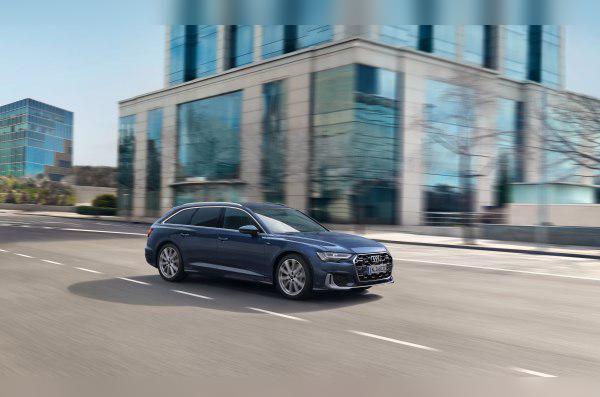
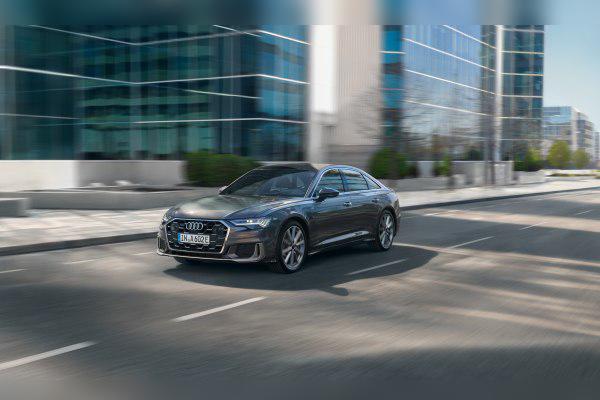
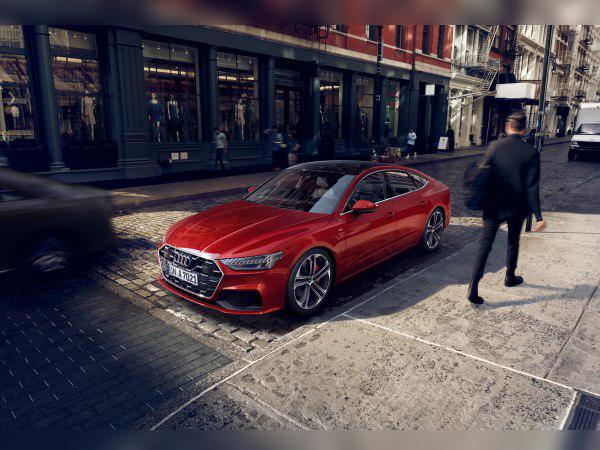
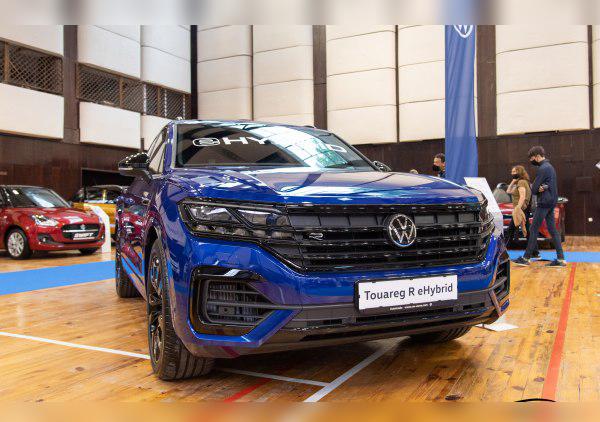
If you’re considering buying a modern Audi badged as 55 TFSI or a powerful Volkswagen Touareg R, under the hood you’ll find a technological gem, but also a very complex machine – the EA839 engine. This is not an engine for beginners or for those on a tight budget. It’s a V6 unit that combines raw power with modern (and complicated) hybrid technology.
Key points in short (TL;DR)
- Performance: Extremely potent engine, linear acceleration and quiet operation. The “hot V” turbo configuration reduces turbo lag.
- Timing drive: Uses a chain. The system is on the rear side of the engine (next to the gearbox), which makes any major intervention very expensive (often requires engine removal).
- Hybrid system: Most of these engines are MHEV (mild hybrids) or PHEV (plug-in in the Touareg). The 48V system is complex and alternator/starter failures are not uncommon.
- Oil consumption: Modern TFSI engines are better than the old ones, but with aggressive driving, some oil consumption is to be expected.
- Maintenance: Very expensive. Parts are specific, and access to components is difficult due to the compact “V” layout.
- Recommendation: Only for owners who can afford regular, high-quality maintenance without compromise.
Contents
- Technical specifications
- Reliability and Maintenance
- Specific Parts and Costs
- Fuel Consumption and Performance
- Additional Options and Modifications
- Gearbox (S tronic / Tiptronic)
- Used Car Buying Tips and Conclusion
Technical specifications
This is an evolution of the modular “V” platform jointly developed by Audi and Porsche. In the 3.0-litre version, a single turbocharger is used, while the 2.9-litre version (used in RS models) has two turbos.
| Characteristic | Data |
|---|---|
| Engine designation (Family) | EA839 (Codes: DLZA, CZSE, DCBD...) |
| Displacement | 2995 ccm (3.0 L) |
| Configuration | V6, 90-degree angle |
| Power | 250 kW (340 hp) – Petrol engine 462 hp (System output for Touareg R eHybrid) |
| Torque | 450 Nm (Petrol engine only) 700 Nm (System output for eHybrid) |
| Charging | 1 x Twin-Scroll Turbo (Hot-V configuration) + Intercooler |
| Injection | Direct injection (FSI/TSI) |
| Hybrid system | MHEV (48V Mild Hybrid) or PHEV (Plug-in Hybrid) |
Reliability and Maintenance
Does this engine have a timing belt or chain?
The EA839 engine uses a chain system to drive the camshafts. The system is very complex and is located on the rear side of the engine (between the engine and the gearbox). This was done from an engineering standpoint for better weight distribution, but for mechanics and your wallet it’s a nightmare. If chain rattle or tensioner issues appear, replacement usually requires removing the entire engine, which makes labour costs extremely high (depending on the market, but count on “very expensive”).
What are the most common failures on this engine?
Although it is more reliable than older generations, it has several critical points:
- Valve rocker arms: On earlier series of this engine (up to 2018/2019, but check newer ones as well) there was premature wear of the needle bearings in the rocker arms. The symptom is loud knocking/ticking from the cylinder head. If ignored, it can destroy the camshaft.
- Coolant leaks: The thermostat and water pump are located in the “V” of the engine. The plastic housings can fail due to high temperatures, and leaks are hard to notice until they become serious because the coolant evaporates on the hot block.
- BSG (Belt Starter Generator) on MHEV models: On Audis with the 48V system (A6, A7), the alternator/starter is a common failure point. The symptom is a bunch of warning lights on the dash (“Electrical system fault”) and the car refusing to start.
At what mileage is the major service done?
Since the engine has a chain, a classic “major service” like with a belt does not exist at a fixed interval. The chain is designed to last the life of the vehicle, but in practice, an inspection is recommended after 150,000 - 180,000 km. However, the serpentine belt (multi-rib belt) that drives the hybrid system and other auxiliaries must be replaced regularly (usually at 60,000 - 90,000 km or 5 years), because if it snaps, the car will immediately stop.
How many litres of oil does it take and which grade is recommended?
The sump holds approximately 7.5 to 7.7 litres of oil (always check the exact amount by VIN). For these new engines, the VAG group strictly insists on 0W-20 (Standard VW 508 00 / 509 00) for low viscosity and efficiency. However, many experienced mechanics in warmer climates or for heavier use recommend switching to 0W-30 or 5W-30 (VW 504 00) to better protect moving parts, provided this does not void the warranty or cause issues with the GPF filter.
Does it consume oil and what is normal?
Yes, like any powerful turbo engine, oil consumption is present. The manufacturer often states that up to 0.5 litres per 1,000 km is “within normal limits” (to protect themselves), but realistically, a healthy engine should not consume more than 1 litre per 5,000 - 8,000 km. If you’re topping up a litre every 1,000–2,000 km, you have a problem (often the oil separator – PCV valve).
At what mileage should the spark plugs be changed?
Due to direct injection and the turbocharger, the spark plugs are under heavy stress. The recommendation is to replace them every 60,000 km or 4 years. Don’t skimp on spark plugs; use only NGK or Bosch specified for this engine, because a poor spark directly affects performance and coil health.
Specific Parts (Costs)
Does the engine have a dual-mass flywheel?
Yes. Both models with S tronic (DL382) and those with Tiptronic (ZF 8HP) gearboxes have a dual-mass flywheel. Its role is to absorb vibrations from the powerful V6 engine. Its lifespan is usually over 200,000 km, but when it fails, you’ll hear metallic knocking at idle that disappears when you rev the engine, or a change in sound when switching the engine off.
Fuel injection system and injectors?
An advanced high-pressure direct injection system is used. The injectors are generally reliable, but sensitive to poor fuel quality. A common issue on all direct injection engines is carbon buildup on the intake valves, because fuel does not wash them. This is solved by mechanical cleaning (walnut shell blasting), usually after 100,000+ km if you notice rough running.
Turbocharger – service life?
This engine uses a single twin-scroll turbocharger located within the “V” of the cylinders (“hot V”). This provides brutal throttle response, but also means the turbo “cooks” at very high temperatures. Service life depends entirely on the owner. With regular oil changes (every 10–15k km, not 30k!) and letting the engine cool down after fast driving, the turbo can last over 200,000 km. Rebuilding is possible, but removing the turbo is complicated.
DPF, EGR, GPF?
Since this is a petrol engine, there is no DPF filter. However, all models from 2023 (and generally after 2018) have a GPF (OPF) – a gasoline particulate filter. It rarely clogs compared to diesel DPFs because petrol engines run at higher exhaust temperatures. There is an EGR valve for exhaust gas recirculation; it is prone to fouling, but less so than on diesels.
AdBlue?
No. This is a petrol engine and does not use AdBlue fluid. AdBlue is reserved exclusively for TDI (diesel) engines to reduce NOx emissions.
Fuel Consumption and Performance
Real-world city fuel consumption?
Forget the factory figures. This is a 3.0 V6 engine in a heavy body (Audi A6/A7 or the even heavier Touareg).
In city stop-and-go traffic, real consumption is between 11 and 15 litres per 100 km. The hybrid system (MHEV) helps a bit by shutting the engine off when coasting up to a traffic light, and in the Touareg R (PHEV) fuel consumption can be 0 litres if you drive on electricity, but once the battery is empty, expect around 12–14 l/100 km of petrol.
Is the engine “lazy”?
Absolutely not. With 340 hp and 450 Nm (available from low revs), this engine catapults saloons like the A6 to 100 km/h in about 5 seconds. The Touareg R is even more brutal thanks to the electric motor. The power delivery feels linear and strong at all times.
Behaviour on the motorway?
This is the natural habitat of this engine. At 130 km/h, thanks to the long gear ratios (7th or 8th gear), the engine spins at a very low 1,800 – 2,000 rpm. This results in a quiet cabin and relatively decent fuel consumption on the open road, which can drop to 8 – 9 l/100 km. Overtaking is effortless and requires no planning.
Additional Options and Modifications
Is it suitable for LPG conversion?
Short and clear: Not recommended. The engine has direct injection, which means it would require an expensive “liquid” LPG system or a system that uses a mixture of petrol and gas. Given the complexity of the electronics, turbo and sensors, an LPG conversion is a risk for long-term issues with “Check Engine” lights and cylinder head overheating. The savings do not justify the risk of damaging an engine of this value.
Remapping (Stage 1)?
The EA839 engine responds very well to tuning. With just a software remap (Stage 1), power can safely be raised to around 380 – 400 hp and torque to over 550 Nm. However, keep in mind that this puts additional stress on the gearbox and turbo, and the warranty is instantly void. On the Touareg R, the system is already highly stressed due to the hybrid setup, so modifications are less advisable.
Gearbox
Which gearboxes are fitted?
This is a key difference you need to know:
- Audi A6 / A7 (55 TFSI): Most commonly use the 7-speed S tronic (DL382+ dual-clutch variant). Very fast and sporty.
- VW Touareg R: Uses the 8-speed Tiptronic (traditional automatic with torque converter, made by ZF). This gearbox is more robust and better for towing and off-road use.
- Note: There is no manual gearbox in this configuration.
Most common gearbox failures?
S tronic (Audi): The most expensive failure is the mechatronics unit (the brain of the gearbox). Symptoms are harsh shifts, delay when engaging reverse, or dropping into “N” while driving. The clutch pack also wears out (even though it’s in oil), and replacement is expensive.
Tiptronic (Touareg): The ZF 8HP is one of the best gearboxes in the world. Failures are rare, mostly oil leaks from the gearbox pan or overheating if towing heavy loads without adequate cooling.
Gearbox servicing?
The VAG group often claims the oil is “lifetime”, but don’t believe that.
- S tronic: Mandatory oil and filter change every 60,000 km.
- Tiptronic: The gearbox manufacturer (ZF) recommends an oil change every 80,000 – 100,000 km.
Used Car Buying and Conclusion
Before buying a used car with the EA839 engine, pay attention to the following:
- Cold start: Listen to the engine when it’s cold. If you hear chain rattle for more than 2–3 seconds or a loud “tick-tick-tick” from the top of the engine (cams), walk away.
- Leaks in the “V” section: Use a torch to illuminate the area under the intake manifold. If you see red/pink crystalline traces, the water pump or thermostat is leaking.
- Gearbox service history: If the car has 150,000 km and the gearbox oil has never been changed – it’s a ticking time bomb.
Conclusion:
This engine is intended for drivers who want uncompromising performance and comfort and are prepared to pay the price of premium maintenance. It is not for those who plan to “patch things up” or constantly drive on reserve. In the A6/A7 it offers sporty elegance, while in the Touareg R it provides incredible versatility. If you find a well-maintained example, you’ll enjoy every kilometre, but always keep a reserve fund for unexpected service costs.