6AR-FSE Engine
- Engine
- 1998 cm3
- Aspiration
- Naturally aspirated engine
- Fuel
- Petrol (Gasoline)
- Fuel injection system
- Direct injection
- Power
- 150 hp @ 6500 rpm
- Torque
- 199 Nm @ 4700 rpm
- Cylinders
- 4
- Valves
- 16, 4 per cylinder
- Cylinders position
- Inline
- Valvetrain
- DOHC, VVT-iW
- Oil capacity
- 4.4 l
- Coolant
- 7.3 l
- Systems
- Start & Stop System, Particulate filter
# Vehicles powered by this engine

Toyota / Lexus 2.0 6AR-FSE – Experiences, problems, fuel consumption and buying tips
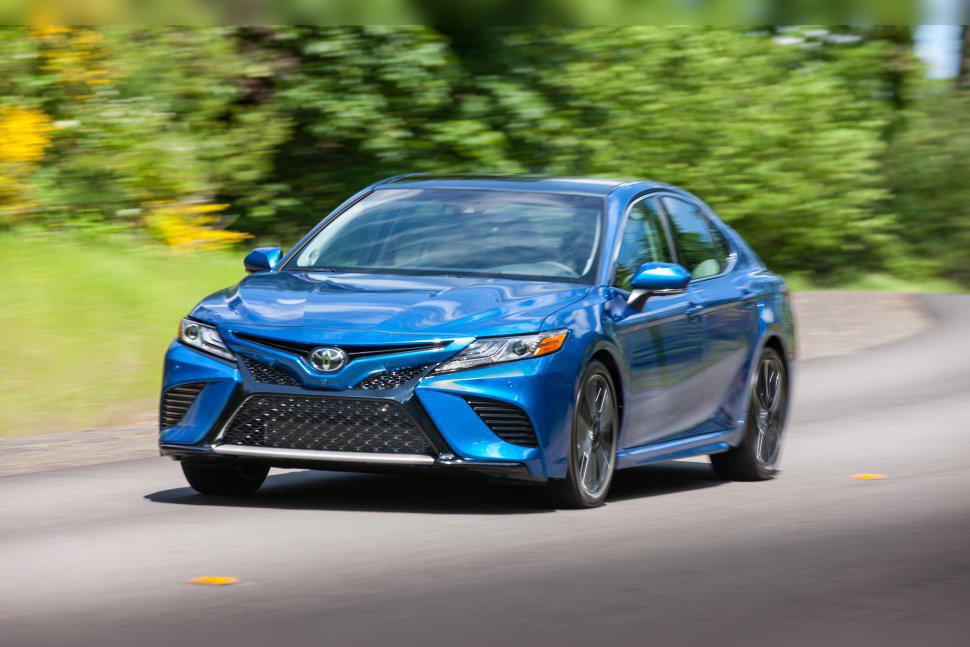
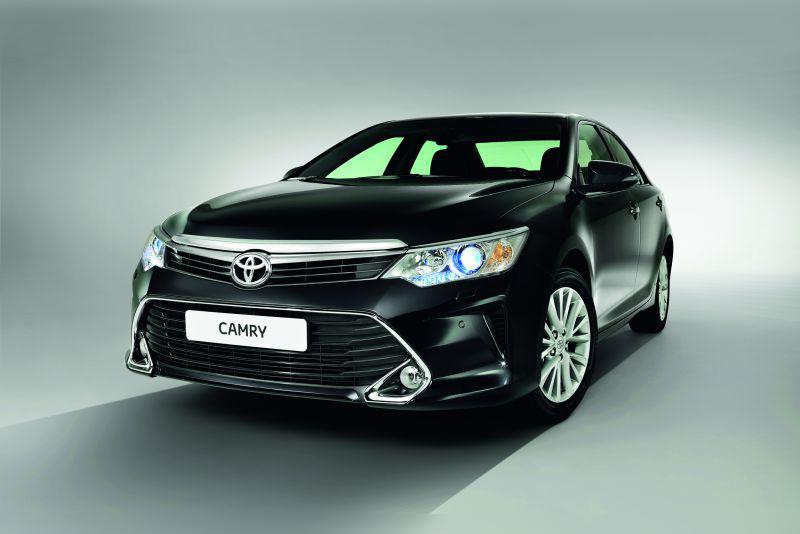
The 6AR-FSE engine is Toyota’s answer to the need for a modern naturally aspirated 2.0-liter petrol engine that must meet strict emission standards while retaining legendary Japanese reliability. Primarily installed in D and E segment sedans (Toyota Camry, Lexus ES), this engine is specific because it combines the old school (no turbo) with high technology (D-4S injection and VVT-iW system).
As someone who has spent years analyzing powertrains, I can tell you this is an engine of contrasts – technologically very advanced “under the hood”, yet in driving it delivers that classic, linear feel that is slowly disappearing. Is it too weak for the Camry’s body? Does it break down? You’ll find out below.
Key points in short (TL;DR)
- Reliability: Extremely high. This is one of the most reliable modern 2.0 petrol engines.
- Performance: The engine is “lazy” at low revs. It needs to be “wrung out” to pull the heavy body properly.
- Technology: Uses the D-4S system (combination of direct and port injection), which solves the problem of deposits on the valves.
- Maintenance: Chain-driven. No turbo, no dual-mass flywheel (with automatics), which makes running costs lower.
- Fuel consumption: In the city it can be high (heavy car), but on the open road it is surprisingly economical thanks to the Atkinson cycle.
- Recommendation: Ideal for drivers who value peace, quiet and longevity, and don’t race at traffic lights.
Contents
- Technical specifications
- Reliability and maintenance
- Specific parts (costs)
- Fuel consumption and performance
- Additional options and modifications
- Transmission and drivetrain
- Buying used and conclusion
Technical specifications
| Parameter | Value |
|---|---|
| Engine code | 6AR-FSE |
| Displacement | 1998 cc (2.0 L) |
| Power | 110 kW (150 hp) at 6500 rpm |
| Torque | 199 Nm at 4600 rpm |
| Injection type | D-4S (Direct + Port Injection) |
| Induction | Naturally aspirated |
| Engine block | Aluminum |
| Compression ratio | 12.7:1 |
Reliability and maintenance
When you open the hood of a Camry or Lexus with this engine, you’re looking at a machine designed to cover 300,000+ kilometers with minimal intervention. Still, regular maintenance is crucial.
Timing belt or chain?
The 6AR-FSE engine uses a timing chain. This is great news for owners because the chain on this engine is not prone to stretching like on some German competitors. There is no need to replace it preventively before audible symptoms appear (rattling), which in practice rarely happens before 200,000–250,000 km. The valvetrain uses VVT-iW on the intake side (which enables operation in the Atkinson cycle) and standard VVT-i on the exhaust side.
Most common failures
The list of failures is short, but here’s what to watch out for:
- Water pump: As with most Toyotas, the water pump is a “consumable item”. It can start leaking or become noisy around 100,000–150,000 km. The symptom is traces of pink residue (coolant) around the pump pulley.
- VVT-i controller: Sometimes you may hear a brief rattle on cold start. This is a sign that the variable valve timing actuator is losing oil pressure. Although often not fatal, it requires inspection.
- Ignition coils: They can fail at higher mileage, which manifests as rough running and the “Check Engine” light coming on.
Service intervals and oil
Minor service (oil and filter change) should be done every 10,000 to 12,000 km at most or once a year. Although manufacturers often state longer intervals, given the complex VVT system, clean oil is imperative.
Which oil and how much?
- Capacity: The engine takes approximately 4.2 to 4.4 liters of oil (with filter).
- Viscosity: Toyota strictly recommends 0W-20 for efficiency and proper operation of the hydraulic chain tensioners and VVT system, especially in colder climates. In warmer regions or for high-mileage engines, 5W-30 is an acceptable alternative.
Oil consumption
Unlike older generations (such as some ZZ engines), the 6AR-FSE does not suffer from chronic oil consumption due to poor piston rings. Consumption of up to 0.5 liters per 10,000 km is completely normal and acceptable. If it uses more than a liter between services, that points to a problem (leaks or stuck oil rings due to infrequent oil changes).
Specific parts (costs)
This is where the biggest advantage of this engine lies – the absence of expensive components that give diesel owners headaches.
Dual-mass flywheel and clutch
Since the Camry XV50/XV70 and Lexus ES are almost exclusively paired with a automatic transmission (torque converter), this engine DOES NOT have a dual-mass flywheel in the way diesels with manual gearboxes do. There is a flexplate connecting the engine and transmission, and it almost never fails. So the typical 500–800 EUR flywheel expense simply doesn’t exist here.
Injection system (injectors)
This engine uses the D-4S system. That means it has 8 injectors for 4 cylinders! Four are for direct injection (into the cylinder), and four for port injection (into the intake manifold).
Advantage: The port injectors wash the intake valves with fuel, so there is no problem with carbon buildup on the valves like on VW TSI/FSI engines.
Disadvantage: If a failure does occur (very rarely), the system is complex and the direct injectors are expensive. However, Toyota injectors (Denso) are extremely durable.
Turbocharger
The engine does not have a turbocharger. This means: no turbo rebuilds, no intercooler that can crack, no oil leaks on the turbo shaft. One big worry less.
EGR and DPF
Petrol engines do not have a DPF filter (newer ones may have a GPF, but these generations mostly don’t). They do have a catalytic converter and an EGR system. The EGR valve can get dirty from city driving, which leads to unstable idle. Cleaning is relatively cheap and simple. The catalytic converter is durable unless the engine burns oil or is run on poor-quality fuel.
Fuel consumption and performance
This is where drivers often have unrealistic expectations. You need to understand physics: 150 naturally aspirated horsepower in a car weighing 1.5–1.6 tons.
Is the engine “lazy”?
Honestly? Yes, it feels lazy compared to modern turbo engines. The 199 Nm of torque is available only at a high 4600 rpm. This means that for any serious acceleration or overtaking, the gearbox has to drop two gears and the engine has to rev above 4000 rpm. In the city the response is perfectly adequate, but on motorway inclines you can feel the lack of “breath”.
Real-world fuel consumption
- City driving: Expect between 10 and 12 l/100 km. In heavy stop-and-go traffic in winter, this can go up to 13 liters. The heavy body takes its toll.
- Open road (rural / secondary roads): This is where the engine shines. Thanks to the Atkinson cycle (similar to hybrids), consumption drops to 6.0–7.0 l/100 km.
- Motorway (130 km/h): Consumption is around 7.5–8.5 l/100 km. The gearbox (6-speed automatic) keeps the engine at about 2500–2700 rpm at 130 km/h, which ensures a quiet cabin.
Additional options and modifications
LPG conversion
Is it possible? Yes. Is it worth it? Probably not. Because of the D-4S system (direct injection), you cannot install a simple sequential LPG system for 400 EUR. You need a system designed for direct injection that either uses a “mix” (for example 20% petrol and 80% LPG to cool the petrol injectors) or liquid phase injection. Such systems are expensive (over 1000 EUR), and given the complexity of the electronics and potential issues, the conversion only pays off if you drive more than 30,000 km per year.
Remapping (Stage 1)
On naturally aspirated engines, remapping is a waste of money. The gain would be maybe 5 to 8 hp, which you won’t even feel in real driving. The factory map is already optimized for the best balance of consumption and longevity. Don’t touch the software.
Transmission and drivetrain
In the mentioned models (Lexus ES, Camry), this engine is found almost exclusively with a 6-speed automatic transmission (Aisin U761E).
Automatic transmission reliability
This is a classic hydraulic automatic (torque converter). It is extremely reliable and robust. It doesn’t have the sensitivity of DSG/DCT dual-clutch gearboxes. It shifts smoothly and comfortably, although it’s not sports-car quick.
Transmission maintenance
Although Toyota often says the oil is “fill for life”, any experienced mechanic will tell you that’s a myth.
Recommendation: Change the transmission fluid (ATF) and filter every 60,000 to 90,000 km. This is a relatively small cost that ensures the transmission will outlast the engine.
Manual gearbox?
In most European markets and the markets of the former USSR, the combination of the 2.0 6AR-FSE engine and a manual gearbox in these bodies is extremely rare. If you do happen to come across such a car, the clutch kit is standard and not expensive, but focus on the automatic – it suits these cars much better.
Buying used and conclusion
Before buying a used car with the 6AR-FSE engine, do the following:
- Cold start: Insist that the engine be completely cold. Listen to the chain in the first 3–5 seconds. Any metallic rattling is a red flag (VVT actuator or chain tensioner).
- Water pump: Use a flashlight to inspect the area around the auxiliary belt. Traces of pink fluid mean the pump is leaking.
- Idle: Once warm, the engine should run so smoothly that you barely feel any vibration in the steering wheel. Vibrations may indicate a dirty injection system or worn engine mounts.
Final verdict:
The 6AR-FSE engine is an excellent choice for a rational buyer. If you’re looking for a used sedan (Camry or Lexus ES) and are afraid of expensive diesel failures (injectors, flywheel, turbo, DPF), this is the right engine for you. It’s not fast, it uses a bit more fuel in the city, but it will serve you faithfully for hundreds of thousands of kilometers with regular oil changes. That’s the price of peace of mind.
Was this content useful to you?
Your opinion helps us to improve the quality of the content.