EA888 / CJXC Engine
- Engine
- 1984 cm3
- Aspiration
- Turbocharger, Intercooler
- Fuel
- Petrol (Gasoline)
- Fuel injection system
- Direct injection and Multi-port manifold injection
- Power
- 300 hp
- Torque
- 380 Nm
- Cylinders
- 4
- Valves
- 16, 4 per cylinder
- Cylinders position
- Inline
- Valvetrain
- DOHC
- Oil capacity
- 5.7 l
- Coolant
- 8 l
- Systems
- Start & Stop System
# Vehicles powered by this engine







2.0 TFSI/TSI (EA888 Gen 3 / CJXC) – Experiences, issues, fuel consumption and used-buying guide
Key points (TL;DR)
- Performance: One of the best 2.0-liter turbo engines in the world. Explosive power and huge tuning potential.
- Timing drive: Uses a chain. Much more reliable than the previous generation (Gen 2), but requires stretch checks at higher mileage.
- Cooling: The biggest weakness is the water pump and thermostat module, which is prone to leaking.
- Turbo: The IS38 turbocharger is powerful, but early units had issues with shaft failure.
- Gearbox: DSG is recommended. Manual gearboxes have a weak factory clutch that can slip even at stock power.
- Maintenance: Requires high-quality oil, regular spark plug changes and Haldex coupling service (4x4 drivetrain).
- Recommendation: Highly recommended for enthusiasts, provided you keep a budget aside for regular and preventive maintenance.
Contents
- Introduction and applications
- Technical specifications
- Reliability and maintenance
- Specific parts and costs
- Fuel consumption and performance
- Additional options and modifications
- Gearbox and drivetrain
- Buying used and conclusion
Introduction and applications
The engine with the code CJXC belongs to the third generation (Gen 3) of the famous VAG EA888 engine family. This is not the "regular" 2.0 TSI from a Passat; this is the pinnacle of engineering intended for the "R", "S" and "Cupra" models. With 300 horsepower, this unit set the benchmark in the hot hatch segment.
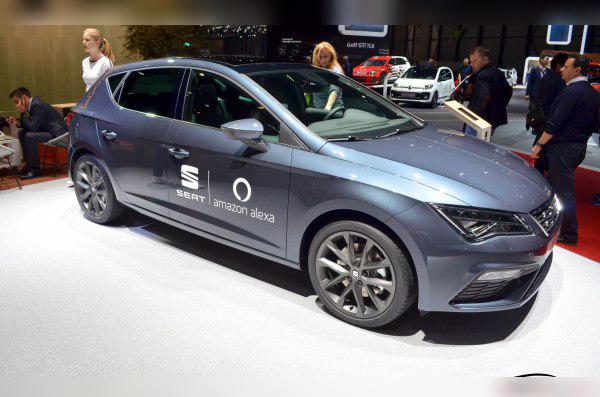
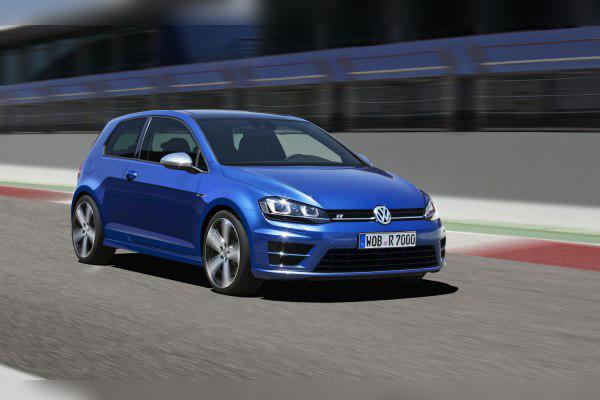
It is installed in the fastest models on the MQB platform: Audi S3 (8V), VW Golf 7 R and Seat Leon Cupra 300. Unlike lower-powered versions (such as the one in the Golf GTI), the CJXC comes with a reinforced block, a different cylinder head, larger valves, stronger connecting rods and pistons, as well as a significantly larger IS38 turbocharger. This is an engine that offers supercar performance from 10 years ago, wrapped in a practical body.
Technical specifications
| Parameter | Value |
|---|---|
| Engine displacement | 1984 cc (2.0 L) |
| Power | 221 kW (300 hp) at 5500-6200 rpm |
| Torque | 380 Nm at 1800-5500 rpm |
| Engine code | CJXC (EA888 Gen 3) |
| Injection type | Combined: Direct (FSI) + Port (MPI) |
| Forced induction | IHI IS38 turbocharger + intercooler |
| Camshaft drive | Chain |
Reliability and maintenance
Does this engine have a timing belt or a chain?
The engine uses a timing chain. Unlike the notorious second generation EA888 engines (where tensioners failed and destroyed engines), Gen 3 engines such as the CJXC have a revised and much more reliable chain and tensioner system. Still, the chain is not eternal. Over time it can stretch. It is recommended to check the timing angle (chain stretch) via diagnostics at every minor service once the car has passed 100,000 km.
What are the most common failures on this engine?
Although robust, the CJXC has a few characteristic weak points:
- Thermostat housing and water pump: This is issue number one. The housing is plastic and deforms over time due to heat, which leads to coolant leaks. Symptoms are a dropping coolant level in the expansion tank and the smell of coolant under the hood.
- PCV valve (oil separator): When the membrane tears, the engine may start consuming oil, run rough at idle, or you may hear a whistling sound. Sometimes it throws a "lean mixture" fault code.
- Camshaft adjuster solenoids: They can fail, which leads to timing errors.
- Oil leaks: Often occur at the timing cover or the oil pan (which is plastic on some models).
At what mileage is the major service due?
Since the engine has a chain, a classic "major service" (timing belt replacement) does not exist at a fixed interval. The chain is replaced as needed – most commonly when you hear rattling on cold start or when diagnostics show excessive timing angle deviation. In practice, this is usually between 150,000 and 200,000 km, although with regular oil changes it can last longer. The auxiliary (serpentine) belt and its tensioners should be replaced at around 100,000 - 120,000 km.
How many liters of oil does this engine take and which grade is recommended?
The sump holds approximately 5.7 liters of oil. The recommended grade is 5W-30 or 0W-30 with specification VW 504.00 / 507.00.
Tip: Due to high thermal loads and the turbocharger, do the oil service strictly every 8,000 to 10,000 km or once a year. Long-life intervals of 30,000 km are a long-term "death sentence" for this engine.
Does it consume oil between services?
Gen 3 engines solved the massive oil consumption issue that plagued Gen 2 (due to bad piston rings). Still, this is a performance engine. Consumption of 0.5 to 1 liter per 10,000 km is considered completely normal and acceptable, especially if driven aggressively. If it consumes more than that, first check the PCV valve and turbo before suspecting the rings.
At what mileage should the spark plugs be replaced?
On CJXC engines, the spark plugs are under heavy stress. The factory interval is 60,000 km, but that is too long. It is recommended to replace them every 30,000 to 40,000 km. If the engine is tuned (Stage 1 or higher), the interval drops to 15,000 - 20,000 km, with mandatory use of colder plugs (e.g. NGK Racing).
Specific parts (costs)
Does this engine have a dual-mass flywheel?
Yes, the engine uses a dual-mass flywheel (DMF), regardless of whether it is paired with a manual or DSG gearbox. With DSG it lasts longer because the computer smooths out shocks, whereas with a manual gearbox and aggressive driving it can fail earlier. Replacement is expensive (depends on the market, but expect a serious bill).
What kind of injection system does it have and are the injectors problematic?
This is one of the best features of this engine (for the European market). The CJXC uses combined injection: it has 4 injectors for direct injection (FSI) and 4 injectors for port injection into the intake manifold (MPI).
Advantage: The MPI injectors "wash" the intake valves with fuel at low loads, which means this engine does not suffer from carbon buildup on the valves, a major issue on most modern petrol engines. The injectors are generally very reliable.
Does this engine have a turbocharger and what is its lifespan?
The engine uses a single, large IHI IS38 turbocharger. This is the heart of this engine’s performance.
Issue: Early revisions of these turbos (produced 2013-2015) had a problem with shaft failure under high loads. Later revisions (part numbers ending with 722H, 722G, etc.) are much more reliable. With proper warm-up and cool-down (not shutting the engine off immediately after full throttle), the turbo can last over 150,000 km.
Does this model have a DPF filter or an EGR valve?
Being a petrol engine, it has no DPF. CJXC models produced up to 2018 generally do not have an OPF/GPF (gasoline particulate filter) either, which is great for exhaust sound and flow. Later versions (codes like DNUE) do have a GPF, which muffles the sound. EGR function is handled via variable valve timing, so there is no conventional EGR valve that can clog.
Fuel consumption and performance
What is the real-world fuel consumption in city driving?
Do not expect miracles. This is 300 hp and all-wheel drive (in most cases).
City driving: Realistically between 11 and 14 l/100 km. In heavy traffic and with a heavy right foot, it easily goes over 15 l/100 km.
Is this engine “lazy” for the weight of the car?
Absolutely not. With 380 Nm of torque available from just 1800 rpm, the engine pulls hard from low revs. A Golf 7 R or S3 with this engine accelerates from 0 to 100 km/h in under 5 seconds. The driving feel is impressive and the car feels lighter than it actually is.
What is it like on the motorway and at what rpm does it cruise at 130 km/h?
This engine was made for the Autobahn. At 130 km/h in the highest gear (6th or 7th on DSG), the engine spins at about 2,500 to 3,000 rpm (depending on the gearbox). The cabin is quiet, and there is always enough power for overtaking without the need to downshift. Highway fuel consumption is around 7.5 to 9 l/100 km.
Additional options and modifications
Is this engine suitable for LPG conversion?
Theoretically yes, but in practice it is not worthwhile and not recommended. Due to direct injection, an expensive system is required (liquid LPG or a system that also uses petrol to cool the injectors). Considering this is a performance car, LPG would interfere with the complex fuel mapping and increase the risk of failures. If you can afford an S3 or a Cupra, you should be able to afford the petrol as well.
How far can this engine be safely tuned (Stage 1)?
The CJXC is a tuning king.
Stage 1: With just a software remap, without any mechanical changes, this engine goes to 360 - 370 hp and 460+ Nm. That is a safe zone provided the engine is mechanically healthy.
Note: Tuning drastically shortens spark plug life, requires more frequent oil changes and puts more stress on the turbo and gearbox (especially the manual).
Gearbox
Which gearboxes are used and what issues do they have?
DSG (S-Tronic): The most common choice. Older models (up to 2017) use the DQ250 (6-speed, wet clutch), while newer (facelift) models use the DQ381 (7-speed, wet clutch). Both are extremely durable and quick. Failures are rare with regular maintenance, though mechatronics issues can sometimes occur.
Manual (6-speed): Installed in some versions of the Golf R and Leon Cupra. The gearbox itself is precise, but it has a major weakness – the clutch. The factory clutch is too weak for 300 hp and often starts slipping as early as 30,000-40,000 km, especially if the car is tuned.
Does this model have a dual-mass flywheel and how much does a clutch replacement cost?
As mentioned, it does have a dual-mass flywheel.
Cost: Very expensive. A clutch kit with flywheel for the manual gearbox costs from 600 to 1000+ EUR (depending on brand and market), plus labor. For DSG, flywheel replacement is also a costly job.
At what mileage does the gearbox need servicing?
DSG: Oil and filter should be changed every 60,000 km (DQ250) or 120,000 km (DQ381, although most specialists recommend 60k here as well). Do not skip this!
Haldex (4x4 system): Although not part of the gearbox, it is important to mention. Oil in the Haldex coupling should be changed every 40,000 - 60,000 km. Always insist that the pump be removed and the strainer (mesh filter) cleaned, because authorized dealers often skip this, which leads to pump failure and loss of 4x4 drive.
Buying used and conclusion
Before buying a used car with the CJXC engine, make sure to check:
- Cold start: Listen whether the chain rattles for more than 2-3 seconds.
- Water pump: Look for white traces of dried coolant under the intake manifold.
- Turbo: Do you hear a "siren" sound (like an ambulance) when you press the throttle? That is a sign of a failing turbo.
- Launch control: Use diagnostics to check how many times launch control has been used. If the number is high (e.g. over 200 times), be aware the car has been driven hard.
- Haldex: Try hard acceleration from a standstill. If the front wheels spin, the rear drive is not working (usually the pump).
Conclusion: The EA888 Gen 3 (CJXC) is a fantastic engine. It offers an incredible balance between everyday usability and track-level performance. Although maintenance is not cheap (expensive parts, higher fuel consumption), reliability is high for this power class. If you are looking for driving excitement, this is the engine to buy – but only after a thorough check of its service history.
Was this content useful to you?
Your opinion helps us to improve the quality of the content.