EA888 / CYFB Engine
- Engine
- 1984 cm3
- Aspiration
- Turbocharger, Intercooler
- Fuel
- Petrol (Gasoline)
- Fuel injection system
- Direct injection
- Power
- 292 hp @ 5400 rpm
- Torque
- 380 Nm @ 1800 rpm
- Cylinders
- 4
- Valves
- 16, 4 per cylinder
- Cylinders position
- Inline
- Valvetrain
- DOHC
- Oil capacity
- 5.7 l
- Coolant
- 10 l
- Systems
- Start & Stop System
# Vehicles powered by this engine
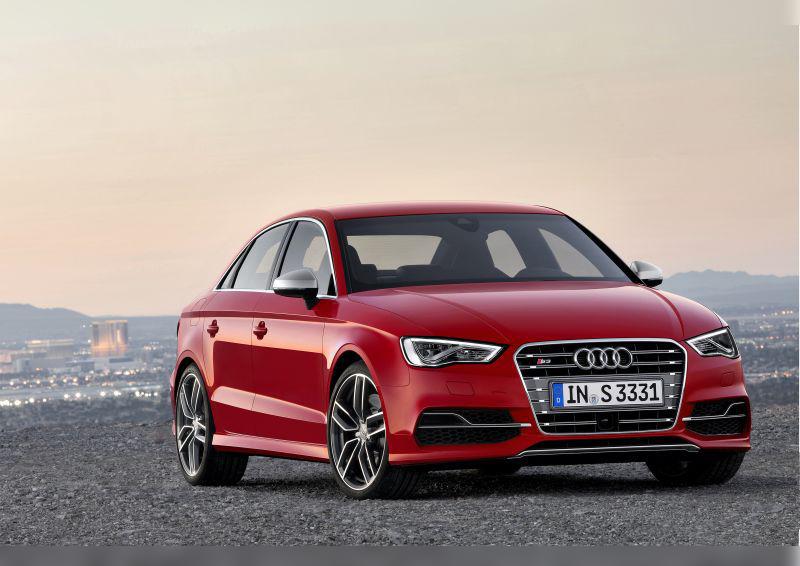
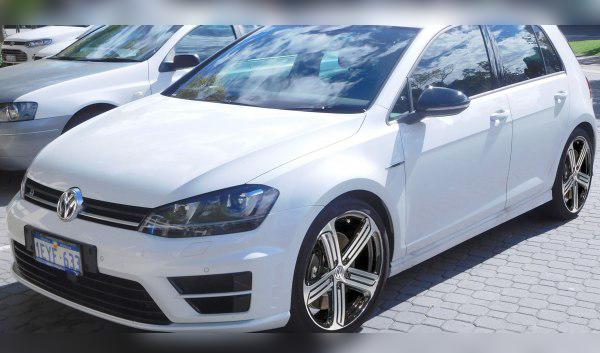
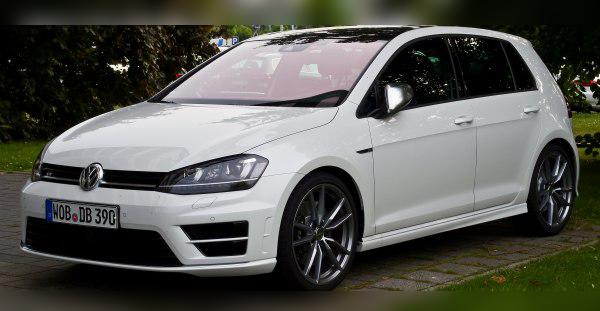
2.0 TFSI / TSI (EA888 Gen 3 / CYFB) – Experiences, problems, fuel consumption and used car buying guide
Key points (TL;DR)
- Performance: This is a “serious” engine. 292 hp in a Golf R or S3 delivers supercar performance from 15 years ago. Not a naive piece of machinery at all.
- Drivetrain: Always comes with all-wheel drive (Quattro / 4Motion), which means you must maintain the Haldex clutch as well, not just the engine.
- Main weakness: Thermostat housing and water pump. They’re made of plastic that deforms and leaks. Failure is almost guaranteed.
- Turbocharger: The IHI IS38 turbo is powerful, but early units had issues with shaft failure. Check the turbo revision.
- Tuning potential: Huge. With software only (Stage 1) it goes to over 350 hp without mechanical changes.
- Recommendation: Buy only cars with a fully documented service history, especially for the gearbox and Haldex.
Contents
Introduction: The heart of the hot hatch kings
The CYFB engine belongs to the third generation (Gen 3) of the famous VAG EA888 engine family. Specifically, this is the 292 hp variant most commonly found on the North American market, but also on certain global markets as an alternative to the European 300 hp version (due to climate conditions or fuel quality). It is installed in top performance versions of compact cars such as the Audi S3 (8V) and VW Golf 7 R.
This engine is important because it represents the peak of four‑cylinder technology before the full transition to hybridization. It offers a fantastic power-to-weight ratio and, thanks to its cast-iron engine block, it is extremely tolerant of modifications.
Technical specifications
| Specification | Value |
|---|---|
| Engine displacement | 1984 cc (2.0 L) |
| Power | 215 kW (292 hp) at 5400 rpm |
| Torque | 380 Nm at 1800–5500 rpm |
| Engine code | CYFB (EA888 Gen 3) |
| Injection type | Direct (FSI/TSI) + Port (MPI) *Depends on market |
| Induction | Turbocharger (IHI IS38) + intercooler |
| Cylinder layout | Inline 4 (R4) |
Reliability and maintenance
Timing chain or belt?
The EA888 Gen 3 engine, including the CYFB, uses a timing chain. Unlike the notorious second generation of these engines where the chain was basically a “consumable”, here the system is significantly improved. The chain is robust and designed to last the entire life of the vehicle, but in practice it is recommended to check chain stretch via diagnostics or visually (through the inspection opening) after around 150,000 km. If you hear rattling on cold start for longer than 2–3 seconds, that’s a sign it needs urgent replacement.
Most common failures
Although this is one of the best 2.0 turbo engines, it’s not without flaws:
- Thermostat and water pump: This is the “Achilles’ heel” of this engine. The thermostat housing is plastic and eventually cracks due to heat cycles. Symptoms are loss of coolant (antifreeze) and a sweet smell of vapor under the hood. Replacement is unavoidable sooner or later.
- PCV valve (oil separator): When the membrane in this valve tears, the engine starts consuming oil, idles roughly, or you can hear a whistling sound. It’s not an expensive repair, but it should be done immediately because excessive pressure can blow the crankshaft seals.
- Oil leaks: Often occur at the plastic oil pan (if the model has one) or at the timing cover.
Service intervals and spark plugs
Minor service (oil and filter change) should be done at a maximum of 10,000 km or one year. Factory intervals of 30,000 km are disastrous for this engine, especially considering it’s usually driven more aggressively. The major service (auxiliary/serpentine belt, tensioner, water pump) is done preventively at around 100,000–120,000 km, even though you don’t touch the chain if it’s in good condition.
Spark plugs: Given the high specific output, spark plugs are replaced more often than on regular cars. The recommendation is every 40,000 to 60,000 km. If the engine is “chipped”, this interval is halved (20–30k km).
Oil: capacity and consumption
The engine holds approximately 5.7 liters of engine oil. The recommended grade is 5W-30 or 0W-40 with VW 504.00 or 502.00 specification. For warmer climates and more aggressive driving, 5W-40 is a better choice.
Oil consumption: The third generation of EA888 engines solved the oil-burning problem that ruined the reputation of its predecessors. Still, it is normal for the engine to consume between 0.5 and 1 liter of oil per 10,000 km if driven hard. Anything above that requires checking the PCV valve or turbo condition.
Specific components and costs
Dual-mass flywheel
Yes, it has one. Whether you drive the manual or DSG (S tronic) version, the engine is paired with a dual-mass flywheel (DMF). Its role is to reduce vibrations. On DSG gearboxes the flywheel usually lasts longer, but when you start hearing a “clattering” noise at idle that disappears when you rev the engine, start saving money. It’s an expensive part (depends on market, but think “very expensive”).
Turbocharger and lifespan
The engine uses a single but large IHI IS38 turbocharger. It is the key to those 292 hp. Its lifespan is generally good and follows the life of the engine with regular oil changes. However, early units (2013–2015) had an issue with turbine shaft failure, which could destroy the entire engine. Newer revisions (codes 722H, 722T etc.) have solved this problem.
Injection system
The system is very advanced. Depending on the market for which the CYFB was built, it may have dual injection: direct (into the cylinder) and port (into the intake manifold). This is great because the port injectors “wash” the intake valves and prevent carbon buildup, which is a common issue with direct-injection petrol engines. If your model has only direct injection (often for the US market), walnut-shell blasting of the intake valves will be needed at around 80,000–100,000 km.
DPF, EGR and AdBlue
Since this is a petrol engine:
- No DPF filter (but newer EU models have a GPF – gasoline particulate filter, although the CYFB is mostly from before that era).
- No traditional EGR valve that clogs like on diesels (it uses variable valve timing for internal exhaust gas recirculation).
- No AdBlue fluid.
Fuel consumption and performance
Real-world fuel consumption
Don’t trust the factory figures. This is a performance engine.
- City driving: Expect between 11 and 14 l/100 km. In heavy traffic and with a “heavy right foot”, this easily goes to 16 l.
- Highway / open road: With moderate driving, consumption can drop to 7.5–9 l/100 km.
- Combined: A realistic average for most owners is around 10.5–11 l/100 km.
Is the engine “lazy”?
Absolutely not. With 380 Nm available from just 1800 rpm, this engine pulls instantly. Combined with all-wheel drive (which prevents wheelspin), standing starts are brutal (under 5 seconds to 100 km/h). There is no sense of body weight; with this engine the Golf R or S3 behave like “rockets”.
Highway driving
The engine is extremely relaxed on the highway. At 130 km/h in top gear (6th or 7th), it spins at around 2,600–2,800 rpm. This allows quiet cruising with plenty of power in reserve for overtaking without needing to downshift.
Additional options and modifications
LPG conversion
Is it possible? Yes. Is it recommended? Not really. Due to direct injection, you need an expensive system (liquid-phase system or a system that uses both petrol and LPG at the same time to cool the petrol injectors). Installation cost is high (depends on market, but over 1000 EUR), and given the complexity of the engine and the car’s purpose, the risk of combustion and performance issues is not worth the savings. This is a car for enjoyment, not for economy.
Chiptuning (Stage 1)
This is the favorite discipline of EA888 owners. The engine is factory “detuned”. A safe Stage 1 remap raises power from 292 hp to 350–370 hp and torque to over 450 Nm, without any mechanical changes! The engine handles this very well, provided that service intervals are shortened.
Gearbox: manual vs DSG
With this engine you get two options:
- 6-speed manual gearbox: Offers more driving pleasure for purists, but has one major flaw – the stock clutch is weak. Even at stock power, if you often do hard launches, the clutch will start slipping quickly. If you plan on “chipping” the engine, upgrading the clutch with a reinforced kit (sintered or similar) is mandatory (and expensive).
- DSG (S tronic) automatic gearbox: Depending on model year, this is the DQ250 (6-speed) or the newer DQ381 (7-speed). These gearboxes are excellent, shift lightning-fast and handle torque better than the manual clutch.
Gearbox maintenance and failures
- DSG service: Oil and filter in the DSG gearbox MUST be changed every 60,000 km. If this is skipped, the mechatronics unit (the gearbox brain) fails, and that repair costs thousands of euros.
- Haldex clutch (4x4 system): This is not part of the gearbox, but it’s crucial. Oil in the Haldex system should be changed every 40,000–50,000 km. Make sure the mechanic also cleans the pump strainer, because it clogs up and the AWD stops working (the car becomes front-wheel drive only without triggering a warning light).
Conclusion and what to check before buying
The EA888 Gen 3 (CYFB) is a fantastic engine that offers sports-car performance in a practical package. Its weaknesses are well known and solvable.
Used car buying tips:
- Cold start: Listen to the engine when it’s completely cold. There should be no chain rattle or uneven running.
- Coolant smell: After a drive, open the hood. If you notice a sweet smell, the water pump/thermostat is leaking.
- Launch control: If you’re buying a DSG, diagnostics can show how many times “Launch Control” has been used. If the number is high (e.g. hundreds of times), be cautious about the condition of the drivetrain.
- Exhaust smoke: Bluish smoke under hard acceleration or engine braking points to a worn turbo or valve stem seals.
Verdict: If you can afford the fuel and proper maintenance (including regular gearbox and Haldex services), this is one of the best engines in its class. Ideal for enthusiasts who want speed but also everyday usability.
Was this content useful to you?
Your opinion helps us to improve the quality of the content.