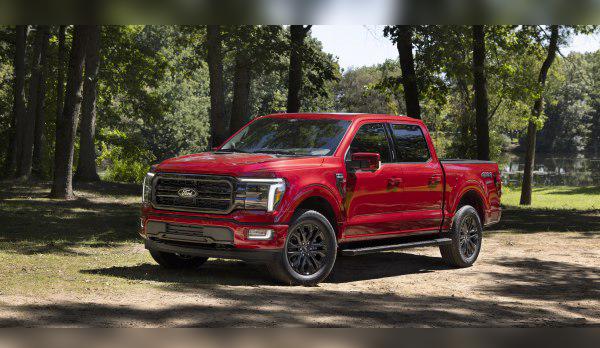
Ford 5.0 V8 Coyote (400 hp) – Experiences, issues, fuel consumption and used-buying tips
Key points (TL;DR)
- Naturally aspirated V8 gem: No fragile turbochargers, delivers linear power and a perfect sound.
- Timing system: Uses a reliable chain, but you should listen carefully at cold start because of the VCT cam phasers.
- Fuel consumption: High. In city driving it easily exceeds 16 l/100 km, while on the highway it is more moderate.
- Injection system: Smart PFDI system (direct and port injection) prevents carbon buildup on the valves.
- Transmission: Paired exclusively with a 10-speed automatic that requires regular fluid changes and sometimes software updates due to jerky shifts.
- LPG conversion: Possible, but very expensive (Depends on the market) due to the dual injection system.
Contents
- Introduction: An icon in modern form
- Technical specifications
- Reliability and maintenance
- Specific parts and costs
- Fuel consumption and performance
- Additional options and modifications
- Transmission and drivetrain
- Buying used and conclusion
Introduction: An icon in modern form
When we talk about true “workhorses” and pickup trucks like the Ford F-150 series, few engines command as much respect as the 5.0 V8 Coyote. In its latest, fourth generation (installed in the facelifted F-150 XIV from 2023), this engine produces 400 hp and 556 Nm of torque. This is not an old-school, lazy American V8 – the Coyote is a high-revving unit, equipped with advanced injection systems and cylinder deactivation technology. It matters because it is one of the last reliable naturally aspirated V8 engines in a segment that is increasingly turning to turbo V6 and hybrid powertrains. It is intended for those who tow heavy loads, cover hundreds of thousands of kilometers and want the simplicity of V8 architecture.
Technical specifications
| Parameter | Specification |
|---|---|
| Engine displacement | 5038 cc |
| Power | 294 kW (400 hp) |
| Torque | 556 Nm |
| Engine code | Coyote Gen 4 (5.0L Ti-VCT V8) |
| Injection type | PFDI (Port Fuel and Direct Injection) |
| Aspiration | Naturally aspirated |
Reliability and maintenance
Timing belt or chain?
This engine uses a timing chain to drive the camshafts. It is a robust system that rarely fails, but it is not completely free of teething issues.
Most common issues
The biggest problem with Coyote engines across generations, including the newer ones, are the VCT (Variable Cam Timing) cam phasers on the camshafts. The symptom is a clearly audible rattling or “clattering” at cold start or at low revs when the engine is warm. If ignored, it can lead to damage to the timing system. There are also occasional leaks from the water pump after around 150,000 km, which the driver may notice by a drop in coolant level and a sweet smell under the hood.
Major and minor service, oil and spark plugs
A classic “major service” with belt replacement does not exist here. The timing chain is inspected and, if necessary, replaced (together with guides, tensioners and VCT modules) somewhere around 200,000 to 250,000 km.
As for oil, the sump holds an impressive 7.3 to 7.8 liters (depending on the exact sump variant), and the manufacturer strictly recommends fully synthetic 5W-30. The Coyote is known for liking to consume oil, especially until the compression rings bed in during the first 10–20 thousand kilometers, but also later under heavy loads (towing a trailer). Consumption of 0.5 to 1 liter per 5,000 km is considered normal, so regularly checking the dipstick is mandatory!
Since this is a gasoline engine, spark plugs are replaced every 90,000 to 100,000 km. Access is relatively easy, but since there are eight of them, expect slightly higher cost.
Specific parts and costs
Injection system
The Coyote Gen 4 uses a brilliant PFDI (Port Fuel and Direct Injection) system. This means the engine has two injectors per cylinder – one for direct injection into the combustion chamber and one for port injection into the intake manifold. Why is this great? Because the fuel from the intake manifold washes the intake valves and prevents carbon buildup, which is a common issue on almost all modern engines with direct injection only. The injectors are very durable and rarely cause problems.
Turbo, DPF and flywheel
A major advantage of this engine is what it doesn’t have. It doesn’t have a turbocharger (or two, unlike the EcoBoost V6 models), which drastically reduces the potential for expensive failures. As a gasoline engine, it doesn’t have an AdBlue system or a DPF filter.
However, models imported into Europe or adapted to stricter standards may have a GPF (Gasoline Particulate Filter) and an EGR valve. On gasoline engines, the EGR valve clogs far less often than on diesels, while the GPF may require regeneration on open roads. Since the 5.0 V8 is offered exclusively with an automatic transmission, there is no dual-mass flywheel (it uses a hydraulic torque converter).
Fuel consumption and performance
City driving and “laziness”
Let’s be honest: the heavy F-150 body (often over 2.3 tons) and a naturally aspirated V8 cannot be economical. Real-world city consumption ranges from 16 to 20 liters per 100 km. Fortunately, the engine has a cylinder deactivation system that shuts the valves on four cylinders while cruising to save fuel.
Is it lazy? Absolutely not. With 556 Nm and 400 hp, this truck pulls extremely hard. Unlike a diesel, the Coyote loves high revs – it delivers peak power only above 4,500 rpm, where you feel a real shove in the back accompanied by a phenomenal exhaust note.
Highway
This engine truly shines on the highway. Thanks to the 10-speed transmission, at 130 km/h it cruises at a very relaxed 1,800 to 2,000 rpm. In these conditions, and without heavy load, fuel consumption drops to a more tolerable 11 to 13 l/100 km.
Additional options and modifications
LPG conversion
Because of the high fuel consumption, many consider LPG. Is it possible? Yes. Is it easy and cheap? No. Due to the PFDI dual injection system, a highly sophisticated, dedicated LPG system is required, capable of controlling 16 injectors simultaneously, or a liquid LPG injection system. The conversion is possible, but it is a project that is very expensive (Depends on the market), and pays off only for those who cover huge mileages.
Remap (Stage 1)
Since this is a naturally aspirated engine, a classic software “Stage 1” brings negligible gains – at most 15 to 25 hp. This type of tuning is usually done to change throttle response and optimize transmission behavior, not for raw power. If owners want a drastic power increase, the Coyote is globally known as one of the best bases for installing a mechanical supercharger (e.g. Whipple or Roush), where power easily jumps to over 700 hp on stock internal engine components.
Transmission and drivetrain
In the 2023 F-150, the 5.0 V8 Coyote comes paired exclusively with Ford’s 10R80 10-speed automatic transmission. A manual gearbox is not available.
Automatic transmission issues and maintenance
This transmission was developed in cooperation with General Motors. Although it is extremely capable for towing, it is known for being occasionally “indecisive”. The most common problems are not mechanical, but rather harsh and jerky shifts (especially from 1st to 3rd gear, or when downshifting). In 90% of cases this is resolved by a software update (reprogramming the TCM module) at an authorized service center.
For the transmission to last hundreds of thousands of kilometers under load, transmission service (fluid and filter change) is critical and should be done every 60,000 to 80,000 km. The cost of this service ranges from not expensive to expensive (Depends on the market) compared to European premium automatics. As mentioned, the transmission uses a torque converter, so there is no clutch replacement.
Buying used and conclusion
What to check before buying?
When looking at a used F-150 with this engine, focus on the following:
- Cold start: The engine must be completely cold before you start it. Listen carefully for the first 3–4 seconds. If you hear metallic scraping or “clattering” from the front of the engine, those are the VCT phasers and chain tensioners. The repair is very expensive (Depends on the market).
- Blue smoke from the exhaust: Have someone drive behind you while you accelerate hard, or rev the engine while stationary. Blue smoke can indicate a problem with the PCV valve (cheap) or valve stem seals and piston rings (very expensive).
- Transmission test: During the test drive, pay attention to how the transmission shifts from 3rd to 4th or 5th gear under light throttle. Strong jolts indicate neglected fluid or an issue with the valve body (mechatronics).
- Service history: Diagnostics are a must, as well as checking whether the oil has been changed regularly. This engine does not tolerate dirty oil.
Who is this engine for?
The Ford 5.0 V8 Coyote is for drivers who want classic power, durability without complicated turbochargers, and the recognizable burbling V8 sound. It is an ideal solution for tough conditions, frequent trailer towing and off-road adventures (especially in Tremor and 4x4 versions). It is not intended for those who count every drop of fuel and drive exclusively in city traffic. If you provide it with regular high-quality oil changes and timely transmission servicing, this engine will serve you faithfully for years.