L5P Duramax 6.6 V8 (470 hp): Real‑world experience, issues, fuel consumption and used‑truck buying guide
Key points (TL;DR)
- Relentless power: With 1,322 Nm of torque, this is a real locomotive that will pull anything you hook up to it.
- No timing belt: The engine uses an extremely robust gear-driven timing system, which eliminates the usual “big service” timing belt worries.
- Emissions are the main enemy: The DPF, EGR and AdBlue (DEF) systems are the main source of headaches and expensive repairs, especially if the truck is used only for short trips.
- Robust Allison transmission: It comes exclusively with an almost indestructible Allison 10‑speed automatic. No dual‑mass flywheel.
- High ownership costs: Maintenance, the amount of oil (almost 10 liters) and fuel consumption are huge. This is not a vehicle for a tight budget.
- Purchase recommendation: Buy it only if you really need a workhorse for heavy loads or a large trailer. For casual city cruising, it’s the wrong choice.
Contents
- Introduction: An American workhorse in a modern suit
- Technical specifications
- Reliability and maintenance
- Specific components and costs
- Fuel consumption and performance
- Options and modifications
- Transmission and drivetrain
- Buying used and conclusion
Introduction: An American workhorse in a modern suit
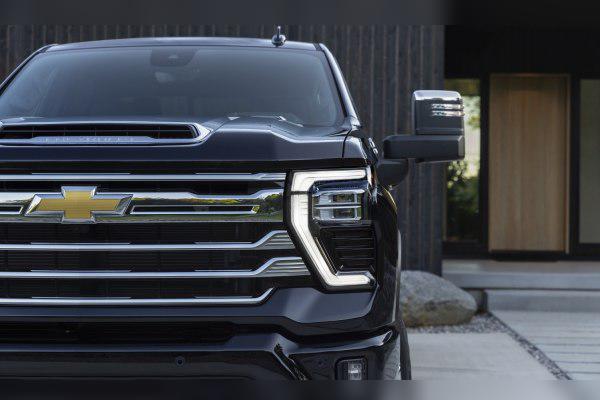
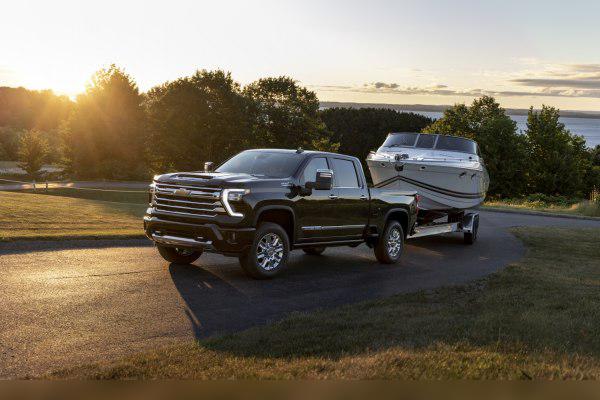
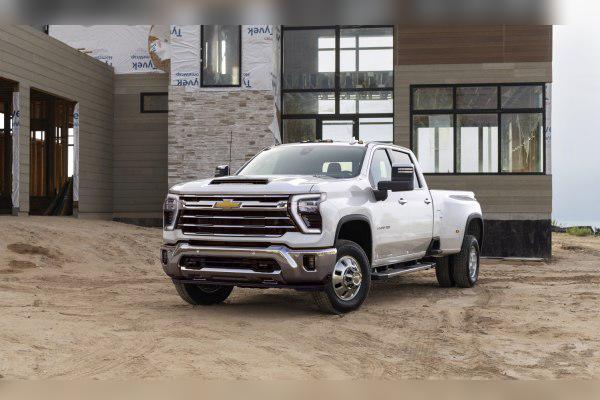
When we talk about heavy‑duty vehicles and massive trucks designed to tow real yachts, large horse trailers or heavy machinery, GM’s L5P Duramax 6.6L V8 Turbo Diesel in its latest iteration (2024 facelift) represents the pinnacle of engineering. This giant, delivering a monstrous 350 kW (470 hp) and an astonishing 1,322 Nm of torque, is installed in the heavy‑duty Chevrolet Silverado 2500 HD and 3500 HD series in numerous configurations (Crew Cab, Double Cab, long or standard bed, as well as dual rear wheel – DRW – variants).
Although in Europe we see these vehicles far less often than on the North American continent, their import and use attract a specific group of buyers who want absolute brutality and payload capacity. This article is written to demystify this engine for you: what is happening under that massive hood and why it’s important to understand its quirks before you sign a purchase contract.
Technical specifications
| Parameter | Specification |
|---|---|
| Displacement | 6604 cc (6.6L) |
| Power | 350 kW (470 hp) at 2,800 rpm |
| Torque | 1,322 Nm at 1,600 rpm |
| Engine code | L5P |
| Injection type | Denso common‑rail (direct injection) |
| Turbo/Naturally aspirated | BorgWarner VGT turbocharger with variable geometry, intercooler |
Reliability and maintenance
When you open the hood of the L5P, you’re greeted by a pile of electronics and emissions plumbing. But at its core, this V8 diesel is built like a tank.
Does this engine have a timing belt or chain?
It has neither in the classic sense you need to worry about. The Duramax L5P is an OHV engine (cam in block with pushrods and valves in the head). The camshaft is driven by massive gears directly off the crankshaft. There is a short chain, but it only drives the oil pump. Thanks to the gear drive, the timing system is practically bulletproof and does not require replacement within the engine’s intended service life.
Most common issues and “major service”
On this engine, there is no classic timing‑belt major service (like replacing a timing belt kit every 100,000 km on smaller diesels). Maintenance comes down to inspecting the accessory drive belts (alternator, water pump, power steering) every 150,000 km. What most often causes headaches is the MAP sensor (manifold absolute pressure sensor), which quickly gets clogged with soot from the EGR system, triggering the “Check Engine” light and a loss of power. The driver will notice the engine “running out of breath” under acceleration. Also, the glow plugs can fail, and the glow plug control module sometimes burns out.
Oil and injectors
The oil pan on this monster is huge. The L5P takes about 9.5 liters of engine oil (10 quarts). A heavy‑duty diesel grade 15W‑40 (CJ‑4 or CK‑4 spec) is recommended, while in colder climates with harsh winters you should use fully synthetic 5W‑40. For peace of mind, oil changes are recommended every 10,000 to 15,000 km.
Does it burn oil? Under maximum load (when towing), it is perfectly normal for the engine to consume around 0.5 liters of oil between services, and that is no cause for concern. Anything over 1.5 liters points to an issue with piston rings or a leak at the turbo.
The injectors (Denso common‑rail system) operate at extremely high pressure, but in practice they have proven to be excellent. If you use clean fuel and regularly replace the fuel filter, they will easily last 250,000 to 300,000 km. When they start to fail, symptoms include rough idle, rising oil level (due to diesel leaking into the crankcase) and increased black smoke in those rare moments when the DPF can’t catch everything.
Specific components (costs)
Dual‑mass flywheel and fuel system
Since this engine is supplied exclusively with an automatic transmission, the L5P does not have a dual‑mass flywheel. It relies on a heavy torque converter and a strong flexplate, so that notorious fear of dual‑mass flywheel repair simply doesn’t apply here. The high‑precision fuel system is indeed expensive if it fails, but as mentioned, it is very robust. The high‑pressure pump (HP4) does not suffer from internal metal shavings like some older designs from other manufacturers. Replacing the entire fuel system is generally very expensive (depends on market).
Turbo and emissions systems (DPF, EGR, AdBlue)
The engine is equipped with a single but huge BorgWarner VGT (variable‑geometry) turbocharger, backed up by a massive intercooler. The turbo itself is very durable, but the geometry actuator can seize if the vehicle is used constantly in city driving where exhaust temperatures never get high. Replacing the complete turbocharger is expensive (depends on market).
The real Achilles’ heel of modern V8 diesels is emissions equipment. The L5P has a huge DPF filter and a complex EGR valve. Given the large displacement, it generates a lot of soot while cold. If you drive only in the city from light to light, the DPF and EGR will clog up catastrophically fast.
On top of that, the vehicle uses an AdBlue system (known globally as DEF – Diesel Exhaust Fluid) for the SCR catalyst to reduce NOx emissions. The DEF system is prone to failures. The most common issues are the heater inside the AdBlue tank and the NOx sensors in the exhaust. When the sensors fail, the instrument cluster displays a countdown with a message that vehicle speed will be limited to a few dozen km/h, which can be dangerous and very annoying on long trips. Maintaining these systems out of warranty is very expensive (depends on market).
Fuel consumption and performance
Is it sluggish and how much fuel does it use?
With a vehicle weight often exceeding 3.5 tons (and more for DRW models), you might think it’s sluggish. That is absolutely wrong. With 1,322 Nm of torque available from just 1,600 rpm, the L5P pins you to the seat every time you touch the throttle. Overtaking with this truck, even with a loaded trailer on an uphill grade, is child’s play.
However, the laws of physics can’t be cheated, and the aerodynamics of a refrigerator take their toll. Real‑world consumption in city driving is between 16 and 22 l/100 km. If you try to weave through congested streets, not only will you be exhausted by the size of the vehicle, but the fuel tank will also empty very quickly.
On the open highway, the L5P truly shines. At 130 km/h, thanks to the 10‑speed transmission, the engine cruises at unrealistically low revs (below 1,700 rpm in tenth gear). In that scenario, fuel consumption stabilizes at around 11 to 14 l/100 km, depending on tire profile, aerodynamic drag and the load you’re carrying or towing.
Options and modifications
This engine is not intended for LPG conversion, as it is a heavy‑duty diesel. As for electronic power upgrades, GM has made ECU tuning (Stage 1) significantly more difficult by introducing an encrypted ECM for the 2024 model year. Still, serious tuning shops around the world are gradually cracking it and can safely add about 50 to 80 hp and up to an additional 200 Nm without smoke shows. It must be clearly stressed, however, that overly aggressive remaps put extreme stress on the torque converter if you frequently launch hard and hit maximum boost from a standstill.
Transmission
In 2024 facelift Silverado 2500/3500 HD models, the L5P comes only with the fantastic Allison 10L1000 10‑speed automatic transmission. A manual gearbox is not an option, and with this kind of torque you really wouldn’t want one.
Transmission issues: The Allison automatic is synonymous with workhorse reliability and is overbuilt. It doesn’t suffer from the mechanical failures that plagued older 6‑speed units under heavy load. What drivers sometimes complain about are harsher shifts (“jerks”) from 1st to 2nd or 2nd to 3rd gear until the transmission fluid warms up, which is usually solvable with a software update to the transmission control module.
There is no clutch replacement cost because there is no clutch, but you must factor in regular transmission service. Replacing the large quantity of special ATF and the two filters in the Allison transmission is recommended every 70,000 to 90,000 km to keep it in factory condition, and this is an item that is expensive (depends on market), but must not be ignored.
Buying used and conclusion
When buying a used Silverado with this engine, don’t let the rugged looks fool you. Here is what you should check in detail:
- Cold start: It should fire up instantly without even the slightest puff of white smoke from the exhaust (possible glow plug damage or injector issues).
- Condition of oil and fluids: Check for dirty deposits (“mayonnaise”) around the oil filler neck, although this is not common on this engine. Pull the dipstick – a strong diesel smell in the oil is a red flag.
- DPF regeneration history: A proper diagnostic scan is mandatory before handing over any money. Have a technician read the remaining DPF life and the saturation status of the AdBlue injector/system.
- Condition of the undercarriage (suspension and driveline): These multi‑ton beasts are used for towing, so the suspension must be perfect. Ball joints, control arms and driveshaft supports take a serious beating under such brutal weight.
Who is the L5P engine for?
This is not a pickup you take to the mall on Sunday or leave parked in a cramped city center. The L5P in a 2500/3500 HD body is a ruthless worker. Its natural habitat is the highway or open country roads where it can tow a boat, excavator or race car on a trailer for hours on end. If you genuinely need monstrous torque, and you perform a thorough diagnostic check before purchase plus regular oil and fuel‑filter changes, it will be a very loyal and reliable partner. Otherwise, repairs to the emissions systems and the enormous fuel consumption in city driving will eat up all your money.