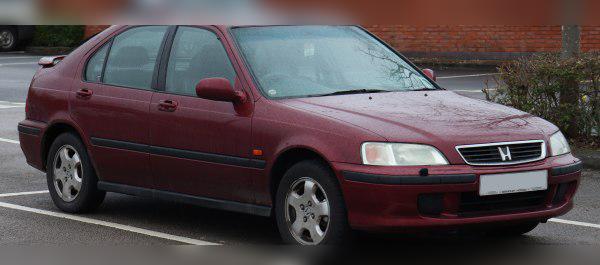
Honda D16B2 (1.6 16V) – Experiences, issues, fuel consumption and used-buying tips
Key points in short (TL;DR)
- Reliability: Extremely durable “old-school” engine, mechanically almost indestructible with regular maintenance.
- Main weakness: Ignition distributor and oil leaks on gaskets as the engine ages.
- Maintenance: Cheap and simple. No expensive modern components (no dual-mass flywheel, turbo, DPF).
- Performance: Loves high revs. Below 3,000 rpm it can feel sleepy, but above that it “comes alive”.
- LPG (Autogas): Handles LPG very well, but requires regular mechanical valve clearance adjustment.
- Recommendation: Ideal for drivers who want a simple, cheap car to maintain and are ready to tolerate a bit of noise and a spartan character.
Contents
- Introduction: About the D16B2 engine
- Technical specifications
- Reliability and maintenance
- Specific parts and fuel injection system
- Fuel consumption and performance
- LPG and tuning
- Gearbox and drivetrain
- Buying used and conclusion
Introduction: About the D16B2 engine
The Honda D16B2 is an inline four-cylinder naturally aspirated petrol engine from Honda’s famous D-series. This particular model is most commonly found in the sixth-generation Honda Civic, specifically in the “Fastback” (MA/MB) variant that was produced in the United Kingdom (a project developed in cooperation with Rover). With its 116 horsepower, this engine represents the “golden middle” of the range of that era – it is more powerful than the basic 1.4 models, and more economical and simpler than the VTi variants.
It is important to note that this is a SOHC engine (single overhead camshaft), which contributes to its simplicity and compactness. Although it does not carry the famous VTEC badge in this specific variant (depending on the market, but the D16B2 is mostly non-VTEC), it still has that recognizable Honda character that needs revs to deliver its power.
Technical specifications
| Specification | Data |
|---|---|
| Engine displacement | 1590 ccm (1.6 L) |
| Configuration | Inline 4 cylinders, 16 valves (SOHC) |
| Power | 85 kW (116 hp) at 6300 rpm |
| Torque | 143 Nm at 4800 rpm |
| Engine code | D16B2 |
| Injection type | PGM-FI (Multi-point injection) |
| Induction | Naturally aspirated (No turbo) |
| Camshaft drive | Timing belt |
Reliability and maintenance
Honda’s D-series engines are considered some of the most reliable petrol engines of the 1990s. Still, age takes its toll, so there are specific points you should pay attention to.
Timing belt or chain?
This engine uses a timing belt. This is a critical maintenance item. It is recommended to do a major service every 100,000 km or 5 years, whichever comes first. A snapped belt leads to piston-to-valve contact (interference engine), which means catastrophic engine damage. When replacing the belt, you should always replace the tensioner and water pump as well.
Most common failures
Although the core mechanics (pistons, crankshaft) are extremely durable, peripheral components can cause issues:
- Ignition distributor: The most common weak point. Inside the distributor are the ignition coil and igniter (ignition module). Symptoms include sudden engine stalling, failure to start, or jerking while driving.
- Main relay: A well-known problem on older Hondas. The solder joints in the fuel pump relay crack. Symptom: The engine cranks but will not start when the cabin is hot (e.g. in summer), yet starts normally once it cools down.
- Oil leaks: Most often from the valve cover gasket, camshaft seal, or from the VTEC solenoid (on models that have it, less common here). The oil pan gasket also tends to seep with age.
- Thermostat: If it gets stuck open, the engine never reaches operating temperature, which increases fuel consumption and wear.
Oil: capacity and consumption
The D16B2 engine takes about 3.3 to 3.6 liters of oil (including the filter). The recommended grade is 10W-40 semi-synthetic for most European climates, although 5W-40 can be used if the engine is in excellent condition.
Does it burn oil? Yes, that is expected for Hondas of this age, especially if driven at high revs. Consumption of 0.3 to 0.5 liters per 1,000 km is often tolerated on older examples, but anything above that points to the need to replace valve stem seals or piston rings. Blue smoke from the exhaust when you press the throttle is a sure sign of worn rings, while smoke at first cold start in the morning points to worn valve stem seals.
Spark plugs
On this petrol engine, spark plugs are replaced every 20,000 to 30,000 km if you use standard (nickel/copper) plugs (NGK or Denso are the factory recommendation and work best). If you use iridium plugs, the interval can be up to 100,000 km, but on such a simple engine standard plugs are perfectly adequate and cheap.
Specific parts (costs)
Dual-mass flywheel and clutch
Good news: This engine does NOT have a dual-mass flywheel. It uses a classic solid flywheel that does not fail. A clutch kit (pressure plate, disc, release bearing) is relatively cheap (falls into the “not expensive” category) and is replaced only when the disc is worn.
Fuel injection system
It uses Honda’s PGM-FI system with four injectors (multi-point). The injectors are extremely robust and very rarely fail. If a problem does occur, it is usually due to poor fuel quality or dirt, and is solved by ultrasonic cleaning, which is an inexpensive procedure.
Turbo, DPF, EGR, AdBlue
This engine is the embodiment of simplicity:
- Turbocharger: None. The engine is naturally aspirated, which means one (expensive) worry less.
- DPF filter: None.
- AdBlue: None.
- EGR valve: Some versions may have an EGR system for exhaust gas recirculation, but on petrol engines it rarely causes problems like on diesels. If it clogs, cleaning is straightforward.
Fuel consumption and performance
City driving
Real-world city consumption is between 8.5 and 10 liters per 100 km. This depends on how heavy your right foot is. In winter or in heavy traffic jams it can reach 11 liters, which is standard for 1990s technology.
Performance and “sluggishness”
Is the engine sluggish? It depends how you drive it. The Civic VI Fastback is a relatively light car (around 1150 kg). Up to 3,000 rpm the engine is tame and can feel “sleepy” uphill. However, maximum torque is at 4,800 rpm, and peak power at 6,300 rpm. To make this car go well, you have to rev it. If you are not afraid of high revs, the car is quite lively and fun.
Highway driving
This is perhaps its weakest point in terms of comfort. The gearbox is geared relatively short for better acceleration. At 130 km/h the engine spins at about 3,800 to 4,000 rpm in fifth gear. This means noticeable engine noise in the cabin. Fuel consumption on the open road is around 6.5 to 7.5 liters.
Additional options and modifications
LPG (Autogas) conversion
This engine is an excellent candidate for LPG. The intake manifold is (usually) metal, and the electronics are simple. However, there is one key rule: Honda engines do not have hydraulic valve lifters. This means valve clearances must be adjusted mechanically. When running on LPG, you need to do this more often (every 20,000 – 30,000 km) to prevent valve seat recession and cylinder head damage. If you respect this, the engine can cover hundreds of thousands of kilometers on LPG.
ECU remap (Stage 1)
On a naturally aspirated petrol engine of this displacement, an ECU remap is basically a waste of money. You might gain 3 to 5 hp at best, which you will not feel in everyday driving. It is better to invest in quality tyres, fresh oil and filters – these will affect performance more than software.
Gearbox
Types of gearboxes
The D16B2 is most commonly paired with a 5-speed manual gearbox (code S40 or similar). There is also an option of a 4-speed conventional automatic gearbox, although it is rarer in Europe.
Failures and maintenance
- Manual gearbox: Honda gearboxes are precise and durable. The only frequent failure is the input shaft bearing. Symptom: Grinding or rustling noise while the car is idling in neutral with the clutch released. When you press the clutch, the noise disappears. Repair requires removing the gearbox. The gearbox oil (Honda MTF or 10W-40 engine oil, depending on model year and recommendation, but Honda MTF-3 is the safest option) should be changed every 60,000 – 80,000 km.
- Automatic gearbox: The older 4-speed automatics are reliable but slow (they “eat” power). They require regular ATF changes every 40,000 – 60,000 km. If the oil is not changed, they start to jerk when shifting.
Buying used and conclusion
When buying a Honda with the D16B2 engine, focus on the following:
- Bodywork (most important): These engines usually outlive the body. Check the rear arches, sills and the boot floor. Rust is the Civic’s biggest enemy in this generation.
- Cold start: Watch the exhaust. Blue smoke? The engine burns oil. White smoke after warming up? Head gasket.
- Engine running: Listen for “ticking” from the top end. If it is too loud, the valves are out of adjustment.
- Idle speed: Does it fluctuate (rev up and down)? That points to a dirty IAC valve (idle air control) or a vacuum leak.
Conclusion: The Honda Civic with the D16B2 engine is a textbook example of a reliable 1990s car. It is aimed at drivers who appreciate engineering simplicity and low running costs, and who do not mind a spartan interior and somewhat higher noise levels on the highway. If you find an example that is not rusty, the engine will serve you for years with minimal maintenance.