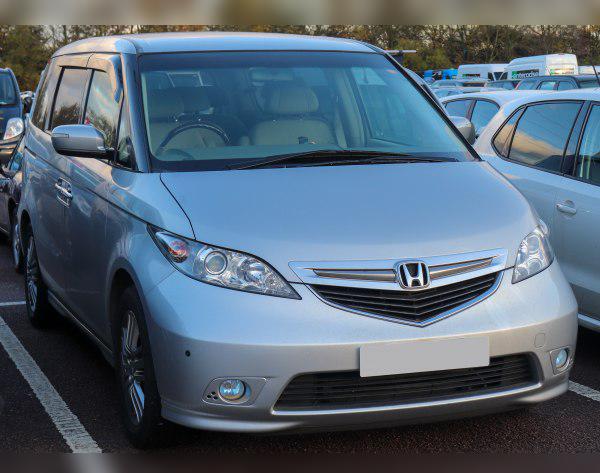
Honda J30A 3.0 V6 (200 hp) – Experiences, problems, fuel consumption and maintenance
When we talk about "big" Honda engines, the J-series holds a special place. J30A is a 3.0-liter V6 gem that was installed in prestigious models such as the Honda Elysion. It is an old-school engine that combines Honda’s proverbial precision with the smooth operation of a six-cylinder.
Although Honda is often associated with high revs, this engine in a heavy body like the Elysion has a different task: to be a comfortable cruiser. Still, like any more complex engine, it requires specific attention, especially now that these cars are getting older. In this text, as an experienced technical editor, I’ll go through everything you need to know before buying or servicing this powerplant.
Key points (TL;DR)
- Timing belt: The engine uses a belt, not a chain. Replacement is critical and not cheap.
- Fuel consumption: Be prepared for high numbers; this is a V6 petrol engine in a heavy vehicle.
- Transmission: The automatic transmission is a weak point if it hasn’t been regularly serviced with genuine fluid.
- Refinement: Extremely quiet and smooth, provided the engine mounts are in good condition.
- VCM system: Some versions have cylinder deactivation, which can cause oil consumption and vibrations.
- Recommendation: An excellent engine for long journeys, but it requires a budget for fuel and preventive maintenance.
Contents
- Technical specifications
- Reliability and maintenance
- Specific parts and costs
- Fuel consumption and performance
- Additional options and modifications
- Transmission
- Buying used and conclusion
Technical specifications
| Specification | Value |
|---|---|
| Engine code | J30A (and variations) |
| Displacement | 2997 cc (3.0 L) |
| Configuration | V6, SOHC (Single Overhead Cam) |
| Power | 147 kW (200 hp) |
| Torque | 265 Nm |
| Fuel injection system | PGM-FI (Multipoint injection) |
| Induction type | Naturally aspirated |
| Valvetrain | 24V (4 per cylinder) with VTEC technology |
Reliability and maintenance
Does this engine have a timing belt or a chain?
The Honda J30A engine uses a timing belt. This is very important information. Since this is an interference engine where valves and pistons will collide if the belt snaps, regular replacement is imperative. Along with the belt itself, the tensioner and idler pulleys, the water pump must also be replaced because it is driven by the same belt. If the pump seizes, the belt will fail and the engine will be damaged.
What are the most common failures on this engine?
Although it is mechanically very robust (“bulletproof”), the J30A has its weaknesses, mostly related to peripherals and electronics:
- Oil leaks at the VTEC solenoid: The seals on the VTEC solenoid harden over time, causing oil to leak over the engine. This is easily solved by replacing the seals.
- Problems with the VCM system (Variable Cylinder Management): In models such as the Elysion, the engine often has a system that shuts down 3 cylinders to save fuel. This system can lead to excessive oil consumption, fouled spark plugs on those cylinders, and vibrations that destroy engine mounts.
- Active engine mounts: To compensate for V6 vibrations (especially in VCM mode), Honda uses expensive active mounts. They are oil-filled and electronically controlled. When they fail, vibrations in the cabin become unbearable.
- EGR passages: Intake runners can clog with soot from the EGR valve, leading to rough running and an illuminated Check Engine light.
At what mileage should the major service be done?
The major service (timing belt replacement) is recommended every 100,000 to 120,000 km or every 6 to 7 years, whichever comes first. Do not risk exceeding this interval.
How many liters of oil does this engine take and which viscosity is recommended?
The engine takes approximately 4.3 to 4.5 liters of oil (with filter). Honda usually recommends 5W-30 or 0W-20 for this engine (for newer models and colder climates). Considering the age and mileage of most used cars, a quality 5W-30 or 5W-40 (fully synthetic) is the safest choice for European conditions.
Does it consume oil between services and what amount is considered normal?
A healthy J30A engine should not consume significant amounts of oil. However, engines with the VCM system are known to “drink” oil due to the specific behavior of the rings in cylinders that are deactivated. Consumption of up to 0.5 liters per 1,000 km is often tolerated by Honda in the manuals, but in practice, if you add more than 1 liter between minor services (10,000 km), it’s time to check the PCV valve or piston rings.
At what mileage should the spark plugs be replaced?
This engine uses iridium or platinum spark plugs. Their replacement interval is long, usually around 100,000 km. However, due to the VCM system, more frequent inspection is recommended (every 50,000 km), because the plugs in cylinders that are periodically deactivated can foul more quickly with oil and soot.
Specific parts (costs)
Does the engine have a dual-mass flywheel?
Not in the classic sense as in diesels with a manual gearbox. Since the Honda Elysion with this engine comes exclusively with an automatic transmission, it uses a torque converter and a flexplate. So there is no expensive dual-mass flywheel that fails in the way you may be used to with European diesels.
What kind of fuel injection system does it have and are the injectors problematic?
The engine uses a classic PGM-FI port fuel injection system (multipoint) into the intake manifold. This is great news for used-car owners. The injectors are extremely robust, rarely fail, and are not as sensitive to poor-quality fuel as modern direct injectors (GDI). Ultrasonic injector cleaning is inexpensive and recommended at higher mileages.
Does this engine have a turbocharger?
No. The J30A is a pure naturally aspirated engine. No turbo, no intercooler, no boost hoses that can burst. This significantly reduces potential long-term maintenance costs.
Does this model have a DPF filter or an EGR valve?
It does not have a DPF filter (because it’s a petrol engine). It does have catalytic converters, which are long-lasting. However, it has an EGR valve (exhaust gas recirculation). As mentioned, the EGR passages in the intake manifold tend to clog, which is a relatively cheap issue to fix (cleaning is required), but can look dramatic because of the symptoms of poor running.
Does this engine use AdBlue?
No, this engine does not use AdBlue fluid.
Fuel consumption and performance
What is the real-world fuel consumption in city driving?
This is where we come to the painful part. The Honda Elysion is a heavy car (over 1.8 tons), and a 3.0 V6 petrol needs energy to move that mass. In pure city driving (stop-and-go), real-world consumption is between 13 and 16 liters per 100 km. In winter or with a “heavy right foot”, that figure can go up to 18 liters.
Is this engine “lazy” for the weight of the body it’s installed in?
The engine is not lazy, but it’s not explosively sporty in this vehicle either. With 200 hp and 265 Nm of torque, it provides linear and smooth acceleration. There is no “kick” like with a turbo diesel; power builds with revs. It is perfectly adequate for overtaking, but it requires the transmission to drop one or two gears so the engine can enter the VTEC zone where it breathes best.
How does the engine behave on the highway and at what rpm does it cruise at 130 km/h?
This is the natural habitat of this engine. On the highway it is extremely quiet and refined. Thanks to the 5-speed automatic with long gear ratios, at 130 km/h the engine spins at a comfortable 2,500 to 2,700 rpm. Fuel consumption on the open road drops to a bearable 9 to 11 liters, depending on vehicle load.
Additional options and modifications
Is this engine suitable for LPG (autogas) conversion?
Yes, but with caution. Honda engines have somewhat “softer” valve seats compared to some European competitors. LPG conversion is possible and economically viable due to the high fuel consumption, but it is essential to:
- Install a high-quality sequential LPG system with OBD connection.
- Use a valve lubrication system (so-called “dripper” or electronic additive).
- Regularly check valve clearances. This is crucial! When running on LPG, valve clearances should be checked every 30,000–40,000 km, because the engine does not have hydraulic lifters; they are adjusted mechanically.
How much can this engine be safely tuned (Stage 1)?
Since this is a naturally aspirated engine, a remap doesn’t make much sense. The power gain would be negligible, maybe 5 to 8 hp, which you won’t really feel in everyday driving. It’s better to invest that money in quality maintenance or good tires.
Transmission
Which manual and automatic transmissions are paired with this engine?
With the J30A engine in the Honda Elysion, you almost exclusively get a 5-speed automatic transmission of classic design (Honda’s own design, not ZF or Aisin). Manual gearboxes are not an option for this engine-vehicle combination.
What are the most common automatic transmission issues?
Honda automatic transmissions from that period are generally reliable, but sensitive to overheating and old fluid.
- Symptoms of problems: Hesitation when shifting, a jolt when engaging “D” or “R”, slipping between gears (revs rise but the car doesn’t accelerate).
- Cause: Clogged solenoids or worn clutch packs inside the transmission due to irregular fluid changes. The torque converter’s lock-up function can also cause vibrations.
Does this model have a dual-mass flywheel and what is the cost of clutch replacement?
As mentioned, there is no dual-mass flywheel or clutch in the sense of a manual gearbox. The cost of an automatic transmission overhaul (if it fails) is very high (depending on the market, it often exceeds 1000–1500 EUR), so the condition of the transmission is crucial when buying.
At what mileage should the transmission be serviced and the fluid changed?
This is “holy scripture” for Hondas: change the transmission fluid every 40,000 to 60,000 km. IMPORTANT: Use only genuine Honda ATF-DW1 (or older Z1) fluid. Universal ATF fluids can cause shifting problems. Only drain and refill what comes out (around 3 liters); never do a pressurized machine flush, as it can stir up sludge and clog fine passages.
Buying used and conclusion
When buying a Honda Elysion with the J30A engine, pay attention to the following:
- Cold start: Listen for ticking from the top of the engine (valves) or rattling (belt tensioner).
- Test drive: The transmission must shift seamlessly. If it jerks or hesitates, walk away. Pay attention to vibrations at idle (could indicate expensive engine mounts).
- Exhaust smoke: Bluish smoke under hard acceleration indicates oil consumption (rings or valve stem seals).
- Service history: When was the timing belt replaced? If there is no proof, you immediately have an extra cost of several hundred euros.
Conclusion:
The Honda J30A in the Elysion is a fantastic family cruiser for those who value comfort, quietness and reliability, and are not obsessed with fuel consumption. The engine is mechanically durable, but it requires an owner who will not skimp on quality oil and regular automatic transmission maintenance. If you’re looking for cheap city driving, this is not the engine for you. If you’re looking for a “living room on wheels” that will take you safely to the seaside, the J30A is an excellent choice.