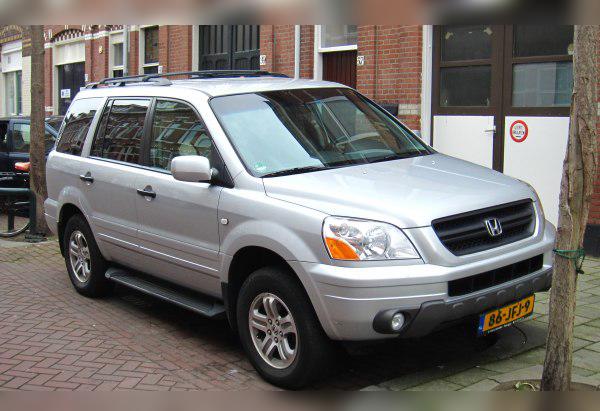
Honda J35A4 3.5 V6: Experiences, issues, fuel consumption and used-buying guide
When we talk about "big" Honda engines, the J-series is an absolute legend. Specifically, the J35A4 is the engine that defined the first generation of the Honda Pilot (and certain Odyssey minivans). This is a classic representative of the old school: large displacement, naturally aspirated, and VTEC technology tuned for torque rather than just high revs.
Although the first-gen Honda Pilot was not widely sold in all parts of Europe, this engine is well known among enthusiasts as an exceptionally refined power unit. Still, not everything is perfect – while the "heart" is strong, the peripherals and transmission can cause headaches. Below is a brutally honest overview of the J35A4.
Key points in short (TL;DR)
- The engine is “bulletproof”: The engine block and piston assembly are extremely durable with regular maintenance.
- The Achilles’ heel is the gearbox: The automatic transmission paired with this engine is known for overheating and failing if not obsessively maintained.
- Timing belt: It’s not a chain! It requires regular and costly replacement because a snapped belt destroys the engine.
- Fuel consumption: Expect high numbers; this is a 3.5 V6 in a heavy body.
- Excellent on LPG: The engine handles LPG very well, which is a lifesaver for your budget.
- No VCM: The J35A4 (unlike newer versions) generally does not have cylinder deactivation, which is good news for engine mount reliability and oil consumption.
Contents
- Technical specifications
- Reliability and Maintenance
- Specific Parts and Costs
- Fuel Consumption and Performance
- Additional Options (LPG and Tuning)
- Transmission: Problems and Maintenance
- Buying Used and Conclusion
Technical specifications
| Specification | Value |
|---|---|
| Engine code | J35A4 |
| Displacement | 3471 cc (3.5 L) |
| Configuration | V6, SOHC, VTEC |
| Power | 179 kW (243 hp) @ 5400 rpm |
| Torque | 328 Nm @ 4500 rpm |
| Fuel type | Petrol (Gasoline) |
| Injection | PGM-FI (Multi-point indirect) |
| Turbo / NA | Naturally aspirated |
Reliability and Maintenance
Does this engine have a timing belt or a chain?
The J35A4 uses a timing belt. This is critical information because this is an "interference" engine. If the belt snaps, the pistons will hit the valves and the engine will suffer catastrophic damage. Along with the timing belt, the tensioner (hydraulic tensioner) and the water pump must also be replaced, as the pump is part of the timing system.
What are the most common issues with this engine?
Although mechanically robust, time takes its toll:
- EGR valve and passages: They often clog with carbon deposits, causing rough idle, stalling, and a "Check Engine" light. Cleaning the intake manifold and EGR passages is a common job.
- Oil leaks: Most often from the valve cover gaskets (VTEC solenoid gasket) and the crankshaft seal.
- Engine mounts: Due to high torque and a heavy body, engine mounts fail. OEM mounts are expensive (depends on the market), while cheap aftermarket ones transmit too much vibration.
- Valves: They require mechanical adjustment of valve lash; there are no hydraulic lifters. If you hear a "ticking" sound, it’s time for a valve adjustment.
At what mileage should the major service be done?
Honda’s recommendation is usually around 100,000 to 120,000 km or every 7 years (whichever comes first). Considering the age of these vehicles today, never take chances – if you don’t have proof of replacement, do the full timing service immediately after purchase.
Oil: Capacity, grade and consumption
The J35A4 takes approximately 4.3 to 4.5 liters of oil (with filter). The recommended grade is 5W-20 (factory recommendation for fuel economy), but on the European market and for higher-mileage engines, 5W-30 has proven to be an excellent choice, especially in summer.
Oil consumption: A healthy J35A4 should not consume a significant amount of oil between services. Consumption up to 0.5 L per 10,000 km is acceptable. If it consumes more (e.g. 1 L per 3,000 km), the piston rings or valve stem seals are likely worn, although this is not a systemic flaw of this engine but rather a consequence of poor maintenance in the past.
Spark plugs
It uses iridium spark plugs (NGK or Denso are OEM). Replacement interval is 100,000 to 120,000 km. Do not experiment with cheap plugs; this engine likes a strong, high-quality spark.
Specific Parts (Costs)
Fuel injection system and injectors
The engine uses a classic MPI (Multi-Point Injection) system. The injectors are extremely durable and rarely cause problems. They are not as sensitive as modern piezo injectors on direct injection systems. If an issue does occur, ultrasonic cleaning usually solves it. Replacement or refurbishment costs are low.
Dual-mass flywheel, turbo, DPF, AdBlue?
Good news for your wallet:
- Dual-mass flywheel: This model comes exclusively with an automatic transmission, so it uses a torque converter. There is no conventional dual-mass flywheel that fails like on manual diesel cars.
- Turbo: None. The engine is naturally aspirated, which means fewer parts that can fail.
- DPF / AdBlue: None. This is an older-generation petrol engine. Catalytic converters are present and can be expensive (depends on the market) if they need to be replaced to meet emissions at inspection.
- EGR: It does have one, and as mentioned, it tends to clog, but it is easy to clean.
Fuel Consumption and Performance
What is the real-world fuel consumption?
No sugar-coating here. The Honda Pilot with the J35A4 is a heavy SUV with permanent (or on-demand) all-wheel drive and poor aerodynamics.
- City driving: Expect 13 to 17 liters per 100 km, depending on traffic and how heavy your right foot is. In winter it can be even higher.
- Highway / open road: It can go down to about 10 to 11 liters per 100 km with moderate driving.
- Average: A realistic average for most drivers is around 13.5 L/100 km.
Is the engine “lazy”?
No. With 243 hp and 328 Nm, the engine handles the Pilot’s weight (over 2 tons) surprisingly well. Throttle response is linear. It’s not a sports car, but overtaking is safe and the engine has plenty of power in reserve.
Behavior on the motorway
This is the engine’s natural habitat. At 130 km/h it runs relaxed, usually at or below 2,500 rpm (thanks to the 5th gear of the automatic), which makes for quiet and comfortable cruising.
Additional Options and Modifications
LPG conversion
Highly recommended. The J35A4 is an ideal candidate for LPG due to its indirect injection. The savings are huge. However, there is one key note: Since the engine does not have hydraulic lifters and the valves are adjusted mechanically, running on LPG requires more frequent valve clearance checks – recommended every 40,000 to 50,000 km to prevent valve seat recession (VSR).
Remapping (Stage 1)
On naturally aspirated petrol engines, gains are minimal. You can expect 10–15 hp, which you will hardly notice in a heavy SUV. It’s better to invest that money in proper transmission or cooling system maintenance.
Transmission
Which transmission is used?
With the J35A4 in the first-gen Honda Pilot, you only got a 5-speed automatic transmission. There is no manual option.
Most common transmission failures (RED ZONE)
This is the weakest point of the whole vehicle. Honda’s 5-speed automatics from this era (early 2000s) are notorious.
- Overheating and failure: The transmission often did not have sufficient cooling for the vehicle’s weight. Symptoms include slipping, harsh shifts, or complete loss of gears.
- 2nd gear issue: There was a factory recall where an additional oil jet was installed to better lubricate the second-gear cog. Make sure this has been done.
- Torque converter: It can cause a shudder under light acceleration, which is a sign that the fluid is old or the converter is nearing the end of its life.
Transmission servicing
Forget about "lifetime" fluid. Change the transmission fluid every 30,000 to 40,000 km. Use only Honda ATF-DW1 (successor to the old Z1). Regular fluid changes are the only way to make this transmission last. The cost of a fluid change is not high (a partial change of about 3–4 liters), while a transmission rebuild is very expensive (depends on the market, but expect thousands of euros).
Buying used and Conclusion
When buying a Honda Pilot with the J35A4 engine, follow these steps:
- Test the transmission: When it’s cold and when it’s hot. Any hesitation, slipping, or harsh engagement is a sign to walk away from that car.
- Listen to the engine: When cold, there should be no knocking (pistons). When warm, a slight valve tick is OK, but a loud metallic noise is not.
- Check the timing belt: Look for a sticker or service history. If there is no proof, immediately factor the cost of a full timing service into the price (parts + labor = expensive).
- Drivetrain: Check whether the VTM-4 (4x4 system) works and whether the oil in the rear differential has been changed (it uses specific Honda VTM-4 fluid).
Conclusion: The Honda J35A4 is a fantastic engine paired with a problematic transmission. If you find a car where the transmission has been regularly serviced (or already rebuilt) and you install LPG, you will get an extremely comfortable, powerful and reliable family cruiser that can cover hundreds of thousands of kilometers. It is intended for drivers who value comfort and space and are willing to pay a bit more for registration and fuel.