Key points in short (TL;DR)
- Hybrid heart: The 2.0 L LFC engine runs on the Atkinson cycle and primarily serves as a generator for the electric motor – which means less stress on the petrol engine itself.
- Reliability: It has a timing chain and no turbocharger, which makes it mechanically very robust and durable.
- Performance: Although on paper the petrol part has 141 hp, in real driving it relies on the electric motor (184 hp system output), so throttle response is instant, similar to electric vehicles.
- Fuel consumption: Extremely low in the city (often below 5 l/100 km), but on the highway consumption rises because the engine is then directly connected to the wheels.
- Maintenance: No conventional gearbox, no belts (except the PK belt), no alternator or starter in the traditional sense. Fewer parts that can fail.
- Advice: Not suitable for LPG conversion due to direct injection and complex hybrid electronics.
Contents
Introduction: LFC 2.0 and Honda e:HEV philosophy: Experience, issues and buying tips
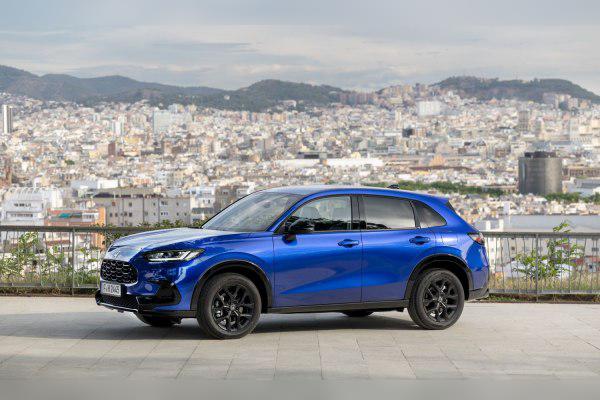
When you open the hood of a new Honda ZR-V or 11th-gen Civic, you are looking at the LFC engine. This is not a regular 2.0 petrol engine like the ones we were used to 10–15 years ago. This is the heart of Honda’s award-winning e:HEV system.
Why does this matter? Because this engine most of the time does not drive the wheels directly. It works as the most efficient possible generator of electricity, while the wheels are driven by a powerful electric motor. Only at higher speeds (highway cruising) does the clutch engage and the petrol engine take over the drive. This means the engine operates in its optimal range, without sudden load changes, which in theory guarantees longevity. Still, like every modern machine, it has its specifics you need to know before buying.
Technical specifications
| Feature | Data |
|---|---|
| Engine displacement | 1993 cc (2.0 L) |
| Power (petrol engine) | 105 kW (143 hp) @ 6000 rpm |
| Power (system / e-motor) | 135 kW (184 hp) / 315 Nm (e-motor) |
| Torque (petrol) | 182 – 186 Nm @ 4500 rpm |
| Engine code | LFC (LFC-H4, variations depending on market) |
| Injection type | Direct injection |
| Induction | Naturally aspirated |
| Number of cylinders | 4 cylinders, Atkinson cycle |
Reliability and maintenance
Timing system: Chain or belt?
The LFC engine uses a timing chain to drive the camshafts. Honda chains have traditionally been very reliable and with this engine there have been no recorded issues with chain stretch at low mileage. With regular oil changes, the chain is designed to last as long as the engine itself (over 250,000 km). There is no need for preventive replacement like with some European competitors.
Most common failures and symptoms
Since the engine is relatively new on the market (in this configuration), the list of failures is short, but here is what you should pay attention to:
- GPF filter (Gasoline Particulate Filter): Similar to a DPF on diesels, this engine also has a particulate filter. If you drive only short trips in winter where the engine frequently starts and stops, it can become saturated. The symptom is a warning light on the dashboard. However, the hybrid system usually manages engine operation smartly enough to prevent this.
- Deposits on intake valves: Due to direct injection, fuel does not “wash” the intake valves. At high mileage (150k+ km) carbon buildup is possible, which can cause rough running.
- Noise at high revs: This is not a failure, but a characteristic. When you floor the throttle, the engine revs high to generate electricity, which can sound like a slipping clutch (a “scooter effect”), even though everything is working properly.
Major and minor service
Minor service: Honda uses the “Maintenance Minder” system to notify you when it’s time for service, but in practice it’s every 10,000 to 15,000 km or once a year. Do not skip intervals.
Major service: Since the engine has a chain, there is no classic major service (timing belt replacement). Only the auxiliary (PK) belt and tensioner for the auxiliary units are replaced at around 100,000 – 120,000 km, together with a valve clearance check (even though hydraulic lifters are increasingly common, Honda still requires checks on some models). Also check the coolant for the inverter and the engine (usually changed for the first time at 10 years or 200,000 km).
Oil: Quantity and grade
This engine uses extremely thin oil for maximum efficiency.
Recommendation: 0W-20 (Honda specification is mandatory, e.g. Honda Type 2.0).
Quantity: The engine takes about 4.0 to 4.5 litres of oil with filter (check the manual for exact value, as it depends on the sump on 4WD versions).
Oil consumption: Modern Honda engines are “tight”. Oil consumption between services is minimal. If the engine uses more than 0.5 L per 10,000 km, it’s a sign something is wrong (unless you drive constantly on the motorway at 160 km/h).
Spark plugs and injectors
Spark plugs: Only iridium spark plugs (NGK or Denso) are used. Replacement interval is long, usually at 100,000 to 120,000 km. Do not install regular plugs because access is difficult and the engine requires a precise spark due to the Atkinson cycle.
Specific parts (costs)
Dual-mass flywheel and clutch
Good news: This engine DOES NOT have a dual-mass flywheel like the ones you know from diesel cars that cost a fortune and often fail. Instead, there is a torsion damper between the engine and generator, which is much simpler and rarely fails. There is also no conventional clutch disc and pressure plate that wear out. This is a huge saving in maintenance.
Turbocharger and injection
Turbo: The engine is naturally aspirated. No turbocharger, no intercooler, no hoses that can burst under pressure. One less thing to worry about.
Injection: It uses high-pressure direct injection. Injectors are precise and expensive (depending on the market, but expect them to be pricier than standard ones). They are not problematic if quality fuel is used, but they are sensitive to contamination.
EGR and GPF (filters)
Yes, the engine has an EGR valve and a GPF filter (Gasoline Particulate Filter) to meet Euro 6d standards. The EGR rarely clogs because the engine runs optimally. The GPF is passive and regenerates itself while driving. There is no AdBlue fluid – this is a petrol engine.
Fuel consumption and performance
City driving: Efficiency king
This is where the Honda ZR-V with the LFC engine truly shines. Real-world city consumption is between 4.5 and 5.5 l/100 km. In stop-and-go traffic, the engine is often off and you drive on electric power. The heavier the traffic, the more efficient the hybrid is compared to regular petrol cars.
Is the engine “lazy”?
Absolutely not. Although the petrol engine alone has 141 hp and a modest 182 Nm, you don’t really feel that. What you feel is the electric motor, which has 315 Nm available from 0 rpm. The car pulls hard from a standstill. It feels like driving a 2.0 turbo diesel, but with a much quicker throttle response. The weight of the ZR-V body is not noticeable in city acceleration.
Motorway and cruising
At speeds above 80–90 km/h, the system can connect the petrol engine directly to the wheels through a single gear ratio (as if you were in 5th or 6th gear). At 130 km/h the engine runs quietly and efficiently. Fuel consumption then rises to about 6.5 – 7.5 l/100 km (depending on wind and terrain), because SUV aerodynamics take their toll. The engine has enough power for overtaking, but it will become noisy as it “disconnects” from the wheels and revs high to generate power for the e-motor.
Additional options and modifications
LPG conversion
Short answer: Not recommended.
The engine has direct injection, which requires an expensive system (liquid phase or petrol addition alongside LPG). Secondly, the engine constantly starts and stops. By the time the system switches to LPG, the engine may already have shut off. Cost-effectiveness is questionable, and the risk of overheating injectors and causing electronic issues is high. Leave it on petrol.
Chiptuning (Stage 1)
This is a naturally aspirated engine tuned for economy (Atkinson cycle). Chiptuning is a waste of money. You won’t gain any noticeable power (maybe 3–5 hp), because wheel power depends on the inverter and electric motor, not directly on the petrol engine map. Honda’s software is already optimised to perfection for this system.
Transmission: e-CVT
This is where drivers often get it wrong. The ZR-V does not use a manual gearbox (there is no such option), nor a conventional CVT with a belt and pulleys.
How does the e-CVT work?
This is a transmission without gears in the traditional sense. It consists of two electric motors (one drive motor, one generator) and a set of gears with a clutch for direct drive.
- Most common failures: Mechanical failures are extremely rare because the design is simpler than a conventional automatic (no torque converter, no clutch packs that wear out, no mechatronics that fail like on DSG). The electronics (inverter) are reliable.
- Oil change: The transmission uses a special Honda fluid (usually ATF-Z1 or newer HCF-2, check exact spec for e:HEV). It must be changed at around 40,000 to 60,000 km (depending on usage severity). The change is not expensive (usually about 2–3 litres of fluid plus labour) and is crucial for cooling the electric motor inside the housing.
Buying used and conclusion
What to check before buying?
- Service history: Has the oil been changed on time? Hybrids are sensitive to poor maintenance.
- Hybrid battery test: At an authorised service, ask for a check of the battery “health”. Although Honda offers long warranties (often up to 10 years on the hybrid system), replacing the battery out of warranty is very expensive.
- Noise on cold start: The engine should run smoothly. Chain rattle when cold is a bad sign (rare, but possible if oil hasn’t been changed regularly).
- Test drive: Accelerate hard. The transition from electric to petrol should be seamless, without jerks. The only thing you should notice is the engine sound, not a thump.
Conclusion:
The Honda LFC 2.0 engine in the ZR-V is an engineering gem for those who understand it. If you’re looking for a sporty sound and gear shifting – skip it. But if you want a car that doesn’t break down, that sips fuel in the city, and offers comfort and instant electric-motor torque – this is one of the best powertrains on the market today. Ideal for families and taxi drivers thanks to its low running costs and the absence of expensive, failure-prone parts (turbo, dual-mass flywheel, belts).