G3LA 1.0 Engine (67 HP) – Experiences, issues, fuel consumption and used-car buying tips
- Naturally aspirated petrol, 3 cylinders: Sounds a bit rough, but it’s an extremely reliable and simple engine.
- Low maintenance costs: It’s driven by a timing chain, has no dual-mass flywheel and no expensive components like a turbocharger.
- City warrior: Excellent in urban traffic jams, but becomes noisy and sluggish on the highway.
- Great for LPG: Classic MPI injection makes it a perfect candidate for LPG conversion.
- Fuel consumption: Economical in the city, but consumption rises on open roads due to high revs.
- Gearboxes: Manuals are durable and cheap to maintain, automatics are slow but reliable.
Contents
- Introduction: A modest engine for big city challenges
- Technical specifications
- Reliability and maintenance: What’s hiding under the hood?
- Specific parts and costs: Forget about sky‑high repair bills
- Fuel consumption and performance: Agile in the city, lazy on the highway
- Additional options and mods: LPG and remapping
- Gearbox and drivetrain
- Buying used and final verdict
Introduction: A modest engine for big city challenges
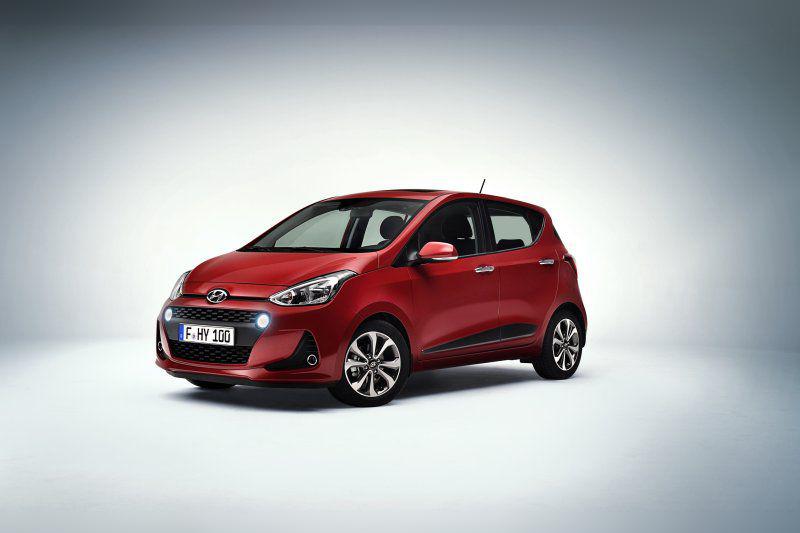
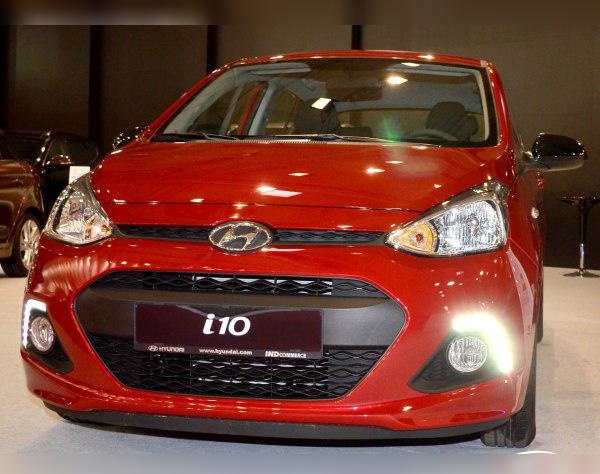
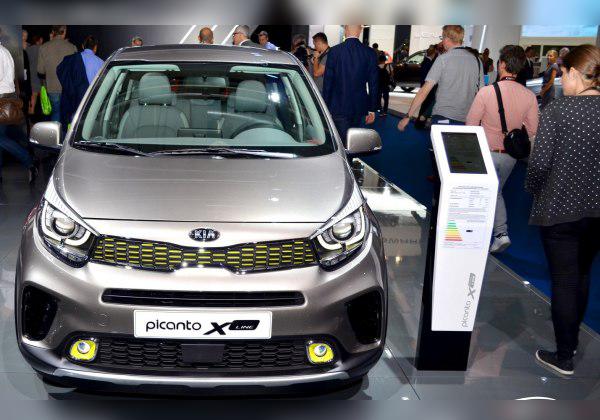
The G3LA engine is a product of the Korean group (Hyundai/Kia) and belongs to the well-known “Kappa II” engine family. It’s a compact three-cylinder petrol engine with a displacement of 1.0 litre and a modest output of 49 kW (67 HP). This engine was designed exclusively for city micro-cars and is most commonly found under the bonnet of models such as the Hyundai i10 (especially the second generation and its facelifts) and the Kia Picanto (third generation). Its main strengths are not speed, but durability, low running costs and the ability to withstand harsh stop‑and‑go city driving.
Technical specifications
| Parameter | Value |
|---|---|
| Engine code | G3LA |
| Engine displacement | 998 cc (1.0 L) |
| Power | 49 kW (67 HP) |
| Torque | 96 Nm |
| Number of cylinders | 3 cylinders (inline) |
| Injection type | MPI (Multi-Point Injection) |
| Aspiration | Naturally aspirated |
| Fuel | Petrol |
Reliability and maintenance: What’s hiding under the hood?
If you’re looking for an engine that doesn’t require a PhD to maintain, you’re in the right place. The G3LA uses a timing chain for power transmission. Because of that, there is no classic “major service” in the sense of regularly changing a timing belt every 60,000 to 80,000 km. The chain is quite reliable and in most cases doesn’t need attention before 150,000 to 200,000 km. However, what does get replaced during major inspections are the auxiliary belt, tensioners and water pump (roughly at 90,000 to 100,000 km).
When it comes to engine oil, this three-cylinder takes about 2.8 to 3.0 litres. The manufacturer recommends 5W-30 or 0W-20 (on newer Euro 6 revisions for lower emissions). Oil consumption between two minor services (which should be done every 10,000 to 15,000 km) is minimal. A loss of up to 0.2 litres per 1,000 km is considered normal, but in practice a healthy G3LA almost doesn’t burn oil at all. If you notice a bigger drop in level, the problem usually lies in hardened valve stem seals or leaks at gaskets, as the piston rings on this block rarely fail.
The most common failures on this engine are peripheral. As a petrol engine, it’s sensitive to spark quality, so issues with the ignition coils are quite frequent. The symptoms are obvious: the engine shakes heavily (runs on two cylinders), loses power and the “Check Engine” light comes on. To prevent this, spark plugs must be replaced every 40,000 to 60,000 km. Delaying spark plug replacement directly leads to overheating and failure of the coils.
Specific parts and costs: Forget about sky‑high repair bills
One of the biggest advantages of this engine is what it doesn’t have. The G3LA doesn’t have a dual-mass flywheel, but uses a classic solid flywheel with a simple clutch kit. This drastically reduces maintenance costs. Also, as a fully naturally aspirated engine, it has no turbocharger, intercooler, or complex air management hardware that can drain your wallet on many modern small-displacement “buzz boxes”.
The injection system is the good old MPI (Multi-Point Injection). Unlike modern direct-injection engines (GDI), injectors here don’t get dirty as easily, nor is there rapid carbon build-up on the intake valves. Petrol injectors on the G3LA are long-lasting and not prone to failure, and if they do get clogged due to poor fuel, cleaning is a routine and inexpensive job. As for emissions equipment, since this is a small-displacement petrol engine, you won’t find headaches like a DPF filter (nor a GPF on most versions), and of course there’s no AdBlue system, which is reserved for diesels. The petrol EGR and PCV valves are present, but they operate in a cleaner environment and rarely need more than preventive cleaning after 100,000 km or more.
Fuel consumption and performance: Agile in the city, lazy on the highway
Don’t let the numbers fool you; although 67 HP and 96 Nm sound very low, cars like the i10 and Picanto are extremely light. For city use, this engine is anything but “lazy”. Short gear ratios make it very lively at traffic lights up to about 60 km/h. Real-world consumption in heavy city traffic is around 6.0 to 7.0 l/100 km, depending on how heavy your right foot is and how often you use the air conditioning (which noticeably bogs the engine down).
The situation changes dramatically once you get on the motorway. At 130 km/h in fifth gear, the crankshaft spins at a rather high 3,800 to 4,000 rpm. This is where the lack of a sixth gear really shows. The cabin becomes noisy, the engine struggles against air resistance, and fuel consumption can easily jump to over 7.5 litres of petrol. If you need to overtake uphill at speeds above 80 km/h, shifting down and flooring the throttle is absolutely necessary.
Additional options and mods: LPG and remapping
Thanks to indirect MPI injection, this engine is a perfect candidate for LPG (autogas) conversion. Installing a sequential LPG system is straightforward, and the engine handles running on gas very well, without excessive valve wear. With LPG, city running costs become almost laughably low, which makes this engine a favourite among delivery services and sales reps.
When it comes to increasing power (chiptuning / Stage 1), forget about it right away. Since this is a small-displacement naturally aspirated engine, ECU remapping will give you at best 3 to 5 HP and a barely noticeable increase in torque. On the G3LA, such an investment simply doesn’t pay off, either financially or in terms of driving feel.
Gearbox and drivetrain
The G3LA engine is most commonly paired with a standard 5-speed manual gearbox, although depending on trim level and model year you can also find a 4-speed conventional automatic (with a torque converter) or a newer 5-speed automated manual transmission (AMT).
The manual gearboxes are extremely durable. The only quirk is that on some cars the lever can be a bit stiff when engaging reverse, which is more a characteristic of the synchro design than a serious fault. Since there is no dual-mass flywheel, the price of a clutch replacement (pressure plate, disc, release bearing) is: not expensive (depends on the market). The 4-speed automatics are proven and robust, but make the car even slower. For long automatic gearbox life, it’s crucial to change the transmission fluid every 60,000 km. On the manual gearbox, a preventive oil change is recommended at 80,000 to 100,000 km to keep the shifting smooth.
Buying used and final verdict
When checking a used car with the G3LA engine, the most important thing you should do is a cold start. Ask the seller not to start the car before you arrive. When you crank a cold engine, listen around the timing area; metallic rattling or scraping that lasts longer than a second or two may indicate a stretched chain or a bad chain tensioner. Also, since this is a three-cylinder, mild vibrations at idle are completely normal, but the car must not “stumble” or have fluctuating revs – that’s a clear sign that the coils and spark plugs are due for replacement. Visually inspect the engine for oil leaks, especially around the valve cover.
Conclusion: Who is the G3LA 1.0 MPI for? This is not an engine for family trips to the seaside. It is a superb, reliable and extremely cheap workhorse for cutting through city traffic, squeezing into tight parking spots and commuting to work. It’s an ideal choice for beginner drivers, students and people who cover 20–30 kilometres a day in the city without stress and without fear of astronomical repair bills.