Nissan VQ38DD 3.8 V6 (310 HP): Experiences, problems, fuel consumption and used-buying tips
- Great performance: With 310 HP, this is an extremely powerful and flexible engine, perfect for heavy SUVs and pickup trucks.
- No turbocharger: Naturally aspirated design means fewer expensive parts that can fail.
- Timing chain: A very reliable timing system, provided the oil is changed regularly.
- Direct injection (DI): Brings better efficiency, but also the risk of carbon buildup on the intake valves.
- High fuel consumption: A physically large V6 petrol engine cannot be economical, especially in city driving conditions.
- Automatic only: It is paired exclusively with a 9-speed automatic transmission, there is no manual option.
Contents
- Introduction: About the VQ38DD engine
- Technical specifications
- Reliability and maintenance
- Specific parts and costs
- Fuel consumption and performance
- Additional options and modifications
- Transmission and drivetrain
- Buying used and conclusion
Introduction: About the VQ38DD engine
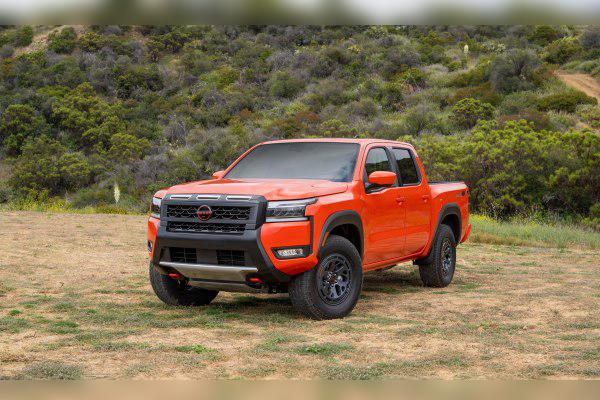
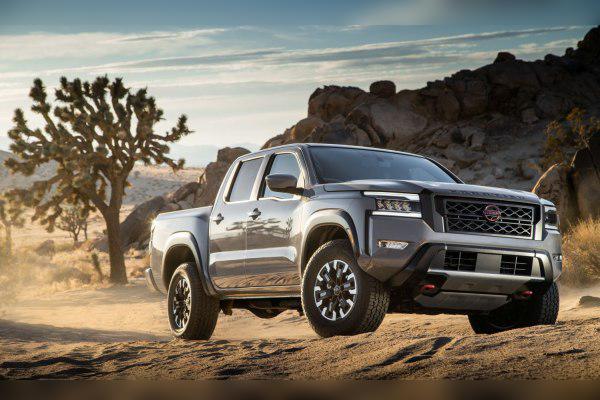
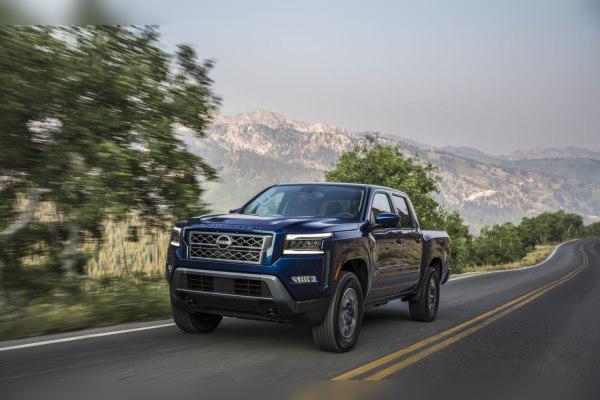
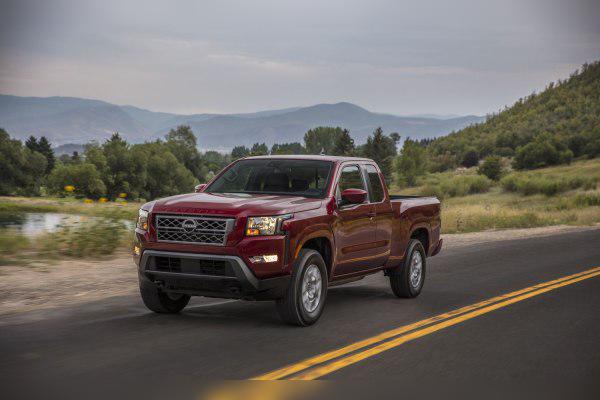
Nissan’s VQ38DD engine represents the pinnacle of engineering in the class of naturally aspirated V6 units. Introduced as a modern and more efficient replacement for the legendary but thirsty 4.0-liter VQ40DE, this 3.8-liter V6 brings direct injection and a significant power jump to an impressive 310 HP. It is primarily installed in the third-generation Nissan Frontier (King Cab and Crew Cab versions), turning this heavy pickup into a very agile vehicle. For fans of classic mechanical engineering, this is a real treat – a powerful V6 petrol engine without complicated turbochargers, but with enough modern electronics to meet emission standards.
Technical specifications
| Specification | Data |
|---|---|
| Engine displacement | 3799 cc (3.8L) |
| Power | 231 kW (310 HP) |
| Torque | 381 Nm |
| Engine code | VQ38DD |
| Injection type | Direct injection (DI) |
| Induction type (Turbo/Naturally aspirated) | Naturally aspirated |
Reliability and maintenance
Does this engine have a timing belt or a chain?
The VQ38DD uses a timing chain to drive the camshafts. Nissan’s VQ series is known for massive and long-lasting chains. The chain is designed to last as long as the engine itself, but its longevity directly depends on the quality of lubrication.
What are the most common failures on this engine?
As a relatively new engine (on the market in larger numbers since 2020/2021), it has no fatal factory defects, but there are specific issues related to the technology it uses:
- Carbon buildup on intake valves: Due to direct injection, fuel no longer washes over the intake valves. Oil vapors from the PCV system deposit on the hot valves and create carbon deposits. Symptoms: Rough idle, loss of power at higher revs and slightly increased fuel consumption. Cleaning the valves (most often by walnut shell blasting) is recommended every 100,000 to 120,000 km.
- PCV valve failure: The crankcase ventilation valve can stick, which leads to increased oil consumption and faster contamination of the intake manifold. Regular inspection of this inexpensive part is therefore crucial.
- Crankshaft and camshaft sensors: As with older VQ engines, position sensors (camshaft/crankshaft sensors) can fail due to high temperatures, causing the engine to stall while driving or making it hard to start.
At what mileage is the “major service” due?
A classic “major service” in the sense of timing belt replacement does not exist. However, visual and acoustic inspection of the timing system (chain, tensioners and guides) is recommended at around 200,000 km. Replacing the chain and related components is very expensive (depends on the market) because of the amount of labor required to remove the front of the engine, but it is done only if the chain stretches and starts rattling at cold start.
How many liters of oil does this engine take and which grade is recommended?
This V6 engine takes about 5.2 to 5.4 liters of oil (with filter replacement). The manufacturer strictly recommends full synthetic oil of grade 0W-20. Using “thin” oil is mandatory because of the precise hydraulic chain tensioners and the variable valve timing system. Using thicker oil can cause oil pressure problems at cold start.
Does it consume oil between services?
A healthy VQ38DD engine consumes minimal amounts of oil, often unnoticeable on the dipstick between services (which should be at a maximum of 15,000 km, and preferably at 10,000 km). Factory tolerance allows consumption of up to 0.5 liters per 1,000 km before a warranty claim is acknowledged, but in practice, anything over 1 to 1.5 liters per 10,000 km may indicate a clogged PCV system or, more rarely, worn piston rings.
At what mileage should the spark plugs be replaced?
The spark plugs are iridium and their service life is specified at around 160,000 km (100,000 miles), but for optimal operation and to protect the ignition coils, mechanics recommend replacement at 100,000 to 120,000 km. Spark plug replacement is not cheap, because access to the plugs on one side of the V6 block requires removal of the intake manifold (expensive, depends on the market and labor rates).
Specific parts and costs
Does the engine have a dual-mass flywheel?
No, this model does not have a classic dual-mass flywheel. Since it is paired exclusively with a conventional automatic transmission (with a hydraulic torque converter), there is no clutch or dual-mass flywheel that usually give headaches to diesel owners with manual gearboxes. Consequently, there is no clutch replacement cost either.
What kind of injection system does it have and are the injectors problematic?
The engine uses direct petrol injection (DI) under high pressure. The system consists of a high-pressure fuel pump and 6 injectors that spray fuel directly into the cylinder. The injectors are robust, but sensitive to poor fuel quality and contamination. Injector failures are rare at lower mileages, but if clogging occurs, replacing direct-injection petrol injectors is extremely expensive (depends on the market). It is recommended to use high-quality fuel and occasionally add fuel system cleaners.
Does the engine have a turbocharger?
No. The VQ38DD is a naturally aspirated engine. This is a huge advantage in terms of longevity. There is no need to worry about turbo failure, oil cooling after hard driving, or expensive turbocharger overhauls.
Emission systems: DPF, EGR and AdBlue
Since this is a pure petrol engine, the answers are straightforward:
- DPF filter: Not present. No issues with particulate filter clogging in city driving.
- AdBlue: Not present. No worries about urea tank heaters or AdBlue pump failures.
- EGR system: The engine does not have a classic external EGR valve that commonly fails on diesels. Instead, it uses an intelligent variable valve timing (VVT) system to retain part of the exhaust gases in the cylinder and thus reduce NOx emissions (internal EGR). Maintenance is limited to regular oil changes so that the VVT actuators do not fail.
Fuel consumption and performance
What is the real-world fuel consumption in city driving?
Let’s be honest – a large, heavy pickup (Frontier) and a 3.8-liter V6 petrol engine are not a recipe for fuel economy. In stop-and-go traffic, congestion and short trips, real-world consumption ranges between 14.5 and 17 liters per 100 km. In winter, until the engine reaches operating temperature of around 90°C, that figure can be even higher.
Is this engine “lazy”?
Absolutely not. With 310 HP and 381 Nm of torque, this is one of the liveliest engines in its class. Throttle response is instant (an advantage of a naturally aspirated engine compared to turbo “lag”). The engine delivers power very linearly and has no problem pulling the massive body, even when the bed is fully loaded or when the vehicle is towing a heavy trailer.
How does it behave on the highway and what are the revs at 130 km/h?
The engine excels on the highway. Thanks to the modern 9-speed automatic transmission, at 130 km/h it “relaxes” at a low 1,800 to 2,000 rpm. This results in a quiet cabin and drastically reduces fuel consumption compared to city driving. On open roads and highway cruising, consumption drops to a very acceptable 9.5 to 11 liters per 100 km.
Additional options and modifications
Is this engine suitable for LPG conversion?
Short answer: It’s not ideal and it’s very expensive.
Due to direct injection, installation of a classic sequential LPG system is not possible. You must install a specialized system for DI engines (such as VSI-DI systems). These systems simultaneously inject a small percentage of petrol (around 5–10%) while you drive on LPG, in order to cool the tips of the petrol injectors located directly in the combustion chamber. The equipment itself is very expensive (depends on the market, but we’re talking premium prices), so the investment pays off only for drivers who cover very high annual mileages.
How much can this engine be safely “chipped” (Stage 1)?
Since this is a naturally aspirated engine without a turbo, “chipping” (ECU remapping) doesn’t make much sense. A Stage 1 map can free up only about 10 to 15 HP at the top of the rev range and slightly sharpen throttle response (by moving the limiter and adjusting ignition timing). It’s not worth the cost, because you won’t feel the difference in a vehicle weighing over two tons. Leave it in stock form.
Transmission and drivetrain
Which transmissions are fitted?
Across all listed models and body configurations (King Cab, Crew Cab, 4x2, 4x4), Nissan offers exclusively a 9-speed automatic transmission. The supplier is Jatco (code JR913E), and the transmission architecture is derived and licensed from the renowned Mercedes 9G-Tronic system. A manual gearbox is not offered with this engine.
Most common automatic transmission issues?
The transmission’s mechanical components are extremely robust and handle high torque without problems. However, early models (2020–2022) suffered from software “bugs”. Drivers reported harsh shifts, jolts (a “kick in the back”) when shifting from first to second gear, as well as confusion on inclines when the transmission didn’t know which gear to choose. The problem is usually completely resolved by a software update at an authorized service center (TCM update). If the transmission still jerks after software calibration, the problem may lie in the valve body, which is an expensive repair (depends on the market).
At what mileage should the transmission be serviced and the oil changed?
Car manufacturers often advertise “lifetime fluid”, but real-world practice and mechanics say otherwise. For the 9-speed automatic to operate smoothly and avoid clutch pack wear inside the transmission, oil and filter must be replaced at least every 60,000 to 80,000 km. The procedure usually requires a machine-assisted fluid change (dynamic flush) with strictly specified Nissan Matic ATF fluid. The cost of this service is among the higher maintenance items (depends on the market), but it is the only real prevention for long transmission life.
Buying used and conclusion
What must be checked before buying?
When buying a used vehicle with the VQ38DD engine, focus on the following:
- Cold start: The engine must be completely cold when you start it. Listen carefully. A scraping or metallic rattling sound in the first 2–3 seconds indicates chain stretch and weak tensioners.
- Idle smoothness: Once warm, the engine must run quietly and without any vibrations. If you feel shaking in the steering wheel, the intake manifold may be full of carbon deposits or the spark plugs may be worn out.
- Test drive (transmission check): Pull away gently and feel the shifts from 1st to 2nd and 3rd gear. They must be completely smooth, without mechanical jolts. Also, brake hard from higher speed down to zero – the transmission must not downshift harshly.
- Fluid inspection: Pull out the oil dipstick. If the oil is thick, tar-black or there is not enough of it, this is a sign of poor maintenance. The timing chain does not forgive irregular oil changes.
Who is this engine for?
Nissan’s VQ38DD is a true “old-school” engine wrapped in a modern package. It is intended for drivers who value longevity, linear power delivery, and who want a powerful “workhorse” ready for towing and serious 4x4 off-road use. If you are not afraid of 15 l/100 km in the city and you want reliability without worrying about turbo failures, EGR valves, DPF filters and dual-mass flywheels – this 3.8 V6 is one of the best and most honest engines on the global market today.