EA825 / MCV.DA Engine (4.0 V8 Twin-Turbo): Experiences, issues, fuel consumption and used car buying tips
Key points (TL;DR)
- A beast of an engine: Brutal performance with 550 hp (up to 680 hp in the E-Hybrid version) and 770 Nm of torque.
- Design: “Hot V” configuration with two turbochargers placed between the cylinder banks provides minimal turbo lag, but generates enormous heat.
- Timing drive: Uses a massive chain mounted at the rear of the engine, whose replacement is very complex.
- Maintenance: Requires deep pockets. Regular servicing is mandatory, and there is zero tolerance for poor-quality oil or skipped intervals.
- Fuel consumption: Expect high fuel consumption in the city, but surprisingly efficient cruising on the open road.
- Emissions: Newer models are equipped with OPF (GPF) particulate filters that can cause problems if the car is driven exclusively in city traffic.
Contents
- Introduction: About the EA825 engine
- Technical specifications
- Reliability and maintenance
- Specific parts and costs
- Fuel consumption and performance
- Additional options and modifications
- Transmission (PDK)
- Buying used and conclusion
Introduction: About the EA825 / MCV.DA engine
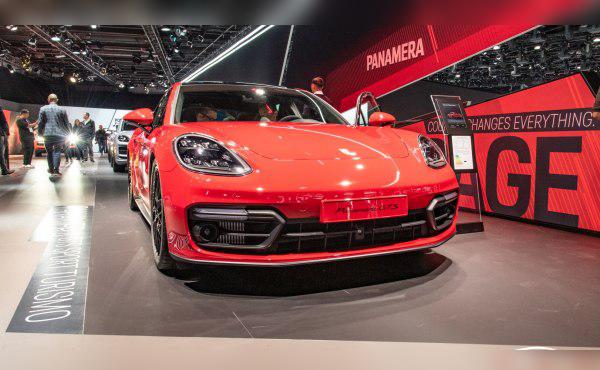
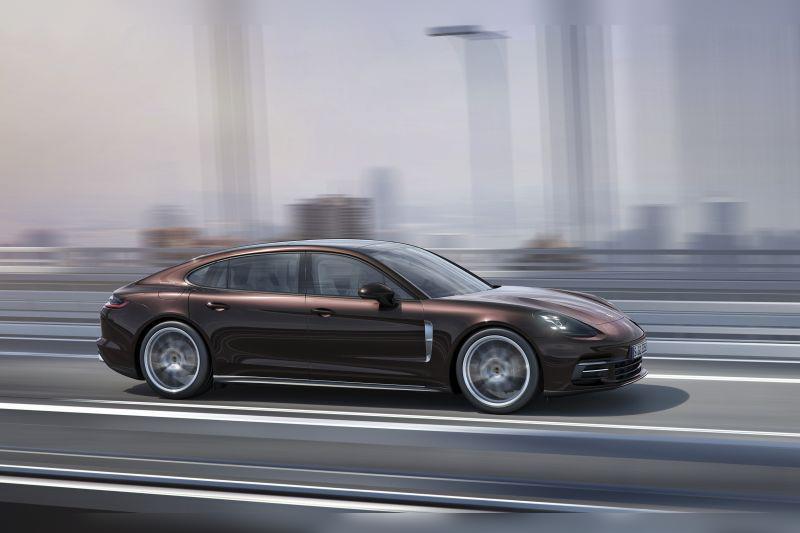
The EA825 engine code represents the very pinnacle of engineering in the automotive industry. Developed jointly by Porsche and Audi, this 4.0-liter V8 Twin-Turbo powerplant is the heart of the most powerful models in the group. In the Porsche Panamera (G2) – whether it’s the standard Turbo version, the Sport Turismo (wagon) or the Executive (long wheelbase) variant – this engine delivers supercar performance in a luxury sedan package. The MCV.DA version specifically produces 550 hp, while when paired with an electric motor in E-Hybrid models it jumps to an impressive 680 hp. This is an engine intended for drivers who don’t compromise, but such engineering also comes with specific requirements in terms of maintenance and longevity.
Technical specifications
| Parameter | Specification |
|---|---|
| Engine displacement | 3996 cc |
| Engine power | 404 kW (550 hp) / up to 500 kW (680 hp) E-Hybrid |
| Torque | 770 Nm |
| Engine codes | EA825 / MCV.DA |
| Injection type | Direct injection (FSI) |
| Charging type | Twin-Turbo, “Hot V” configuration with intercooler |
Reliability and maintenance
Does this engine use a timing belt or a chain?
This engine uses a chain for the timing drive. The chain system is extremely complex and is located at the rear of the engine, towards the transmission (firewall). This engineering solution saves space at the front, but it also means that for almost any intervention on the timing system the engine usually has to be removed from the car, which makes labor costs astronomical.
What are the most common failures on this engine?
Although mechanically very robust (the crankshaft, pistons and connecting rods are forged and can withstand enormous loads), the EA825 suffers from issues caused by extreme temperatures. Due to the so-called “Hot V” configuration (the two turbos are placed in the V between the cylinder banks), the upper part of the engine is exposed to tremendous heat. Over time, plastic and rubber components such as coolant hoses and vacuum lines become brittle and crack. Symptoms include loss of coolant without visible leaks on the ground (because it evaporates on the hot block) or a burning plastic smell in the cabin. Also, the PCV valve (oil separator) is a common weak point; when it fails, crankcase pressure rises, the engine starts consuming oil, and the driver may hear a characteristic whistling sound at idle and feel rough running.
At what mileage is the major service done?
Since the engine uses a chain, there is no classic “major service”. The chain is designed to last the life of the engine, but in practice, due to brutal acceleration and driving style, an inspection is recommended (diagnostic reading of camshaft angles and listening for rattling on cold start) after 150,000 km. Replacing the chain is very expensive (depends on the market). However, the auxiliary (serpentine) belt that drives the accessories is replaced regularly, together with rollers and tensioners, usually every 90,000 km.
Oil: Capacity and consumption
This V8 engine takes about 9 to 9.5 liters of oil. Only top-quality synthetic oil with a viscosity grade of 0W-40 or 5W-40 is recommended, and if the model is equipped with an OPF filter, the Porsche C40 specification (Low SAPS oils) must be strictly followed. As for oil consumption, yes, this engine does consume oil between services. Due to the two turbochargers and ring tolerances adapted to high loads, consumption of 0.5 to 1 liter per 5,000 km is considered completely normal. If it consumes more, you should suspect the aforementioned PCV valve or turbocharger bearings.
Spark plugs and ignition
Since this is a gasoline engine with direct injection and extremely high boost pressure, the spark plugs are constantly under heavy stress. The manufacturer’s recommendation (confirmed by real-world experience) is to replace the spark plugs every 30,000 to a maximum of 45,000 km. If this is skipped, “misfires” can occur under full throttle, which destroys ignition coils and can lead to catalytic converter overheating.
Specific parts and costs
Dual-mass flywheel and clutch
Yes, this engine is paired with a dual-mass flywheel designed to absorb the massive 770 Nm of torque. On E-Hybrid models, the system is even more complex because the electric motor is integrated into this assembly with a so-called separating clutch. Replacing the dual-mass flywheel on these models falls into the category of – very expensive (depends on the market).
Fuel injection system
The system is FSI (direct injection). The injectors operate at pressures above 250 bar. The injectors themselves rarely fail, but the high-pressure fuel pump (HPFP) can, which causes loss of power (limp mode) and harder starting. Because of direct injection, fuel does not wash the intake valves, so carbon deposits build up on them around 100,000 km. The engine then loses its sharp throttle response and idles roughly. Cleaning the valves with walnut shell blasting solves this problem.
Turbochargers and exhaust systems (DPF/OPF, EGR)
The two twin-scroll turbochargers are located between the cylinder heads. Their lifespan depends directly on cooling. If the driver shuts the engine off immediately after hard driving, the oil in the hot turbo cokes, clogging the passages and destroying the bearings. With proper cooldown driving before switching off, they can last over 150,000 km. Being a gasoline engine, this engine has no DPF filter and no AdBlue system (AdBlue is used only on diesels). However, models produced after 2018 (due to WLTP and Euro 6d standards) are equipped with a OPF (Gasoline Particulate Filter). Like a DPF, the OPF can clog if the car is driven only on short, stop-and-go city trips, choking the engine.
Fuel consumption and performance
Real-world fuel consumption and engine behavior
If you expect fuel efficiency from a 4.0 V8 engine with 550 hp, you’re looking at the wrong car. Real-world consumption in heavy city traffic is between 16 and 22 l/100 km. In the E-Hybrid version, city fuel consumption can be 0 l/100 km if you drive on electric power only, but once the battery is depleted, the heavy hybrid battery further burdens the gasoline engine, and consumption again jumps to around 15+ liters.
Is the engine “lazy” for this body? Absolutely not. The Panamera is a very heavy car (especially the E-Hybrid, which exceeds 2.3 tons), but 770 Nm is available already at about 2,000 rpm. The engine literally pins you to the seat at a touch of the throttle and is extremely aggressive.
Highway driving
This powerplant was born for the Autobahn. A Panamera with this engine is the ultimate grand tourer. At 130 km/h on the highway, thanks to the eighth gear in the PDK transmission, the engine cruises at a remarkably relaxed 1,600 to 1,800 rpm. At that speed, fuel consumption drops dramatically to a very reasonable 9 to 11 l/100 km. It even features cylinder deactivation (Cylinder on Demand) during steady cruising for additional savings.
Additional options and modifications
LPG conversion
To the question of whether this engine is suitable for LPG conversion, the answer is short and clear: No. The combination of direct injection, enormous boost pressure, lack of physical space under the hood, as well as the very philosophy of Porsche engineering, makes LPG installation impossible, dangerous for the engine and completely pointless for this type of car.
Chiptuning (Tuning and Stage 1)
The EA825 has a frightening amount of tuning potential. The engine block, injectors and turbos are factory-dimensioned with huge reserves. A simple software remap (Stage 1) safely raises power from the stock 550 hp to 650 to 700 hp, and torque goes beyond 900 Nm. However, the driver must be aware that increasing power puts the transmission, driveshafts and suspension components under enormous stress and shortens service intervals for oil and spark plugs.
Transmission (PDK - Porsche Doppelkupplungsgetriebe)
Types of transmissions and failures
The EA825 engine is not offered with a manual transmission. The only option is the fantastic 8-speed dual-clutch automatic transmission – PDK. This gearbox is probably the fastest and most intelligent transmission on the market today.
As for failures, the PDK is generally very reliable as long as it is not abused with repeated launch-control starts when cold. The most common problems lie in the mechatronics (the transmission control module) and in the temperature and gear position sensors inside the transmission housing. Symptoms of failure include jerking when taking off, hesitation when engaging reverse (R), or the transmission going into limp mode (only even or only odd gears). Mechatronics repairs are expensive (depends on the market).
Transmission maintenance
To keep the PDK sharp and reliable, regular servicing is essential. The manufacturer sometimes specifies overly long intervals, but any serious mechanic will tell you that the oil in the PDK, together with the built-in filters (often the entire transmission pan is replaced because the filter is integrated into it), must be changed strictly every 60,000 km. On E-Hybrid models, the transmission service procedure also requires software calibration due to synchronization with the electric motor.
Buying used and conclusion
What must be checked before buying?
Buying a used V8 Panamera can be a dream or an absolute financial nightmare. Before you shake hands with the seller, make sure you do the following:
- Cold start: The engine must be completely cold when you start it (insist on this with the seller). Listen carefully to the rear of the engine near the cabin. If you hear metal-on-metal rattling that lasts a few seconds and then disappears, the chain is stretched or the tensioners are weak. The repair is very expensive.
- Check for leaks in the V: Take a flashlight and try to illuminate the area under the engine cover and between the turbos. If you see dried red/pink coolant, the hoses have cracked from the heat.
- Exhaust: Have someone else rev the engine while it’s warm. If you see thick blue smoke from the exhaust, this indicates worn turbo bearings.
- PIWIS diagnostics: MANDATORY! Using Porsche’s factory diagnostic tool (PIWIS), the technician must read the over-rev history. It shows in which rpm ranges the car was driven, how many times the engine hit the redline and whether it has been abused. Also, be sure to read fault codes for the air suspension, whose compressor and air springs cost a small fortune.
Conclusion
The EA825 / MCV.DA engine is an engineering masterpiece, designed for people who want sports-car performance packaged in a full-size sedan. It is not meant for taxi duty, quick runs to the bakery, or for those who cut corners on maintenance. Who is it for? Enthusiasts, executives and driving aficionados who spend time on fast highways and are willing to pay the price for top-tier comfort and raw power. If you find a car with a properly stamped service book from an authorized dealer and no signs of oil leaks on seals and turbos, you will enjoy one of the best V8 engines of our time.