Porsche 3.6 M96.05 engine (320 hp): Experiences, issues, fuel consumption and used-buying tips
- Most important in short (TL;DR):
- Classic naturally aspirated boxer engine that delivers a top-notch driving experience, but requires deep pockets to maintain.
- It uses a timing chain, but the critical weak point is the IMS bearing (Intermediate Shaft Bearing), whose replacement is an absolutely mandatory preventive measure.
- The risk of cylinder wall damage (bore scoring) is a real problem with this engine.
- Expect increased oil consumption; regular checks are essential.
- Parts prices and labor at specialized workshops are very expensive (depends on the market).
- The manual gearbox uses a dual-mass flywheel, while the automatic (Tiptronic S) uses a classic torque converter and is considered extremely reliable.
Contents
- Introduction: About the model and the engine
- Technical specifications
- Reliability and maintenance
- Specific components and failures
- Fuel consumption and performance
- Additional options and modifications
- Gearbox and drivetrain
- Buying used and conclusion
Introduction: About the model and the engine
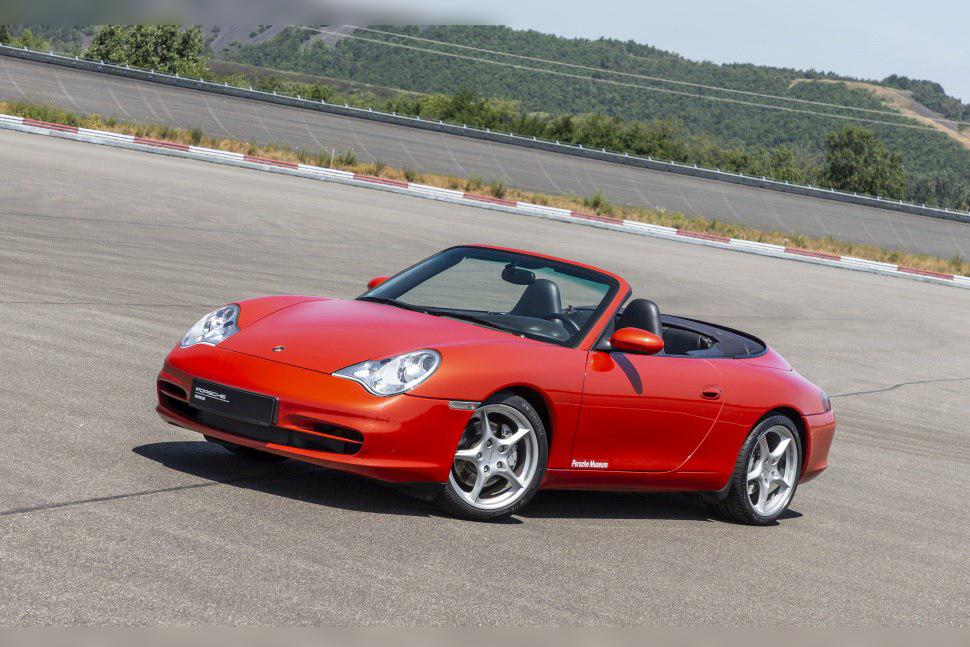
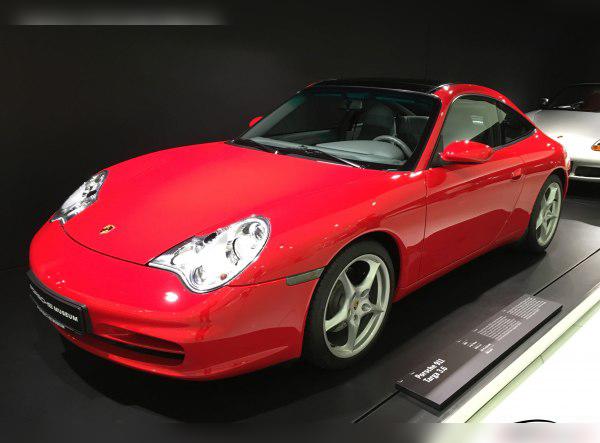
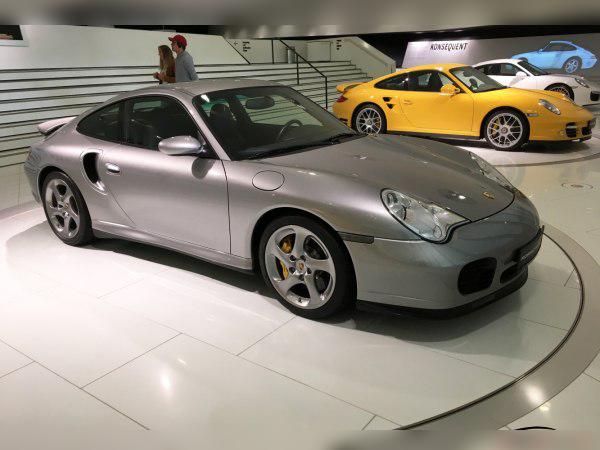
When talking about the Porsche 911 of the 996 generation (facelift models from 2001 to 2005), the engine designated M96.05 represents an evolution of the earlier 3.4-liter unit. Increasing the displacement to 3.6 liters brought a power jump to 320 hp and a significantly smoother torque curve. This engine was installed in a wide range of 996 models – from the standard Carrera, through the all-wheel-drive Carrera 4, to the beautiful Targa and the muscular Carrera 4S (both Cabriolet and Coupe versions).
As a technical editor with many hours spent under the hood and behind the wheel of these cars, I can tell you this: the M96.05 is a mechanical masterpiece when it comes to throttle response and sound, but it is also an engineering compromise that comes with several serious factory flaws you must be thoroughly aware of before investing your money.
Technical specifications
| Parameter | Data |
|---|---|
| Displacement | 3596 cc (3.6 L) |
| Power | 235 kW (320 hp) |
| Torque | 370 Nm |
| Engine code | M96.05 |
| Injection type | Port injection (multi-port fuel injection) |
| Aspiration | Naturally aspirated |
Reliability and maintenance
Does this engine have a timing belt or chain, and a “major service” interval?
This boxer engine uses a chain (several of them, in fact) to drive the camshafts. There is no classic “major service” in the sense of replacing a timing belt every 60,000 or 100,000 km. The chain is very robust and rarely breaks, and is replaced only during a full engine rebuild. However, the accessory belt that drives the ancillaries (alternator, water pump, power steering) is replaced roughly every 60,000 to 80,000 km, with a mandatory inspection of the tensioner and idler pulleys.
Oil, viscosity grade and consumption
Engine oil is one of the most hotly debated topics in Porsche circles. The M96.05 takes a hefty 8.5 to 9 liters of oil (depending on whether the filter is changed and how long you let it drain). The factory recommends 0W-40, however, in practice it has proven to be much wiser on older M96 engines – especially for protecting the cylinder walls – to use a high-quality synthetic oil of grade 5W-40 or even 5W-50, as it provides a stronger oil film at high temperatures.
Oil consumption is absolutely normal for this type of design (flat-six). Factory tolerance allows up to 1 liter per 1000 km in extreme driving conditions, although in real life it is normal for the engine to consume about 0.5 to 0.8 liters per 2000–3000 km. If consumption exceeds 1.5 liters, that is already a red flag for inspecting the piston rings or cylinders.
Spark plug replacement
Given that this is a high-revving petrol engine, spark plugs are recommended to be replaced every 60,000 km or every 4 years, whichever comes first. At the same time, the ignition coils are checked. Due to the engine’s position, the coils are exposed to massive heat from the exhaust system, so their plastic housings often crack, allowing moisture in and causing misfires.
Specific components and failures
Here we come to the most important part. If you are buying an M96.05 engine, these are the terms you need to know by heart.
IMS bearing (Intermediate Shaft Bearing)
The infamous IMS bearing is the biggest weak spot of this engine. It sits on the intermediate shaft that transfers rotation from the crankshaft to the camshafts. If this bearing fails, the chain jumps timing, the valves hit the pistons and the engine is effectively destroyed. In these models (2001–2005), Porsche used single-row bearings that were more prone to failure than the earlier dual-row ones. Solution: A retrofit of an upgraded bearing (for example, a ceramic unit from independent manufacturers). The cost is high (depends on the market), but still far cheaper than a new engine.
Bore scoring
The engine uses a “Lokasil” coating on the cylinder walls instead of steel liners. Over time, due to thermal stress and lack of lubrication when cold, this coating can become damaged (flaking), especially on cylinders 4, 5 and 6. Symptoms: Audible ticking or knocking during operation (similar to noisy hydraulic lifters), increased oil consumption, and black soot exclusively on the left side of the exhaust system.
Oil leak at the rear main seal (RMS – Rear Main Seal)
The seal between the engine and gearbox is another well-known issue. The leak usually starts as a light “sweating” of oil. The seal itself is cheap, but labor is very expensive because the gearbox has to be removed. That’s why the RMS is always replaced preventively when changing the clutch or IMS bearing.
EGR, DPF, AdBlue and turbochargers?
This is a classic naturally aspirated petrol engine from the early 2000s. There is no turbocharger, no DPF filter, no EGR valve to clog up and, of course, no AdBlue system. The injection system is port injection (multi-port), which means fuel is injected before the intake valve. This is a big advantage because the fuel washes the valves, so there are no carbon build-up issues on the valve heads like on modern direct-injection engines. The injectors are extremely durable and rarely fail.
Fuel consumption and performance
How does the engine behave on the road?
With a vehicle weight of around 1350 to 1450 kg (depending on version and drivetrain), 320 hp is more than enough. This engine is anything but sluggish. Throttle response is instantaneous, typical of naturally aspirated boxers. 0–100 km/h takes around 5 seconds. It pulls best from 4000 rpm all the way to the redline.
Real-world fuel consumption
Do not be under any illusions – this engine loves to drink. In city driving fuel consumption is around 16 to 18 l/100 km, and that’s with a reasonably light right foot. On the other hand, the 911’s aerodynamics and suitable gearing make it excellent on open roads. On the motorway at 130 km/h in sixth gear, the engine cruises at a very relaxed ~3000 rpm, with fuel consumption dropping dramatically to around 9 to 10 l/100 km.
Additional options and modifications
LPG conversion
From a purely engineering standpoint, it is possible to install an LPG system because the engine uses port injection. However, from a practical and enthusiast’s point of view – this is a very bad idea. There is physically no room under the hood of a 911 for LPG components, the front trunk is too small for a tank, and the boxer engine already struggles with heat dissipation around the cylinder heads (which LPG only makes worse). The risk of destroying the valve seats is too high. Not recommended.
ECU remap (Stage 1)
Since this is a naturally aspirated engine from which the factory engineers have already extracted almost everything, a simple remap (Stage 1) brings modest results. Expect a power increase of no more than 15 to 20 hp and a minimal torque improvement. Given the high cost of a quality remap, it only makes sense if you want to sharpen throttle response or remove the top-speed limiter. Significant power gains are only possible with mechanical modifications (cams, exhaust, intake).
Gearbox and drivetrain
Types of gearboxes
The model was offered with two transmission options: a 6-speed manual and a 5-speed automatic (Tiptronic S). The Tiptronic S is based on Mercedes’ extremely robust 722.6 gearbox.
Manual gearbox (dual-mass flywheel and clutch)
Manual versions use a dual-mass flywheel. It serves to absorb vibrations and provide smooth operation, but it is subject to wear. Symptoms of wear include judder when pulling away and vibrations at idle. Replacing the clutch kit and dual-mass flywheel is very expensive (depends on the market), not only because of the price of genuine parts but also due to the labor hours required to dismantle the rear of the car. The most common gearbox issue (Getrag G96) is popping out of second gear (“2nd gear pop-out”) due to worn synchros and gear teeth.
Tiptronic S gearbox
The automatic does not use a dual-mass flywheel, but a classic torque converter. This gearbox is extremely reliable and basically “bulletproof” if serviced regularly. Failures are very rare. The oil and filter in the Tiptronic should be changed every 60,000 to 80,000 km, while in the manual gearbox the oil is usually changed at around 90,000 km.
Buying used and conclusion
What to check before buying?
Buying a Porsche with an M96.05 engine blindly is financial suicide. Here are the steps you must not skip:
- Cylinder endoscopy (borescoping): The mechanic must remove the spark plugs and inspect the walls of all cylinders with a special camera for any scoring.
- IMS bearing service history: Ask for physical proof (receipts, invoices) that the IMS bearing has been replaced with an upgraded version. The seller’s word is not enough.
- Inspection of the oil filter: Cut open the used oil filter and look for copper, steel or plastic particles (black debris from chain guides).
- Check for oil leaks: Inspect the engine and gearbox mating area from underneath for RMS seal leaks.
- Diagnostics (over-rev report): Diagnostics can show so-called “Range 1” and “Range 2” over-rev counters. They indicate how many times the previous owner has over-revved the engine beyond the redline (for example, accidentally shifting from 5th to 2nd). A high number of entries in Range 2 is a clear sign to walk away from that engine.
Final conclusion
Who is the 320 hp M96.05 engine for? It is an ideal ticket into the world of serious 911 models. It delivers a driving feel, soundtrack and precision that very few other cars can offer. However, it requires a mature owner who understands the maintenance costs of a premium sports brand. If you find a car that has already undergone preventive work (IMS replacement, clutch, water pump) and shows no cylinder damage, you will have a phenomenal sports car that is slowly but surely becoming a modern classic.