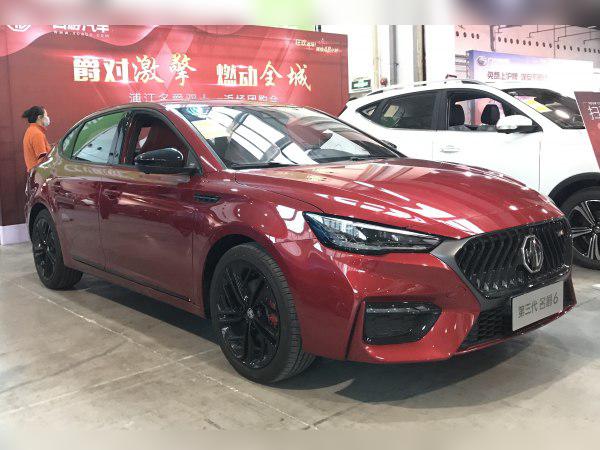
MG 15E4E (1.5 TGI) 181 HP: Experiences, issues, fuel consumption and maintenance
Key points (TL;DR)
- Performance: With 181 HP and 285 Nm, this is a very lively engine that turns the MG6 into a fast sedan. It’s not “lazy”.
- Transmission: Comes exclusively with a 7-speed DCT automatic gearbox. It requires strict maintenance (oil changes) to avoid expensive mechatronics failures.
- Timing drive: Uses a chain, which is theoretically an advantage, but it requires high-quality oil to avoid premature stretching.
- Injection system: Direct injection (GDI/TGI). That means better performance, but more complicated LPG installation and potential carbon buildup on intake valves.
- Fuel consumption: In the city it’s not a fuel-saving champion (expect around 9–10 liters), but on the open road it’s very economical.
- Maintenance: Parts are not available at every corner shop like for VW, but they can be sourced. Prices are in the mid-range.
Contents
- Introduction and applications
- Technical specifications
- Reliability and maintenance
- Specific parts and costs
- Fuel consumption and performance
- LPG and tuning
- Gearbox (DCT)
- Buying tips and conclusion
Introduction: The heart of the modern MG
The engine designated 15E4E is the top-of-the-range option in the second generation of the MG6 model (especially after the 2020 facelift and in “Pro” versions). Although MG carries a British badge, this is a product of the Chinese giant SAIC (Shanghai Automotive Industry Corporation). It belongs to the “NetBlue” or “Mega Tech” generation of engines developed in cooperation with General Motors (GM), which is evident from many technical solutions it shares with newer Opel small petrol engines.
This engine was designed to offer a sporty driving feel while also meeting strict emission standards. With 181 horsepower from 1.5 liters of displacement, it belongs to the group of highly stressed “downsized” engines.
Technical specifications
| Specification | Value |
|---|---|
| Displacement | 1490 cc (1.5 L) |
| Power | 133 kW (181 HP) at 5600 rpm |
| Torque | 285 Nm at 1500–4000 rpm |
| Engine code | 15E4E |
| Injection type | Direct injection (GDI / TGI) |
| Induction | Turbocharger + intercooler |
| Cylinder layout | I4 (inline, 4 cylinders) |
Reliability and maintenance
When it comes to maintaining the 15E4E engine, the key word is discipline. This is not a simple naturally aspirated engine that tolerates neglect.
Timing belt or chain?
This engine uses a timing chain to drive the valves. In general, the chain is designed to last the lifetime of the engine, but in practice, with these modern turbo petrol units, a detailed (audible) inspection is recommended already at around 150,000 km. If you hear rattling on cold start that lasts more than a few seconds, it’s a sign that the hydraulic tensioner has weakened or the chain has stretched. Replacing the chain set falls into the “moderately expensive” category.
Minor and major service
Minor service (oil and filter change) should be done at a maximum of 10,000 to 12,000 km, even if the manufacturer recommends longer intervals. Due to direct injection and the turbocharger, the oil degrades faster. The engine takes approximately 4.5 to 5 liters of oil.
The recommended grade is exclusively full synthetic 0W-20 or 5W-30 (check the exact specification in the owner’s manual; it usually requires API SP or a newer standard due to LSPI protection). The major service (replacement of auxiliary belt, tensioners, water pump) is usually done at around 100,000 km or every 5 years.
Oil consumption and common issues
Modern turbo engines with direct injection tend to consume a certain amount of oil. For the 15E4E, consumption of up to 0.5 liters per 5,000 km can be considered acceptable, especially if driven aggressively. If it consumes more, the issue is usually with the oil separator (PCV valve) or, in a worse scenario, the piston rings.
Common failures include:
- Carbon buildup: Due to direct injection, fuel does not “wash” the intake valves. Over time, carbon deposits build up and can reduce power and cause rough running. The solution is intake cleaning (“decarbonization” or walnut shell blasting) every 60–80k km.
- Sensors: Occasional problems with fuel pressure sensors or lambda (oxygen) sensors.
Specific parts (costs)
Dual-mass flywheel and clutch
Yes, this engine in combination with the DCT gearbox has a dual-mass flywheel. Its role is to dampen the strong vibrations produced by a high-torque engine. Replacement is expensive. Symptoms of failure are metallic knocks when switching the engine off or rattling at idle that disappears when you rev the engine.
Turbo and injection
It uses a single variable-geometry turbocharger. Its service life is long (over 200,000 km) if you follow the rule of cooling the engine after fast driving (let it idle for 1–2 minutes before shutting it off). The injectors are piezoelectric for direct injection. They are very precise but also sensitive to poor fuel quality. Replacing injectors is very expensive, so it is recommended to use only high-quality, additized petrol.
Emissions (DPF/GPF/EGR)
Since this is a newer-generation Euro 6 engine (after 2018), it is equipped with a GPF filter (Gasoline Particulate Filter – the petrol equivalent of a DPF). Although a GPF does not clog as easily as a diesel DPF (because petrol exhaust gas temperatures are higher), frequent short city trips can clog it. Symptoms are a warning light on the dashboard and loss of power. Occasional driving on the open road is necessary.
Fuel consumption and performance
City vs. highway driving
Factory figures are often too optimistic. The reality for the MG6 with this engine is:
- City driving: Expect between 8.5 and 10.5 l/100 km. In heavy traffic and with a heavy right foot, this easily goes over 11 liters.
- Open road (rural roads): Here the engine shines and can go down to about 6.0–6.5 l/100 km.
- Motorway (130 km/h): Consumption is around 7.5 l/100 km.
Is the engine “lazy”?
Absolutely not. With 181 HP and 285 Nm available from as low as 1500 rpm, this engine moves the MG6 body with ease. Acceleration is linear and strong, especially in “Sport” mode. Overtaking is safe and quick.
At 130 km/h in 7th gear, the engine spins at a pleasant 2,400–2,600 rpm, which contributes to cabin quietness and lower fuel consumption.
Additional options and modifications
LPG
Installing LPG is complicated and expensive. Due to direct injection, a regular sequential system cannot be used. You need a direct-injection LPG system (which also uses a bit of petrol to cool the injectors) or a liquid-phase system. The installation cost is high (often over 800–1000 EUR), so the cost-effectiveness is questionable unless you cover very high mileage.
Chiptuning (Stage 1)
Turbo engines respond well to remapping. Stage 1 can raise power to a safe 200–210 HP and torque to around 320 Nm. However, be careful because of the gearbox. DCT gearboxes have a torque limit they can handle. Pushing torque too high can shorten the life of the clutch packs.
Gearbox: Achilles’ heel or advantage?
The 15E4E engine in the MG6 comes as standard with a 7-speed DCT gearbox (Dual Clutch Transmission).
Dry vs. wet clutch
This is a critical point. Older MG models used a DCT with “dry” clutches that was jerky and unreliable in traffic jams. Facelift models with this more powerful engine (181 HP) mostly use the “Mega Tech” 7-speed gearbox with “wet” clutches. A wet clutch is a dramatically better solution because the oil cools the plates, which means much higher reliability and smoother shifting.
Maintenance and failures
- Service: The oil in the gearbox (and the filter if externally replaceable) MUST be changed every 40,000 to 60,000 km. This is not a “sealed for life” gearbox, whatever anyone tells you.
- Most common failures: Mechatronics (the gearbox control unit) failure and wear of the clutch packs. Symptoms are delay when setting off, harsh jolts when shifting from 1st to 2nd gear, or slipping under hard acceleration.
- Cost: Replacing the clutch set on a DCT gearbox is a very expensive operation.
Buying used and conclusion
If you are planning to buy a used MG6 with the 15E4E engine, here is what you should check:
- Cold start: Listen to the chain. Any rattling or “diesel-like” sound in the first few seconds is a red flag.
- Test drive (gearbox): Warm the car up, then in city stop-and-go traffic observe the gearbox behavior. It should set off smoothly, without jerks or hesitation.
- Diagnostics: Check the status of the GPF filter and whether there are any fault codes related to fuel pressure or the turbocharger.
Conclusion
The 15E4E (181 HP) engine is a modern, potent and technologically advanced unit that offers excellent performance for the money. It is a far better choice than the weaker versions. However, it requires an owner who understands the needs of turbocharged direct-injection petrol engines and DCT gearboxes. If you are ready to change the oil regularly (both in the engine and in the gearbox) and not skimp on parts quality, this engine will serve you well. If you are looking for a “fill up and drive” car with minimal maintenance, this may not be the best choice for you.