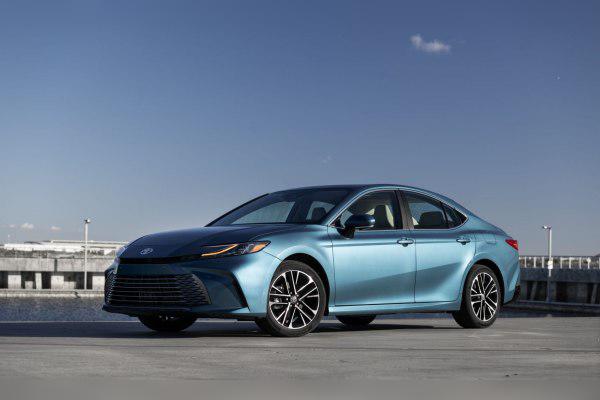
Toyota M20C-FKS 2.0 Dynamic Force: Experiences, issues, fuel consumption and buying guide
Key points (TL;DR)
- Reliability: Extremely high. This engine is part of Toyota’s "Dynamic Force" family, focused on thermal efficiency and longevity.
- Timing system: The engine uses a timing chain designed to last as long as the engine itself, with regular maintenance.
- Performance: As a naturally aspirated engine, it needs revs. It lacks the "kick in the back" that turbo engines have (modest torque of 206 Nm).
- Transmission: Direct Shift CVT is a revolution – it has a physical first gear for take-off, which eliminates the typical CVT "slipping" at start.
- Technology: Uses D-4S injection (combination of direct and port injection), which prevents carbon buildup on valves – a common problem of many modern petrol engines.
- Recommendation: Ideal for drivers who value relaxed driving and longevity rather than sporty performance.
Contents
- Technical specifications
- Reliability and Maintenance
- Specific Parts and Systems
- Fuel Consumption and Performance
- Additional Options and Modifications
- Transmission (Direct Shift CVT)
- Used car buying and Conclusion
Introduction
The engine designated M20C-FKS is the heart of the petrol lineup for the latest generation Toyota Camry (XV80) in markets where the hybrid is not the only option (such as parts of Eastern Europe and Asia). It is a two-liter naturally aspirated unit from the Dynamic Force series. These engines were designed to achieve record thermal efficiency (around 40%), which in practice means extracting the maximum amount of energy from every drop of fuel with minimal losses. Although on paper it looks like a "regular petrol engine", there is a lot of advanced technology under the hood that directly affects real-world use.
Technical specifications
| Specification | Data |
|---|---|
| Engine code | M20C-FKS |
| Displacement | 1987 cc |
| Power | 127 kW (173 hp) @ 6600 rpm |
| Torque | 206 Nm @ 4400–4900 rpm |
| Fuel type | Petrol |
| Induction | Naturally aspirated (No turbo) |
| Injection | D-4S (Direct + Port) |
| Compression ratio | 13.0 : 1 |
Reliability and Maintenance
With the Dynamic Force series, Toyota has maintained its reputation as a brand that "doesn’t break down", but now with significantly more complex technology than 20 years ago.
Timing belt or chain?
The M20C-FKS engine uses a timing chain. The chain is single-row but of very high quality. In practice, it has proven to be extremely durable and there is no scheduled replacement interval. It is replaced only if a characteristic rattling noise appears, which is rare before 250,000–300,000 km, provided that the oil has been changed regularly.
Minor and Major service
A minor service is recommended every 15,000 km or one year, whichever comes first. For harsher city driving (taxi, delivery, stop-and-go), shorten the interval to 10,000 km.
A traditional major service (timing belt replacement) does not exist here because of the chain. However, you still need to check and replace the auxiliary (serpentine) belt that drives peripheral components (such as the AC compressor and alternator) at around 100,000 km or based on its condition. In newer models, the water pump is often electric, which reduces engine load but increases the price of the part.
Oil and oil consumption
This is a critical point. Due to extremely tight tolerances and the variable valve timing system (VVT-iE), this engine requires very thin oils.
The recommended viscosity is 0W-16 or alternatively 0W-20. Using thicker oils (such as 5W-30 or 10W-40) can lead to issues with the VVT system and increased fuel consumption.
The engine takes approximately 4.2 to 4.5 liters of oil (with filter).
As for oil consumption, the M20C-FKS is not known as an "oil burner". Consumption of up to 0.5 liters per 10,000 km is acceptable, but most owners do not notice any significant drop in level between services. If it consumes more, the problem is usually clogged oil control rings due to overly long oil change intervals.
Most common issues
The engine is mechanically robust, but there are some peripheral points to watch:
- Electric thermostat / Cooling control valve: This is a known weak point of Dynamic Force engines. It can stick, leading to overheating or very slow warm-up. The symptom is a check engine light and a fault code on diagnostics.
- NOx sensors and oxygen (lambda) sensors: Due to strict Euro emission standards, the sensors are sensitive to poor fuel quality.
- High-pressure fuel pump: You can hear a characteristic "ticking" while the engine idles. That is a normal sound of direct injection operation, but if it becomes excessively loud, the pump may be close to failure (an expensive part).
Specific Parts (Costs)
Dual-mass flywheel and clutch
Since this model is paired with a CVT transmission, it does not have a conventional dual-mass flywheel like diesels with a manual gearbox. Instead, it uses a torque converter. This is good news for your wallet, as it eliminates one of the most expensive potential failures (replacement of clutch and flywheel set).
Fuel injection system
The engine uses the advanced D-4S system. This means it has two injectors per cylinder: one for direct injection (into the combustion chamber) and one for port injection (into the intake manifold).
Why is this good? The port injector washes the intake valves with petrol, solving the carbon buildup problem that plagues modern engines with only direct injection. The injectors are generally reliable, but if they fail, replacement is very expensive because there are 8 of them for 4 cylinders, and the high-pressure system is complex.
Turbo, DPF, EGR
- Turbo: None. This is a naturally aspirated engine. Fewer parts to fail, but also less torque.
- EGR valve: Yes, it has an EGR system for exhaust gas recirculation. Clogging is possible, but less common thanks to the D-4S combustion system.
- GPF/OPF filter: Models for the European market (Euro 6d and newer) have a GPF (Gasoline Particulate Filter). It works similarly to a DPF on diesels, but regenerates much more easily and quickly (heats up faster) because petrol engines operate at higher temperatures. Clogging is rare, except on cars driven exclusively on very short trips in winter.
Fuel Consumption and Performance
City driving and "sluggishness"
The Camry is a large and heavy sedan. With 173 hp, the engine is not weak, but torque of only 206 Nm is modest by today’s standards.
Is it sluggish? Compared to a turbo diesel or turbo petrol of similar power – yes. You have to rev it high to get strong acceleration. However, thanks to the "launch gear" system in the transmission, take-off from a standstill is surprisingly brisk.
Real-world city consumption: Expect between 8.5 and 10.5 l/100 km. In heavy traffic it can go up to 12 liters. This is not a hybrid, so don’t expect miracles in the city.
Open road and motorway
This is where the M20C-FKS shines. Thanks to its excellent thermal efficiency and the long ratios of the CVT transmission:
At 130 km/h the engine runs at quite low revs (often below 2,500 rpm), resulting in quiet operation and good economy. Motorway consumption is around 6.0 to 7.5 l/100 km, depending on terrain and load.
Additional Options and Modifications
LPG (Autogas) conversion
Not recommended and not cost-effective. Due to the D-4S system (8 injectors), a standard sequential LPG system cannot be installed. Sophisticated direct-injection LPG systems are required, which are very expensive (often over 1000–1200 EUR). Even with such systems, the engine still uses a certain percentage of petrol to cool the petrol injectors. Considering this engine’s fuel consumption, the payback period for such a system is too long.
Remapping (Stage 1)
On naturally aspirated engines, remapping is usually a waste of money. The gain is in the range of 5 to 8 hp, which is imperceptible in everyday driving. It’s better to invest that money in quality tyres or regular servicing.
Transmission: Direct Shift CVT
With this engine in the Camry XV80 you only get the Direct Shift CVT (code K120). This is not "that old CVT" that drones like a blender.
- How it works: Toyota has fitted a real, physical first gear (gearset). Up to about 40–60 km/h, the car drives through the gearset (like a conventional automatic), and then seamlessly switches to the belt (CVT mode). This gives a direct feel when taking off and eliminates belt stretching under high load at launch.
- Maintenance: Although Toyota often states that the oil is "lifetime", real-world experience says otherwise. Change the transmission fluid every 60,000 to 80,000 km. The service cost is moderate ("not expensive" compared to DSG/DCT gearboxes).
- Failures: A very reliable transmission. Far more reliable than Nissan’s Jatco CVTs. The only potential issue is a solenoid in the valve body at very high mileage, but regular fluid changes largely prevent this.
Used car buying and Conclusion
Before buying a Camry with this engine, make sure you do the following:
- Listen to a cold start: Chain rattling or knocking from the VVT actuators in the first few seconds may indicate poor maintenance.
- Check service history: If the oil was changed every 30,000 km (long-life intervals), be cautious. This engine likes fresh oil.
- Test drive: Check whether the transmission responds linearly under hard acceleration or if there are "jerks" when shifting from the physical first gear to the belt.
Final verdict
The Toyota Camry with the 2.0 M20C-FKS engine is a car for the rational buyer. It is intended for people who drive a lot of kilometres, want comfort, quietness and reliability, and are not obsessed with sporty driving. For taxi drivers and families who want a car that will "last forever" with minimal breakdowns – this is one of the best choices on the market. If you are looking for excitement and "being pinned to the seat", look for a different model.