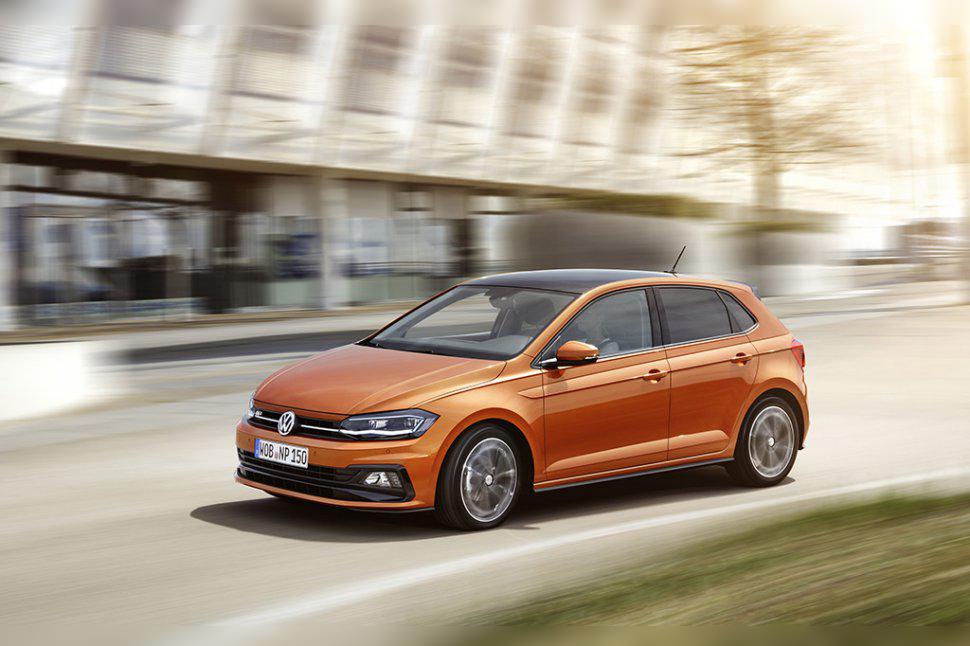
VW 1.0 MPI (65 HP) – Experiences, problems, fuel consumption, and is it too weak?
Key points (TL;DR)
- Extremely reliable: This is one of the simplest modern engines. No turbo, no dual-mass flywheel, no direct injection.
- Modest performance: With 65 HP in a Polo VI body, this car is strictly for city use and relaxed driving. Overtaking requires patience and planning.
- Ideal for LPG: Thanks to the MPI injection system, LPG installation is simple, cheap, and the engine handles it very well.
- Low maintenance costs: Parts are widely available, there are few components that can fail, and regular servicing is inexpensive.
- Fuel consumption: It is economical in the city, but on open roads, due to short gearing and the need for high revs, consumption can increase.
- Timing belt: Uses a very durable belt, unlike the old problematic TSI chains.
Contents
- Introduction and models
- Technical specifications
- Reliability and maintenance
- Specific parts and costs
- Fuel consumption and performance
- Additional options and modifications
- Gearbox
- Used car buying tips and conclusion
Introduction: Basic engine for patient drivers
The engine in question belongs to the Volkswagen Group’s EA211 family. It is a three-cylinder naturally aspirated petrol engine with a displacement of 1.0 litre. The codes CHYC and DFNB refer to variants that meet different emission standards (Euro 6d-TEMP/EVO), but they essentially share the same mechanics. This is the entry-level, “base” engine for the sixth-generation Volkswagen Polo (from 2017 onwards). Its main role is to be affordable, easy to maintain, and to meet the needs of city driving. It is not intended for enthusiasts, but for those who want transport from point A to point B with minimal running costs.
Technical specifications
| Parameter | Data |
|---|---|
| Displacement | 999 cc (1.0 l) |
| Configuration | Inline, 3 cylinders |
| Power | 48 kW (65 HP) at 5000-6000 rpm |
| Torque | 95 Nm at 3000 rpm |
| Engine codes | CHYC, DFNB |
| Injection type | MPI (Multi-Point Injection) – Indirect |
| Aspiration | Naturally aspirated (No turbo) |
Reliability and maintenance
Belt or chain?
This engine (EA211 series) uses a timing belt. This is a big advantage compared to older generations of VW engines that had problematic chains. The belt is reinforced and designed to last a very long time. The manufacturer often states an inspection at 240,000 km, but experienced mechanics realistically recommend doing the major service (replacement of the timing kit and water pump) between 150,000 km and 180,000 km or after 7–8 years of age, whichever comes first, to avoid the risk of failure due to rubber ageing.
Most common failures
Since the engine is structurally simple, the list of failures is short:
- Water pump and thermostat housing: This is the “Achilles’ heel” of EA211 engines. The housing is plastic and over time coolant leaks can occur. If you notice the coolant level dropping, this is the first place to check.
- Throttle body contamination: Can cause unstable idle. Cleaning solves the problem.
- Ignition coils: As with most petrol engines, coils can fail, which manifests as the engine running on 2 cylinders and the “Check Engine” light coming on.
- Oil level sensor: Sometimes it can report an error even when there is enough oil.
Oil and service intervals
The sump of this engine holds approximately 3.4 to 3.8 litres of oil (depending on whether the filter is changed; always buy 4 litres). The recommended grade is usually 5W-30 or 0W-20 (VW 508.00 or VW 504.00 specification). Check the exact specification in the vehicle’s manual because newer DFNB engines often require thinner oils (0W-20) for emissions reasons.
Oil consumption: These engines generally do not consume oil in worrying amounts if they are healthy. Consumption of up to 0.3 litres per 10,000 km is acceptable. If it uses more than that (e.g. a litre every few thousand km), this may indicate an issue with piston rings or valve stem seals, but that is rare at low mileage.
Spark plugs
Spark plugs are replaced every 60,000 km or 4 years. Do not postpone this replacement because worn plugs can overload the coils and lead to their failure.
Specific parts (Costs)
This is the brightest aspect of this engine – simplicity means low costs.
Dual-mass flywheel and clutch
This engine does not have a dual-mass flywheel. It uses a conventional solid flywheel. The clutch kit is simple and relatively cheap to replace (depends on the market, but it falls into the “not expensive” category).
Injection system and injectors
The engine uses an MPI (Multi-Point Injection) system. This means that fuel is injected into the intake manifold, not directly into the cylinder. The injectors are very durable, cheap to refurbish or replace, and are not as sensitive to fuel quality as on TSI engines. Also, this system prevents carbon build-up on the intake valves, which is a common problem with direct injection.
Turbo and EGR
The engine does not have a turbocharger. That means one less worry (no turbo overhauls, no intercooler issues). There is an EGR valve, but on petrol engines it rarely clogs compared to diesels.
DPF / GPF filter
Older versions (CHYC) usually do not have a particulate filter. However, newer versions with the DFNB code (Euro 6d standard) are equipped with a GPF (Gasoline Particulate Filter) – the petrol equivalent of a DPF. Still, petrol exhaust gases are hotter, so GPF filters passively regenerate much more easily and rarely cause problems in city driving, unlike diesels. AdBlue fluid is not used with this engine.
Fuel consumption and performance
City driving
This engine is in its element in the city. Expect real-world consumption between 6.0 and 7.5 l/100 km, depending on traffic and how heavy your right foot is. The start-stop system helps reduce consumption while stationary.
Is the engine “sluggish”?
To be frank – yes. With 95 Nm of torque and 65 HP, the Polo VI (which is not a light car) accelerates to 100 km/h in about 15.5 to 16 seconds. In the city it is perfectly adequate, and it feels lively in the first three gears up to 50–60 km/h. However, as soon as you get onto open roads and encounter an incline or need to overtake, you will feel the lack of power. You have to shift down and rev the engine high.
Motorway
On the motorway the engine struggles. At 130 km/h in fifth gear, it spins at a fairly high 3800–4000 rpm. This creates noise in the cabin and increases fuel consumption to around 6.5 to 7.5 l/100 km. Its more comfortable cruising speed is 110–120 km/h.
Additional options and modifications
LPG installation
This is an ideal engine for LPG. Thanks to the MPI injection system, a standard sequential LPG system can be installed, which is cheaper than systems for direct-injection engines. The valves are sufficiently durable, and the savings are significant. The tank is usually fitted in the spare wheel well.
Chiptuning (Stage 1)
On small-displacement naturally aspirated engines, chiptuning makes no real sense. The gain would be maybe 3 to 5 horsepower, which is imperceptible in everyday driving. Do not waste money on software “tuning” of this engine.
Gearbox
This engine is paired exclusively with a 5-speed manual gearbox. Automatic (DSG) gearboxes are usually not combined with the weakest 65 HP variant (they are reserved for more powerful TSI models).
Most common manual gearbox issues:
- The gearboxes are generally precise and robust (MQ200 series).
- Sometimes it can be difficult to engage reverse (you may hear grinding), which is often a characteristic rather than a fault, but if it happens frequently, have the clutch checked.
- The gearbox oil is “lifetime fill” from the factory, but it is recommended to replace it at around 150,000 – 180,000 km to preserve the synchros and bearings.
- Replacing the clutch kit is a routine job and falls into the cheaper repairs.
Used car buying tips and conclusion
Before buying a Polo with this engine, pay attention to the following:
- Engine sound: Three-cylinders naturally have a “throaty”/“chuffing” sound, but you should not hear metallic knocking or chain-like rattling (even though it has a belt, rattling can come from valves/lifters).
- Coolant leaks: Look in the engine bay around the plastic thermostat housing (on the right-hand side of the engine when viewed from the front). Pink residue is a sign of coolant leakage.
- Clutch: Check where the clutch bites. Since this is a weak engine, drivers often “ride” or slip the clutch when starting uphill to get more power.
Conclusion: The VW Polo 1.0 MPI (65 HP) is a car for the head, not the heart. It is intended for beginner drivers, students, delivery services, or people who spend 90% of their time in city traffic where power is not important. Its greatest strengths are low maintenance costs and reliability. If you often drive on the motorway or with a full load of passengers, it is strongly recommended to look for the 1.0 TSI version (with a turbo), because the difference in driving is “night and day”.