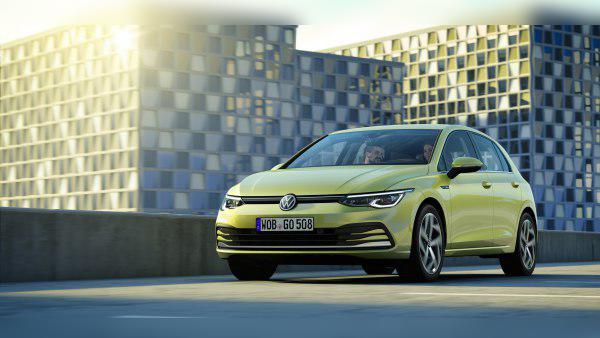
Volkswagen 1.5 TGI (DFYA) – Experiences, issues, fuel consumption and maintenance
Volkswagen’s 1.5 TGI with the engine code DFYA represents the very peak of engineering when it comes to factory CNG (compressed natural gas) powertrains. This is not an aftermarket conversion, but an engine from the EA211 Evo family, designed from the ground up to run on natural gas. It is primarily installed in the Golf 8, as well as related models from the VAG group.
This engine is specific because it offers extremely low running costs, but it also comes with certain compromises, primarily in the form of a smaller petrol tank and specific maintenance requirements for the gas system.
Key points in short (TL;DR)
- Economy: One of the “cheapest” engines to run per kilometer on the market.
- Range: It has a small petrol tank (around 9 liters), which can cause range anxiety in regions with a poor CNG network.
- Technology: Equipped with a VTG turbo (variable geometry), which is rare for petrol/CNG engines in this class.
- Gearbox: Comes exclusively with the automatic DSG gearbox (DQ200), which requires specific care.
- Maintenance: Requires strict adherence to service intervals and regular checks of the CNG tanks’ condition.
- Recommendation: Ideal for taxi drivers and long-distance commuters in areas with good CNG coverage. Not for those seeking sporty performance.
Contents
- Technical specifications
- Reliability and maintenance
- Specific parts and costs
- Fuel consumption and performance
- Additional options and modifications
- Gearbox
- Buying used and conclusion
Technical specifications
| Feature | Data |
|---|---|
| Name / Engine code | 1.5 TGI / DFYA (EA211 Evo) |
| Displacement | 1498 cc |
| Power | 96 kW (130 hp) |
| Torque | 200 Nm at 1400–4000 rpm |
| Fuel type | CNG (Methane) / Petrol |
| Charging | Turbo (VTG), intercooler |
| Injection | Direct injection |
| Number of cylinders / valves | 4 / 16 |
Reliability and maintenance
Timing belt or chain?
The 1.5 TGI (DFYA) engine uses a timing belt. This is good news, as earlier generations of TSI engines had issues with timing chains. The belt on this engine is reinforced and designed for long intervals, but caution is still advised.
Major service
The manufacturer often states very optimistic belt replacement intervals (sometimes over 210,000 km or 10 years). However, in practice and considering harsher operating conditions, experienced mechanics recommend doing the major service every 160,000 to 180,000 km, or after 6 to 7 years of age, whichever comes first. A snapped belt leads to catastrophic engine damage, so preventive replacement of the timing kit and the water pump (which is electronically controlled) is crucial.
Most common issues
Although generally reliable, the DFYA engine has its specifics:
- Oil consumption: Like most modern VAG engines with thin piston rings to reduce friction, it can consume oil, especially if driven aggressively on the motorway.
- Deposits on intake valves: Due to direct injection, the valves are not “washed” by fuel, so carbon deposits build up over time, which can lead to rough running and loss of power.
- CNG system: The gas pressure regulator is a complex component. If there is a leak or incorrect pressure, the car will automatically switch to petrol.
- Turbo actuator: Since it uses a VTG turbo (variable geometry), the mechanism can stick if the car is driven only gently in city traffic. It occasionally needs to be “blown out” on the open road.
Oil: quantity and grade
The engine holds approximately 4.3 liters of engine oil. For this engine (EA211 Evo), VW strictly specifies the VW 508.00 / 509.00 standard. This is a 0W-20 viscosity oil. This “thin” oil is crucial for the operation of the variable oil pump and for reducing fuel consumption. Do not use thicker oils (e.g. 5W-40) unless a mechanic specifically determines it is necessary due to wear, as this can affect VTG turbo operation and fuel consumption.
Oil consumption of up to 0.5 liters per 1,000 km is considered “acceptable” by factory standards, but in practice a healthy engine should not consume more than 0.5 to 0.8 liters between two services (at 15,000 km).
Spark plugs
This is a critical point for TGI engines. Methane burns at a higher temperature and is harder to ignite than petrol. Spark plugs must be replaced more frequently than on pure petrol engines. The recommended interval is every 40,000 to 60,000 km. Always use spark plugs specifically intended for the TGI engine (they are often iridium or platinum), as regular plugs can lead to coil pack failure (which are also expensive).
Specific parts (costs)
Dual-mass flywheel
Yes, this model has a dual-mass flywheel. Since it is paired with a DSG gearbox, a dual-mass flywheel is necessary to absorb vibrations. Its lifespan depends on driving style, but it usually lasts between 150,000 and 200,000 km. Replacement is expensive (depends on the market), but necessary for comfortable driving.
Injection system and injectors
This engine has a complex system. It has a set of petrol injectors (high-pressure direct injection) and a set of CNG injectors (which inject gas into the intake manifold, i.e. an MPI principle for gas, although newer versions may have more direct systems). CNG injectors are generally reliable, but sensitive to impurities in the gas (oil from compressors at filling stations). If a gas injector leaks or does not close properly, the engine will be hard to start or will run roughly.
Turbocharger
The engine uses a single VTG turbocharger (Variable Turbine Geometry). This technology was previously reserved for diesels and Porsche petrol engines. It provides excellent low-end response and efficiency in the engine’s Miller cycle operation. Service life is long if quality oil is used and changed regularly, but in case of failure, overhaul or replacement is very expensive due to the complex electronics and vane mechanism.
DPF / GPF / EGR
As a petrol engine, it does not have a classic DPF, but it does have a GPF (Gasoline Particulate Filter). GPF issues are rarer than DPF problems on diesels because petrol (and especially methane) burns cleaner. Passive regeneration occurs during normal driving. There is no AdBlue fluid – that is reserved for diesels.
Fuel consumption and performance
City consumption
This is the DFYA engine’s main trump card. In city driving, real-world methane consumption is around 4.5 to 5.5 kg per 100 km. Considering the price of methane, this is extremely economical. Keep in mind that this car has a very small petrol tank (around 9 liters), which serves only as a reserve. The car is designed to be driven on gas 99% of the time.
Is the engine “sluggish”?
With 130 hp and 200 Nm, the engine is not sluggish, but it is not a sports engine either. Thanks to the VTG turbo, torque is available at very low revs (from 1400 rpm), so the car pulls nicely away from traffic lights. In a Golf 8 estate or hatchback, the power is more than sufficient for smooth, normal driving, even when the car is fully loaded.
Motorway behavior
On the motorway it is stable and quiet. At 130 km/h in 7th gear (DSG), the engine runs at relatively low revs (around 2200–2400 rpm), which contributes to low noise and good economy. However, overtaking at higher speeds requires a firmer press on the accelerator and a “kickdown” from the gearbox.
Additional options and modifications
LPG installation
Absolutely not worthwhile and technically unnecessary. The car already has factory CNG (methane), which is more economical than LPG. Also, the engine has direct petrol injection, which would make an LPG conversion extremely expensive and complicated.
Chip tuning (Stage 1)
Although it is a turbo engine, chip tuning is not recommended. The engine operates in a Miller cycle with a high compression ratio (12.5:1), specific for gas. Increasing boost pressure would significantly raise the thermal load on an engine that already operates at high combustion temperatures due to gas. The risk of melting pistons or damaging the VTG turbo is too high for a gain of 15–20 hp.
Gearbox
Gearbox type
With the DFYA engine in the Golf 8 you usually get a 7-speed DSG gearbox with dual clutch. The gearbox code is most often DQ200.
Failures and maintenance (DQ200)
This is a gearbox with “dry” clutches.
- Most common issues: Wear of the clutch pack (friction plates) due to frequent stop-and-go city driving. Symptoms include shuddering when moving off or when shifting from 1st to 2nd gear. The mechatronic unit (the gearbox “brain”) can also fail, resulting in an inability to change gears.
- Servicing: VW officially claims the oil in this gearbox is “lifetime fill”. However, real-world experience says otherwise. It is recommended to change the gearbox oil (there is only a small amount, around 2 liters) and check the hydraulic oil in the mechatronics every 60,000 to 80,000 km to extend its lifespan.
- Clutch cost: Replacing the clutch pack on the DQ200 is an expensive job, but still cheaper than on “wet” DSG gearboxes. Nevertheless, you should expect a significant expense around 150,000–200,000 km.
Buying used and conclusion
When buying a Golf 8 with this engine, it is crucial to check the following:
- CNG tank certification: Check the validity of the certification for the CNG tanks. The tanks are composite (on newer models) or steel. If they are damaged or corroded, replacement is very expensive (several thousand euros).
- Operation on both fuels: The car must run flawlessly on both petrol and methane. Switching between fuels should be imperceptible.
- DSG behavior: The gearbox must not jerk, knock or hesitate when moving off from a standstill.
Conclusion: The Volkswagen 1.5 TGI (DFYA) is an excellent choice for drivers who cover a lot of kilometers and want to drastically reduce fuel costs while driving a modern and comfortable car. It is not for racers or for people living in areas without CNG stations (due to the small petrol tank). If the gas system is in good condition and the gearbox properly maintained, this is one of the most rational powertrains available today.