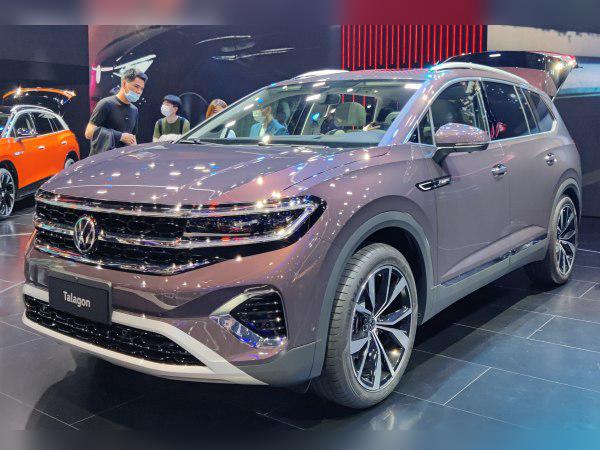
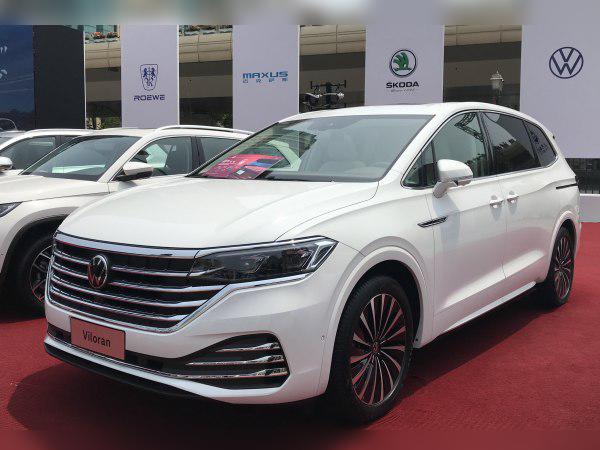
In short – the most important (TL;DR)
- Engine base: DKX belongs to the proven EA888 Gen 3B family (2.0 TSI). This is a modern, powerful petrol engine, but in heavy vehicles it has a tough job.
- Timing drive: Uses a chain. The system is significantly improved compared to older generations, but it requires high‑quality oil and regular changes.
- Biggest weakness: The thermal management module (thermostat housing and water pump) is plastic and prone to leaking.
- Gearbox: Comes exclusively with a DSG gearbox (wet clutch). Servicing the gearbox every 60,000 km is critical for longevity.
- Fuel consumption: In models such as the Talagon and Viloran, expect high city consumption (over 12 l/100 km) due to the huge vehicle weight.
- Recommendation: An excellent engine for highway use and comfortable cruising, but it requires strict maintenance and quality fuel.
Article contents
2.0 TSI (DKX) – The heart of the largest Volkswagen models: Experiences and issues
The engine with the code DKX is a variation of Volkswagen’s well‑known third‑generation EA888 platform (Gen 3B), specifically calibrated for markets where massive models such as the Volkswagen Talagon and Viloran are sold. These cars are true heavyweights – large MPV and SUV models that often exceed 2 tons in weight.
With its 220 hp and 350 Nm, the DKX represents a “golden middle ground” (badge 380 TSI). It is not the most powerful version VW produces, but it is designed to provide a balance between the torque needed to move a heavy body and acceptable fuel consumption. Although these models are rarely seen on European roads (they are more common in Asia and Eastern markets), the engine itself is mechanically identical to European 2.0 TSI units found in the Tiguan or Passat, so workshop experience is very applicable and relevant.
Technical specifications
| Parameter | Value |
|---|---|
| Engine code | DKX (EA888 Gen 3B family) |
| Displacement | 1984 cc (2.0 L) |
| Power | 162 kW (220 hp) |
| Torque | 350 Nm at 1500–4400 rpm |
| Fuel type | Petrol (Recommended 98/100 RON, minimum 95) |
| Injection system | TSI (direct injection) + MPI (depending on market) |
| Charging | Single turbocharger (IHI IS20), intercooler |
| Camshaft drive | Chain (timing chain) |
Reliability and maintenance
Timing: Chain or belt?
The DKX engine uses a timing chain. This used to be a sore spot of older TSI engines (up to 2012), but in this generation (Gen 3) the system is much more robust. Still, the chain is not eternal. Chain stretch can occur at higher mileages (over 150,000–200,000 km). The symptom is rattling at cold start that lasts a few seconds. If you hear that sound, go to a mechanic immediately to check for chain stretch.
Most common failures and “Achilles’ heel”
Although the engine is mechanically very durable (block, pistons, crankshaft), it is the peripherals that cause headaches:
- Thermostat module and water pump: This is a plastic housing that is exposed to high temperatures. It is almost guaranteed that it will start leaking or deform between 60,000 and 120,000 km. The symptom is a drop in coolant level without visible traces under the car (because the coolant evaporates on the hot block) or engine overheating.
- PCV valve (oil separator): When the membrane tears, the engine starts to whistle, idles roughly and consumes oil. It is not an expensive part, but it should be replaced in time so that the crankshaft seal does not blow out due to excess pressure.
- Carbon buildup: Although newer generations are improved, direct injection inevitably leads to dirty intake valves. Mechanical cleaning (walnut blasting) is recommended at around 100,000 km if you notice a loss of power.
Service intervals and oil
The major service (chain replacement) is not strictly prescribed by mileage; it is done as needed (often around 180,000–200,000 km). The auxiliary belt and tensioners should be replaced at around 120,000 km.
Oil: This engine takes approximately 5.7 liters of oil. VW recommends the VW 508.00 (0W‑20) specification for maximum efficiency, but many experienced mechanics, for warmer climates and better protection (especially in heavy vehicles such as the Viloran and Talagon), recommend VW 504.00 (5W‑30). Do the minor service at a maximum of 10,000–15,000 km or once a year. Forget “Long Life” intervals of 30,000 km if you want the engine to last.
Oil consumption
Does it consume oil? Yes, all turbo petrol engines consume a bit of oil. For the DKX engine, consumption of up to 0.5 liters per 5,000 km is considered acceptable, especially if driven aggressively. If it consumes a liter per 2,000 km, that points to an issue with the piston rings or the PCV valve, but this is not a standard occurrence as it was with the old 1.8/2.0 TSI engines.
Spark plugs
On this turbo petrol engine, spark plugs are replaced every 60,000 km. Use only iridium/platinum spark plugs according to factory specification (NGK or Bosch). Worn spark plugs can burn out the ignition coils (which are also common wear items).
Specific parts and costs
Injection system and turbo
The engine uses high‑pressure direct injection (up to 200 bar). Injectors are generally reliable, but sensitive to poor fuel quality. Replacing injectors is expensive (depends on market), so it is recommended to occasionally use fuel system cleaning additives.
Turbocharger (IHI IS20): This is one of the most reliable components of this engine. It has a long service life and, with regular oil changes and proper cooldown after hard driving, easily exceeds 250,000 km. Overhaul is possible and the price is moderate.
Dual‑mass flywheel
Yes, this engine has a dual‑mass flywheel. It is necessary to absorb vibrations and shocks from the high torque before they reach the DSG gearbox. Given the weight of the Talagon and Viloran, the flywheel is heavily stressed when moving off from a standstill.
Emissions equipment (GPF/EGR)
Depending on the market, this engine is equipped with a GPF (Gasoline Particulate Filter) – the petrol equivalent of a DPF. Unlike diesels, the GPF regenerates much more easily (heats up faster) and rarely clogs in city driving. The EGR valve is present, but it is not as problematic as on diesels.
AdBlue: This engine DOES NOT have an AdBlue system, as it is a petrol engine.
Fuel consumption and performance
Real‑world consumption
Let’s be honest: the Viloran and Talagon are “fortresses on wheels”. The kerb weight often exceeds 2,100 kg.
- City driving: Expect 12 to 15 l/100 km. In heavy stop‑and‑go traffic, this can go even higher. Physics is unforgiving.
- Country roads: It is possible to get down to 8–9 l/100 km with careful driving.
- Motorway (130 km/h): Consumption is around 9–10.5 l/100 km, depending on aerodynamics and load.
Is the engine “lazy”?
With 220 hp and 350 Nm, the engine is not lazy, but in these bodies it is not sporty either. It reaches 100 km/h in about 8–9 seconds, which is perfectly adequate for family transport. The feeling of “pull” is good thanks to the turbo delivering torque early, but during overtakes at higher speeds (over 120 km/h) you will feel the vehicle’s mass.
At 130 km/h in top gear (7th), the engine spins at a pleasant and quiet 2,000–2,200 rpm, which makes for very comfortable cruising.
Additional options and modifications
LPG conversion
This engine uses direct injection (FSI/TSI). Installing LPG is possible, but expensive and complicated. It requires “direct liquid” systems (liquid phase) or systems that use a mixture of petrol and LPG (to cool the petrol injectors).
Verdict: Due to the high installation cost (depends on market, but often over 1,000 EUR) and complexity, it rarely pays off unless you drive very high mileages.
Chiptuning (Stage 1)
EA888 engines are known for their huge tuning potential.
Stage 1: With a software remap only, this engine can safely be taken to 290–300 hp and 420–440 Nm.
Warning: Although the engine can handle it, keep the gearbox and vehicle weight in mind. Increasing torque further stresses the DSG clutch packs and the dual‑mass flywheel. On heavy vehicles such as the Talagon and Viloran, tuning can drastically shorten drivetrain life.
Gearbox: DSG is mandatory
With the DKX engine in these models you get exclusively a 7‑speed DSG automatic gearbox with dual clutch. Depending on the drivetrain (FWD or 4Motion), it is either the DQ381 model or the more robust DQ500.
Issues and maintenance
- Maintenance: The oil and filter in the DSG gearbox MUST be changed every 60,000 km (or earlier). This is not a recommendation, this is the rule for long gearbox life.
- Failures: If the oil is not changed, the mechatronics (the gearbox brain) and clutch packs fail. Repairs are very expensive.
- Clutch replacement: Since these are “wet” clutches (running in oil), they last longer than dry ones. With normal driving they can last over 200,000 km. Replacing the clutch set is a costly job.
- Dual‑mass flywheel: As mentioned, it is a wear item. Symptoms are metallic knocking at idle that disappears when you rev the engine, or vibrations when switching the engine off.
Buying used and conclusion
Before buying a used Talagon or Viloran with the DKX engine, pay attention to the following:
- Check for coolant leaks: Look under the intake manifold for traces of pink coolant (thermostat housing).
- Cold start: Insist on starting the car when the engine is completely cold. Listen to the chain – rattling must not last longer than 1–2 seconds.
- DSG service history: Ask for proof of gearbox oil changes every 60,000 km. If there is no proof, that is a major risk.
Conclusion: The DKX 2.0 TSI is an excellent, modern powerplant. It is powerful enough to move these road cruisers, and it is quiet and refined. It is not a champion of city fuel economy, but on the open road it offers top‑class comfort. If you are ready for strict maintenance (especially of the gearbox and cooling system), it is a better recommendation than weaker engines that would struggle with such a heavy vehicle.