EA888 Gen 3 (CJXC/CJXH) 2.0 TSI Engine: Ownership Impressions, Issues, Fuel Consumption and Used-Buying Guide
Key points in short (TL;DR):
- Performance: Extremely powerful engine (350 hp), offers fantastic acceleration and throttle response, not “lazy” for the body at all.
- Timing system: Uses a timing chain, which is significantly more reliable in the third generation, but should be checked after 120,000 km.
- Most common failures: Coolant leaks at the water pump/thermostat housing and failure of the PCV valve membrane.
- Gearbox: Mostly paired with DSG gearboxes that require regular oil changes every 40,000 to 60,000 km. Equipped with a dual-mass flywheel.
- Maintenance: Requires top-quality engine oil and frequent changes (recommended every 8,000–10,000 km due to high performance). Spark plugs are replaced every 30,000 km.
- Tuning: Huge potential for Stage 1 remap, where you can reach close to 400 hp without major mechanical modifications.
- Turbocharger: The well-known IS38 turbo must be cooled by idling after spirited driving to avoid shaft failure.
Contents:
- Introduction: About the EA888 Gen 3 Engine
- Technical Specifications
- Reliability and Maintenance
- Specific Components and Costs
- Fuel Consumption and Performance
- Additional Options and Modifications
- Gearbox and Drivetrain
- Buying Used and Conclusion
Introduction: About the EA888 Gen 3 (CJXC/CJXH) Engine
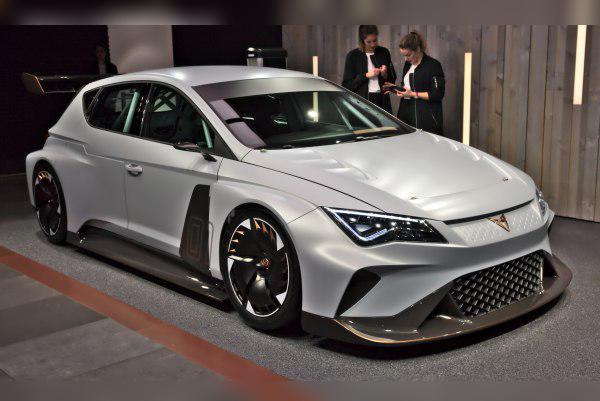
When talking about the top tier of 2.0-liter turbo petrol engines in the automotive industry, the EA888 Gen 3 is the undisputed king. The codes CJXC and CJXH denote its most potent iterations, which deliver extreme figures from the factory. Although we most often see it in “civilian” hot hatch models, this specific 350 hp (257 kW) and 420 Nm version became famous in racing and semi-racing machines such as the Cupra TCR.
The third generation of this engine has corrected many of the early issues of its predecessors (such as excessive oil consumption and timing chain tensioner failures), but considering how much power is squeezed out of just two liters of displacement, this is an engine that does not tolerate poor maintenance. Any neglect in servicing will come back to bite you very quickly.
Technical Specifications
| Parameter | Data |
|---|---|
| Displacement | 1984 cc |
| Power | 257 kW (350 hp) |
| Torque | 420 Nm |
| Engine codes | CJXC, CJXH (depending on version and map) |
| Injection type | Direct + Port (FSI + MPI) |
| Forced induction | Turbocharger (IS38) + Intercooler |
| Fuel type | Petrol (Recommended min. 98 RON) |
Reliability and Maintenance
Does this engine have a timing belt or a chain?
This unit uses a timing chain to drive the camshafts. The good news for buyers is that in the “Gen 3” engines the chain tensioner issue that destroyed many “Gen 2” engines has been largely resolved. However, due to the high torque and aggressive driving these cars are exposed to, the chain can stretch slightly after 120,000 to 150,000 km. The driver will notice this by a rough rattling noise at cold start (first few seconds) and a possible “Check Engine” light due to camshaft timing deviation. A major service on this engine essentially means replacing the chain, guides and tensioner once diagnostics show a deviation greater than specified. This job is very expensive (depends on the market).
Most common failures and their symptoms
Although robust, the EA888.3 suffers from several chronic weaknesses:
- Water pump and thermostat housing: This is the “Achilles’ heel” of the entire EA888 family. The housing is plastic and, due to numerous thermal cycles (heating above 100 °C and cooling), the plastic warps and cracks. Symptoms include coolant loss, a sweet smell under the hood and a puddle under the car. Replacing the whole unit is expensive (depends on the market).
- PCV valve (oil vapor separator): The membrane inside the valve fails due to pressure. The driver notices this through rough idle (fluctuating rpm), a whistling noise from the engine bay and increased oil consumption. The part is not very expensive and replacement is quick.
- Ignition coils: Under maximum load (especially if the engine is tuned), coils tend to burn out easily. Symptoms are engine “stumbling”, loss of power and rough running (misfire).
Minor service: Oil and oil consumption
The sump of this engine holds about 5.7 liters of engine oil. Due to the high operating temperature of the turbo, 5W-40 or even 0W-40 top-quality oil with the correct manufacturer specs is recommended. The service interval must by no means be 30,000 km as prescribed by the “LongLife” regime; on the 350 hp version, change the oil every 8,000–10,000 km.
Does it burn oil? Unlike the second generation, which “drank” oil due to poor piston rings, Gen 3 is incomparably better. However, because of the strong turbo and hard driving, consumption of 0.3 to 0.5 liters per 1000 km under aggressive use is considered completely normal and within factory tolerance. Make sure to check the dipstick regularly.
Spark plugs and replacement interval
Since this is a high-performance turbo petrol engine, the spark plugs are exposed to enormous pressure and temperatures. They must be replaced every 30,000 to 40,000 km at most. If this is neglected, a weak spark can cause detonation, which on a 350 hp engine can lead to melted pistons.
Specific Components and Costs
Turbocharger and fuel injection system
This model uses the well-known IS38 turbocharger. Early units had issues with turbo shaft failure due to excessive rpm and poor balancing, but later revisions fixed this. Turbo lifespan depends directly on the driver: if you rev a cold engine hard, or if you shut it off immediately after hard driving without letting it idle for a few minutes to cool down, the turbo will fail very quickly. Rebuilding or replacing the turbo is a very expensive job (depends on the market).
The fuel injection system is a masterpiece: it uses dual injection. There are 4 injectors for direct injection (FSI) into the cylinder and 4 injectors for port injection (MPI) into the intake manifold. This brings a huge benefit – the MPI injectors “wash” the intake valves with the air-fuel mixture, which keeps the notorious carbon build-up on the valves to a minimum. Injectors rarely cause problems if you use high-quality high-octane fuel.
DPF, EGR and AdBlue systems
Since this is a petrol engine, it has no DPF filter and no AdBlue system, which immediately removes a huge burden from the owner’s shoulders. Instead of a classic EGR valve that clogs up, this engine uses a variable valve timing (VVT) system, which retains part of the exhaust gases in the cylinder by overlapping valve timing, thus performing internal recirculation. On the very latest versions, due to strict emission standards, you may find a GPF/OPF (gasoline particulate filter), but this must be checked by VIN. Unlike diesels, gasoline particulate filters rarely cause issues because exhaust temperatures are much higher and they regenerate more easily.
Fuel Consumption and Performance
Real-world fuel consumption
No one buys 350 hp to save fuel, so consumption is understandably not low. In stop-and-go city driving, expect between 12 and 15 l/100 km. If you fully enjoy the acceleration, the figure easily goes over 18 liters. On open roads and highways, consumption can drop to a reasonable 7.5–8.5 l/100 km, thanks to efficient injection and a modern gearbox.
Performance and driving characteristics
Is it “lazy”? Absolutely not. With 420 Nm available from low revs (thanks to the turbocharger and optimized intake manifold), this engine catapults the car like a slingshot. Throttle response is instantaneous.
On the motorway, it is a true mile-eater. At 130 km/h in top gear (depending on whether it’s a 6- or 7-speed gearbox), the engine cruises at a very relaxed 2500 to 2800 rpm. At that speed, you always have a huge reserve of power for overtaking without needing to downshift.
Additional Options and Modifications
Should you install LPG?
Plain and simple: NO. Although it is technically possible to install complex systems due to dual injection, fitting LPG to a track-oriented 350 hp engine is a recipe for disaster. LPG raises combustion temperatures in cylinders that are already under enormous stress, which can easily damage valves and pistons. Owners of such cars avoid LPG altogether.
Tuning potential (Stage 1)
The EA888 Gen 3 is a legendary tuning platform. With just software modifications (Stage 1 remap of the engine and gearbox), this engine safely reaches 380 to 400 hp and around 500 Nm of torque on completely stock hardware. The engine was designed with a huge power reserve. However, keep in mind that every power increase requires even more rigorous maintenance and shorter intervals for oil and spark plug changes.
Gearbox and Drivetrain
Types of gearboxes and common issues
On the 350 hp versions (especially in the Cupra TCR series), by far the most common choice is a dual-clutch automatic gearbox in an oil bath (DSG). Depending on the model year, this is either the 6-speed DQ250 or the newer 7-speed DQ381. Manual gearboxes are extremely rare at this power level and often cannot withstand the huge torque under aggressive driving.
The main problem with DSG gearboxes is the Mechatronics unit – the “brain” of the gearbox full of valves and sensors. Failure manifests as jerking when taking off, harsh shifts from first to second gear, or complete loss of drive (“Limp mode”). Repairing the mechatronics unit is expensive (depends on the market).
Dual-mass flywheel and gearbox servicing
Yes, these models with DSG gearboxes are equipped with a dual-mass flywheel (DMF). Its role is to absorb the destructive vibrations produced by 420 Nm of torque. When worn, you will hear metallic knocking and rattling at idle (especially in “P” or “N” positions). Replacing the flywheel is an expected expense and is considered a very costly repair (depends on the market).
For a DSG gearbox to survive, regular servicing is mandatory. The oil and filter in the DSG must be changed at least every 60,000 km, and given the engine’s high output, smart owners do it every 40,000 km. Contaminated oil with metal shavings directly destroys the clutch pack and mechatronics.
Buying Used and Conclusion
What to check before buying?
Buying a 350 hp EA888.3 engine requires a cool head and a good mechanic. Be sure to check the following:
- Chain rattle: Let the car sit overnight. The first cold start in the morning reveals the true condition of the timing chain and cam phasers. If it rattles for more than 2–3 seconds, a big expense is coming.
- Coolant traces: Carefully inspect the front and lower part of the engine for white or pink residue from leaks around the water pump.
- Gearbox behavior: During a test drive, pay attention to whether the DSG “jerks” when taking off from a traffic light under light throttle. It should shift gears smoothly, without kicks in the back.
- Diagnostics (VCDS/OBDEleven): Always hook up diagnostics to check the number of so-called “misfires”, which can indicate bad coils, spark plugs or dirty valves, as well as the timing chain deviation angle.
Conclusion: Who is this engine for?
The 350 hp EA888 Gen 3 (CJXC/CJXH) is not an engine for someone who wants cheap A-to-B transport. It is an engineering gem created for enthusiasts, speed lovers and track-day events. It is one of the most reliable high-performance 2.0-liter engines of today, provided it has been maintained by someone who did not skimp on oil, filters and preventive servicing. If you buy a car with a proper service history, you will get a brutal machine that will put a smile on your face every time you press the accelerator.