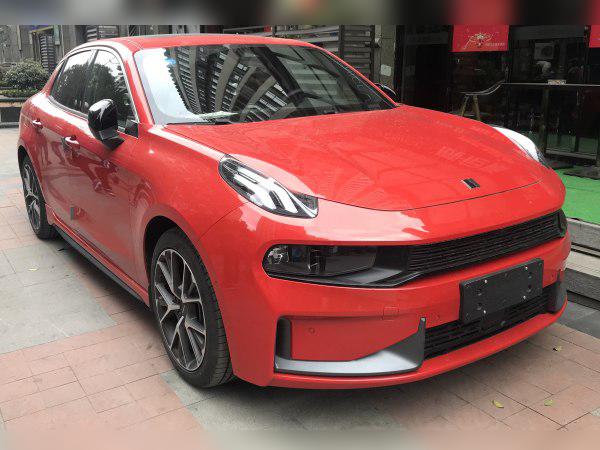
JLH-4G20TDC Engine (2.0 T5 254 HP): Experiences, issues, fuel consumption and used-car buying tips
- Volvo genes in a Geely package: Although it carries the JLH code, this is essentially Volvo’s Drive-E 2.0 T5 engine, which means excellent performance and high safety, but also more expensive parts.
- Timing belt driven: Requires regular replacement on time, a snapped belt leads to total engine failure.
- Direct injection (GDI): Prone to carbon build-up on intake valves, which requires decarbonization after around 100,000 km.
- Very sensitive to oil: Uses extremely thin 0W-20 oil. Regular changes every 10,000–15,000 km are absolutely mandatory to save the turbo and piston rings.
- Gearboxes dictate the costs: The 8-speed Aisin automatic is virtually indestructible with regular servicing, while the 7-speed DCT dual-clutch gearbox requires more attention and has a dual-mass flywheel.
- LPG (Autogas): Forget about LPG conversion. Direct injection and sensitive injectors make this investment completely uneconomical.
Contents
- Introduction: What exactly is the JLH-4G20TDC?
- Technical specifications
- Reliability and maintenance
- Specific parts and costs
- Fuel consumption and performance
- Additional options and modifications
- Gearbox and drivetrain
- Buying used and conclusion
Introduction: What exactly is the JLH-4G20TDC?
The engine designated as JLH-4G20TDC may sound unfamiliar to the average European driver, but things become much clearer once we look under the hood. It is a product of Aurobay (a joint venture between Volvo and Geely). In practice, it is a clone of Volvo’s VEA (Volvo Engine Architecture) two‑liter unit, known as the T5. It is primarily installed in Lynk & Co models (01, 02, 03, 05 and the luxury 09). It was designed to provide a premium feel, high power output of 254 HP and to serve as a platform for advanced hybrid systems (PHEV, MHEV).
Technical specifications
| Specification | Data |
|---|---|
| Displacement | 1969 cc |
| Power | 187 kW (254 HP) |
| Torque | 350 Nm |
| Engine codes | JLH-4G20TDC (Equivalent to Volvo B4204T series) |
| Injection type | Direct injection (GDI) |
| Forced induction | Turbocharger (twin-scroll), intercooler |
| Cylinder layout | Inline 4-cylinder |
Reliability and maintenance
Does this engine use a timing belt or a chain?
This unit uses a timing belt for the valvetrain. Although many manufacturers in this power class have switched to chains, Volvo/Geely engineers opted for a belt for quieter operation and reduced internal friction. Replacing the belt, tensioners and water pump is absolutely critical for long life.
At what mileage should the major service be done?
Factory intervals often state figures of 150,000 km, but in real life the major service (replacement of timing belt, rollers, tensioners and water pump) should be done at a maximum of 100,000 to 120,000 km or every 5 to 7 years. It’s not worth playing Russian roulette with the engine, because a snapped belt means valve‑to‑piston contact, which leads to very expensive repairs (depending on the market).
What are the most common issues with this engine?
This engine is mechanically very solid, but it does have a few specific quirks:
- Carbon build-up on intake valves: Due to direct injection, fuel does not wash over the intake valves. Symptoms include rough idle, hesitation when you press the throttle and loss of power. It is resolved by decarbonization (walnut shell blasting).
- PCV valve (oil vapor separator) failure: A known issue on this engine architecture. The symptom is a distinctive “whistling” noise from the engine at idle (as if air is leaking). If you pull out the dipstick while the engine is running and the whistling stops, the PCV membrane has torn.
- Water pump leaks: Can occur even before the scheduled major service interval. Regularly check coolant level.
Engine oil: capacity, grade and consumption
The engine takes about 5.6 to 5.9 liters of oil. The manufacturer requires fully synthetic oil with a viscosity of 0W-20 (usually VCC RBS0-2AE specification). This oil is thinner than water and serves to cool the turbocharger and reduce exhaust emissions.
Does it consume oil? Yes, turbocharged direct‑injection engines with very thin oil naturally consume a certain amount. The official tolerance is up to 0.5 liters per 1000 km (which is a lot), but in reality a healthy unit should not use more than 0.5 to 1 liter per 10,000 km. Early Volvo VEA units had issues with piston rings, but this has been largely revised on the JLH-4G20TDC. Oil changes are recommended strictly every 10,000 to 15,000 km (definitely not 30,000 km).
At what mileage should the spark plugs be replaced?
Since this is a heavily stressed turbo petrol engine, the spark plugs are exposed to very high temperatures. The replacement interval is 60,000 km. Using iridium spark plugs only is mandatory. Worn plugs can cause ignition coil failure, which is an unnecessary expense.
Specific parts (costs)
What kind of injection system does it have and are the injectors problematic?
It uses electronically controlled high‑pressure direct injection. The injectors themselves are very durable, but extremely sensitive to poor‑quality fuel. Bad fuel can clog the microscopic holes in the injector, which leads to poor atomization, cylinder flooding with petrol (washing away the oil film) and ultimately engine damage. Replacing injectors is expensive (depending on the market).
Does the engine have a turbocharger and what is its lifespan?
This engine uses a single but very efficient twin‑scroll turbocharger (most often BorgWarner). This design reduces turbo lag and allows the full 350 Nm to be available already at low revs. The turbo’s lifespan depends entirely on maintenance: regular 0W‑20 oil changes and the rule of not switching the engine off immediately after hard highway driving (let it idle for a minute so the oil can cool down) will allow the turbo to last as long as the engine itself.
Emissions: DPF, EGR, AdBlue?
As a petrol engine, it does not have a DPF (diesel particulate filter) and does not use AdBlue. However, due to strict Euro 6 standards, newer models (after 2019/2020) are equipped with a GPF (Gasoline Particulate Filter) and an EGR valve. The GPF clogs less frequently than diesel DPFs because exhaust gas temperatures on petrol engines are significantly higher, so regeneration occurs passively. The EGR valve can accumulate soot, especially if the car is driven exclusively in stop‑and‑go city traffic.
Fuel consumption and performance
What is the real‑world fuel consumption in city driving?
Lynk & Co cars (such as the 01, 05 or the heavy 09) are not light vehicles. Their weight often exceeds 1.8 tons. In city conditions, without hybrid assistance, this engine consumes between 10.5 and 12.5 l/100 km. In plug‑in hybrid versions (PHEV), if the battery is charged, fuel consumption in the city can be zero, but as soon as the battery is depleted, the petrol engine takes over again and fuel consumption rises.
Is this engine “lazy” for such a heavy body?
With 254 HP and 350 Nm, this engine is anything but lazy. Throttle response is excellent thanks to the twin‑scroll turbo, and power delivery is linear. It handles heavy SUV bodies very well, so overtaking on country roads is safe and quick. In the extreme Lynk & Co 09 model (where the system delivers over 500 HP with the help of electric motors), performance is on par with genuine sports cars.
Behavior on the motorway
The motorway is this engine’s natural habitat. At 130 km/h in 8th gear (when paired with the automatic), the engine cruises at a very relaxed ~2000 rpm. In this driving mode it is very quiet, and fuel consumption drops to a more acceptable 7.5 to 8.5 l/100 km.
Additional options and modifications
Is this engine suitable for LPG (autogas) conversion?
The short answer: NO. Because of direct fuel injection (GDI), a conventional LPG system cannot be installed. You would need a system that injects LPG in liquid phase directly through the petrol injectors, which is very expensive (depending on the market). Even with “dual‑fuel” systems (which use both LPG and petrol at the same time to cool the injectors), the savings are minimal and the risk of failures is high. If you are buying 254 HP, assume you will be running it exclusively on high‑octane petrol.
How far can you safely go with a Stage 1 remap?
The engine is mechanically identical to the T6 version, which from the factory has over 300 HP (with the addition of a supercharger). The basic architecture of the JLH-4G20TDC engine block is extremely robust. A safe software “Stage 1” remap can raise power from 254 HP to a stable 280 to 290 HP, and torque from 350 Nm to over 400 Nm. The important thing is that the gearbox can handle the extra torque (the Aisin automatic copes with it very well, while you need to be more cautious with the DCT gearbox).
Gearbox: automatic only
Which gearboxes are fitted?
There are no manual gearboxes paired with this engine. Buyers have two options depending on the model and drivetrain configuration:
- 8‑speed Aisin automatic (torque converter): A conventional automatic with a torque converter. Most common on AWD versions.
- 7‑speed DCT Evo (wet clutch): A dual‑clutch gearbox, often reserved for FWD (front‑wheel drive) or sporty configurations such as the Lynk & Co 03+.
Does it have a dual‑mass flywheel and how expensive is clutch replacement?
This is where the main difference lies:
- Aisin automatic: Does NOT have a conventional dual‑mass flywheel or clutch disc, but a torque converter. There is no clutch kit to replace here.
- 7‑speed DCT: DOES have a dual‑mass flywheel and clutch pack. Replacing the dual‑mass flywheel and clutch pack in a DCT gearbox is a very expensive job and often requires software adaptation. Prices can be steep – expensive to very expensive (depending on the market).
Most common gearbox issues and maintenance
The Aisin gearbox is widely known for its durability, provided that the oil is changed every 60,000 km. If this is neglected, the valve body suffers and the gearbox starts to “jerk” when shifting from second to third gear.
The DCT gearbox requires even stricter oil and filter changes (also every 60,000 km) because the clutches running in an oil bath contaminate the oil. The most common DCT problems are mechatronics failures and clutch wear, whose symptoms are strong vibrations when moving off from a standstill or hesitation during slow parking maneuvers.
Buying used and conclusion
What exactly should you check before buying?
When buying a used Lynk & Co with the JLH-4G20TDC engine, treat it as if you were buying a modern Volvo:
- First start (cold start): Listen carefully. A slight rattle for the first few seconds is normal for direct injection, but any knocking from the engine is a red flag.
- Idling test: Once the car is warm, open the bonnet and listen for whistling. Pull out the dipstick. If the whistling stops, the PCV valve is faulty.
- Exhaust smoke: Bluish smoke when you suddenly rev the engine at operating temperature indicates oil consumption (rings or turbo).
- Gearbox behavior: Let the car move off without touching the throttle (just release the brake). The car should start moving absolutely smoothly. On the DCT, pay attention to any shuddering; on the Aisin automatic, shift from ‘P’ to ‘R’ and then to ‘D’ – harsh engagement suggests issues with engine mounts, suspension or the gearbox valve body.
- Suspension condition: Cars this heavy wear out bushings and links quickly. Listen for dull thuds when going over speed bumps.
- Diagnostics: MANDATORY! Do not buy this kind of car without a full factory‑level diagnostic scan (that reads all modules).
Who is this engine for?
The JLH-4G20TDC is a fantastic piece of engineering: powerful and safe, aimed at drivers who want premium performance and are not afraid of premium maintenance costs. It is not for those who plan to cut corners on regular servicing, oil changes or who want to install LPG. If you are looking for a car for pure stop‑and‑go city torture, a conventional non‑turbo petrol engine is a better option, but if you want a quiet, fast and reliable cruiser for longer journeys, this “Swedish‑Chinese” engineering hybrid will impress you.