Audi 2.2 Turbo 20V (AAN engine, 230 hp): Ownership impressions, common issues, fuel consumption and used-buying guide
Key points (TL;DR)
- Legendary status: One of Audi’s most respected inline five‑cylinder turbo engines, famous for its fantastic sound and huge tuning potential.
- Performance: The stock 169 kW (230 hp) and 350 Nm move the heavy C4 bodies with ease, while quattro all‑wheel drive guarantees excellent traction.
- Reliability: The block and crankshaft are practically indestructible, but the peripherals (hoses, sensors, coils) require constant attention due to age.
- Fuel consumption: Be prepared for high fuel costs; in city driving consumption rarely drops below 15 l/100 km.
- Maintenance: Genuine parts are becoming rare and very expensive (depends on market), which today makes this more of a collector’s car than a daily driver.
- Transmissions: The recommended choice is the 6‑speed manual (01E). The 4‑speed automatic is slow, ruins the driving feel and doesn’t cope well with increased power.
Contents
- Introduction: The five‑cylinder legend
- Technical specifications
- Reliability and maintenance
- Specific parts and costs
- Fuel consumption and performance
- Options and modifications
- Transmissions: Failures and maintenance
- Buying used and conclusion
Introduction: The five‑cylinder legend
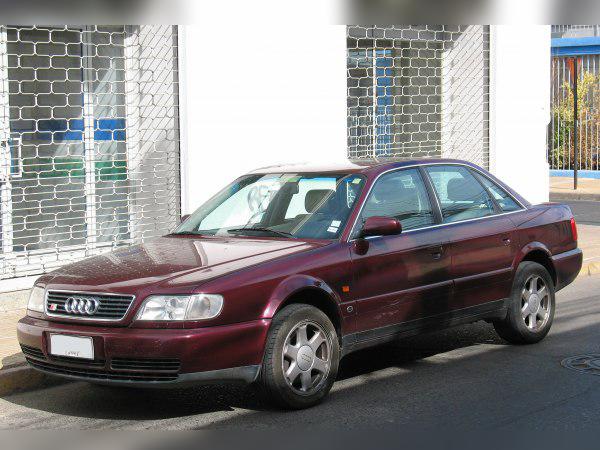
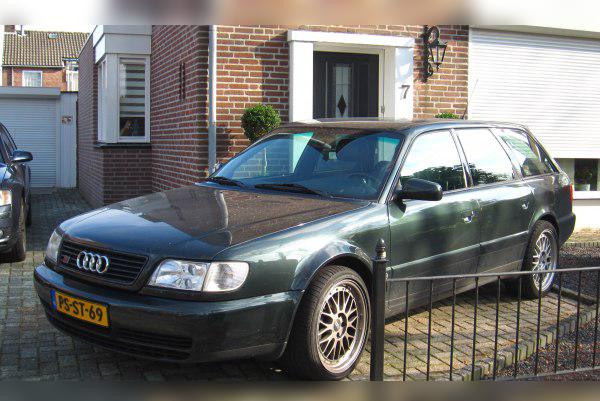
When the code AAN is mentioned, car enthusiasts around the world stand up out of respect. This inline five‑cylinder 20V turbo engine beat under the bonnet of the legendary Audi S4 (C4) and Audi S6 (C4) models throughout the nineties. Whether in sedan form or the practical Avant (wagon), the AAN defined an era in which Audi cemented its position as the master of winter driving and Autobahn cruising thanks to the quattro system.
This is not an ordinary engine; it draws its genes directly from the famous Group B rally days. Its distinctive snarling five‑cylinder sound and the brutal surge of power when the turbo comes on boost make it one of the most desirable youngtimers today. However, owning such an engineering gem now requires deep pockets, strong nerves and serious mechanical knowledge.
Technical specifications
| Parameter | Data |
|---|---|
| Engine code | AAN |
| Displacement | 2226 cc (2.2 litres) |
| Power | 169 kW (230 hp) @ 5900 rpm |
| Torque | 350 Nm @ 1950 rpm (overboost function) |
| Injection type | Bosch Motronic (multi‑point electronic fuel injection) |
| Charging | Turbocharger (KKK K24-7000) with intercooler |
| Fuel | Petrol (98+ octane recommended) |
Reliability and maintenance
Timing belt or chain?
The AAN uses a combined timing system typical for that generation of Audis. The main drive is via a timing belt that connects the crankshaft and exhaust camshaft, as well as the water pump. However, inside the cylinder head the exhaust camshaft drives the intake camshaft via a short chain with a tensioner. During a major service both elements must be checked, even though the chain is replaced less frequently than the belt.
Most common issues and “childhood diseases”
The engine block itself is made of cast iron and is incredibly robust. As long as the engine hasn’t been run low on oil, it will cover hundreds of thousands of kilometres without being opened. Failures are mostly related to peripherals and ageing materials (plastics and rubber):
- Ignition system: The factory coils and POS modules (Power Output Stages) are extremely sensitive and prone to failure. Symptoms include misfiring under full throttle, rough idle and loss of power. Many owners convert to more reliable coils from newer engines (e.g. 1.8T TFSI coil conversion).
- Vacuum hoses and boost leaks: The AAN has a complex system of boost and vacuum hoses. Old hoses crack, leading to loss of power, black smoke (rich mixture) and engine hesitation (safe mode).
- MAF sensor: Over time it gets dirty or fails completely, resulting in incorrect air‑flow readings and rough running.
- Oil pressure sender and temperature sensors: Prone to oil leaks and incorrect readings on the instrument cluster.
Service intervals, oil and spark plugs
The major service on the AAN must strictly be done every 90,000 to 100,000 km, or every 5 years. Skipping this interval or a snapped belt will inevitably cause the pistons to hit all 20 valves, which is a catastrophic and very expensive (depends on market) failure.
Oil capacity with filter change is around 4.5 to 5 litres. Since this is a nineties turbo engine that runs hot, a high‑quality 5W‑40 oil is recommended for normal use, or 10W‑60 if the car is driven more aggressively. Oil consumption definitely exists. For such an old turbo engine, consumption of 0.5 to 0.8 litres per 1000 km is considered normal, especially if the engine is frequently revved high or if the valve stem seals haven’t been replaced recently.
As this is a turbocharged petrol engine, spark plug condition is critical under boost. Spark plugs (strictly platinum or iridium, to turbo spec) should be replaced every 30,000 to a maximum of 60,000 km. Worn plugs instantly kill performance and destroy the already sensitive coils.
Specific parts and costs
Turbocharger and injection system
The AAN uses sequential Bosch Motronic injection. The injectors are generally not problematic and rarely “die”, but given their three‑decade age they should occasionally be removed, cleaned in an ultrasonic bath and checked for spray pattern. Clogged injectors can lean out the mixture in one cylinder, raise combustion chamber temperature (EGT) and lead to piston melting – which is fatal for the engine.
The engine is equipped with a single turbocharger, namely the proven KKK K24-7000. Its lifespan is impressively long if properly maintained. With adequate cool‑down after hard driving (idling for a minute or two before shut‑off) and regular changes of quality oil, this turbo easily lasts over 250,000 km. If it does start to fail, symptoms include bluish exhaust smoke, a siren‑like whistle and increased oil consumption.
EGR, DPF and AdBlue systems?
As a classic sporty petrol engine from the early nineties, this unit is spared modern emissions nightmares. The AAN has no DPF filter, no AdBlue system and no complex modern EGR valve that chokes the engine with soot. Emissions are handled by the lambda sensor and catalytic converters, which on many cars have already been removed or replaced with freer‑flowing items (sports downpipe) due to age.
Fuel consumption and performance
Real‑world fuel consumption
There is no way to sugar‑coat this: the AAN loves petrol. In pure city driving, stop‑and‑go traffic with the heavy C4 body and permanent quattro, you can be happy if consumption is 15 to 17 l/100 km. With a heavy right foot it easily exceeds 20 litres in town.
Driving dynamics: Is the engine “lazy”?
Lazy it is not. Although an empty Audi S4/S6 C4 weighs around 1.7 tonnes, the 350 Nm of torque (available in overboost from about 2000 rpm) catapult the car forward. There is turbo lag – the engine is fairly tame up to around 3000 rpm, and after that a real storm of power arrives, accompanied by that iconic five‑cylinder howl. The quattro system puts the power down perfectly with no wheelspin.
On the motorway this is a true intercontinental cruiser. Depending on whether you have a 5‑ or 6‑speed gearbox, at 130 km/h the engine lopes along at a very relaxed 3000 to 3500 rpm (lower with the 6‑speed). At those speeds it is quiet, with no vibrations, and consumption can drop to a reasonable 9.5 to 11 l/100 km.
Options and modifications
LPG conversion
Although many purists shudder at the thought of drilling the intake manifold on such a classic, installing LPG is mechanically completely feasible. However, it is anything but simple. The engine runs high boost pressure and therefore requires only a top‑quality sequential LPG system with the fastest possible injectors and a vaporiser rated for over 250 hp. Saving money on LPG components will result in hesitation, a lean mixture (check engine light) and potential engine damage. If you want cheap running costs, this is probably not the car for you.
Tuning potential (Stage 1)
The AAN is world‑famous for responding to ECU remaps better than most modern engines. With a simple “chip tune” (Stage 1), raising boost from the stock ~1.1 bar to 1.4–1.5 bar, the engine can safely be taken to around 270 to 285 hp, with torque exceeding 400 Nm. The stock internals (rods, pistons, crankshaft) can safely handle well over 400 hp, but that requires a larger turbo (e.g. RS2 hybrid), bigger injectors and a freer exhaust.
Transmissions: Failures and maintenance
Gearbox options
The difference in driving experience depending on gearbox choice is surprisingly large:
- 5‑speed manual (01A / early 01E versions): Reliable, but with shorter gear ratios.
- 6‑speed manual (01E): The holy grail for this model. Fitted to later cars (especially S6). An incredibly strong gearbox capable of handling over 800 Nm of torque in tuned setups.
- 4‑speed automatic (ZF 4HP18): Slow, “steals” engine power and completely kills the car’s sporty character.
Failures, dual‑mass flywheel and servicing
On the manual gearboxes (01E), the best‑known issue is with the 1st and 2nd gear synchros. If the gearbox is reluctant to go into 2nd when cold, or “crunches” during fast shifts at high rpm, the synchros are worn. Manual cars have a dual‑mass flywheel which develops play over time and causes shuddering when pulling away. Replacing the clutch kit together with the dual‑mass flywheel is expensive (depends on market), but ensures smooth operation for hundreds of thousands of kilometres.
Automatic gearboxes have their own issues – they are sensitive to increased engine power, the torque converter suffers under load, and the clutch packs start to slip if the oil is not changed regularly. Repair is usually very expensive (depends on market).
The oil in the manual gearbox and differentials (quattro) should be changed every 80,000 to 100,000 km. On automatics, oil and filter must strictly be changed every 60,000 km if you want them to last.
Buying used and conclusion
What to check before buying?
Today it is extremely hard to find an unmolested and mechanically sound Audi S4/S6 with the AAN engine. When viewing a car, pay attention to:
- Cold start: Listen to the hydraulic lifters (they may be heard for a few seconds until they build pressure; after that the engine should be almost silent).
- Whistling under boost: Intercooler and boost hoses often leak. Loss of boost means loss of power.
- Exhaust smoke: Blue smoke after long idling (when you blip the throttle) usually points to worn valve stem seals. Blue smoke under full throttle – the turbo is on its way out.
- Suspension and drivetrain: Be sure to check the centre propshaft bearing on the quattro drivetrain (if it thumps and vibrates when setting off, the rubber around the bearing has torn) and the rear bushings.
Final verdict
The Audi 2.2 20V Turbo (AAN) has long since stopped being just transport from A to B. It is a piece of history, a collector’s item and an engine that demands a dedicated owner who understands old‑school mechanics. Due to the scarcity of specific original parts (hoses, plastics, specific sensors), maintenance has become complex and requires a lot of research on foreign forums and used‑parts sites.
It is intended for true enthusiasts. If you find a well‑preserved example (especially with the 6‑speed gearbox), buy it – engines like this will never be made again, and their value is only going up. For everyday city traffic and the race for fuel economy, you’re better off looking for something more modern.