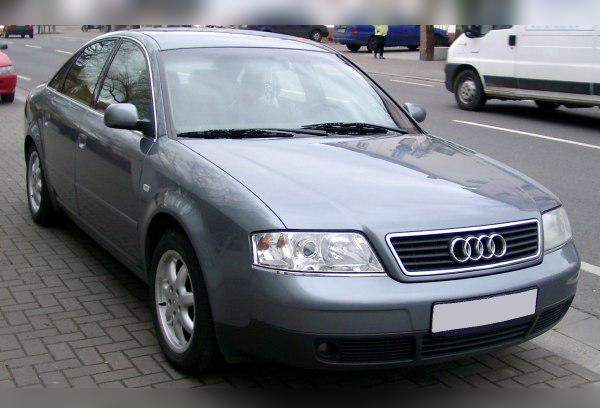
Audi 1.8 Turbo 20V (AEB, ANB, APU, AWT) – Experiences, problems, fuel consumption and buying used
- Key points (TL;DR):
- One of the most reliable and best-known turbo petrol engines from the Volkswagen/Audi group, famous for the exceptional durability of its engine block.
- Combines a timing belt and a small chain for the camshafts – chain rattle on cold start is a common symptom of a worn tensioner.
- Requires regular changes of high-quality oil (every 8,000 - 10,000 km) because it is prone to forming oil sludge that clogs the oil pump pickup screen.
- Ignition coils and vacuum hoses are consumables, but parts are widely available and replacement is not expensive (Depends on the market).
- Extremely suitable for LPG conversion because it uses classic MPI (port) fuel injection, not problematic direct injection.
- Has huge potential for “chipping” (Stage 1), where you can easily and safely get up to 190 hp without mechanical modifications.
Contents
- Introduction and engine history
- Technical specifications
- Reliability and maintenance
- Specific parts and costs
- Fuel consumption and performance
- Extras, LPG and modifications
- Gearbox and drivetrain
- Buying used and conclusion
Introduction and engine history
The 1.8T 20-valve engine (5 valves per cylinder) is a true legend of the automotive industry. Introduced in the mid‑nineties, this engine redefined the standards for reliable turbo petrol units. It was installed longitudinally in models such as the Audi A4 (B5) and Audi A6 (C5).
It should be noted that there are certain differences depending on the engine code. Older AEB engines have a larger cylinder head (large port), a traditional cable-operated throttle and an external water pump, while newer engines such as AWT have an electronic throttle body (drive-by-wire), stricter Euro emission standards, a water pump driven by the timing belt and a variable valve timing (VVT) system. Still, the core of the engine and its behavior remain very similar.
Technical specifications
| Parameter | Specification |
|---|---|
| Engine displacement | 1781 cc |
| Power | 110 kW (150 hp) |
| Torque | 210 Nm |
| Engine codes | AEB, ANB, APU, AWT |
| Injection type | Multi-Point Injection (MPI) into the intake manifold |
| Forced induction | Turbocharger (KKK K03) |
Reliability and maintenance
Timing belt or chain?
This is a specific engine because it uses a hybrid system. The main drive from the crankshaft to the exhaust camshaft is via a timing belt. However, on the rear side of the cylinder head there is a small chain that connects the exhaust and intake camshafts. On newer versions (AWT) there is also an electronic hydraulic tensioner (VVT) in that area, which gradually loses pressure over time. The symptom of a bad chain or tensioner is a characteristic “diesel-like” rattle during the first few seconds of a cold start. If you hear this, replacement is mandatory to avoid catastrophic failure.
Most common failures and symptoms
The biggest enemy of the 1.8T engine is oil sludge. Due to the high temperature around the turbo, if the oil is not changed on time, it carbonizes. That sludge falls into the oil pan and clogs the oil pump pickup screen. The driver notices this when the red oil pressure warning light comes on. If the light comes on, switch off the engine immediately! It is recommended, when buying the car, to remove the oil pan preventively, clean the pickup screen and check the oil pump.
In addition, ignition coils are a classic weak point. When one fails, the engine starts to misfire, loses power, shakes at idle and turns on the “Check Engine” light. The problem is solved by a simple replacement. Also, older vacuum hoses and the PCV valve (crankcase ventilation system) often crack, which leads to unmetered air entering the system, unstable idle and fluctuating revs.
Service intervals and oil
The major service (replacement of timing belt, rollers, tensioner and water pump where applicable) should be done at a maximum of 90,000 km or every 5 to 6 years. It is not worth waiting for the factory‑specified 120,000 km, because a snapped belt is fatal for a 20‑valve engine.
The engine takes about 3.5 to 3.9 liters of oil (depending on the exact model and filter). The recommended grade is 5W-40 (fully synthetic, VW 502.00 spec). Minor services must be done every 8,000 to 10,000 km, never at 15,000 km or more, precisely to prevent the oil pump pickup from clogging.
When it comes to oil consumption, the 1.8T is known to “drink” a bit. Consumption of 0.2 to 0.5 liters per 1,000 km on older examples is considered normal tolerance. The most common causes are hardened valve stem seals or slight play in the turbocharger shaft. If it consumes more than one liter per 1,000 km, this points to a problem with the piston rings or a turbocharger that needs a complete overhaul.
As a petrol engine, it also requires spark plug replacement every 60,000 km. You must install platinum or iridium spark plugs (e.g. NGK PFR6Q) designed for turbo engines; cheap copper plugs will cause ignition problems under boost.
Specific parts and costs
Flywheel and injection system
All models equipped with a manual gearbox have a dual-mass flywheel. Since these cars are heavy, the flywheel is under a lot of stress and eventually fails (symptoms: shuddering when taking off and rattling at idle). Fortunately, the cost of replacing the clutch kit and dual-mass flywheel for this engine today falls into the not too expensive (Depends on the market) category compared to newer diesels.
The injection system is classic MPI (Multi-Point Injection) – the petrol injectors spray fuel into the intake manifold, before the valves. This means the injectors are extremely durable, rarely fail, and the system itself keeps the intake valves clean (no valve carbon build-up issues like on newer TFSI/FSI engines).
Turbocharger and emissions systems
The engine has a single turbocharger, usually a KKK K03 (on some rarer versions a K03s). The turbo is extremely reliable and with proper engine cooling (letting it idle for a minute before shutting off after more aggressive highway driving) it can easily exceed 250,000 km without issues. Symptoms of a bad turbo are loss of power, siren-like whistling and bluish smoke from the exhaust (burning oil).
Since this is an older-generation petrol engine, it does not have a DPF filter and does not use AdBlue. It also does not have a typical EGR valve that clogs with soot like on diesels. Newer models (AWT) have a secondary air injection (SAI) system for faster catalyst warm-up, which can sometimes make a buzzing noise when cold, but does not dramatically affect drivability.
Fuel consumption and performance
Real-world city fuel consumption is this engine’s biggest downside. Depending on whether you drive an Audi A4 B5 (lighter) or an Audi A6 C5 (heavier, often with quattro or a Tiptronic gearbox), city consumption ranges from 11 up to 14 l/100 km. In heavy traffic, expect the upper end of that range.
As for performance, the engine is definitely not sluggish. With 150 hp and 210 Nm available from as low as 1750 rpm, it drives very pleasantly, almost like a diesel, but with a wider rev range. The turbo spools quickly and provides a linear feeling of acceleration. In the Audi A6 its weight can be felt when taking off, but in-gear acceleration is not a problem at all.
On the highway it is an excellent cruiser. Fuel consumption drops to 7.5 to 8.5 l/100 km. At 130 km/h, the tachometer (with the 5‑speed manual gearbox) sits at about 3200 to 3500 rpm. Although the revs are somewhat higher by today’s standards, the engine is quite refined and cabin noise is minimal.
Extras, LPG and modifications
LPG conversion
This is one of the best turbo petrol engines for LPG conversion. Thanks to MPI injection, the conversion is simple and reliable. It is only important to install a quality sequential system with an adequate vaporizer (reducer) that can feed the turbocharger under full boost, as well as fast LPG injectors. The installation cost is affordable (Depends on the market) and the investment pays off quickly due to the higher city petrol consumption.
Chipping (chiptuning)
The 1.8T 20V is a tuner’s dream. The stock 150 hp is deliberately “choked” so that the engine will last. With a standard, safe Stage 1 remap, this engine, without any mechanical modifications (on the stock turbo, intercooler and injectors), reaches 180 - 190 hp and 270 - 280 Nm of torque. The driving feel changes dramatically for the better, the car becomes noticeably more aggressive. The engine block and internals (rods, pistons) can handle much more, but to go beyond 200 hp you need mechanical upgrades (larger K04 turbo, bigger injectors, front‑mount intercooler).
Gearbox and drivetrain
With this engine, there were mainly three types of transmissions in these generations:
- 5-speed manual gearbox: Indestructible with normal maintenance. The shift feel is precise. The oil in it should be replaced preventively every 100,000 km, even though the manufacturer claims it is “lifetime”.
- 5-speed Tiptronic automatic: This is the ZF 5HP19 gearbox. It is not a bad gearbox for cruising, but it robs some performance and increases fuel consumption. The most common failures are a worn torque converter, which causes vibrations during acceleration around 60–80 km/h, and problems with the valve body (harsh shifting). The oil in this gearbox MUST be changed every 60,000 km together with the filter.
- Quattro all-wheel drive: Audi’s legendary Torsen differential. Completely mechanical, incredibly reliable. Just check for oil leaks at the rear differential seals and the condition of the driveshaft (center bearing). It adds weight, but also incomparable safety in rain and snow.
Buying used and conclusion
What to check before buying?
When looking at a used 1.8T, first do a completely cold start. Open the hood and listen to the rear of the engine near the firewall – if you hear loud metal-on-metal rattling that lasts a few seconds and then goes away, the cam chain tensioner is due for replacement. Then let the engine warm up and rev it; if it emits blue smoke, the turbo or valve stem seals are letting oil through. ALWAYS ask for a diagnostic scan, check for misfires (cylinder misfires due to coils) and check the vacuum hoses by listening for any hissing sounds under the hood.
Who is this engine for?
The Audi 1.8T 20V (AEB, ANB, APU, AWT) is a fantastic choice for drivers who want performance, reliability on the road and the option of cheap running on LPG. It is not for those who plan to drive exclusively in stop‑and‑go traffic without LPG, because the fuel consumption will be an unpleasant surprise. If you find an example that has regularly received fresh oil and has not been abused by irresponsible tuning, you will get an engine that will outlive the body it is installed in.