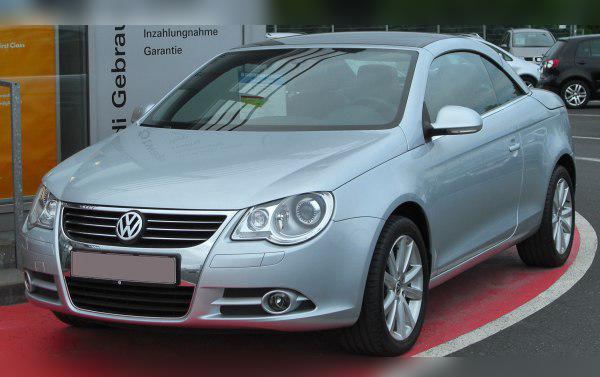
2.0 TFSI/TSI (BWA, CCZA, CAWB) – Experiences, problems, consumption and buying tips
Key points (TL;DR)
- Performance: Excellent balance of power and fun. 200 hp in the VW Eos gives a sporty feel, it’s not “lazy” at all.
- Big difference in maintenance: Pay attention to the engine code! BWA has a timing belt (EA113 series), while CCZA and CAWB have a timing chain (EA888 series).
- Oil consumption: This is the main “weak spot”. Almost all of them consume oil, and on CCZA/CAWB this can be due to poorly designed piston rings.
- Carbon buildup: As direct-injection engines, they are prone to carbon deposits on intake valves, which requires periodic cleaning.
- DSG vs Manual: Both are good, but DSG strictly requires regular oil changes every 60,000 km or you risk expensive mechatronic failures.
- Recommendation: An engine for enthusiasts who are willing to check oil level more often in exchange for excellent performance.
Contents
- Introduction and engine applications
- Technical specifications
- Reliability, Major service and Oil consumption
- Specific parts and Injection system
- Fuel consumption and Performance
- Tuning and LPG
- Gearbox (DSG and Manual)
- Conclusion and buying advice
Introduction and engine applications
The 2.0 TFSI (later also badged as TSI) is a legend within the Volkswagen Group. This is the heart that powered the fifth and sixth generation Golf GTI, and in the Volkswagen Eos it turns a comfortable convertible into a serious overtaking machine. These engines offer fantastic low-end torque and a very linear power delivery.
It’s important to note that we’re talking about two overlapping engine generations here. BWA belongs to the older EA113 family (belt/chain combination), while CAWB and CCZA are part of the newer EA888 generation (full timing chain). Although they have the same power output on paper, they differ significantly mechanically, which directly affects maintenance.
Technical specifications
| Parameter | Value |
|---|---|
| Engine displacement | 1984 cc (2.0 L) |
| Power | 147 kW (200 hp) at 5100–6000 rpm |
| Torque | 280 Nm at 1700–5000 rpm |
| Engine codes | BWA (EA113), CCZA, CAWB (EA888) |
| Injection type | Direct injection (FSI/TSI) |
| Induction | Turbocharger (K03) + intercooler |
| Number of cylinders/valves | 4 cylinders / 16 valves |
Reliability, Major service and Oil consumption
Does this engine have a timing belt or a chain?
You need to be very careful here because it depends on the engine code:
- BWA (older generation): Has a timing belt that drives one camshaft, while the camshafts are linked to each other by a short chain at the back of the engine.
- CCZA / CAWB (newer generation): These engines have a timing chain.
What are the most common failures on this engine?
On the BWA engines, the critical point is the cam follower of the high-pressure fuel pump. It wears out and if not replaced in time, it can damage the camshaft and the pump itself. Also, the PCV valve often fails, causing rough idle and unstable running.
On CCZA/CAWB engines, the biggest concern is the chain tensioner. Early versions had poorly designed tensioners that can fail, causing the chain to jump and leading to catastrophic engine damage (piston-to-valve contact). These engines are also known for cracking of the plastic water pump housing and coolant leaks.
A common issue for all versions is carbon buildup on the intake valves due to direct injection, which gradually reduces power.
At what mileage is the major service done?
- For BWA (belt): It’s recommended to replace the timing belt, tensioners and water pump every 60,000 to 90,000 km or 5 years. Do not wait for the factory-stated 180,000 km; that is far too risky.
- For CCZA/CAWB (chain): The chain has no fixed replacement interval (“lifetime”), but in practice it often needs replacement between 100,000 and 150,000 km. As soon as you hear rattling on cold start (metal-on-metal noise), go to a workshop immediately.
Oil consumption and service intervals
This engine takes about 4.6 liters of oil. Recommended viscosity is 5W-30 or 5W-40 (VW 504.00 / 507.00 or 502.00 for fixed intervals).
Does it consume oil? Yes, and that’s almost unavoidable. The manufacturer tolerates up to 0.5 L per 1,000 km, which is a lot. In reality, on BWA engines, consumption of 1 L per 3,000–5,000 km is common. On newer CCZA/CAWB engines, the problem can be poorly designed oil control rings, where consumption can become extreme (1 L per 1,000 km), which usually requires a full engine rebuild.
Spark plugs and ignition coils
On these turbo petrol engines, spark plugs should be replaced every 60,000 km. If the car is remapped, the interval should be shortened to 30,000 km (use e.g. NGK iridium). Coil pack failures (one or more) are common, causing the engine to run on 3 cylinders. It’s wise to keep a spare coil in the trunk. They are not very expensive (depends on market).
Specific parts (Costs)
Does the engine have a dual-mass flywheel?
Yes. Both manual and DSG versions use a dual-mass flywheel. On DSG it often lasts shorter than on the manual. Symptoms are metallic knocking noises at idle that disappear when you rev the engine or switch it off. Replacement is expensive.
Injection system and turbo
The system is high-pressure direct injection (FSI/TSI). Injectors are generally durable, but they can start leaking or clogging, which leads to fuel diluting the engine oil. A bigger issue is the aforementioned carbon buildup on the valves, because fuel does not wash the intake ports.
The engine uses a single KKK K03 turbocharger (K04 on higher-output versions). Turbo lifespan is good (over 200,000 km) if you follow cooldown procedures after spirited driving and change oil regularly. The diverter valve (DV) on the turbo is a common failure point (rubber diaphragm tears), resulting in loss of power.
Emissions (DPF, EGR, AdBlue)
These are petrol engines, so they do not have a DPF filter (GPF appears much later) and do not have an AdBlue system, which is a big advantage compared to diesels. They have a catalytic converter which is long-lasting. EGR function is often implemented via variable valve timing (internal EGR), so they don’t have a classic EGR valve that clogs up like on diesels.
Fuel consumption and Performance
Real-world fuel consumption
- City driving: Expect around 10 to 13 l/100 km. In heavy traffic and winter conditions, this can easily go up to 14 liters.
- Highway / extra-urban: With moderate driving it’s possible to get down to 7–8 l/100 km.
- Combined: A realistic average is around 9–10 l/100 km.
Is the engine “lazy”?
Absolutely not. With 200 hp and 280 Nm available from just 1700 rpm, this engine moves the VW Eos body (which is heavy due to the roof mechanism) with ease. Acceleration is strong and overtaking is very confident.
Highway driving
On the highway the engine behaves like a true cruiser. At 130 km/h in 6th gear, it spins at about 3,000 rpm (depending on gearbox), which is right in the zone where the turbo is ready to pull without the need to downshift. The cabin is quiet and the engine doesn’t feel strained.
Additional options and modifications
Is it suitable for LPG conversion?
Not an ideal candidate. Due to direct injection, expensive systems are required (so-called “liquid phase” or systems that inject petrol together with LPG to cool the injectors). Installation is very expensive (depends on market) and the cost-effectiveness is questionable unless you cover very high annual mileage.
Remapping (Stage 1)
This engine responds very well to tuning. With just a remap (Stage 1), power can be safely raised to 240–250 hp, and torque to over 350 Nm. However, before remapping, the engine must be 100% healthy (turbo, spark plugs, coils), and the oil change interval should be shortened to 8,000–10,000 km.
Gearbox
Manual vs Automatic (DSG)
- Manual (6-speed): Precise and robust. The most common expense is the clutch kit and dual-mass flywheel. An oil change in the gearbox is recommended every 100,000 km even though VW calls it “lifetime”.
- DSG (DQ250 – 6-speed): This is a wet-clutch gearbox. It offers lightning-fast shifts and pairs very well with this engine.
DSG maintenance and failures
DSG requires oil and filter changes strictly every 60,000 km. If this is neglected, the mechatronic unit (the brain of the gearbox) can fail, and repairs are very expensive. The clutch pack also wears out, typically lasting around 200,000 km with normal driving. Symptoms of problems include juddering when taking off, hesitation or harsh gear engagement.
Buying used and Conclusion
Before buying a VW Eos with this engine, make sure to check:
- Chain noise (CCZA/CAWB): Start the car when the engine is completely cold. Rattling that lasts longer than 2–3 seconds is a red flag.
- DSG service history: If there is no proof of oil changes every 60k km, walk away or negotiate a huge discount.
- Cam follower (BWA): Ask the owner whether the fuel pump cam follower has been replaced.
- Exhaust smoke: Bluish smoke when you rev the engine or after idling indicates oil consumption (turbo or piston rings).
Conclusion: The 2.0 TFSI/TSI is a fantastic driver’s engine that turns the Eos into a true GT car. It’s not the cheapest to maintain and it “likes to drink” a bit of oil, but in return it offers performance that few rivals in its class can match. If you find a car with a well-documented service history (especially regarding chain/belt and DSG), go for it and enjoy.