VW 2.0 TSI (DLRB) – Experiences, issues, fuel consumption and maintenance
Key points (TL;DR)
- Performance: With 268 hp, this is a serious sleeper. The engine is very potent and handles the heavy Arteon body perfectly.
- Timing drive: Uses a timing chain, which is much more reliable than on older generations of TSI engines, but it should be checked after 150,000 km.
- Main weakness: Thermostat housing and water pump. Plastic components are prone to cracking and coolant leaks.
- Gearbox: Comes exclusively with a DSG automatic. Gearbox oil must be changed every 60,000 km (or 120,000 km depending on the exact version, but more frequent changes are better).
- Fuel consumption: Not exactly economical in the city (expect a two‑digit figure), but surprisingly efficient on the open road.
- OPF/GPF: Newer models have a gasoline particulate filter, which complicates engine oil choice and muffles the sound.
Contents
- Introduction and applications
- Technical specifications
- Reliability and maintenance
- Specific components and systems
- Fuel consumption and performance
- Additional options and modifications
- Gearbox and drivetrain
- Buying tips and conclusion
Introduction and applications
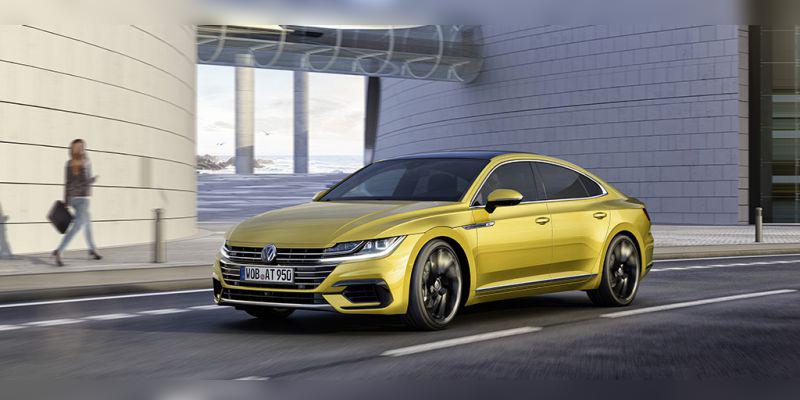
The engine code DLRB belongs to the evolution of the well‑known EA888 series from the Volkswagen Group (Gen 3b). It is a 2.0 TSI unit designed to fill the gap between the standard 2.0 engines with 190 hp and the top “R” versions with 300+ hp. It is primarily installed in the VW Arteon, providing a “Gran Turismo” driving feel. This is an engine for drivers who want sports‑car performance, but in a discreet and comfortable package.
Its output of 268 hp (often also rated as 272 hp or 200 kW depending on the market and software) combined with all‑wheel drive (4MOTION) makes it one of the most versatile powertrains in its class.
Technical specifications
| Parameter | Value |
|---|---|
| Displacement | 1984 cc (2.0 L) |
| Power | 197 kW / 268 hp (up to 272 hp) |
| Torque | 350 Nm (available from low revs) |
| Engine code | DLRB (EA888 Gen 3b) |
| Injection type | Direct injection (TSI/FSI) + MPI (depending on market) |
| Induction | Turbocharger + intercooler |
| Cylinders/valves | I4 / 16v |
Reliability and maintenance
Chain or belt?
This engine uses a timing chain to drive the camshafts. Unlike the notorious early EA888 versions (where tensioners failed), the DLRB uses a revised chain system that is significantly more reliable. Still, the chain is not eternal. It is recommended to check its condition (stretch) via diagnostics or visually (through an inspection opening) at around 150,000 km. If you hear rattling on cold start that lasts longer than 2–3 seconds, that is a sign you should visit a workshop immediately.
Most common failures
Although the engine itself is mechanically robust, the peripherals are its weak point:
- Thermostat and water pump: This is issue number one. The housing is made of plastic that deforms over time due to heat cycles, which leads to coolant leaks. Symptoms include coolant loss without visible puddles under the car (it evaporates on the block) or engine overheating.
- Oil leaks: Often occur at the timing cover or crankshaft seal.
- PCV valve (oil separator): If it clogs or the membrane tears, the engine may start consuming oil, smoking, or idling roughly.
Service intervals and oil
Major service: Since the engine has a chain, a classic “major service” (timing belt replacement) does not exist in that sense. However, the auxiliary (serpentine) belt and its tensioners are replaced at around 100,000–120,000 km.
Oil quantity and type: The engine takes approximately 5.7 liters of oil. The recommended grade is usually 0W‑20 (VW 508.00 standard) for newer models for fuel‑saving reasons, but many enthusiasts and mechanics switch to 5W‑30 (VW 504.00) for better protection at high temperatures, especially if the car is driven hard. Check the sticker under the bonnet.
Oil consumption: Yes, these engines can consume some oil, but not as dramatically as older generations. Consumption of 0.3 to 0.5 liters per 5,000 km is considered acceptable for this power level. If you have to top up a liter every 1,000 km, the engine has a problem (piston rings or PCV valve).
Spark plugs: As this is a high‑performance turbo petrol engine, the spark plugs are under heavy load. They should be replaced every 60,000 km (or 4 years). It is recommended to use only NGK or Bosch plugs specified by part number (iridium).
Specific components (costs)
Fuel injection system
The DLRB engine uses an advanced high‑pressure direct injection system. Injectors are generally reliable, but sensitive to poor fuel quality. A common issue with direct‑injection engines is carbon buildup on intake valves. Since fuel does not “wash” the valves, after 100,000+ km performance may drop and the engine may run roughly. Cleaning (so‑called “decarbonization” or walnut shell blasting) is recommended as preventive maintenance.
Turbocharger
The engine uses a single IHI IS38 (or similar derivative) turbocharger. This is a large turbo that enables high power. Its lifespan is long (often over 200,000 km) with regular oil changes and proper cooldown after driving. The most common failure is related to the actuator (electronics that control the turbo) or the wastegate, which can develop play and rattle.
DPF / GPF and EGR
Since this is a petrol engine, it does not have a classic DPF, but newer versions (Euro 6d‑TEMP and later) have a GPF (Gasoline Particulate Filter) or OPF. It rarely clogs compared to diesels because exhaust gas temperatures are higher on petrol engines. However, using the wrong oil (not “Low SAPS”) can permanently damage this filter.
AdBlue: This engine DOES NOT have an AdBlue system. That is reserved exclusively for diesel engines.
Fuel consumption and performance
City driving
Let’s be honest – 268 petrol horses in a heavy Arteon with 4MOTION all‑wheel drive cannot be frugal. In heavy city traffic, real‑world consumption ranges from 11 to 14 l/100 km. In winter and on short trips, this figure can easily be higher.
Performance and “laziness”
Is the engine lazy? Absolutely NOT. With 350 Nm available from low revs (around 1,700–1,800 rpm), this engine catapults the Arteon. Throttle response is instant, especially in Sport mode. The vehicle’s weight is noticeable only in corners, but the engine has no trouble pulling the body.
Motorway
This is the engine’s natural habitat. At 130 km/h, the engine spins at a low 2,000–2,200 rpm (thanks to the 7th gear of the DSG gearbox). At that point, fuel consumption is surprisingly low, around 7.5 to 8.5 l/100 km. The engine is very quiet and refined at high speeds.
Additional options and modifications
LPG conversion
Is it possible? Technically yes. Is it worth it? Probably not. Due to direct injection, an expensive system is required (liquid‑phase LPG direct‑injection systems or systems that still use a mix of petrol and LPG to cool the injectors). Installation cost is high (very expensive, depends on the market), and the payback period is long. You also risk issues with costly petrol injectors.
Chiptuning (Stage 1)
EA888 engines are known for huge tuning potential. With just a software remap (Stage 1), this engine can safely be taken to 300–310 hp and over 420 Nm of torque. However, keep in mind that this puts additional stress on the turbocharger and DSG gearbox.
Gearbox
Gearbox type
The DLRB engine is not paired with a manual gearbox. It comes exclusively with a DSG automatic gearbox (most commonly the DQ381, a 7‑speed wet‑clutch unit). This is significantly more robust than the older 6‑speed or “dry” 7‑speed variants.
Dual‑mass flywheel
Yes, this model has a dual‑mass flywheel. Although it is an automatic, DSG gearboxes use a dual‑mass flywheel to dampen vibrations. Its typical lifespan is around 150,000–200,000 km, depending on driving style. Symptoms of failure include knocking at idle (metal‑on‑metal sound) or vibrations when switching the engine off. Replacement is expensive.
Gearbox maintenance
For the DQ381 gearbox, the prescribed interval for oil and filter change is every 60,000 km to 120,000 km (depending on model year and manufacturer recommendation). Advice from experienced mechanics: change the gearbox oil every 60,000 km without exception. This is the key to long life for the mechatronics and clutches.
Used car buying and conclusion
Before buying a used Arteon with this engine, make sure to check:
- Signs of coolant leaks: Use a flashlight to inspect the area around the water pump (under the intake manifold).
- Chain noise: Listen to the engine at the first cold start in the morning.
- Gearbox service history: If there is no proof that the DSG oil was changed on time, skip that particular car.
- Exhaust condition: If the tailpipes are black and oily, the engine is probably burning oil or running poorly.
Conclusion
The 2.0 TSI (DLRB) engine is a fantastic choice for those who want a powerful sedan (or four‑door coupé) and do not want a diesel. It offers performance that can embarrass many sports cars, while remaining smooth and refined. However, it is not for those on a tight budget when it comes to maintenance (high city fuel consumption, expensive cooling system parts, DSG upkeep). If you accept these costs, you will get one of the best 2.0 turbo petrol engines on the market.