Lada 1.6 8V (11186) engine – Experiences, issues, fuel consumption and used-car buying tips
- Simple and robust 8-valve naturally aspirated engine, based on proven older technology, ideal for cheap maintenance.
- No expensive components such as a dual-mass flywheel, turbocharger, DPF filter or complex injection systems.
- Uses a timing belt, and its failure (on most series) leads to valve-to-piston contact – respecting the timing belt replacement interval is an absolute priority.
- Perfect candidate for LPG installation, but requires regular manual valve adjustment because it has no hydraulic lifters.
- Extremely durable automatic transmission (Jatco), while the manual is known for its mechanical “whine”, which is a characteristic, not necessarily a fault.
- Fuel consumption ranges from surprisingly low on open roads to around 9–10 liters in heavy city traffic.
Contents
- Introduction: Meet the workhorse
- Technical specifications
- Reliability and maintenance
- Specific parts and costs
- Fuel consumption and performance
- Additional options and modifications
- Gearbox: Manual vs automatic
- Buying used and conclusion
Introduction: Meet the workhorse
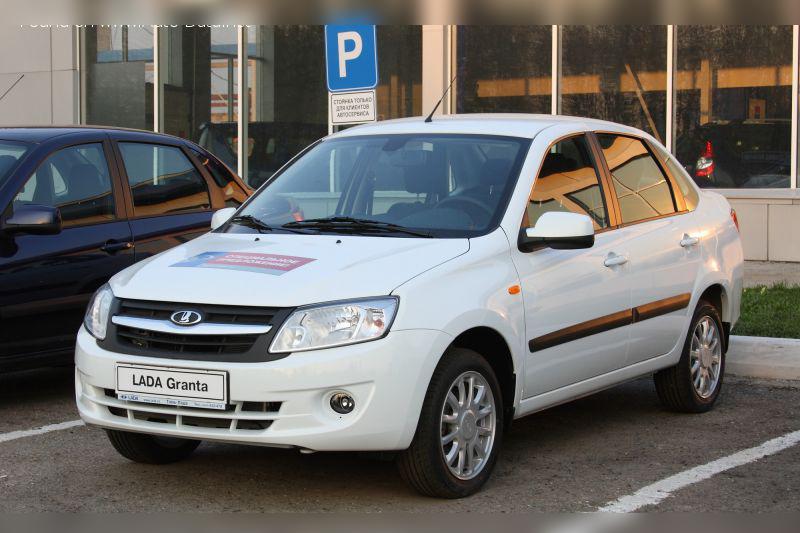
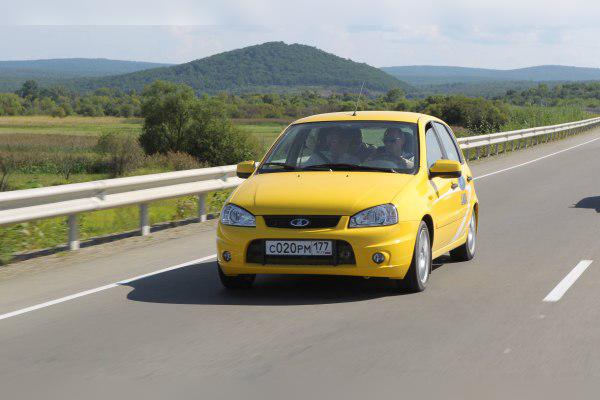
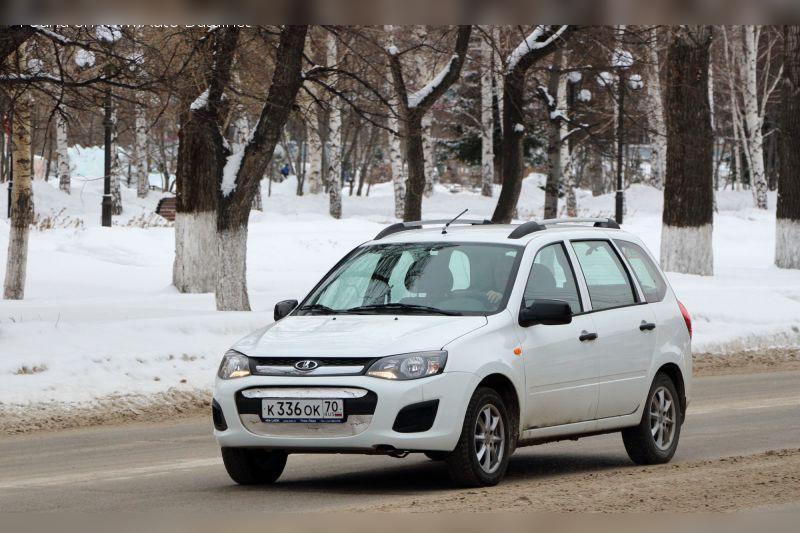
The engine designated 11186 (i.e. VAZ-11186) is an evolution of the legendary Russian 8-valve units. Fitted primarily in Lada Granta and Lada Kalina II models (including all body styles and the Kalina Cross), this 1.6-liter, 87 hp engine was created with one goal: to be cheap to produce, simple to repair and reliable in harsh operating conditions.
What sets it apart from its older predecessors is a lightened piston–connecting rod assembly (developed in cooperation with Federal Mogul), which gave it quieter operation, lower fuel consumption and better throttle response, but also introduced certain risks regarding timing belt failure on earlier versions. This is not an engine for speed enthusiasts, but a purely utilitarian tool for getting from point A to point B.
Technical specifications
| Parameter | Specification |
|---|---|
| Displacement | 1596 cc |
| Power | 64 kW (87 hp) |
| Torque | 140 Nm |
| Engine codes | VAZ-11186 |
| Injection type | Multipoint indirect injection (MPI) |
| Aspiration | Naturally aspirated engine |
Reliability and maintenance
Timing belt or chain?
This engine uses a timing belt for its valvetrain. It is very important to emphasize: due to the lightened piston assembly, on most models with the 11186 engine (up until later upgrades close to the 11182 designation), a broken timing belt will cause valve-to-piston contact. This means that timing failure carries serious financial consequences in the form of a damaged cylinder head, bent valves and sometimes even damaged pistons.
Most common failures and their causes
Mechanically speaking, the engine block is virtually indestructible, but the peripherals often cause headaches. The biggest problem is the water pump. Aftermarket pumps on the market can be of questionable quality. When the pump bearing seizes, it snaps the timing belt, leading to the aforementioned catastrophe. The driver can recognize this by a strange whining noise from the right side of the engine or by a dropping coolant level, which is a signal for an urgent visit to the workshop.
Another common issue is oil leakage from the valve cover. The factory sealing system often fails, so the engine looks dirty from the outside and oil can even reach the spark plugs. Fortunately, the repair is not expensive (depends on the market). In addition, sensors tend to fail – most commonly the crankshaft position sensor (the engine then cannot start) and the throttle position sensor (idle speed fluctuates or the car jerks under acceleration).
Major and minor service
A major service is preventively recommended every 60,000 kilometers or 5 years (whichever comes first). Although the manufacturer in some manuals specifies longer intervals, practice has shown that water pumps and tensioners rarely last longer without risk. A minor service takes about 3.2 to 3.5 liters of engine oil. The most commonly used grade is 5W-40, although in warmer regions mechanics often pour 10W-40 semi-synthetic.
As for oil consumption, a healthy engine usually consumes around 0.5 liters between two services (over 10,000 km), which is completely normal. However, if the car has over 150,000 km in heavy city use, valve stem seals tend to harden, which increases oil consumption and causes bluish smoke at the first cold start in the morning.
Spark plugs
Since this is a petrol engine with a fairly simple ignition system, spark plugs should be replaced every 30,000 kilometers. Ignoring this interval increases the plug gap, which directly leads to overheating and failure of the ignition coil (or ignition module), whose replacement is significantly more expensive.
Specific parts and costs
What makes this engine attractive to drivers on a tighter budget is what it doesn’t have.
- Dual-mass flywheel: It doesn’t exist. A classic solid flywheel is fitted, so the clutch kit (pressure plate, disc, release bearing) is relatively cheap to replace, and the parts themselves fall into the “not expensive” category (depends on the market).
- Injection system: Uses simple multipoint (MPI) injection. Petrol injectors operate at low pressure compared to direct injection systems. They are very durable. If they get dirty due to poor fuel (symptoms: hard starting, rough idle), ultrasonic cleaning successfully solves the problem for a small amount of money.
- Turbocharger: This is a naturally aspirated engine (no turbocharger). There are no worries about turbo cooling, overhauls or power loss due to boost leaks in hoses.
- EGR, DPF, AdBlue: As this is an old-school petrol engine compliant with older Euro standards (mostly Euro 5, newer ones Euro 6 with conventional catalytic converters), it has no DPF filter or AdBlue system. Consequently, there are no issues with clogged filters after short city trips. EGR functions are mostly handled through valve timing overlap (software) or are greatly simplified.
Fuel consumption and performance
City and highway driving
Real-world fuel consumption in city conditions with a lot of stop-and-go traffic is between 8.5 and 10.5 l/100 km, depending on how heavy the driver’s right foot is and the season (it rises significantly in winter with heating). On main roads, consumption drops drastically and with moderate driving at around 80 km/h it easily goes down to 5.5 l/100 km.
Is the engine “lazy”?
Although the figure of 87 hp on paper doesn’t sound impressive, the engine is not lazy at all for bodies weighing around 1,100 kg. In fact, one of the biggest advantages of this 8-valve unit is its low-end torque (the maximum 140 Nm is reached quite early). In city driving it pulls very well from a standstill and from low revs, without constantly demanding a downshift, which makes it pleasant to drive up to about 80–90 km/h.
Behavior on the motorway
On the motorway the situation is completely different. The gearboxes (especially the manual) are designed with short gear ratios to compensate for the lack of raw power. Because of this, at a cruising speed of 130 km/h the engine runs at a high 3,500 to 3,800 rpm (depending on the exact gearing of a particular Lada series). Symptoms: sound insulation in the car is poor, the engine becomes very noisy, and fuel consumption suddenly rises above 8 liters as aerodynamics work against you and the engine leaves its optimal zone. This is definitely not the right car for long stints in the fast lane.
Additional options and modifications
LPG installation
This engine is a fantastic candidate for an LPG system. The simple MPI intake manifold allows installation of sequential systems at a low cost. However, there is one crucial maintenance point! The 11186 engine DOES NOT have hydraulic lifters (automatic valve lash adjustment). Valve clearance must be set manually using calibrated shims.
When the engine runs on pure petrol, this is done at around 60,000 km, but if LPG is installed, the valves must be adjusted every 30,000 kilometers, because LPG combustion causes faster valve seat recession. If the driver ignores this, the valves lose clearance, the engine starts to run rough at idle, and very soon the valve heads burn, which requires removing and reconditioning the cylinder head.
Chiptuning (Stage 1)
On small-displacement naturally aspirated engines, classic “chiptuning” is money thrown away. By changing fuel and ignition maps you can gain at most 5 to 7 horsepower, which is almost imperceptible in real driving. The only real benefit of software tweaks on this engine is smoother and more immediate response to the electronic throttle pedal (removing the delay when you press the pedal), but for the sake of pure power increase – it is not recommended.
Gearbox: Manual vs automatic
Manual gearbox
The 5-speed manual gearbox, despite the switch to cable-operated controls on newer Ladas, suffers from one historical ailment – gear whine. It is most noticeable in second and third gear. Novice drivers often confuse this with worn bearings, but it is actually a factory characteristic due to the design and tooth profile in the gearbox. It is not a sign that the gearbox is about to fail, just a lack of acoustic refinement. Possible failures include worn synchros (if gears are shifted aggressively) and occasional oil leaks from the driveshaft seals. Oil in the manual gearbox should be changed every 60,000 km.
Automatic gearbox (Jatco JF414E)
Where an automatic option exists (e.g. Granta I Sedan or Kalina II), there is a Japanese Jatco 4-speed automatic. This is a classic torque-converter automatic from older Nissan models. It is extremely reliable and durable. Symptoms of failure (jerking when shifting from P to D, slipping) occur only if the gearbox is seriously neglected. Cars with it are a bit “sluggish” and consume one to two liters more in the city, but the comfort is incomparable. Maintenance: The oil (ATF fluid) and filter must be changed every 60,000 km for the gearbox to easily exceed 250,000 km without an overhaul.
The cost of clutch replacement on the manual gearbox is not high (depends on the market) thanks to the simple, non-dual-mass flywheel.
Buying used and conclusion
What to check before buying?
When inspecting a used car with the 11186 engine, be sure to check the following:
- Timing belt service history: Given how sensitive the valvetrain is to belt failure, if the seller has no solid proof of when the timing belt and water pump were replaced, that must be your first expense after purchase.
- Engine sound at idle: If you hear pronounced ticking from the top of the engine, similar to a sewing machine, the valves have excessive clearance and need adjustment. If, on the other hand, the engine shakes and idles unevenly (especially if it has LPG), the valves may already be burnt because they were not adjusted in time.
- Cooling system: Open the coolant reservoir cap (only when the car is cold!). If the fluid is rust-colored or you can see sludge, the previous owner used plain water. This guarantees imminent problems with a leaking radiator or a leaking cabin heater.
- Inspection around the valve cover and oil pan gaskets: Look for fresh traces of oil leaks on joints and around the ignition coils.
Who is this engine for?
The Lada 1.6 8V (11186) engine is intended for drivers whose priorities are low running and maintenance costs, without ambitions for sporty performance or acoustic luxury. It is excellent for everyday use in harsh conditions, urban environments and as a work vehicle. It is not an ideal choice for those who spend hours on the motorway at high speeds. Its design forgives many minor issues, and all of its “quirks” can be fixed by almost any mechanic for a minimal price of parts.