Engine B38A15A (102 HP): Owner experiences, issues, fuel consumption and used car buying guide
Key points (TL;DR)
- Reliability: Generally a very reliable BMW three-cylinder, but it requires strict maintenance and regular oil changes to protect the timing chain and turbo.
- Performance: With 102 HP and 190 Nm it works great in the Mini Hatch, but seriously lacks power in heavier models like the Countryman and Clubman.
- Fuel consumption: Not particularly economical in the city (around 8–9 l/100 km), especially in larger bodies where the engine has to work harder.
- Maintenance: It has a timing chain and a dual-mass flywheel. The weakest points are the engine mounts and the water pump.
- Tuning potential: Fantastic! Since this is hardware-wise the same engine as the 136 HP version, a Stage 1 remap makes a huge difference.
- Buying recommendation: Ideal for city and suburban driving. A thorough check of service history and engine mounts is mandatory before purchase.
Contents
- Introduction and basic information
- Technical specifications
- Reliability, maintenance and common issues
- Specific parts and repair costs
- Fuel consumption and driving performance
- Extras, LPG and remapping
- Gearbox and drivetrain
- Buying used and final verdict
Introduction and basic information
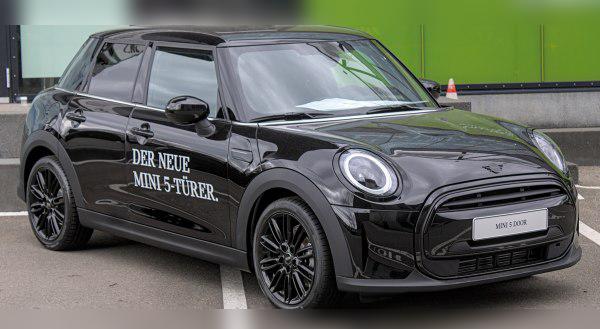
The engine designated B38A15A belongs to BMW’s modern modular engine family. Although it carries the Mini badge (One models), under the bonnet beats a heart developed in Munich. It is a three-cylinder turbo petrol engine with a displacement of 1.5 litres, which in this specific version delivers 102 HP (75 kW). It was installed in a wide range of Mini models, from the nimble Mini Hatch (3- and 5-door), through lifestyle models like the Convertible and Clubman, all the way to the small SUV Countryman (generations F54, F55, F56, F57 and F60, including facelift versions from 2018 to 2021).
The importance of this engine lies in the fact that it represents the entry ticket into the Mini world (the "One" badge). It was designed to offer refinement and flexibility thanks to TwinPower Turbo technology, direct injection and the Valvetronic system. However, buyers must be aware that an "entry-level" engine in heavy bodies comes with certain compromises in terms of longevity and fuel consumption.
Technical specifications
| Specification | Data |
|---|---|
| Engine displacement | 1499 cc (1.5 litres) |
| Number and layout of cylinders | 3 cylinders, inline |
| Power output | 75 kW (102 HP) |
| Torque | 190 Nm |
| Engine code | B38A15A |
| Fuel type | Petrol |
| Injection type | Direct injection (HPI) |
| Charging system | Twin-scroll turbo (TwinPower), intercooler |
Reliability, maintenance and common issues
Timing belt or chain and major service
This engine uses a timing chain, not a timing belt. In B38 engines the chain is located at the rear of the engine (towards the gearbox). Because of this, there is no classic "major service" at a fixed mileage. The chain is designed to last a long time, but in practice a visual and acoustic inspection, as well as a check of the tensioner, is recommended after 150,000 km. Rattling at cold start is the first symptom of chain stretch. Replacement is an expensive job because it requires serious disassembly or engine removal: very expensive (depends on the market).
Most common failures and symptoms
The B38A15A is significantly more reliable than the older Prince (N13/N14) engines, but it is not flawless. The most common issues include:
- Coolant leaks: The water pump and thermostat housing are made of plastic, which becomes brittle over time due to constant temperature changes. Symptoms are coolant loss and a sweet smell under the bonnet when the engine is hot.
- Engine mounts: Three-cylinder engines naturally produce more vibrations. The upper right hydraulic engine mount often fails as early as around 80,000 to 100,000 km. The driver will feel harsh vibrations in the cabin at idle and a dull thump when starting or switching off the engine.
- Crankshaft thrust bearing: This problem was present at the very beginning of B38 production (until the end of 2015), but since the models you’re looking at are mostly facelift versions from 2018 onwards, this risk is reduced to a minimum. Still, on early manual-gearbox cars the crankshaft could be damaged.
Oil and regular servicing
The engine takes approximately 4.25 litres of oil. Full synthetic oil with viscosity 0W-20 or 5W-30 is recommended (with mandatory BMW LL-14 FE+ or LL-04 approval, depending on model year and whether a GPF is fitted). The factory change interval of 30,000 km is far too long and is the main culprit for timing chain and turbo problems. Mechanics usually recommend changing the oil every 10,000 to a maximum of 15,000 km.
As for oil consumption, these engines are not known as "oil burners". Consumption of around 0.2 to 0.5 litres between services is considered normal. If the engine uses more than 1 litre per 10,000 km, the problem is usually a clogged PCV valve (oil separator integrated into the valve cover) or worn valve stem seals due to infrequent oil changes.
Spark plug replacement
Since this is a turbocharged three-cylinder petrol engine, the spark plugs are heavily stressed. It is recommended to replace them every 40,000 to 60,000 km. Worn plugs can cause rough idle, hesitation under acceleration, and even damage to the sensitive ignition coils. Replacement is not expensive, but it is crucial for smooth running of the three-cylinder.
Specific parts and repair costs
Dual-mass flywheel
Surprisingly for some, yes, this engine does have a dual-mass flywheel if paired with a manual gearbox. Its role is to absorb the strong vibrations produced by an engine with an odd number of cylinders. Symptoms of a worn flywheel include shuddering when pulling away (at half clutch), knocking at idle that disappears when the clutch is pressed, and jerking when changing gears. Replacing the clutch kit together with the dual-mass flywheel is: expensive (depends on the market).
Fuel injection system
The engine uses a high-pressure direct injection system. The injectors are located directly in the combustion chamber. They are generally reliable, but sensitive to poor fuel quality. Dirty injectors cause poor atomisation, which leads to improper combustion, hesitation and, in extreme cases, piston damage. It is recommended to use higher-quality 98 or 100 octane fuel to prevent carbon build-up on the intake valves, which is a common issue on all direct-injection engines.
Turbocharger
It is equipped with a single but very efficient twin-scroll turbocharger. The turbo’s lifespan is usually over 200,000 km, provided that the oil is changed regularly and the engine is not switched off immediately after hard driving (it should be left to idle for a couple of minutes so the oil in the turbo can cool down). Sometimes there can be an issue with the wastegate actuator (rattling when revs drop), which may require turbo refurbishment: from moderately expensive to expensive (depends on the market).
Emission components: DPF, EGR, AdBlue and GPF
Since this is a petrol engine, it does not have a DPF filter and does not use AdBlue. It also does not have a classic external EGR valve that clogs with soot like on diesels; instead, BMW uses variable valve timing and lift (VANOS and Valvetronic) to achieve internal exhaust gas recirculation.
However, it is important to note: Mini models with this engine produced after 2018 are equipped with a GPF (or OPF) filter – a gasoline particulate filter to meet Euro 6d-TEMP standards. This filter rarely fails and regenerates itself during driving (the high exhaust temperatures of petrol engines help), but it requires only "Low SAPS" oils so it does not clog with ash from burnt oil.
Fuel consumption and driving performance
City driving and fuel consumption
Although the engine has a small displacement, fuel consumption depends on the body style. In smaller models (Mini Hatch F55/F56) real-world city consumption is around 7.5 to 8.5 l/100 km. However, if this engine is found in a heavy Countryman (F60) or Clubman (F54), you can expect 9 to 10 l/100 km in stop-and-go traffic, because the turbo has to work constantly to move the extra mass.
Is the engine "sluggish"?
In a 3-door Mini Hatch, 102 HP and 190 Nm (available already at low revs) are perfectly adequate and the engine feels quite lively for city use. However, in the Clubman and Countryman this engine is definitely sluggish. With a kerb weight exceeding 1.4 tonnes, any overtaking on country roads or driving uphill with a full car requires high revs, which spoils acoustic comfort and drastically increases fuel consumption.
Behaviour on the motorway
On the motorway the engine struggles more with aerodynamic drag, especially in the Countryman. At a cruising speed of 130 km/h, in 6th gear with the manual or 7th with the automatic, the engine spins at around 2,800 to 3,000 rpm (depending on the exact gear ratios of the specific model). Engine noise is well insulated, but wind noise is often a weak point in Mini vehicles. It is not ideal for frequent long-distance trips due to the lack of power for effortless overtaking at higher speeds.
Extras, LPG and remapping
LPG conversion
Installing an LPG system on the B38A15A engine is strongly discouraged. This is a direct-injection engine with a very complex Valvetronic system (variable valve lift). LPG systems for such engines must inject gas in liquid form through the petrol injectors so they do not burn out, and such systems are: very expensive (depends on the market). The savings in fuel costs are hard to recoup, while the risk of damage to the fuel system and cylinder head is very high.
Remapping (Stage 1)
This is the best news for owners of this engine! The 102 HP "One" version is mechanically (hardware-wise) almost identical to the "Cooper" version, which extracts 136 HP from the same engine. This means your engine is only electronically detuned. With a safe Stage 1 ECU remap, power is routinely raised to around 135 to even 145 HP, while torque jumps from 190 Nm to about 230–240 Nm. After the remap, the car completely changes character, becomes much safer for overtaking, and fuel consumption in normal driving can even slightly decrease.
Gearbox and drivetrain
Types of gearboxes
This engine is paired with several types of gearboxes, depending on the model year:
- 6-speed manual gearbox: Very precise, with short throws and reliable.
- Automatic (Steptronic) before 2018: Aisin 6-speed conventional automatic with a torque converter. Very durable and smooth in operation.
- Automatic (Steptronic DCT) after 2018: Getrag 7-speed dual-clutch gearbox. Offers faster shifts and lower fuel consumption.
Most common gearbox issues and maintenance
With the manual gearbox, problems are rare, but the aforementioned dual-mass flywheel and clutch disc do wear out, especially if the car is used exclusively on steep city streets. Repairs are: expensive (depends on the market).
With the Aisin 6-speed automatic, the main issue is jerking when shifting from first to second gear, most often due to dirty oil or faulty solenoids in the valve body.
With the Getrag 7-speed DCT, the mechatronics control unit can fail, and the dual-clutch pack wears out (similarly to VW’s DSG) due to prolonged city driving in heavy traffic (creeping along). Replacing the clutch pack on a DCT is: very expensive (depends on the market).
Gearbox service intervals
Although the manufacturer often states that the gearbox oil is "lifetime", any experienced mechanic will tell you that this is not true. To avoid costly failures, oil in automatic gearboxes should be changed every 60,000 to 80,000 km. In manual gearboxes, changing the oil at 100,000 km will significantly extend the life of the synchros and make shifting easier in winter.
Buying used and final verdict
What to check before buying?
When buying a Mini with the 102 HP B38 engine, pay attention to the following:
- Noise at cold start: Ask the seller not to start the car before you arrive. When starting, open the bonnet and listen for rattling from the right (rear) side of the engine. If the chain rattles for more than 2–3 seconds, an expensive replacement is looming.
- Vibrations in the steering wheel and gear lever: Start the engine and observe vibrations with the gearbox in neutral or in D (for automatics) with the brake pedal pressed. Pronounced vibrations mean the upper engine mount has failed.
- Smell under the bonnet: Inspect the area around the water pump and oil filter housing. Any traces of whitish stains (coolant) or smell of vapours require replacement of cooling system components.
- Service history: Avoid engines where the oil was changed every 30,000 km. Look for examples with documented services every 10–15 thousand kilometres.
- Diagnostics: Always connect a diagnostic tool to check the turbo actuator operation, fuel pressure in the high-pressure pump and any misfire events on cylinders, which indicate bad spark plugs or coils.
Who is this engine for?
The B38A15A engine with 102 HP is an ideal choice for young drivers, couples or as a second car in the family, provided it is installed in a smaller body such as the Mini Hatch. It offers an excellent balance of reliability, brand image and moderate registration costs. However, if you are aiming for a family Countryman or Clubman, it is strongly recommended either to look for the more powerful "Cooper" version, or to have a proven Stage 1 remap done right after purchase, so you don’t end up frustrated by the lack of power and unnecessarily high fuel consumption.