BMW / MINI engine B38A15A 1.5 TwinPower Turbo (136 hp): Experiences, problems, fuel consumption and used car buying guide
Key points (TL;DR)
- Engine character: Three-cylinder turbo petrol with excellent low-end torque, ideal for city and highway driving.
- Timing drive: Uses a chain, which may need replacement between 150,000 and 200,000 km. The cost is quite high (depends on the market).
- Biggest weakness (early series): Thrust bearing of the crankshaft on models with manual gearbox (mostly before 2015/2016).
- Maintenance: Sensitive to irregular oil changes. Intake valve carbon build-up is inevitable due to direct injection.
- Performance vs weight: Extremely lively in Mini Hatch models, while it struggles under full load in heavier bodies (BMW X1, Mini Countryman).
- LPG conversion: Not recommended. Expensive and not cost-effective due to the complex direct injection system.
Contents
- Technical specifications
- Reliability, failures and regular maintenance
- Specific parts and potential costs
- Fuel consumption and driving performance
- Extras, LPG and Chiptuning (Stage 1)
- Gearboxes, clutch and dual-mass flywheel
- Used car buying tips and final verdict
Introduction to the B38 engine family
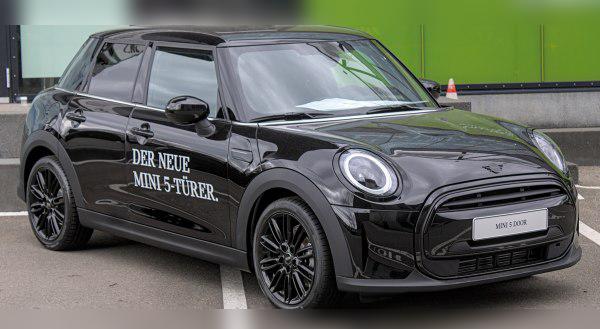
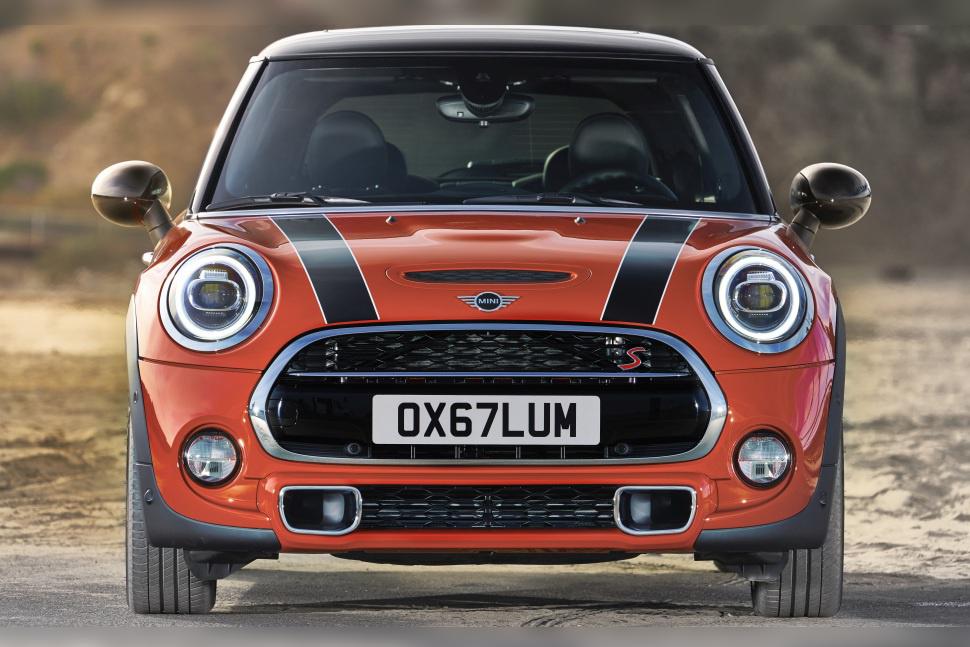
The engine designated B38A15A is BMW’s answer to strict emission regulations and the need for efficient, modular powerplants. It belongs to the family of three-cylinder 1.5-liter engines and is mounted transversely in front-wheel-drive models (or all-wheel drive) developed on the UKL platform. This covers a wide range of vehicles, from the BMW X1 (F48, F49) all the way to the entire modern range of Mini vehicles (Hatch F55/F56, Clubman F54, Convertible F57 and Countryman F60).
Although three-cylinders don’t exactly thrill purists, this unit offers serious technology: direct injection, Valvetronic (variable valve lift), Double-VANOS and a turbocharger. The end result is 100 kW (136 hp) and an excellent 230 Nm of torque, available very low down, almost like a modern diesel.
Technical specifications
| Specification | Data |
|---|---|
| Engine code | B38A15A |
| Displacement | 1499 cc (1.5L) |
| Configuration | Inline 3-cylinder (R3) |
| Power | 100 kW (136 hp) |
| Torque | 230 Nm (from 1250 to 4300 rpm) |
| Fuel type | Petrol (Recommended 98 RON, minimum 95) |
| Injection type | Direct injection (High Precision Injection) |
| Charging | Turbocharger (TwinPower Turbo technology), intercooler |
Reliability, failures and regular maintenance
Does this engine have a timing belt or chain?
Like most modern BMW engines, the B38 uses a chain for the timing drive. On this engine (due to transverse mounting), the chain is on the side, but the engine bay is extremely cramped. The manufacturer declares it as “lifetime” (maintenance-free), but in practice that’s not the case.
At what mileage is the major service done?
The term major service here essentially means replacing the chain, tensioner, guides and related sprockets. Since the chain stretches over time, an inspection is recommended at 150,000 km. Replacement is most often done between 150,000 and 200,000 km, depending on how aggressively the car has been driven and how strictly oil change intervals were followed. Due to the specific design, the work is complex, so the cost of this job is quite high (depends on the market).
Most common failures and symptoms
- Crankshaft thrust bearing: This is the “Achilles’ heel” of early series (mostly pre-facelift Mini models before 2016) paired with a manual gearbox. Clutch pressure caused excessive bearing wear. Symptom: Metallic knocking from the lower part of the engine when pressing the clutch, or complete engine failure. BMW issued a recall, so most have been fixed, but caution is necessary with early model years.
- Coolant leaks: The usual culprits are the oil filter housing and the water pump. Symptom: Coolant level dropping in the expansion tank, a sweet smell under the bonnet, or puddles under the car.
- Intake valve carbon build-up: Due to direct injection, fuel does not wash over the intake valves. Carbon deposits build up, reducing airflow. Symptom: Rough idle, loss of power, increased fuel consumption. Solved by walnut shell blasting every 80,000–100,000 km.
- Engine mounts: Since a three-cylinder is inherently unbalanced, the mounts are under heavy stress. Symptom: Strong vibrations in the cabin at idle and when starting/stopping the engine.
Engine oil and change intervals
The engine takes exactly 4.25 liters of oil. The recommended grade depends on the specification, but most commonly it is fully synthetic 0W-20 (BMW LL-14 FE+ or LL-17 FE+) for newer models for fuel economy, or 5W-30 (LL-04), which mechanics tend to prefer for higher-mileage cars due to better protection at high temperatures.
Oil consumption: Direct injection and a turbocharger take their toll. Consumption of around 0.5 to 1 liter per 10,000 km is considered completely normal. However, avoid the factory change interval of 25,000–30,000 km! Change the oil every 10,000 to 12,000 km to protect the chain and turbo.
When should spark plugs be replaced?
This turbo petrol engine is extremely “hungry” for a strong, clean spark. Spark plugs (and often coils) wear out faster, so they must be replaced at no more than 60,000 km. Delaying this can lead to misfires, which directly damage the catalytic converter or GPF filter.
Specific parts and potential costs
Injection system and injectors
The High Precision Injection system operates at extremely high pressure. The injectors are generally reliable but sensitive to poor-quality fuel with excessive contaminants. Injector failure shows up as rough running, exhaust smoke and warning lights on the dashboard. Replacement is expensive (depends on the market).
Turbocharger
Despite the “TwinPower” name, this is a single turbocharger (most often BorgWarner). Turbo lifespan is around 200,000 km, provided oil has been changed regularly. The electric wastegate actuator often fails, causing loss of boost and a “Check Engine” light. Repair is possible and reasonably priced.
Emission systems: DPF, EGR, AdBlue?
Since this is a petrol engine, it does not have an AdBlue system or a classic DPF as seen on diesels.
However:
1. EGR valve: Yes, modern petrol units like the B38 have an electronically controlled EGR valve to reduce combustion temperature and NOx emissions. It can get dirty, but far less often than on diesels.
2. GPF (OPF) filter: Models produced from late 2018 (Euro 6d-TEMP standard) are equipped with a Gasoline Particulate Filter. It clogs only if the car is driven almost exclusively on short stop-and-go city trips, but regeneration is much easier than on diesels because petrol exhaust gases are significantly hotter.
Fuel consumption and driving performance
Real-world fuel consumption
- City driving: In serious urban traffic, real consumption is between 8.5 and 10.5 l/100 km. Factory figures are, as always, overly optimistic.
- Country roads: On secondary roads, consumption drops to about 5.5–6.5 l/100 km.
- Motorway: At 130 km/h, consumption is around 7.5–8.5 l/100 km, depending on the car’s aerodynamics.
Performance and driving feel
Is the engine “lazy”? That depends entirely on what it’s installed in:
- In the light Mini Hatch (F55/F56), this engine is a little rocket. It accelerates very well, feels extremely agile and is genuinely fun to drive.
- In the BMW X1 (F48) and Mini Countryman (F60), things are different. These cars weigh over 1.5 tons. The engine has enough torque (230 Nm) to pull from a standstill in city conditions, but on country roads when overtaking uphill, or on the motorway with a full load of passengers and luggage, the lack of power becomes apparent. You’ll have to rev it hard.
At 130 km/h (depending on gearbox type), the engine cruises at around 2,500 to 2,800 rpm. Cabin sound insulation does a great job of masking the characteristic (and slightly rougher) three-cylinder sound.
Extras, LPG and Chiptuning
Is this engine suitable for LPG conversion?
Short answer: No. This engine has an extremely complex direct injection system where the petrol injectors also act as a seal for the combustion chamber and are cooled by the flow of petrol. To fit LPG, you need a special (and very expensive) system that will simultaneously inject a small amount of petrol so the injectors don’t melt. The economics of such an investment are highly questionable.
How far can you go with a “chip tune” (Stage 1)?
The engine handles a mild remap very well. A safe limit for Stage 1 is an increase to about 165–170 hp and torque to 270–280 Nm. Going beyond that is not recommended because the turbo loses efficiency, and the gearboxes (especially manual clutches and lower-spec DCT units) cannot handle high input shaft loads without dramatically shortening their lifespan.
Gearboxes, clutch and dual-mass flywheel
Types of gearboxes
The B38 was offered with several transmission options, and the situation is a bit mixed, so check the vehicle’s VIN before buying:
1. 6-speed manual gearbox: Very precise, with the classic BMW feel. The problem lies with early series and the aforementioned thrust bearing issue.
2. Aisin automatic gearbox (6 and 8-speed): A classic torque-converter automatic, extremely reliable and smooth.
3. 7-speed dual-clutch Steptronic (DCT): Introduced on newer versions and facelifts (after 2017/2018). Shifts lightning-fast but requires stricter maintenance and is more expensive if the mechatronics fail.
Dual-mass flywheel and clutch
Yes, all models with a manual gearbox have a dual-mass flywheel. Its role is to cancel out the pronounced vibrations of an odd-cylinder engine. Because of this, it is under much higher stress than on four-cylinder engines and rarely lasts more than 150,000–180,000 km in city driving. Replacing the clutch kit and dual-mass flywheel is expensive (depends on the market).
Automatic gearbox maintenance
No automatic gearbox is truly “maintenance-free”. The gearbox manufacturers (Aisin and Getrag) strictly recommend regular servicing and changing the transmission fluid and filter every 60,000 to 80,000 km. Failures on Aisin gearboxes are rare and most often show up as harsh jolts when shifting from P into D or R, which is a clear sign of old oil full of metal particles.
Used car buying tips and final verdict
What exactly should you check before buying?
- Cold start: The engine must be completely cold when inspected. Listen carefully right after starting. If you hear a short but loud rattling or grinding noise for the first 2–3 seconds, the chain is due for replacement.
- Vibrations: Sit in the car, close the doors and turn on the air conditioning. If you feel the steering wheel and seat noticeably shaking at idle, the engine mounts need replacing (common and not exactly cheap).
- Smell and smoke: Check the area around the oil filter housing. Any sweet smell means a coolant leak. Whitish-blue smoke from the exhaust when blipping the throttle after idling for a while indicates oil leaking past the turbo.
- Service history: Avoid cars where the oil was changed strictly every 30,000 km under “LongLife” lease schedules.
Conclusion: Who is this engine for?
The B38A15A 1.5 TwinPower (136 hp) is an impressive piece of engineering for everyday use. Its biggest asset is the fantastic torque that makes city driving pleasant and relaxed.
Who is it for? It is an ideal fit for the Mini Cooper and BMW 1 Series, as well as BMW X1 drivers whose priorities are family and commuting rather than racing. On the other hand, it demands “premium” maintenance: regular spark plug changes, frequent high-quality oil changes and a willingness to pay more when chain replacement time comes. If you expect the durability of old naturally aspirated engines with zero investment, this is not the engine for you. But if you find a car with a proper service history (especially from 2017 onwards, when early-series teething issues were resolved), it will reward you with a very refined and comfortable driving experience.