BMW 1.5 B38B15 engine: Experiences, issues, fuel consumption and used-car buying tips
- Three-cylinder design: The B38 is a modular three-cylinder engine that offers excellent low-end torque, but you need to get used to its specific sound.
- Crankshaft thrust bearing: The biggest flaw of early units with a manual gearbox. If not detected in time, it can lead to a complete engine replacement.
- Timing chain: The engine uses a chain located at the rear, which makes replacement more expensive when it becomes necessary.
- Maintenance: Direct injection and the sensitive Valvetronic system require regular changes of high-quality oil (every 10,000 to 15,000 km at most).
- Fuel consumption: Very economical for its power, especially in Plug-in Hybrid (225xe) versions.
- LPG: Due to the complex injection system and electronics, LPG installation is absolutely not recommended.
Contents
- Introduction: Meet the BMW B38
- Technical specifications
- Reliability and maintenance
- Specific parts (costs)
- Fuel consumption and performance
- Additional options and modifications
- Gearbox and drivetrain
- Buying used and conclusion
Introduction: Meet the BMW B38
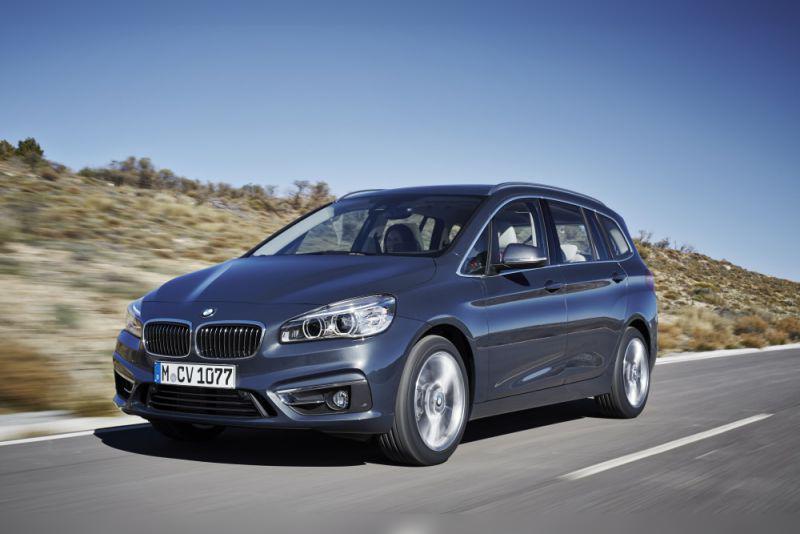
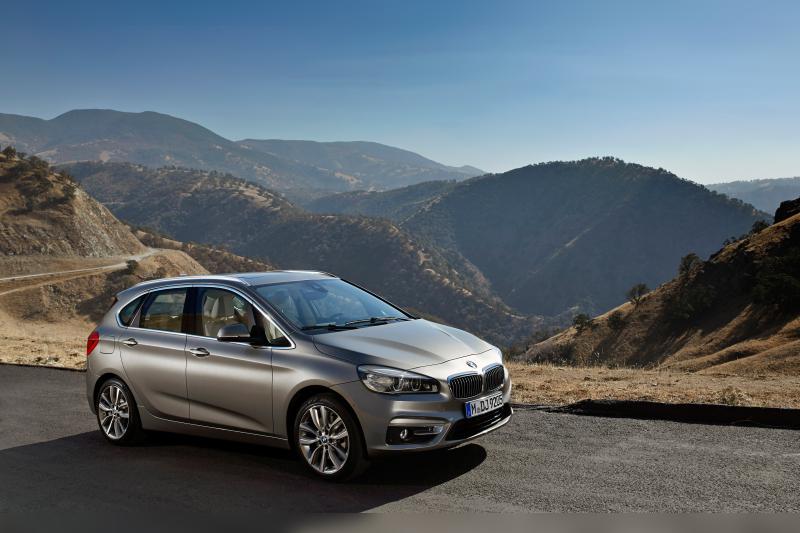
BMW’s switch to front-wheel drive in the 2 Series models (Active Tourer F45 and Gran Tourer F46) also brought a new modular engine family. The B38B15 is a 1.5‑liter three‑cylinder petrol engine that uses TwinPower Turbo technology. Although the idea of a three‑cylinder engine in a BMW initially caused skepticism among purists, this unit has proven to be extremely flexible and efficient, which is why it is even used in hybrid systems (225xe models) and in the sporty i8. However, like every modern BMW engine, it requires disciplined maintenance and has a few “childhood diseases” you need to be aware of before buying a used car.
Technical specifications
| Characteristic | Data |
|---|---|
| Engine code | B38B15 (B38A15M0 for transverse installation) |
| Displacement | 1499 cc (1.5 liters) |
| Power | 100 kW (136 hp) *In the 225xe, combined hybrid power is 224 hp |
| Torque | 220 Nm (from 1250 rpm) |
| Cylinder layout | Inline, 3 cylinders |
| Injection type | Direct (High-Precision Injection) |
| Intake/Boost | Twin-scroll turbocharger (TwinPower), intercooler |
| Valve timing | Chain, DOHC, Valvetronic, Double VANOS |
Reliability and maintenance
Chain or belt and major service?
This engine uses a timing chain to drive the camshafts. Structurally, the chain is located at the rear of the engine (towards the gearbox), which often means the engine has to be removed or the gearbox dropped for replacement – a labor‑intensive and expensive job. There is no factory‑defined interval for a “major service” in the classic sense (where a timing belt is replaced), but in practice the condition of the chain should be checked after 150,000 km. A rattling noise on cold start is the first symptom of a stretched chain. What is regularly replaced as part of a “major service” are the auxiliary (serpentine) belt, idler pulleys, tensioners and the water pump.
Most common failures
By far the most serious issue, especially on early models with a manual gearbox (produced up to mid‑2015), is rapid wear of the crankshaft thrust bearing. Pressing the clutch pushes the crankshaft forward and, due to poor bearing design, excessive play develops. Symptoms include harder gear changes, vibrations and, in the worst case, the oil pressure warning light and total engine failure. BMW dealt with this under warranty, so always check the service history.
Other issues include coolant leaks from the thermostat housing and water pump, as well as occasional problems with the Valvetronic actuator (the electric motor that controls valve lift). Symptoms of Valvetronic failure are hesitation under acceleration and loss of power.
Oil: capacity, grade and consumption
The B38 engine takes exactly 4.25 liters of oil. BMW recommends fully synthetic oil with the specification LL-04, LL-14 FE+ or LL-17 FE+, in grades 0W-20 or 5W-30. Due to the extremely narrow oil passages and the sensitive turbocharger, it is recommended to change the oil every 10,000 to 15,000 km at most, never at 30,000 km as prescribed by the factory LongLife regime.
As for oil consumption, a completely healthy B38 engine should not require topping up between services (at 10,000 km). BMW tolerates consumption up to 0.5 l per 1000 km, but in practice, if the engine uses more than 1 liter per 10,000 km, it’s time to check the piston rings, PCV valve (oil separator) or turbo shaft.
Spark plug replacement
Since this is a petrol engine with high‑pressure direct injection, the spark plugs are under heavy load. It is recommended to replace them every 60,000 km. Annoying misfires or shuddering at idle are often a sign that the spark plugs or ignition coils are nearing the end of their service life.
Specific parts (costs)
Injection system and injectors
The engine uses a direct injection system into the cylinders. Over time, soot (carbon deposits) builds up on the intake valves because the fuel does not wash them. Cleaning the valves (so‑called “walnut blasting”) is recommended at around 100,000 km. The injectors themselves and the high‑pressure fuel pump (HPFP) are generally reliable, but very sensitive to poor fuel quality. Replacing injectors is expensive (depends on the market).
Turbocharger
It is equipped with a single twin‑scroll turbocharger that is integrated into the exhaust manifold for quicker response. Its service life is generally over 150,000 km, but only if you don’t switch the engine off immediately after hard motorway driving and if you change the oil regularly. A common benign issue is rattling of the wastegate lever (turbo actuator) when lifting off the throttle, which does not necessarily mean the turbo needs a rebuild, but that the lever has developed play.
EGR, DPF (OPF) and AdBlue
Although it is a petrol engine, the B38 is specific in that it has an EGR valve (exhaust gas recirculation valve) which serves to lower cylinder temperatures and reduce NOx emissions. This valve can become dirty and stick, causing rough idle and a “Check Engine” light.
The engine does not have a DPF or AdBlue because it is not a diesel. However, models from 2018 onwards (LCI facelift, Euro 6d‑TEMP standard) are equipped with an OPF/GPF filter (Gasoline Particulate Filter). This filter traps fine particles and can cause problems only if the car is constantly driven on short city trips where it cannot reach the temperature needed for self‑regeneration.
Fuel consumption and performance
City and highway driving
In city conditions, due to the weight of the Active/Gran Tourer body (often over 1.4 tons), real‑world consumption is between 8.0 and 10.0 l/100 km. On the other hand, hybrid 225xe models can use a negligible amount of fuel in the city (even 0 l of petrol) if you regularly charge the battery at home and drive on electricity to work and back.
On the motorway at 130 km/h, consumption drops to around 6.5 to 7.5 l/100 km. At this speed, in sixth gear (or eighth with the automatic), the engine cruises at a relatively low 2500 to 2800 rpm, so cabin sound insulation is good and engine noise is not excessive.
Is 136 hp enough for this car?
The engine delivers its maximum 220 Nm of torque as early as 1250 rpm. In practice, this means that in city and country‑road driving it doesn’t feel “sluggish”. It pulls easily from low revs and drives almost like a diesel. However, in the Gran Tourer (F46) models, when the car is loaded with the whole family and luggage, on climbs and during overtakes above 100 km/h, the three‑cylinder engine starts to show a lack of “breath” at high revs.
Additional options and modifications
LPG installation
Plain and simple: Not recommended. Because of direct fuel injection into the cylinder, an LPG system would have to inject a certain amount of petrol in parallel to prevent the injectors from burning out (which defeats the purpose of saving money). In addition, the sophisticated Valvetronic system is extremely sensitive to any changes in the air‑fuel mixture, so LPG installation brings more problems (Check Engine light, loss of power, jerking) than savings.
Chiptuning (Stage 1)
This engine responds very well to remapping. Since it is turbocharged, a simple “Stage 1” software remap safely increases power from 136 hp to around 170 hp up to a maximum of 180 hp, while torque rises to about 260 Nm. This modification makes it significantly more agile when overtaking, and the gearbox and clutch can easily handle this power increase as long as you drive sensibly.
Gearbox and drivetrain
Types of gearboxes and common issues
With the B38 engine in 2 Series (F45/F46) models, the following gearboxes were fitted:
- 6‑speed manual: Reliable in itself, but due to the aforementioned crankshaft thrust bearing issue (under clutch pressure), it requires caution on early units. Always check whether the clutch shudders when pulling away.
- 6‑speed automatic (Aisin): A conventional automatic (torque converter). Very reliable if serviced regularly. It does not tolerate aggressive throttle inputs when cold.
- 8‑speed automatic (Aisin): Often found in the 225xe hybrid. A fantastic gearbox, perfectly matched to the electric motor on the rear axle.
- 7‑speed DCT (Steptronic dual‑clutch): Introduced on facelift (LCI) models from 2018. It shifts faster, but repair costs for the mechatronics and clutch pack are significantly higher.
Dual‑mass flywheel and clutch
Yes, manual gearboxes use a dual‑mass flywheel to dampen the vibrations specific to a three‑cylinder engine. Replacing the clutch kit together with the dual‑mass flywheel is very expensive (depends on the market) and is considered one of the biggest potential expenses. DCT gearboxes also have their own version of a dual clutch and flywheel that smooth out power delivery but can seriously hurt your wallet in case of failure.
Gearbox servicing
For automatic and DCT gearboxes, regardless of BMW’s frequent “lifetime fill” claims, the gearbox manufacturers (Aisin, Getrag) strictly require oil and filter changes every 80,000 to 100,000 km. Neglecting this service leads to harsh shifts, jerking when stopping and failure of valves inside the mechatronics unit.
Buying used and conclusion
What to check before buying?
- Cold start: Ask the seller not to start the car before you arrive. Listen carefully for the first 3–4 seconds. If you hear a sharp metallic rattle, the chain is probably due for replacement.
- Clutch (manuals): Press the clutch at idle. If the engine sound changes, you feel strong vibrations through the pedal, or first gear is hard to engage, suspect a worn crankshaft thrust bearing or worn dual‑mass flywheel.
- Diagnostics: ALWAYS hook up BMW‑specific diagnostics (ISTA or BimmerLink). Look for errors related to the Valvetronic actuator or misfire (which indicates dirty valves/injectors/spark plugs).
- 225xe hybrid: On plug‑in hybrids, always check the battery State of Health (SOH) via diagnostics. If the capacity has dropped significantly, you’ll be driving a heavy petrol car with high fuel consumption, and replacing battery modules is extremely expensive.
Who is this engine for?
The B38 engine in the 218i version is ideal for calm drivers and families who need a spacious car (Active/Gran Tourer) and mostly drive in the city and on country roads, with occasional longer trips. It is very comfortable on the motorway thanks to modern gearboxes. It is not a sports car, despite wearing a BMW badge. If you are looking for a used example, avoid the first manual batches (up to the end of 2015), give preference to LCI models or Aisin automatics and, most importantly, look for a car with a well‑documented oil change history that does not follow the factory 30,000 km interval.