BMW B47D20 (150 HP) – Experiences, problems, fuel consumption and used-car buying tips
1. The most important in short (TL;DR)
- Significantly more reliable than its predecessor: The B47 replaced the infamous N47 and solved most timing chain failure issues, making it one of the best 2.0‑liter diesels on the market.
- The chain is still at the back: Although more durable, timing chain replacement (major service) requires removing the engine or taking down the gearbox.
- EGR cooler: The biggest weak point of this engine. There is a risk of coolant leaking into the intake manifold, which is why BMW carried out massive factory recalls.
- Aisin, not ZF gearbox: Since the engine is mounted transversely in F45 and F46 (Active/Gran Tourer) models, the automatic is an 8‑speed Aisin that requires regular oil changes.
- DPF and AdBlue sensitivity: The engine does not like short urban trips. Emissions systems suffer if the car is not regularly driven on open roads.
- Ideal for families: With 150 HP and 330 Nm, it offers a perfect balance between performance and low fuel consumption for the heavier MPV body.
2. Contents
- 3. Introduction: Where it’s used and why it matters
- 4. Technical specifications
- 5. Reliability and maintenance
- 6. Specific parts (costs)
- 7. Fuel consumption and performance
- 8. Additional options and modifications
- 9. Gearbox
- 10. Buying used and conclusion
3. Introduction: Where it’s used and why it matters
BMW’s engine designated B47D20 (in transverse applications often internally called B47C20, but still part of the B47 family) represented a huge turning point for the Bavarian manufacturer when it was introduced in 2014. It arrived as a savior after the problematic N47 engine, which gave mechanics headaches and emptied owners’ wallets due to timing chain failures.
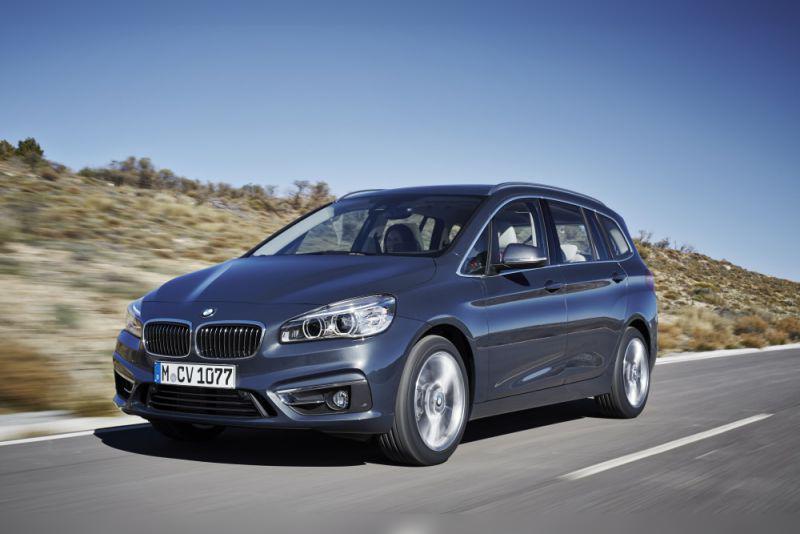
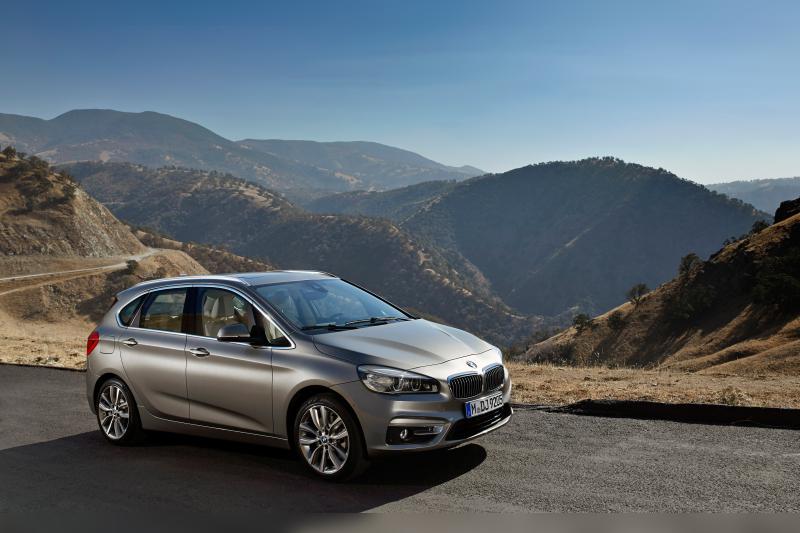
This version with 110 kW (150 HP) has proven to be the most sensible choice for models based on the UKL platform with front‑wheel drive (or xDrive all‑wheel drive), such as the BMW 2 Series Active Tourer (F45) and the extended Gran Tourer (F46). These are premium MPVs where the engine is expected to offer refined running, durability under load and low fuel consumption.
4. Technical specifications
| Characteristic | Data |
|---|---|
| Displacement | 1995 cc |
| Engine power | 110 kW (150 HP) at 4000 rpm |
| Torque | 330 Nm at 1750–2750 rpm |
| Engine code | B47D20 (modular engine generation) |
| Injection type | Common‑rail direct injection (solenoid injectors) |
| Charging system | TwinPower Turbo (single turbocharger with variable geometry), intercooler |
5. Reliability and maintenance
Timing system: belt or chain?
This engine uses a chain to drive the camshafts. As with its predecessor, the chain is located at the rear of the engine, right next to the gearbox and firewall. The good news is that engineers significantly reinforced the guides and the chain itself, so sudden breakages without warning (as on the N47) are no longer common. The chain now lasts much longer, but it is not indestructible.
Major service and common failures
There is no strictly defined interval for a “major service” in the factory documentation for this engine. However, independent BMW specialists usually recommend a preventive inspection of the chain after 150,000 km, and replacement most often between 200,000 and 250,000 km. Symptoms of a worn chain include a specific “rattling” or “scraping” noise from the gearbox area, especially on cold start or in the 1500–2000 rpm range. Since the engine has to be removed or the gearbox and front subframe dropped, labor costs are high.
Among other failures, soot build‑up in the intake manifold and on the swirl flaps stands out. Due to strict Euro 6 standards and aggressive EGR operation, the intake clogs up quickly, causing rough idle, weaker throttle response and increased fuel consumption. Decarbonization or mechanical cleaning of the intake manifold every 80,000–100,000 km is recommended.
Oil: quantity, grade and consumption
The engine takes around 5.0 to 5.2 liters of oil (depending on the filter and how much old oil is drained). It is strongly recommended to use oil with BMW LL‑04 specification only (usually grades 5W‑30 or 0W‑30). Regular services should be done every 10,000–15,000 km; ignore the factory “LongLife” interval of 30,000 km if you want to preserve the chain and turbo.
The B47 is not known as an oil burner. Consumption of 0.2–0.5 l per 10,000 km is considered completely normal due to evaporation and turbo lubrication. If the engine consumes significantly more, the problem usually lies in the PCV valve (oil separator) or worn turbocharger bearings.
Injectors
The injection system uses a Bosch high‑pressure common‑rail pump and solenoid injectors. They have proven to be extremely reliable. With quality fuel and regular fuel filter changes, the injectors easily exceed 250,000 km. Symptoms of worn injectors include: clicking under acceleration, noticeable engine vibration at cold idle, whitish exhaust smoke and harder starting.
6. Specific parts (costs)
Dual‑mass flywheel
Yes, the BMW B47 has a dual‑mass flywheel. Manual‑gearbox versions are equipped with it from the factory to dampen diesel vibrations. Replacement is expensive – very expensive (depends on market) because it is done as a kit (flywheel, clutch disc, pressure plate and release bearing). Automatic versions do not have a classic dual‑mass flywheel in the same sense as manuals; instead they use a torque converter, which also has an integrated vibration damper, but it fails far less often than the manual setup.
Turbocharger
The marketing term “TwinPower Turbo” often confuses drivers into thinking the engine has two turbos. It does not – the 150 HP B47D20 has a single turbocharger with variable vane geometry (VGT – Variable Geometry Turbocharger). Turbo lifespan is excellent, easily exceeding 250,000 km if oil is changed on time and the engine is left to idle for about 30 seconds after hard motorway driving to cool down. If you hear a pronounced siren‑like whine, the turbo bearings are nearing the end.
DPF and the notorious EGR
All of these engines are equipped with a DPF (diesel particulate filter). It has proven very durable, provided the vehicle spends at least 30% of its time on open roads. The problematic part is the EGR valve and EGR cooler. The EGR cooler is a common B47 weak point. Internal baffles can crack, causing coolant to mix with hot soot and oil vapors. This mixture can lead to melting of the intake manifold and, in the worst case, even vehicle fire. Symptom: unexplained coolant loss without visible puddles under the car. Be sure to check with an authorized dealer whether the car has undergone the factory EGR recall and had the cooler replaced!
AdBlue (SCR system)
Newer versions (especially LCI from 2018 onwards and models depending on Euro 6d‑TEMP standard) are equipped with an AdBlue system. It can be troublesome. The most common failures are NOx sensors or the pump inside the AdBlue tank due to fluid crystallization if the car is rarely driven or the fluid sits for too long. SCR system repairs are always expensive (depends on market), so many owners resort to (illegal) software deletion.
7. Fuel consumption and performance
City and highway driving
The BMW F45 and F46 are not light cars (kerb weight often exceeds 1.5 tons). In urban stop‑and‑go conditions, real‑world consumption is between 6.5 and 7.5 l/100 km. If the car is equipped with xDrive, add about 0.5 liters to that.
Is 150 HP “lazy” for this body?
Absolutely not. 330 Nm of torque, available from just 1750 rpm, makes this engine wonderfully elastic. It is designed to pull the body without needing high revs. The engine responds very well to throttle input in everyday situations, easily copes with a full cabin and luggage, and is the optimal choice – the stronger 20d (190 HP) is a luxury, while the weaker 16d (116 HP) can feel anaemic on hilly terrain with a fully loaded car.
Motorway
The B47 shines on the motorway. Thanks to excellent gearboxes, at a cruising speed of 130 km/h the engine spins at just 2000–2200 rpm in top gear (depending on gearbox). Under these conditions the cabin is very quiet (the engine is barely audible), and fuel consumption drops to a very modest 5.0–5.8 l/100 km.
8. Additional options and modifications
Remapping (Stage 1)
This unit has fantastic potential for a safe software power increase (Stage 1). Since the 150 HP B47D20 shares a large number of block components with the stronger 190 HP version (even though the turbo and injectors sometimes differ), it is very easy to “unlock”. A safe Stage 1 raises power to around 185–195 HP and torque to an impressive 400–420 Nm. If the gearbox is in good condition (especially the automatic), this modification completely transforms the car without compromising engine reliability, and in some operating modes can even slightly reduce fuel consumption.
9. Gearbox
Gearbox types and platform specifics
Since the F45 and F46 models are built on the UKL platform (the engine is mounted transversely), they do NOT use the famous ZF 8HP automatic found in the 3 or 5 Series. The options are:
- 6‑speed manual gearbox: Precise and durable. Its biggest weak point is the aforementioned dual‑mass flywheel. Replacing the clutch together with the flywheel is very expensive (depends on market), and it is recommended to change the gearbox oil at around 100,000 km.
- Automatic gearbox (Aisin, 8‑speed): The official BMW name is Steptronic. This is a fantastic Japanese‑made gearbox, very smooth when shifting and robust.
Automatic gearbox failures and maintenance
The Aisin automatic is excellent, but absolutely does not tolerate neglect. BMW’s “lifetime fill” policy (no oil changes) has ruined many of these gearboxes. The oil loses viscosity, metal particles accumulate and the valve body (mechatronics) is the first to fail. Symptoms include a harsh jolt when shifting from P to D or R, as well as shuddering when decelerating and coming to a stop (for example, when downshifting from third to second). The oil in this gearbox must be changed every 60,000–80,000 km. Regular gearbox servicing is not too expensive (depends on market) compared to the extremely high cost of valve body repair.
10. Buying used and conclusion
What to check before buying?
When buying a used BMW 2 Series with this engine, focus on the following:
- Cold start: Ask the seller not to start the car before you arrive. Listen to the engine for the first 5–10 seconds. Any metallic rattling or scraping indicates a stretched chain.
- Coolant level: If coolant is missing, it is almost certainly due to a leaking EGR cooler. Check the VIN with an authorized dealer to see whether the car has been called in for the EGR recall and whether the work has been done.
- Diagnostics (DPF parameters): Always connect a BMW‑specific OBD tool (e.g. ISTA or BimmerLink) and read DPF pressures, ash load and when the last regeneration was performed. Also check injector corrections at operating temperature.
- Test the automatic when hot: The Aisin gearbox must shift completely smoothly. Drive the car for half an hour until the gearbox oil warms up above 80 °C. Jerks when braking and stopping at traffic lights indicate a problem.
Final conclusion
The B47D20 (150 HP) engine is a fantastic engineering correction of BMW’s past mistakes. It is intended for drivers who need a durable, economical engine for family trips, with enough power for safe overtaking. It is not intended for exclusively city driving, where the DPF and EGR get clogged. If you find a car with a proper service history, resolved EGR issue and regularly serviced gearbox, you will get one of the most reliable modern diesel engines on the market, capable of covering serious mileage with minimal stress.