BMW B47D20 Engine (190 HP): Experiences, Problems, Fuel Consumption and Used Car Buying Tips
- Significantly more reliable than its predecessor (N47) – The timing chain failure issue is drastically reduced, but the chain still requires attention and replacement.
- Excellent balance of power and fuel economy – With 190 HP and 400 Nm, the engine offers great performance with an average fuel consumption below 7 l/100 km.
- Critical point: EGR cooler – The most well-known factory flaw that can lead to coolant leaking into the intake, and in extreme cases even to fire (there are factory recalls).
- Two types of automatic transmissions – Rear-wheel drive models (3 Series) use the brilliant ZF gearbox, while front-wheel drive models (2 Series Active/Gran Tourer) use Aisin gearboxes.
- Sensitive DPF and intake system – Predominantly city driving leads to rapid clogging of the intake manifold and problems with DPF regeneration.
- Maintenance is in the premium segment – Regular servicing and replacement of specific parts can be very expensive (Depends on the market).
Contents
- Introduction: The successor that fixed the mistakes
- Technical specifications
- Reliability, maintenance and most common failures
- Specific parts and costs
- Fuel consumption and real-world performance
- Additional options and modifications (Tuning)
- Transmissions: From manual to ZF and Aisin
- Buying used and final verdict
Introduction: The successor that fixed the mistakes
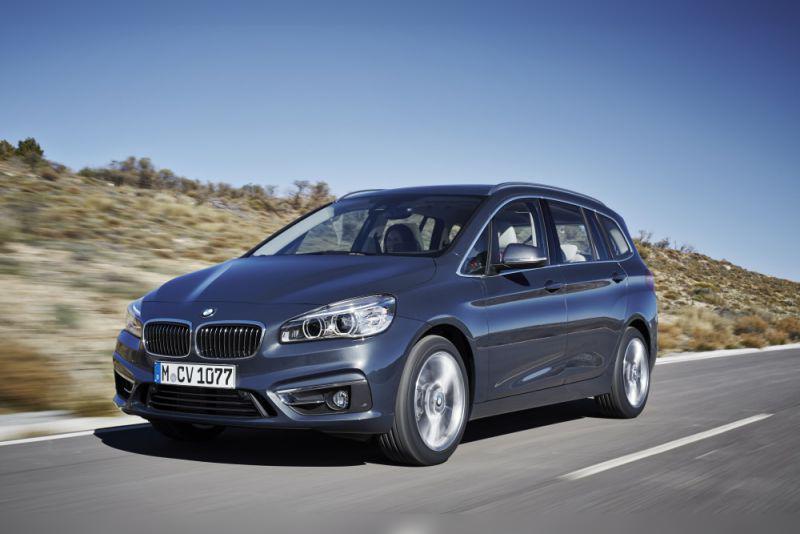
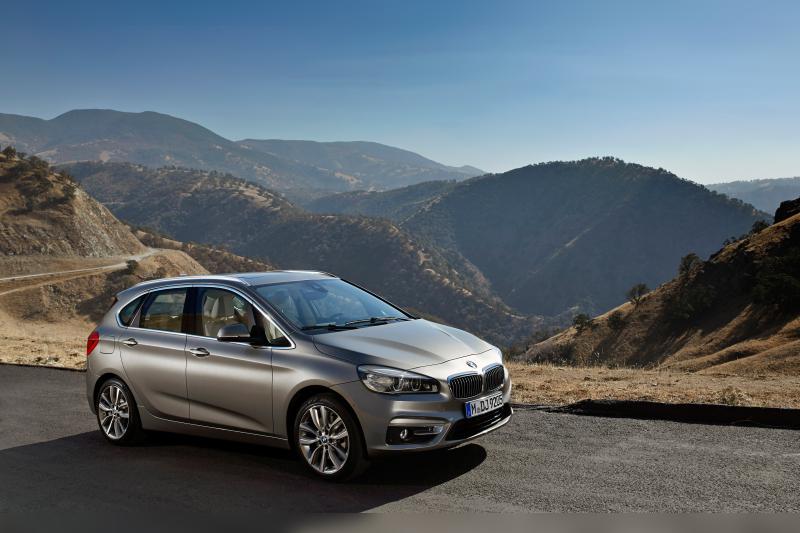
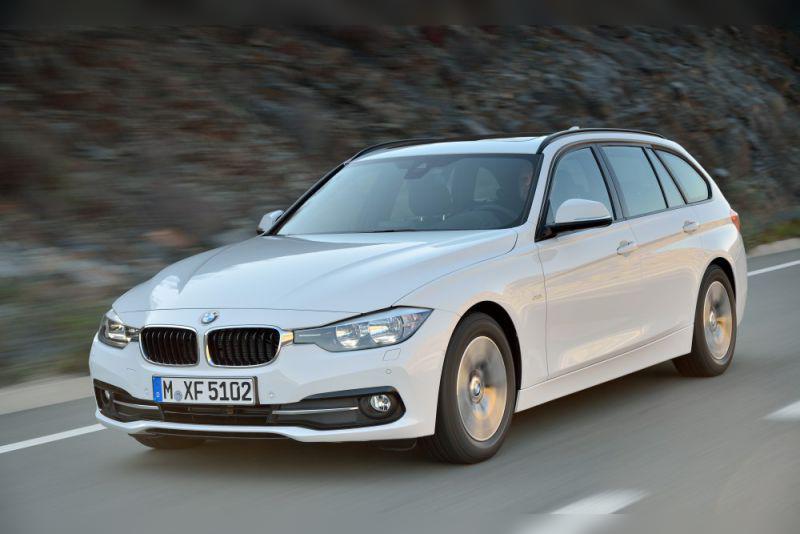
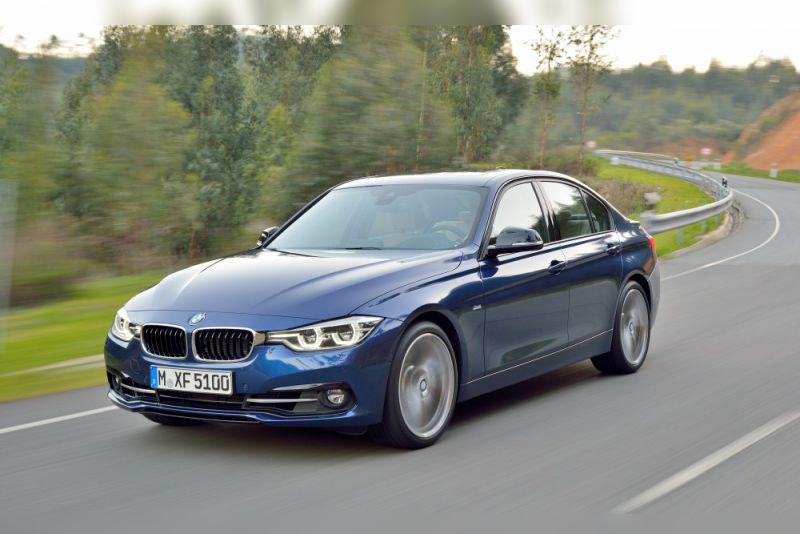
BMW’s diesel engine designated B47D20, introduced in 2014, had a difficult task ahead of it – to restore the company’s reputation after the infamous predecessor (N47), which became a driver’s nightmare due to timing chain failures. This two-liter unit with 190 horsepower became the backbone of BMW’s lineup. It was installed in a wide range of models, from classic rear-wheel drive sedans like the 3 Series (F30 LCI, F31 LCI), to family MPVs on the UKL platform with front-wheel drive, such as the 2 Series Active Tourer (F45) and Gran Tourer (F46). Thanks to its modular architecture, the B47 is smoother, quieter and significantly more reliable, but like every modern diesel, it carries certain risks if not maintained properly.
Technical specifications
| Characteristic | Data |
|---|---|
| Engine displacement | 1995 cc |
| Power | 140 kW (190 HP) at 4000 rpm |
| Torque | 400 Nm at 1750 - 2500 rpm |
| Engine code | B47D20O0 (varies depending on market and application) |
| Injection type | Common Rail direct injection (Bosch) |
| Induction type (Turbo) | TwinPower Turbo (single turbocharger with variable geometry) |
Reliability, maintenance and most common failures
Timing system: Chain or timing belt?
This engine uses a chain to drive the camshafts and high-pressure pump. As with its predecessor, the chain is located at the rear of the engine (next to the gearbox), which means that to replace it, the engine has to be removed from the car or the gearbox has to be taken off. The good news is that the chain on the B47 engine rarely snaps suddenly and is significantly more durable. Still, a major service (replacement of the complete timing system) is recommended at around 150,000 to 200,000 km. Symptoms of a worn chain include a specific metallic rattle at cold start (first few seconds) or a rhythmic “rustling” at idle around 1500 rpm.
Most common real-world failures
By far the biggest weakness of this engine is the EGR cooler. A design flaw leads to micro-cracks forming inside the cooler, causing coolant (antifreeze) to leak into the intake manifold. There it mixes with soot from the exhaust gases and creates a flammable mixture. Symptoms include unexplained coolant loss (without visible puddles under the car) and jerking under acceleration. There is a large-scale factory recall for this problem, so when buying used it is essential to check via the VIN whether the cooler has been replaced free of charge at an authorized service center.
In addition, the swirl flaps in the intake manifold are still present. Over time, soot builds up on them, which hampers their movement, and the actuator reports an error on diagnostics. It is rare for a flap to break off and fall into the engine (which was a nightmare on older generations), but the intake manifold must be cleaned or replaced regularly.
Oil and regular servicing
The engine takes about 5.0 to 5.2 liters of oil. The manufacturer recommends 5W30 or 0W30 with BMW Longlife-04 (LL-04) specification. Although BMW prescribes service intervals of up to 25,000 to 30,000 km, any experienced mechanic will tell you to change the oil at 10,000 to 15,000 km at the latest to protect the turbocharger and timing chain. A healthy B47 engine almost doesn’t consume oil between services. A loss of up to 0.5 liters over 15,000 km is considered completely normal, but anything above that points to a problem with the turbocharger, oil separator (PCV) or, more rarely, piston rings.
Injectors and fuel injection
The injectors on this engine are extremely high quality, most often Bosch solenoid units. If the fuel filter is replaced regularly (only quality brands) and clean fuel is used, the injectors easily last over 200,000 to 250,000 km. When they start to fail, symptoms include rough idle (while the engine is cold), increased fuel consumption, smoke from the exhaust (greyish or black) and a harsher engine sound under acceleration.
Specific parts and costs
Dual-mass flywheel and clutch
All models equipped with a manual gearbox have a dual-mass flywheel. Its job is to dampen the vibrations of the powerful diesel. Service life depends on driving style, but on average it lasts around 150,000 to 200,000 km. Symptoms of wear include vibrations in the clutch pedal, jolts when starting and stopping the engine, and body shudder when pulling away uphill. Replacing the clutch kit and dual-mass flywheel is very expensive (Depends on the market).
Note: Automatic transmissions do not have a conventional dual-mass flywheel that wears out like in manuals, but a torque converter, which reduces long-term maintenance costs of that specific component.
Turbocharger
Confusion often arises because of BMW’s “TwinPower Turbo” label. The 190 HP version of the B47D20 does not have two turbos, but a single turbocharger with variable geometry vanes (VGT). The turbo is very durable, but its lifespan depends directly on regular oil changes. Turbo failures are recognized by a “howling” sound (like an ambulance siren), a drastic loss of power and engine oil consumption.
DPF and AdBlue systems
The B47 is a strictly emissions-oriented engine. A DPF filter (diesel particulate filter) is standard. If the car is driven mostly on open roads, the DPF can last well over 250,000 km. However, constant stop-and-go city driving quickly clogs it, interrupting regeneration processes. Symptoms of a clogged DPF include sluggish engine response and the radiator fan frequently running after the engine is switched off.
As for the AdBlue (SCR) system, its presence depends on the production year and Euro emissions standard. Early models (Euro 6b) often don’t have it, while newer ones (from 2018, Euro 6d-TEMP) are equipped with it as standard. The AdBlue system is problematic on all modern diesels, and BMW is no exception. The most common failures involve the heater in the AdBlue tank or the pump. Repairing this module is expensive (Depends on the market).
Fuel consumption and real-world performance
The 190 HP engine with a hefty 400 Nm of torque is a real sweet spot. In models like the 3 Series (F30 sedan and F31 Touring), the engine is absolutely not sluggish. It responds instantly to throttle input, and overtaking on country roads is effortless.
When this unit is installed in family MPVs (2 Series Active/Gran Tourer), due to slightly worse aerodynamics and higher weight, the sensation of acceleration is milder, but there is still plenty of power even when the car is fully loaded with passengers and luggage.
Fuel consumption:
- City driving: Real-world consumption ranges between 7.0 and 8.5 l/100 km, depending on traffic and how heavy your right foot is. xDrive (all-wheel drive) adds about 0.5 to 1 liter.
- Country roads: Extremely economical, consumption drops to an impressive 4.5 to 5.5 l/100 km.
- Motorway: The B47 is made for the motorway. At 130 km/h in eighth gear (with the automatic), the engine cruises at a very low ~1800 to 2000 rpm, and consumption is around 5.5 to 6.0 l/100 km. Cabin noise is minimal.
Additional options and modifications (Tuning)
Given that this is a turbo diesel with a strong block, the B47 responds extremely well to remapping (chipping). With a standard Stage 1 tune (software-only ECU remap), power can be safely and easily increased to 220 to 230 HP, while torque jumps to 450 to 480 Nm.
This kind of modification drastically changes throttle response and engine flexibility. However, you should be aware that higher torque wears out the dual-mass flywheel and clutch packs in the automatic transmission faster, so remapping is recommended only if the car (and gearbox) are in impeccable mechanical condition.
Transmissions: From manual to ZF and Aisin
Depending on the platform on which the car is built, different types of gearboxes are paired with the B47D20, which is crucial to know for maintenance:
1. 6-speed manual gearbox
Reliable, but requires expensive repairs in the form of clutch and dual-mass flywheel replacement at higher mileages. Problems with the gearbox itself are extremely rare.
2. Automatic gearbox (3 Series – longitudinal engine)
The F30 and F31 models use the famous 8-speed ZF (ZF 8HP) automatic transmission. This is one of the best gearboxes in the world. It shifts quickly, smoothly and is extremely reliable. However, BMW claims that the oil in the gearbox is “lifetime”, which is a marketing trick. The gearbox manufacturer (ZF) explicitly requires servicing (oil and pan-filter replacement) every 80,000 to 100,000 km. If this is ignored, the hydraulic block (mechatronics) fails, and repairing it is very expensive (Depends on the market). Symptoms of a problematic gearbox include jerks when shifting from P to R or D, and harsh shifts from first to second gear.
3. Automatic gearbox (2 Series – transverse engine)
The F45 (Active Tourer) and F46 (Gran Tourer) models do not use the ZF, because the engine is mounted transversely. They are fitted with the Japanese 8-speed Aisin (AWF8F35) gearbox. Although very good and reliable, it is somewhat slower than the ZF. Its issues most often come down to the valve body if the oil is not changed on time. The service interval for it should also be a maximum of 80,000 to 100,000 km.
Buying used and final verdict
What to check before buying?
- Coolant level in the expansion tank: If it’s low, there is a high chance that the EGR cooler is leaking. Be sure to check at an authorized service center whether the car is eligible for a free replacement under recall.
- Cold start: Ask the seller not to start the car before you arrive. For the first 3 to 5 seconds, listen around the area near the windshield (where the rear of the engine is). If you hear metallic rattling or scraping, the chain is due for replacement.
- Diagnostics (ISTA/D / BimmerLink): This is not a car you buy “by ear”. A check with BMW-specific diagnostics is mandatory. Check injector correction values, ash mass in the DPF filter and whether there are any errors on the intake flap actuators.
- Suspension and xDrive: If you are buying an xDrive model, pay attention to jerks under hard acceleration. The transfer case (VTG) is sensitive to different tire sizes or skipped oil changes.
Who is this engine for?
The BMW B47D20 (190 HP) is an excellent choice for drivers who cover high mileages on open roads and value agility, stress-free overtaking and quiet cruising, combined with impressively low fuel consumption for this power output. When paired with the ZF automatic gearbox in the 3 Series, it is one of the smoothest powertrains in its class.
However, if you need a car exclusively for a short 5 km home-to-work commute through heavy city traffic, be prepared for issues with the intake manifold, DPF filter and EGR. For predominantly urban use, the petrol equivalent (e.g. B48) would be a much more sensible and cheaper long-term choice, even though it consumes more fuel initially.