B48A20F Engine (192 hp): Experiences, Problems, Fuel Consumption and Used Car Buying Tips
Key points (TL;DR)
- The B48 is drastically more reliable than the older “Prince” engines (N14/N18). It represents a major step forward for MINI and the BMW group.
- The engine uses a timing chain located at the rear of the engine (next to the gearbox). Replacement is complex, but rarely needed before 200,000 km.
- The most common issues are related to coolant leaks (thermostat housing and water pump) and occasional problems with the PCV valve.
- City fuel consumption is between 9 and 10.5 l/100 km, which is reasonable considering the 192 hp performance.
- Automatic gearboxes (either the 8-speed Aisin or 7-speed DCT) are reliable, but require strict oil changes every 60,000 to 80,000 km.
- Not suitable for LPG due to the high-pressure direct injection system.
- Thanks to its robust bottom end, it handles a Stage 1 remap very well, with power easily raised to around 250 hp.
Contents
- Introduction: Farewell to old problems
- Technical specifications
- Reliability and maintenance: Chain, servicing and oil
- Specific parts and costs: Turbo, injectors and emissions
- Fuel consumption and performance: On the road and in the city
- Additional options and mods: LPG and remapping
- Transmissions and drivetrain
- Buying used and final verdict
Introduction: Farewell to old problems
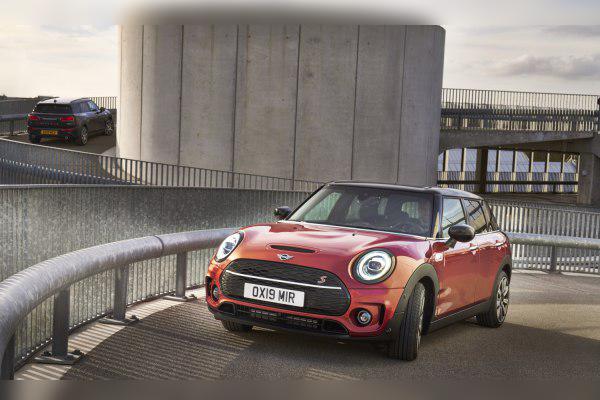
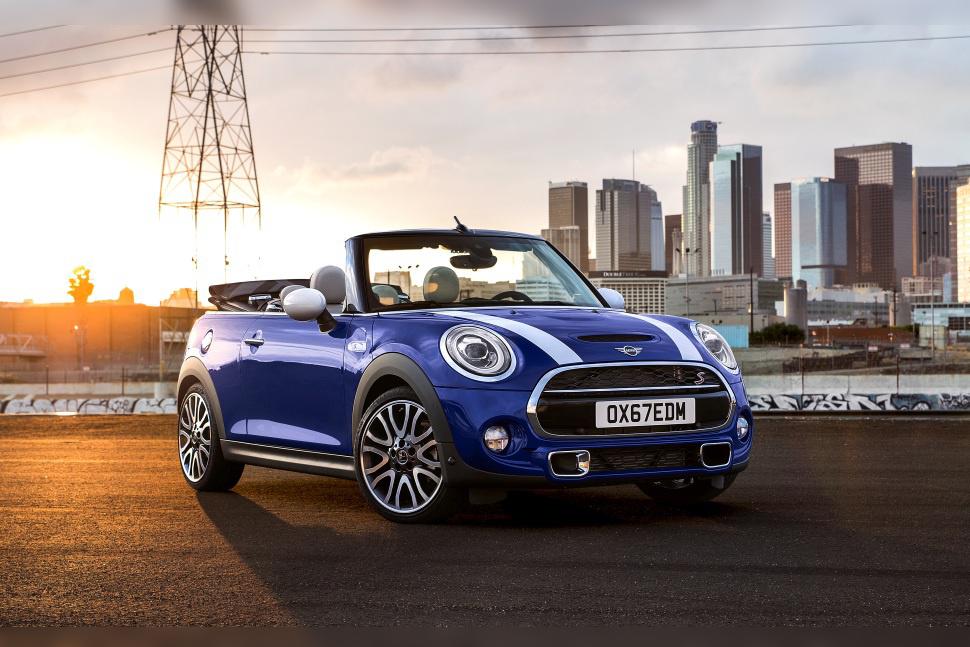
If you’ve ever researched buying a MINI (such as the Clubman F54 or Convertible F57), you’ve probably heard horror stories about stretched chains and massive oil consumption. However, those stories belong to the past. The code B48A20F denotes BMW’s modular 2.0-liter four-cylinder turbocharged petrol engine. The letter “A” stands for transverse installation, which is standard for the modern UKL platform shared by MINI and certain BMW models with front-wheel drive or ALL4 all-wheel drive.
This 192-horsepower unit is probably the best compromise between everyday usability and sporty driving. It’s tame enough for traffic jams, yet on open roads it shows exactly why it wears the “Cooper S” badge.
Technical specifications
| Parameter | Value |
|---|---|
| Engine code | B48A20F |
| Engine displacement | 1998 cc (2.0L) |
| Power | 141 kW (192 hp) |
| Torque | 280 Nm |
| Fuel type | Petrol (Direct injection) |
| Induction | Twin-power turbo (single twin-scroll turbo), intercooler |
Reliability and maintenance: Chain, servicing and oil
Does this engine have a timing belt or a chain?
The B48 uses a timing chain. Structurally, the chain is located at the rear of the engine, right next to the dual-mass flywheel and gearbox. Because of this position, chain replacement is extremely labor-intensive, as it requires removing the engine or significantly lowering the drivetrain with the subframe. Fortunately, unlike its predecessors, this chain is very robust and rarely snaps or stretches.
What are the most common failures and symptoms?
Although mechanically robust, the engine is not completely free of teething problems. The most common issues include:
- Coolant leaks: The thermostat housing and plastic parts around the water pump can fail due to thermal stress. Symptoms: A sweet smell under the bonnet, coolant level dropping in the expansion tank and, at a later stage, the temperature warning light coming on.
- PCV valve (crankcase ventilation system): The membrane can tear, leading to increased oil consumption, bluish exhaust smoke and rough idle (the engine is “false-airing”).
- Oil filter housing: The plastic housing can crack if a mechanic overtightens it during an oil service, resulting in oil leaking down the engine block.
At what mileage is the major service done?
The classic “major service” in the sense of regular timing belt replacement does not exist here. The chain is replaced as needed. In practice, it’s recommended to have its condition (tension and noise) thoroughly checked at around 200,000 km. If you hear metallic rattling on cold start (lasting longer than a second or two), it’s time for replacement. The cost of this job is very high (depends on market) precisely because of the number of labor hours needed to access the chain.
Oil: Capacity, grade and consumption
This engine takes 5.25 liters of oil. Fully synthetic oil of grade 0W-20 or 5W-30 (with BMW LL-04 or LL-14 FE+ specification) is recommended. The 30,000 km service interval prescribed by the manufacturer is a death sentence for this engine. A shortened interval of 10,000 to 15,000 km is advisable.
As for oil consumption, the B48 is quite frugal. Factory tolerance allows up to 0.5 L per 1000 km, but in reality a healthy engine will not require topping up between services (at 10,000 km). If you notice it’s burning oil, the usual culprits are valve stem seals or the aforementioned PCV valve, and less often the piston rings themselves.
At what mileage should the spark plugs be changed?
Since this is a turbocharged petrol engine with direct injection, the spark plugs (and coils if needed) are under heavy load. The recommended spark plug replacement interval is every 60,000 km. If this is neglected, misfires can occur, which directly damage the catalytic converter, while the engine loses power and jerks under hard acceleration.
Specific parts and costs: Turbo, injectors and emissions
Injection system and injectors
The engine uses a high-pressure direct fuel injection system. The injectors are generally reliable and don’t fail often, provided quality petrol is used. The biggest downside of this system is carbon buildup on the intake valves. Since petrol doesn’t wash over the valves (it’s injected directly into the cylinder), soot accumulates on the intake side. At around 100,000–150,000 km, “walnut blasting” (cleaning the valves with crushed walnut shells) is recommended to restore factory throttle response and smooth idle.
Does the engine have a turbocharger and what is its lifespan?
The B48 has a single turbocharger, but uses twin-scroll technology (which BMW markets as TwinPower). This means exhaust gases enter the turbine through two separate channels, reducing turbo lag at low revs. Its lifespan largely depends on regular oil changes. If the oil is changed on time and the driver doesn’t switch off a hot engine immediately after hard motorway driving, the turbo will easily last over 200,000 km. Rebuilds are expensive (depends on market), but parts are available.
Emissions: DPF, EGR and AdBlue on a petrol?
Since this is a petrol engine, it does not have a DPF filter, nor does it require AdBlue (both are reserved for diesels). However, if you’re buying facelift models (after 2018/2019), due to strict Euro 6c/d standards they are equipped with a OPF/GPF (Gasoline Particulate Filter). This petrol particulate filter rarely causes issues because petrol engines warm up faster than diesels and regenerate more easily. An EGR valve is present to reduce combustion temperatures, but it clogs far less frequently than on diesels.
Fuel consumption and performance: On the road and in the city
Is this engine “lazy”?
With 192 hp and 280 Nm of torque (available from just 1350 rpm, almost like a diesel), this engine is absolutely not lazy. On the contrary, it’s very lively. Although the MINI Clubman (F54) is quite a heavy car for its class (over 1.4 tons), the B48 pulls that body with ease. In ALL4 versions (all-wheel drive), traction is excellent, so there’s no power waste at launch.
Real-world city fuel consumption
Turbo petrol engines of this power level are not economical in stop-and-go traffic. In real city driving you can expect consumption of between 9.0 and 10.5 liters per 100 km. If you have a heavy right foot and drive in Sport mode, that figure easily climbs above 11 liters.
Behavior on the motorway
On open roads the situation changes dramatically. MINI’s aerodynamics are not great (boxy shape), but the engine doesn’t struggle. At 130 km/h in top gear (8th gear on the automatic), the engine cruises at a very relaxed 2,200 to 2,500 rpm (depending on the exact gearbox and final drive). The cabin is quiet and motorway consumption drops to a respectable 6.5–7.5 l/100 km.
Additional options and mods: LPG and remapping
Is this engine suitable for LPG?
Short answer: No. Due to direct injection, installing a standard sequential LPG system is not possible, as the petrol injectors would burn out without fuel flow. Expensive liquid-phase injection systems or setups that constantly mix petrol and LPG (often using 20–30% petrol alongside LPG) are required. The cost of such a system is very high (depends on market), and payback time is too long. LPG should be avoided entirely on this engine.
Potential for remapping (Stage 1)
The B48 in this 192 hp version is known as a “detuned” engine (stronger variants produce over 250 hp from the same displacement). Because of that, it has huge potential. With a quality software remap (Stage 1), the engine safely reaches 250–260 hp and around 380–400 Nm of torque. The engine internals (crankshaft, pistons) handle this power without issue, but the gearbox will require more careful use and more frequent servicing.
Transmissions and drivetrain
Types of gearboxes and common failures
With the B48A20F engine in MINI models you can encounter three types of gearboxes:
- 6-speed manual gearbox: Very precise. Failures are rare, but drivers with a heavy foot wear out the clutch quickly.
- 8-speed Aisin automatic (Steptronic): A conventional automatic with a torque converter. Fitted before the facelift and mostly on ALL4 models. Extremely reliable if maintained properly.
- 7-speed Getrag DCT (dual-clutch automatic): Started appearing in late 2017 and in facelift models (F54/F57 with front-wheel drive). Shifts lightning fast, but can be slightly jerky in city traffic. Sensitive to neglected oil changes (mechatronics can fail).
Flywheel and clutch costs
If you choose a model with a manual gearbox, yes, it has a dual-mass flywheel. Its role is to absorb shocks and vibrations from the engine. Symptoms of a worn flywheel include strong vibrations when setting off, knocking at idle that disappears when you press the clutch, and jolts when switching the engine off. A clutch kit with dual-mass flywheel is very expensive (depends on market).
Transmission servicing
BMW and MINI often claim that the oil in automatic gearboxes lasts “for the lifetime of the vehicle”. From a mechanic’s point of view, that’s a pure myth. To preserve the hydraulic block (mechatronics) and clutch packs, the oil in automatic (Aisin) and DCT gearboxes must be changed every 60,000 to 80,000 km. For the manual gearbox, an oil change is recommended at around 100,000 km.
Buying used and final verdict
What to check before buying a used one?
If you’ve decided to buy a MINI Clubman or Convertible with this engine, here’s what to pay attention to at the dealer lot or with a private seller:
- Cold start: The engine must be completely cold when you arrive. Open the bonnet and have the seller start the car. Listen to the rear of the engine. A sharp metallic rattle lasting more than a couple of seconds indicates a stretched chain.
- Coolant traces: Take a flashlight and inspect the area around the water pump and thermostat housing (passenger side of the engine). If you see dried white or bluish residue, there is a leak.
- Diagnostics (OBD): Reading fault codes is mandatory. The B48 ECU stores misfire codes. If there are many, the problem may be spark plugs, coils or clogged intake valves.
- Gearbox (automatic): During a test drive, slow down to almost a standstill at a traffic light, then suddenly accelerate. The gearbox must not bang or jerk. If it does, the mechatronics is on its way out.
Who is this engine for?
The 192 hp B48A20F in F54 and F57 models is an ideal choice for drivers who want a premium feel, excellent driving dynamics (the famous MINI “go-kart” feel) and an engine with enough power in reserve for safe overtaking on the motorway. It’s not recommended for people who drive exclusively short city trips in stop-and-go conditions (due to carbon buildup typical of direct injection and higher consumption). If you’re willing to invest in regular maintenance, quality oil and avoid cheap mechanics without the right specialist tools, this engine will serve you for hundreds of thousands of kilometers with a smile on your face.