BMW M57D30TU2 (286 HP) – Experiences, problems, fuel consumption and used car buying guide
Key points (TL;DR)
- Legendary durability: The last generation of BMW’s three‑liter diesel with a cast‑iron block. An incredibly robust engine.
- Timing chain instead of belt: The engine uses a timing chain mounted at the front (easily accessible), and replacement is usually done only around 250,000–300,000 km.
- Boost system: It has two turbochargers (twin‑turbo). Power delivery is linear, but the vacuum hose system that controls them is very complex and prone to cracking.
- Automatic gearbox only: This engine was factory‑paired exclusively with the ZF 6‑speed automatic transmission. There is no conventional dual‑mass flywheel, but a torque converter instead.
- Achilles’ heel: You must check and, if necessary, remove the intake swirl flaps and regularly monitor thermostat operation to avoid damaging the DPF filter.
- Tuning potential: A phenomenal base for a remap (Stage 1); the engine easily handles over 330 HP and 650 Nm.
Contents
- Introduction: Cast‑iron beast
- Technical specifications
- Reliability and maintenance
- Specific parts and failures
- Fuel consumption and performance
- Additional options and modifications
- Gearbox and drivetrain
- Buying used and conclusion
Introduction: Cast‑iron beast
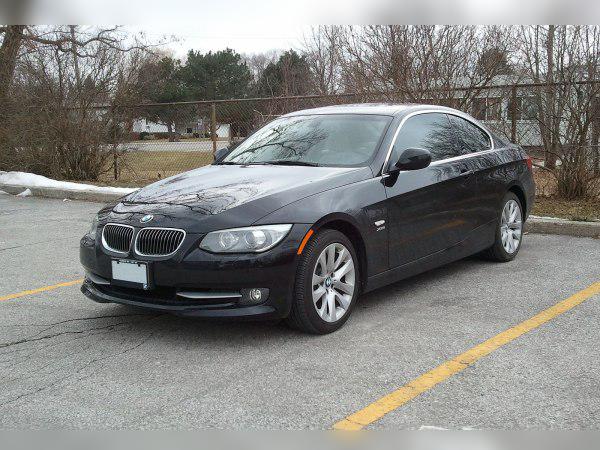
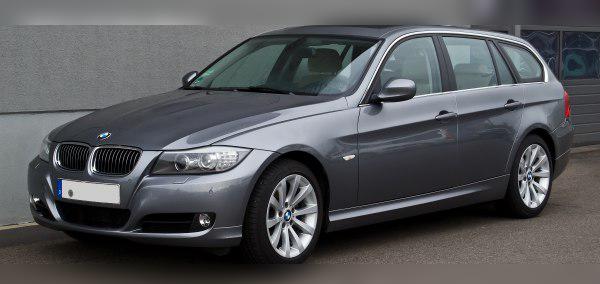
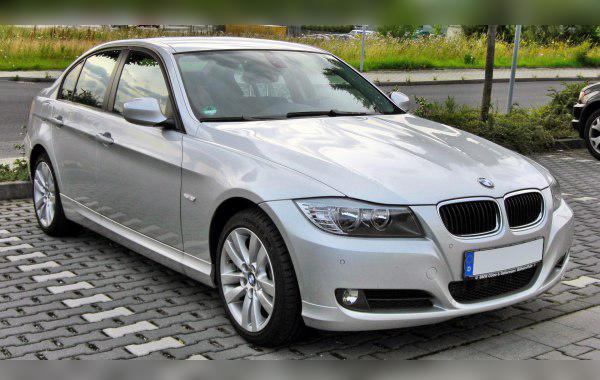
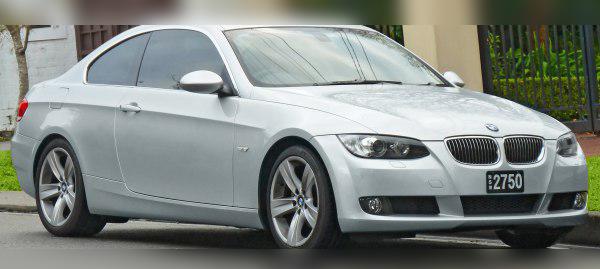
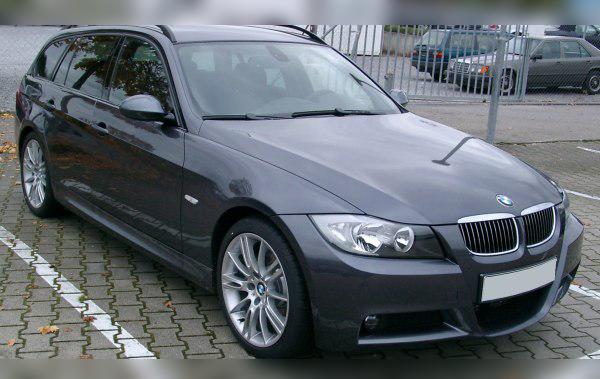
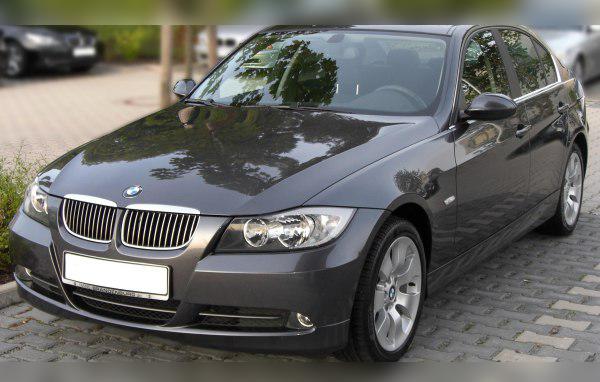
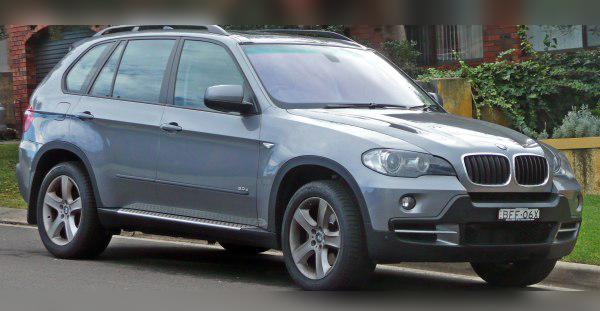
The engine designated M57D30TU2 (often known as M57 TOP) represents the very peak of BMW engineering before the switch to the aluminum N57 engines. It was installed in top‑tier models such as the 3 Series (E90/E91/E92 as 335d) and the X5 (E70 as 3.0sd and later 35d). This powerplant is important because it offers the performance of a sporty petrol engine with torque that could tow a building, all with a cast‑iron block that guarantees longevity. It is considered one of the most reliable “fast” diesels ever made, but given that these cars are now older and usually have serious mileage, maintenance is anything but cheap.
Technical specifications
| Parameter | Value |
|---|---|
| Engine code | M57D30TU2 (M57TU2D30 TOP) |
| Displacement | 2993 cc |
| Power | 210 kW (286 HP) at 4400 rpm |
| Torque | 580 Nm at 1750–2250 rpm |
| Injection type | Common Rail (piezo injectors) |
| Boost system | Twin‑Turbo (two sequential turbochargers) + intercooler |
| Engine timing drive | Chain (front‑mounted) |
Reliability and maintenance
Timing chain or belt and major service
This engine uses a timing chain. Unlike its successor (N57), where the chain is at the rear by the firewall, on M57 engines the chain is mounted at the front of the engine. This drastically simplifies and reduces labor costs because the engine does not need to be removed from the car for replacement. The chain is extremely robust, but due to the huge torque, a major service (replacement of the chain, guides, tensioners, water pump and accessory belts) is recommended at around 250,000 to 300,000 km. A stretched chain is indicated by a specific metallic rattling or “hissing” noise on cold start.
Most common failures
Although the engine block itself is virtually indestructible, the peripherals can cause headaches. The most well‑known issues are:
1. Intake swirl flaps: Over time, the plastic flaps become brittle, break off and get sucked straight into the cylinder, which destroys the engine. The solution is preventive removal (blanking) as soon as you buy the car.
2. Crankshaft pulley (harmonic balancer): The rubber in the pulley cracks over time and can fail, which leaves the car without power steering, alternator charging and water pump drive.
3. Thermostats (main and EGR): These engines suffer from “always‑open thermostat” syndrome. In winter the engine doesn’t warm up beyond 70 °C (while normal operating temperature should be close to 90 °C). Because of this, the car cannot perform DPF regeneration, which in turn leads to the filter clogging up.
Oil and regular servicing
The engine takes about 7.2 to 7.5 liters of oil. You must use high‑quality synthetic oil with a viscosity of 5W‑30 that meets the BMW LL‑04 specification (because of the DPF). In a healthy M57D30TU2 engine, oil consumption is minimal. It is normal to burn around 0.5 to 1 liter per 10,000 km. If it consumes significantly more (e.g. a liter per 3,000 km), the problem is usually not in the block or piston rings, but in worn turbochargers that leak oil or a clogged crankcase ventilation system (PCV valve) that pushes oil into the intake.
Injectors
This engine uses advanced Bosch piezo injectors. They have proven to be extremely durable, often lasting over 300,000 km without being touched. When they start to fail, symptoms include rough idle, increased vibrations in the cabin, hard starting and thick grey or white smoke from the exhaust with a sharp smell of unburnt diesel. Repairing piezo injectors is complicated and expensive, so replacement is often the only option; prices are high: 200–400 EUR per refurbished unit (depending on the market).
Specific parts and failures
Dual‑mass flywheel
An important clarification: the 286 HP version of the M57 was never delivered with a manual gearbox! Due to the massive 580 Nm of torque, BMW paired this engine exclusively with an automatic transmission. Consequently, it does not have a conventional dual‑mass flywheel that is replaced together with the clutch kit. Vibrations are absorbed by the torque converter inside the automatic gearbox.
Turbochargers and vacuum system
The heart of this engine is the twin‑turbo system with two sequential turbochargers – a smaller one for low revs and a larger one for higher revs. The BorgWarner turbos themselves are durable, but the problem lies in the vacuum system that controls them. Dozens of thin vacuum hoses run around the engine. Due to heat, they eventually become brittle and crack. The symptom is a sudden “safe mode” or the feeling that the car doesn’t pull at all up to 2500 rpm and then suddenly “comes alive”. The solution is a complete replacement of all vacuum hoses and electro‑pneumatic valves, which is not overly expensive but requires a meticulous mechanic.
DPF, EGR and AdBlue
All models with this engine have a DPF filter and EGR valve. The EGR valve needs periodic cleaning of soot deposits. The DPF filter is very high‑quality, but it fails if the car is driven exclusively in the city or if (as mentioned) the thermostats don’t work properly so regeneration never starts. A clogged DPF is indicated by engine strangling, increased fuel consumption and the radiator fan switching on frequently. As for the AdBlue system (SCR technology), most European E90/E70 models from this period do not have it. It was mainly fitted to US‑spec 335d models, where it causes serious issues with NOx sensors and the fluid tank. For a European buyer, that’s one less headache.
Fuel consumption and performance
City driving and vehicle weight
With its 286 HP and 580 Nm, this engine is anything but “lazy”. Even in a heavy SUV like the BMW X5 (E70), which weighs over 2 tons, the engine feels brutal every time you press the throttle. However, the weight and automatic gearbox do take their toll at the pump.
In the 335d (E90): Realistic city consumption is around 9 to 11 l/100 km.
In the X5 3.0sd / 35d: Realistic city consumption jumps to 12 to 14 l/100 km.
Highway driving
This engine was built for cruising on the German Autobahn. At 130 km/h in sixth gear, the engine spins at a very relaxed ~2000 to 2200 rpm. Under these conditions, fuel consumption drops significantly. The 3 Series can easily average around 6.5 to 7.5 l/100 km, while the X5, due to poorer aerodynamics, will need about 8.5 to 9 l/100 km on the highway. Overtaking is safe in any gear because the small turbo delivers torque immediately.
Additional options and modifications
Since this is a diesel engine, installing LPG is not an option and makes no economic sense. However, when it comes to chiptuning, the M57D30TU2 is an absolute champion. Thanks to the very strong cast‑iron block and factory over‑engineered injectors, a basic Stage 1 software remap safely raises power to 330–350 HP, while torque easily goes to 650–700 Nm. The engine tolerates these modifications without issues, but keep in mind that such torque puts additional stress on the gearbox (torque converter and driveshafts), so too many full‑throttle launches from traffic lights will quickly lead to an automatic transmission overhaul.
Gearbox and drivetrain
Gearbox specifications
As mentioned, this engine comes exclusively with the ZF 6‑speed automatic transmission (models 6HP26 TU or 6HP28). A manual option was not available even as an extra.
Gearbox failures and maintenance
The gearbox is generally excellent and durable, but it has two weak points at higher mileage:
1. Torque converter: Symptoms of a failing converter include fluctuating revs at a constant speed (the tachometer slightly “hunts” up and down at around 90 km/h) and strong vibrations or a “driving over rumble strips” sensation (so‑called shudder) during gentle acceleration at low revs. A converter rebuild is the only solution and costs 400–700 EUR (depending on the market).
2. Mechatronics unit: Harsh engagement of gears, “kicking” or jolting when stopping at traffic lights indicates worn seals and solenoids inside the mechatronics unit.
BMW once claimed that the gearbox oil is “lifetime”, but the gearbox manufacturer (ZF) explicitly prescribes servicing and replacing the oil and filter (pan) every 80,000 to 100,000 km for the transmission to last many years.
Buying used and conclusion
What exactly to check before buying?
- Cold start: Ask the seller to keep the car completely cold. Start it and listen for any rattling from the front of the engine (stretched chain).
- Exhaust smoke: An M57 with a healthy DPF must not emit black smoke. If it does, the DPF has been removed. Blue smoke means the turbos are burning oil, while thick white smoke that stings your eyes points to bad injectors.
- Live data during a test drive: Always connect diagnostics and check injector correction values (deviations over +/- 1.5 are a red flag), as well as the backpressure in the DPF filter. Also check coolant temperature parameters – if the car does not go above 70–75 °C while driving, the thermostats must be replaced urgently and the DPF is probably on its way to clogging.
- Gearbox test: Gently accelerate from 60 to 100 km/h in the highest gear. If the car shudders or the tachometer constantly fluctuates by 100–200 rpm, expect a torque converter rebuild.
Conclusion
BMW’s M57D30TU2 is an engine for enthusiasts who enjoy driving, strong performance and a fantastic sound (for a diesel). It is aimed at buyers who want brutal overtaking power and are willing to pay for proper premium‑level maintenance. It will outlive many modern diesels thanks to its cast‑iron block, but it will constantly remind you of vacuum hoses, thermostats and regular gearbox servicing. It is not a car for someone who only drives in the city and counts every cent, but it is a perfect cruiser for open roads and highways, where it shows its true dominance.