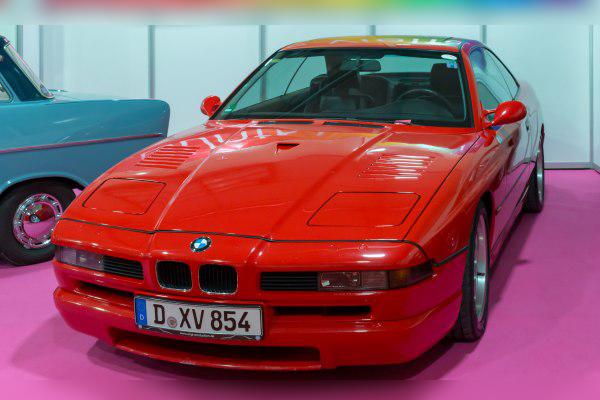
BMW M60B40 4.0 V8 (286 hp) – Ownership impressions, problems, fuel consumption and used-buying tips
Key points (TL;DR)
- Acoustic and engineering legend: One of the best naturally aspirated V8 engines of the nineties, famous for its incredible sound and smoothness.
- Timing chain driven: Uses a durable double-row chain, but after 30 years the guides and tensioners need attention.
- High fuel consumption: In city driving expect between 16 and 20 l/100 km. This is not an engine for stop‑and‑go traffic.
- Specific issues: Loose oil pump bolts and a sensitive aluminum block (the infamous Nikasil problem on early units) are the main weak points.
- Expensive maintenance: Parts are available, but since it’s a V8, you buy everything “times two”. A clutch kit with dual‑mass flywheel for manuals is very expensive.
- Loves LPG: Works very well on LPG if a quality sequential system with adequate vaporizers is installed.
Contents
- Introduction: The return of the V8 legend
- Technical specifications
- Reliability, maintenance and common failures
- Specific parts and costs
- Fuel consumption and real‑world performance
- Extras, LPG and modifications
- Gearbox: Automatic and manual
- Buying used and final verdict
Introduction: The return of the V8 legend
In the early nineties, BMW introduced the M60 engine family, bringing the V8 configuration back into their lineup after more than 25 years of absence. The M60B40 engine, with a displacement of 4.0 liters and 286 horsepower, was the pinnacle of this series. A fully aluminum block and cylinder heads, four camshafts and 32 valves made it a technological marvel of its time.
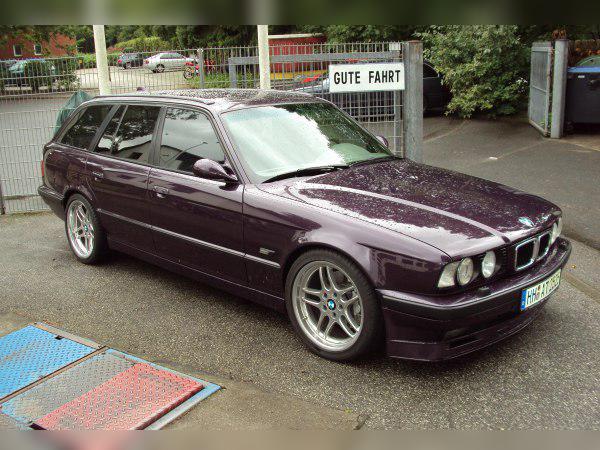
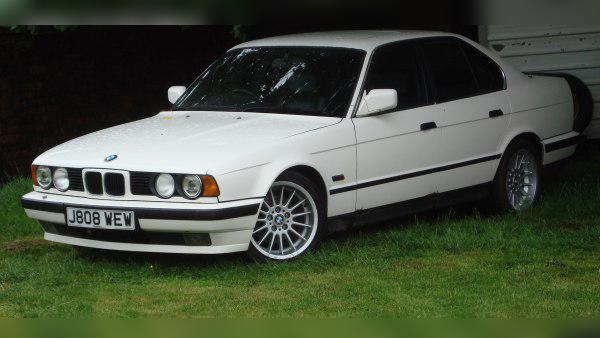
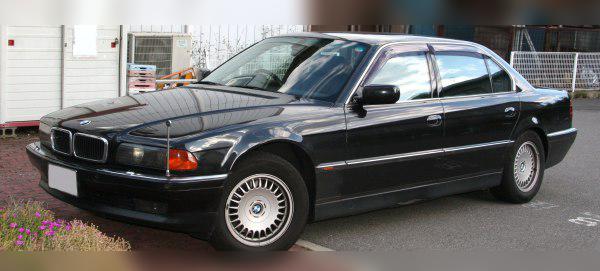
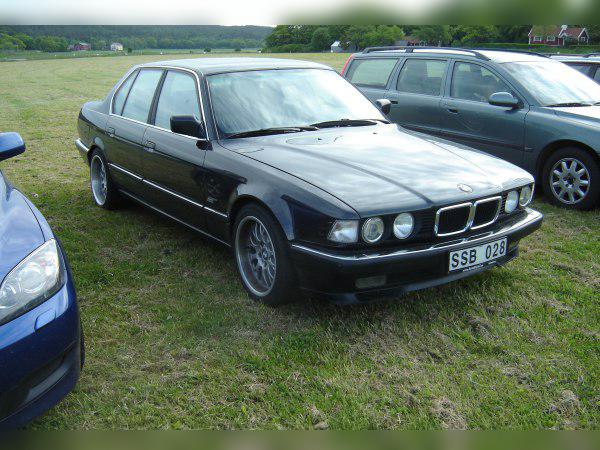
It was installed in heavyweights and cruisers: the 5 Series (E34 sedan and Touring), the luxury 7 Series (E32 and early E38), as well as the grand tourer 8 Series (E31). Today this engine is adored among enthusiasts, but it demands a deeper pocket and a conscious owner. Let’s break down what awaits you if you park this V8 in your garage.
Technical specifications
| Specification | Value |
|---|---|
| Engine displacement | 3982 cc |
| Engine power | 210 kW (286 hp) |
| Torque | 400 Nm at 4500 rpm |
| Engine code | M60B40 |
| Injection type | Indirect (multi‑point injection into the intake manifold) |
| Turbo/NA | Naturally aspirated engine |
Reliability, maintenance and common failures
When we talk about the M60B40, we’re talking about old‑school engineering. This engine doesn’t have a timing belt, but uses a robust double‑row chain. Since the chain itself doesn’t just snap on these engines, a classic “major service” in the sense of frequent timing replacement doesn’t really exist. However, beyond 250,000 km, the plastic chain guides and hydraulic tensioners become brittle and wear out. If you hear rattling on cold start, it’s time to replace them, which is quite expensive (depends on the market) due to the amount of labor involved.
Most common failures and “childhood diseases”
Although extremely durable, the M60B40 has a few specific issues that every mechanic knows by heart:
- Loose oil pump bolts: This is a legendary weak point. The bolts that hold the oil pump to the block can loosen over time and fall into the oil pan. The result? Loss of oil pressure and potential seizure of the crankshaft and engine. Preventively removing the oil pan and securing the bolts is mandatory right after purchase!
- Nikasil problem: Early models had cylinder liners coated with Nikasil (nickel‑silicon). Fuel with a high sulfur content attacked this coating, leading to loss of compression and rough running. BMW later switched to Alusil. Symptom: extremely rough idle and heavy oil consumption. Today, most damaged engines have already been scrapped or rebuilt, but you should definitely check compression.
- Oil leaks: Valve cover gaskets often fail, so oil leaks directly onto the exhaust manifolds (burnt‑oil smell in the cabin) or into the spark plug wells, causing misfires.
- Cooling system: The water pump, plastic thermostat housing and old hoses are prone to cracking. An aluminum V8 does not tolerate overheating – if the needle goes into the red, a warped cylinder head usually follows.
- PCV valve (crankcase ventilation/oil separator): The membrane tears, creating so‑called “false air” (vacuum leak). The engine idles poorly and starts consuming more oil.
Service intervals, oil and spark plugs
The sump of this engine holds about 7.5 liters of oil. A quality synthetic oil of grade 5W‑40 or 10W‑40 is recommended. Given the age of the engine and its high operating temperatures, oil consumption of up to 1 liter per 2000–3000 km is now considered acceptable, especially with more spirited driving. However, if it uses a liter per 1000 km or less, the problem is hardened valve stem seals or worn piston rings.
Since this is a classic petrol engine, the spark plugs (there are eight of them) should be replaced every 40,000 to 60,000 km, depending on the type (standard or iridium). Don’t forget to check the individual coil packs mounted directly on each plug.
Specific parts and costs
The cost of owning a V8 engine is never low. Manual versions have a dual‑mass flywheel. If the clutch kit and flywheel need replacement, prepare for a very expensive repair (depends on the market), mainly because parts for manual V8 models from that era have become rare.
The fuel system is a classic indirect injection setup. The injectors themselves are not particularly problematic, but after 30 years of service they can be dirty, which leads to poor fuel atomization and increased consumption. Ultrasonic cleaning usually solves the problem and is not expensive.
As far as emissions and forced induction go, this is pure old‑school mechanics. There is no turbocharger (and therefore no expensive turbo rebuild cycles), no DPF filter (because it’s a petrol engine), and no modern, complicated EGR systems that would choke the intake manifold with soot deposits. Naturally, there is no AdBlue system either. Emissions control comes down to classic catalytic converters and oxygen sensors.
Fuel consumption and real‑world performance
Let’s be honest: nobody buys a 4.0 V8 from the nineties to save fuel. Real‑world city consumption rarely drops below 16 l/100 km, and in heavy traffic with frequent stops and a heavy 7 Series (E38) body, it easily reaches 20 l/100 km.
Is the engine “lazy” for the weight of the car? Absolutely not. With 400 Nm of torque, it pulls very well, but its character is such that maximum power and torque are delivered at higher revs (peak torque only at 4500 rpm). Because of that, it likes to be “revved out” to give you that proper shove in the back, unlike modern turbo engines that pull strongly from very low revs.
Its natural habitat is the motorway. The engine is incredibly smooth. At a cruising speed of 130 km/h, depending on gearbox and differential ratios, it usually spins at a low 2200 to 2500 rpm. Under those conditions, fuel consumption drops to a tolerable 9 to 11 l/100 km. Sound insulation in the E34, E38 and E31 is fantastic, so the only thing you hear is the subtle rumble of the V8.
Extras, LPG and modifications
For those who like to save on fuel, the good news is that the M60B40 is an excellent candidate for an LPG conversion. It doesn’t have direct injection and the valves are not particularly sensitive. However, the installation must be top‑notch – you need a powerful ECU for sequential LPG, very fast injectors and, most importantly, a vaporizer (or two vaporizers) that can handle the flow required for 286 hp. If you try to “save” on the LPG kit, expect jerking, misfires and frequent “check engine” lights.
When it comes to remapping (Stage 1), forget about huge gains. Since this is a naturally aspirated engine, optimizing fuel and ignition maps can give you around 15 extra horsepower at the top of the rev range, along with possibly removing the top‑speed limiter or raising the rev limiter. The price‑to‑power‑gain ratio is not favorable here. Real performance mods involve fitting camshafts from Alpina models or switching to higher‑flow exhaust manifolds, which is very expensive.
Gearbox: Automatic and manual
This engine was paired with both manual and automatic transmissions, each with its own specifics:
- Automatic gearboxes: The most common is the five‑speed ZF 5HP30. Very robust for its time, but with one well‑known flaw: wear of the seal and cracking of the reverse drum. If, during a test drive, you select “R” and the car doesn’t move, walk away. A proper automatic transmission service (oil and filter change) must be done every 60,000 to 80,000 km; ignoring this interval leads straight to valve body failure.
- Manual gearboxes: Rarer, but loved by drivers. There are five‑speed and six‑speed versions (the famous Getrag 420G). The gearboxes themselves are mechanically almost indestructible, but if you get grinding when shifting (worn synchros), repair is nearly impossible due to the lack of internal spare parts. Change the oil in the manual gearbox every 100,000 km.
Buying used and final verdict
Buying a car with the M60B40 engine today means buying either an oldtimer or a modern classic. What should you check before handing over the money?
- Cold start: Listen to the chain. If it rattles for more than a second or two, set money aside for a timing overhaul.
- Smoothness: Put a coin on the intake manifold at idle. A healthy V8 should run silky smooth. Hesitation and vibrations point to false air, a bad PCV valve, faulty plugs/coils or (worst‑case scenario) poor compression.
- Cooling system: Squeeze the thick coolant hoses when the engine is hot. If they are rock hard, the head gasket may have failed.
- Exhaust and smoke: Bluish smoke when you lift off the throttle after prolonged acceleration is a clear sign of worn valve stem seals.
- Smell under the hood: If you smell burning oil, the valve cover gaskets are probably leaking oil onto the hot exhaust manifolds.
Who is this engine for?
This is not a car for someone who counts every cent and needs a reliable daily commuter for rush‑hour traffic. The BMW M60B40 is perfect for true enthusiasts, weekend drives and fans of serious autobahn cruisers. The sound of a healthy BMW naturally aspirated V8 from that era, paired with a precise manual gearbox or a smooth ZF automatic, delivers a driving feel that modern four‑cylinder turbo engines will never be able to replicate. If you find a well‑maintained example and have the budget to proactively secure the oil pump and refresh the seals, you’ll own a piece of the finest automotive history.