BMW N52B25A Engine (218 hp): Experiences, Problems, Fuel Consumption and Used Car Buying Tips
- Great sound and smoothness: One of the last great naturally aspirated inline-sixes without a turbo, offering linear acceleration and refined operation.
- Oil consumption is the biggest downside: Unlike its bigger 3.0L brother, the 2.5L version suffers from piston ring issues, which leads to high oil consumption.
- Electric water pump: Its failure is sudden and leaves you stranded. It is replaced preventively.
- Excellent for LPG conversion: Thanks to port (indirect) injection, this engine works perfectly with sequential LPG systems.
- No expensive diesel-related issues: The absence of a turbo, DPF and high-pressure injectors saves money in the long run, even though fuel consumption is higher.
- Chiptuning is not worth it: As a naturally aspirated engine, it offers little room for cheap power gains.
Contents
- Introduction: The last Mohican of the naturally aspirated era
- Technical specifications
- Reliability, maintenance and common failures
- Specific parts and costs
- Real-world fuel consumption and performance
- Extras: LPG and chiptuning
- Gearbox: Manual vs Automatic
- Buying used and final verdict
Introduction: The last Mohican of the naturally aspirated era
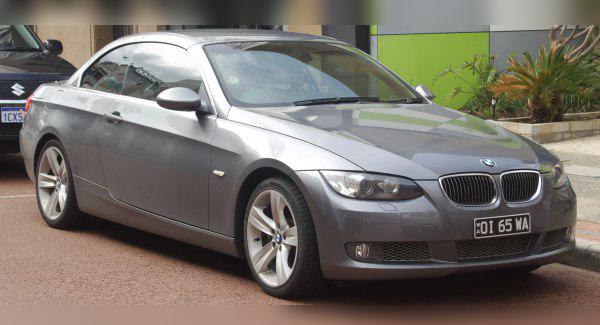
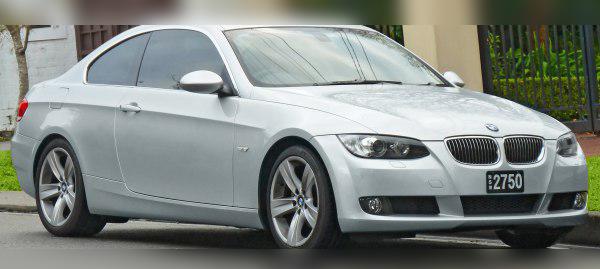
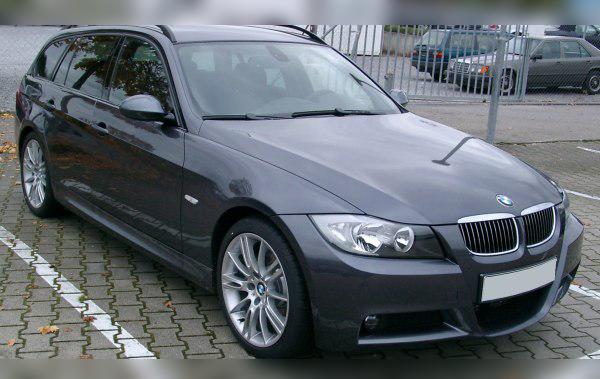
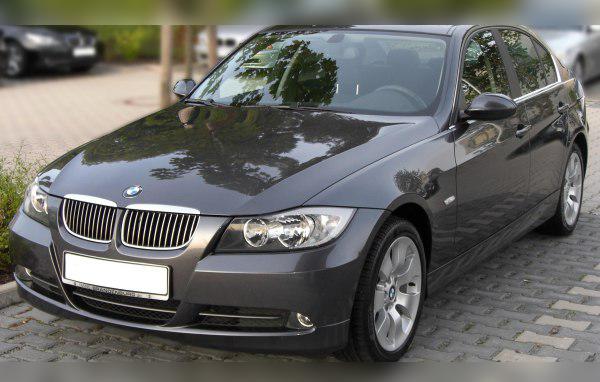
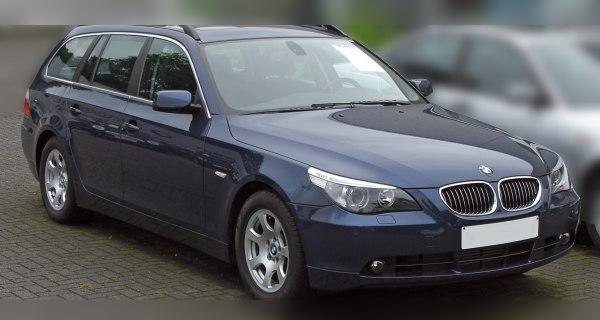
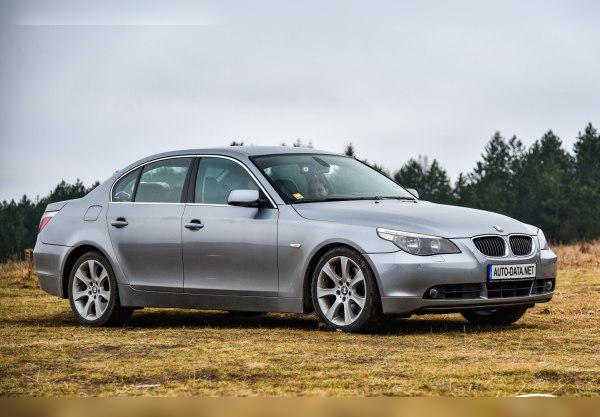
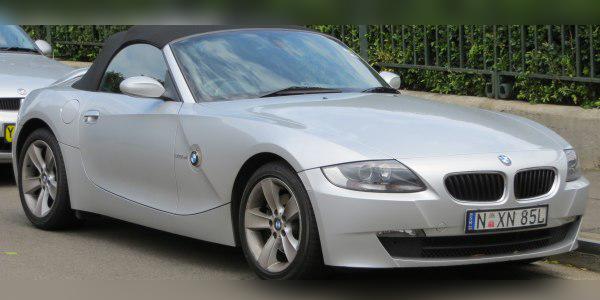
The engine designated N52B25A is one of the most interesting engineering powertrain solutions to come out of Bavaria. It was fitted in the mid-2000s to a wide range of models, including the 3 Series (E90/E91/E92/E93), 5 Series (E60/E61), as well as the X3 (E83) and Z4 (E85). Its importance lies in the fact that this is the last generation of BMW naturally aspirated inline-six engines before the switch to turbocharging and direct injection. It is distinctive for its engine block made from a magnesium-aluminum alloy, which makes it exceptionally light. It features the Valvetronic system (variable valve lift) and Double VANOS (variable valve timing on both intake and exhaust), which provides excellent throttle response. However, this engineering complexity also brings specific maintenance challenges that every potential buyer must be aware of.
Technical specifications
| Parameter | Value |
|---|---|
| Displacement | 2497 cc |
| Power | 160 kW (218 hp) at 6500 rpm |
| Torque | 250 Nm at 2750 - 4250 rpm |
| Engine code | N52B25A |
| Injection type | Port injection (Multi-Point Injection - MPI) |
| Aspiration | Naturally aspirated (No turbo) |
Reliability, maintenance and common failures
Unlike many modern engines where we worry about timing belt failure, the N52B25A uses a timing chain. The timing system here is generally very reliable and, unlike the notorious N47 diesel, the chain on this petrol engine rarely fails. A classic “major service” is not done at a fixed interval; instead, the condition of the chain and guides is checked around 200,000 to 250,000 km. A rattling noise on cold start will be the first sign that the chain needs replacing.
Oil: Capacity, grade and the engine’s “Achilles heel”
This engine takes exactly 6.5 liters of oil. Only fully synthetic oil of grade 5W-30 or 5W-40 that meets the BMW LL-01 (LongLife-01) specification is recommended. Oil must be changed every 10,000 to 12,000 km at most; ignoring the factory interval of 25,000 km is mandatory if you want the engine to live long.
This brings us to the biggest weakness of this engine: oil consumption. Specific to the 2.5-liter version of the N52 (N52B25), the factory used piston rings that over time lose tension and stick, or the cylinders themselves wear. Because of this, this engine always consumes oil. Consumption of 1 liter per 3,000 to 4,000 km is, unfortunately, considered “normal” for this unit in its later years. If the engine uses 1 liter per 1,000 km or blows blue smoke from the exhaust when you rev it after idling for a while, it means the rings or valve stem seals are worn out. The solution is an engine refresh, which is very expensive (depends on the market). External oil leaks are also common: the valve cover gasket, oil filter housing gasket and oil pan gasket regularly start to seep.
Other common failures
One of the most dangerous failures is the electric water pump. Unlike a mechanical one, it usually fails without any warning noises at around 120,000 - 150,000 km. The symptom is a sudden yellow, then red engine overheat warning light. Replacement is expensive (depends on the market), and the thermostat is always replaced together with the pump.
Another problem is the VANOS solenoids, which get clogged by dirty oil, causing rough idle and loss of power. Also, the DISA valves (flaps in the intake manifold responsible for changing intake runner length) become brittle over time. If a flap breaks off and enters a cylinder, it can destroy the engine. Preventive inspection or replacement every 100,000 km is recommended.
Since this is a petrol engine, the spark plugs should typically be replaced every 60,000 to 80,000 km, together with checking the ignition coils, which occasionally fail and cause misfires and the engine running on five cylinders.
Specific parts and costs
In versions with a manual gearbox, this engine uses a dual-mass flywheel. Its role is to dampen the vibrations of the inline-six, and its lifespan is generally over 200,000 km. Replacing the clutch kit and dual-mass flywheel is expensive (depends on the market).
The good news is the injection system. The N52B25A uses port (indirect) injection into the intake manifold (MPI). The petrol injectors on this engine are extremely reliable, rarely fail and are not particularly expensive to replace or clean, unlike the piezo injectors on newer engines (N53).
As for emissions and forced induction, you can relax here. The engine has no turbocharger, no DPF filter, no problematic EGR valve and no AdBlue system. This is a classic naturally aspirated engine, which drastically reduces ownership costs compared to modern diesels.
Real-world fuel consumption and performance
An engine with 218 hp sounds serious, but you need to keep in mind the 250 Nm of torque that comes in at higher revs. Is the engine “lazy”? The answer depends on the body style. In the 3 Series (E90/E92) and Z4, this engine is very lively and provides a sporty driving experience. However, if you buy it in the heavier 5 Series (E60) or X3 (E83) with all-wheel drive, it can feel sluggish in city driving until it passes 3,000 rpm. To get the most out of it, you have to rev it, and it absolutely loves that.
Real-world city fuel consumption is high. In lighter models, expect around 12 to 14 l/100 km, while in the X3 or 5 Series with automatic and xDrive, city consumption easily reaches 15 - 16 l/100 km.
On the highway, the situation is much better. The engine cruises impressively smoothly, and in 6th gear at 130 km/h, revs are usually around 2,800 to 3,000 rpm (depending on differential and gearbox ratios). Highway consumption drops to a reasonable 7.5 to 8.5 l/100 km.
Extras: LPG and chiptuning
Given the high city fuel consumption and port injection, this engine is absolutely perfect for LPG conversion. There is no need for expensive systems for direct injection; a quality sequential LPG system will work flawlessly, will not damage the engine, and running costs will be cut in half. The space for the toroidal tank is usually in place of the spare wheel, but you should check the specific car model.
When it comes to chiptuning (Stage 1), there is not much to be excited about. Since there is no turbocharger whose boost can be increased, software tweaks to ignition timing and throttle response can give you at most 10 to 15 hp. The car will feel a bit sharper on the throttle, but there will be no dramatic “push into the seat”. Chiptuning this engine is not financially worthwhile.
Gearbox: Manual vs Automatic
The N52B25A was paired with excellent 6-speed manual gearboxes (Getrag or ZF) and a 6-speed automatic Steptronic gearbox (often ZF 6HP19 or 6HP21). GM automatics were more often used in lower-powered versions, but with the 325i/525i we are mostly talking about ZF units.
The manual gearboxes are practically indestructible; the biggest issue is actually wear of the aforementioned clutch and dual-mass flywheel due to aggressive driving. Sometimes the gear lever can develop play due to worn bushings in the shifter linkage.
With the Steptronic (ZF) automatics, the most common problem is harsh shifting (a jolt from 2nd to 1st gear when coming to a stop) or fluctuating revs while driving (an issue with the torque converter). BMW once claimed that the gearbox oil is “lifetime fill”, which is engineering nonsense. The oil and filter with the pan must be changed every 80,000 to 100,000 km. If you buy a used car at 250,000 km where the oil has never been changed, be prepared for serious costs for mechatronics and valve body overhaul.
Buying used and final verdict
When inspecting a used car with the N52B25A engine, do not start the car before opening the hood. The engine must be completely cold. Listen for any metallic rattling (chain or VANOS) in the first few seconds. Once the engine is warm, let it idle for 5–10 minutes, then rev it hard. If it blows a cloud of blue smoke, the rings or valve stem seals are due for replacement. Shine a light on the engine block below the oil filter housing – there must be no fresh oily patches there. Always connect proper BMW diagnostics; check for fault codes related to the electric water pump (which often reports reduced performance before it completely fails) and the VANOS systems.
Who is this engine for? This is not an engine for people who want cheap maintenance and minimal fuel consumption, nor for those who drive by the “fill up and forget” principle. It is aimed at automotive enthusiasts, fans of the traditional BMW school, those who appreciate the sound of an inline-six and linear power delivery. If you manage to find a car with a well-documented service history or one that has already had its oil consumption issues resolved, you will get an engine that will put a smile on your face every time you go past 4,000 rpm. Otherwise, an unprepared buyer is in for a bottomless pit of topping up oil and paying for expensive gaskets.