BMW N55B30A (326 HP): Experiences, problems, fuel consumption and used car buying tips
Most important in short (TL;DR):
- This is a “TwinPower Turbo” inline-six (single turbo with twin-scroll technology) known for its fantastic sound and linear power delivery.
- It uses a timing chain, which is quite reliable, but requires inspection around 150,000 km.
- The biggest weak points are: electric water pump, oil leaks on gaskets, and cracking of the plastic chargepipe.
- Fuel consumption in the city is high (around 12–15 l/100 km), while on the highway it is reasonable.
- Maintenance is classified as expensive to very expensive (depending on the market), so it requires an owner prepared for premium parts prices.
- It’s excellent for “chipping” (Stage 1), but only with mandatory mechanical prerequisites (such as an aluminum chargepipe).
Contents:
- Introduction: About the engine and models
- Technical specifications
- Reliability and maintenance
- Specific parts and failures
- Fuel consumption and performance
- Additional options and modifications
- Gearbox and drivetrain
- Buying used and conclusion
Introduction: About the engine and models
When mechanics and driving enthusiasts talk about modern BMW straight-sixes, the N55 code commands a lot of respect. This engine is an evolution of the older N54 unit. While the N54 had two turbochargers, the N55B30A uses only one turbocharger, but with twin-scroll technology (which BMW markets as TwinPower Turbo), combined with the Valvetronic system and direct injection.
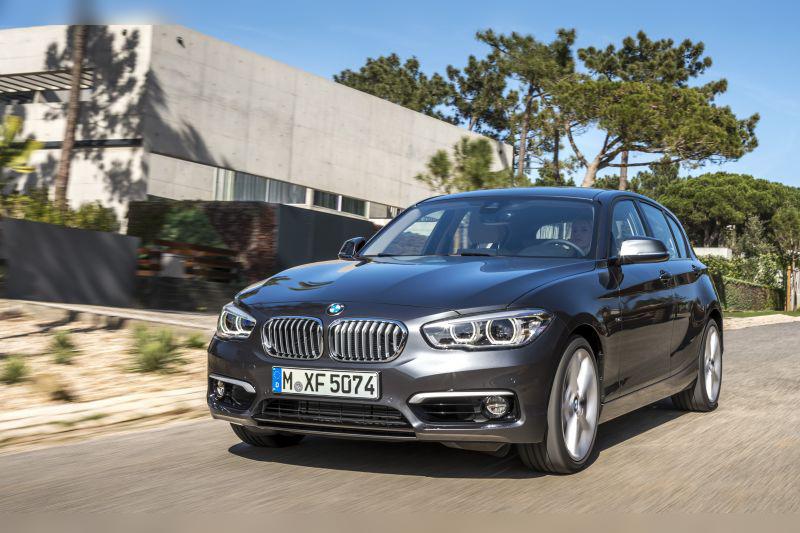
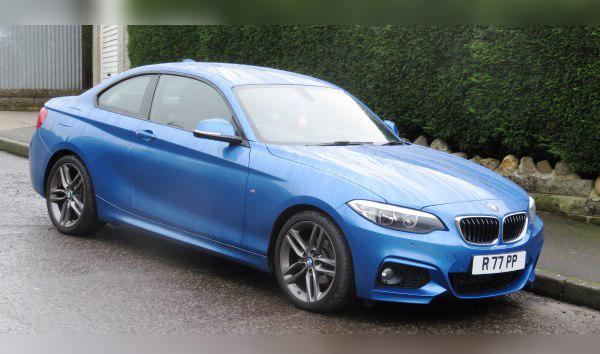
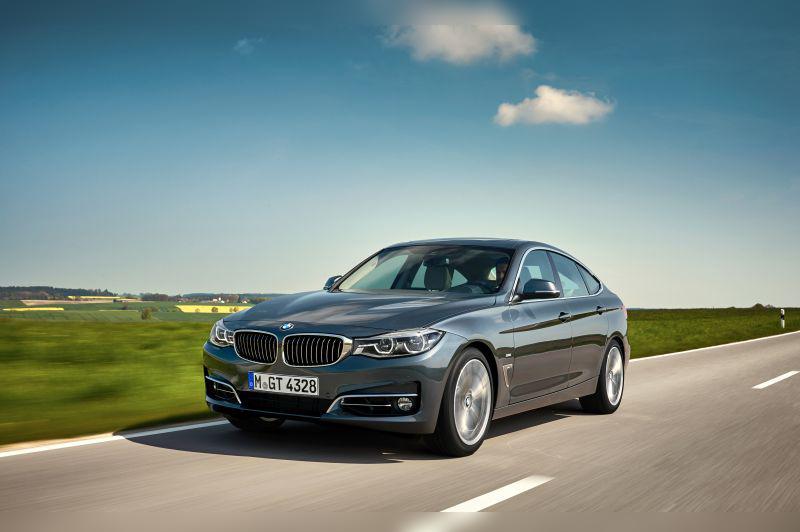
In the 240 kW (326 HP) and 450 Nm version, this engine turned models like the BMW M135i (F20/F21) and M235i (F22/F23) into real “pocket rockets”, giving them performance that seriously threatens purebred supercars in a straight line. Later it also found its way into the 340i Gran Turismo (F34), where it proved to be an incredibly comfortable cruising engine. It represents a golden middle ground – it is easier to maintain than thoroughbred M engines (such as the S55), yet offers enormous driving pleasure.
Technical specifications
| Characteristic | Value |
|---|---|
| Engine code | N55B30A |
| Displacement | 2998 cc (Often also listed as 2979 cc for the N55 series) |
| Power | 240 kW (326 HP) |
| Torque | 450 Nm |
| Injection type | Direct injection |
| Forced induction | TwinPower Turbo (single twin-scroll turbo), intercooler |
| Fuel type | Petrol (98+ or 100 octane recommended) |
Reliability and maintenance
Does this engine have a timing belt or a chain?
Like every proper BMW straight-six in recent history, the N55 uses a timing chain to drive the camshafts. Unlike the notorious four-cylinder N47 diesels, the chain on the N55 is not a design failure. However, it is not “lifetime” either (as manufacturers like to claim). The chain is located at the front of the engine.
At what mileage is the major service done?
A classic “major service” is not done at a fixed interval, but in practice somewhere between 150,000 and 200,000 km the plastic chain guides become brittle and the chain itself develops play. Symptoms of wear are metallic rattling or a “rustling” sound at cold start (the first few seconds until the tensioner gets oil pressure). When you hear that, replacement of the chain and tensioner is mandatory. The job is very expensive (depends on the market).
What are the most common failures on this engine?
Although mechanically strong (crankshaft, pistons and block are extremely durable), the engine peripherals cause headaches:
- Electric water pump and thermostat: This is the best-known problem of N55 engines. The electric pump does not give an audible warning before failure. It usually “dies” suddenly between 100,000 and 130,000 km. The driver notices it when the car suddenly goes into limp mode (reduces power), and a yellow and shortly after a red engine overheat warning appears on the instrument cluster. The solution is preventive replacement of both parts together.
- Oil leaks on gaskets: Due to high operating temperatures in the engine bay, rubber seals eventually become hard like plastic. The valve cover gasket, oil filter housing gasket and oil pan gasket commonly leak. Symptom: you notice oily spots on the engine block or smell a strong burning plastic/oil odor through the vents when you stop at a traffic light (because oil is dripping directly onto the hot exhaust manifold).
- Cracking of the plastic chargepipe: The factory pipe that carries compressed air from the intercooler to the engine is made of brittle plastic. Under turbo pressure, especially during hard acceleration, it can literally crack. Symptom: an explosive “pop” sound, sudden loss of power, “Drivetrain malfunction” warning and loud hissing of air.
How many liters of oil does it take and which oil is recommended?
This engine takes exactly 6.5 liters of oil. Forget the factory “LongLife” intervals of 25,000 to 30,000 km. For the engine and turbo to survive, change the oil strictly every 8,000 to 10,000 km. A high-quality synthetic 5W-30 or 5W-40 that meets BMW LL-01 specification is recommended.
Does it consume oil between services?
Yes, the N55 does like to drink some oil. Consumption of up to 0.5 liters per 5,000 km is considered completely normal. However, if the engine needs a liter of oil every 2,000 km and there are no external leaks, the problem most often lies in the PCV system (the oil separator integrated into the valve cover, which requires replacement of the entire cover) or in worn oil control rings/turbo seals.
At what mileage are spark plugs replaced?
Since this is a turbocharged petrol engine with direct injection, the ignition system is under heavy load. Spark plugs (iridium) must be replaced every 40,000 to 60,000 km. If this is ignored, the increased resistance will destroy the ignition coils. Symptoms of bad spark plugs or coils are rough idle (shuddering), slight “stumbling” at full throttle and eventually the “Check Engine” light with misfire error codes.
Specific parts (Costs)
Does the engine have a dual-mass flywheel?
Models with a manual gearbox certainly have a dual-mass flywheel, and it is massive in order to handle 450 Nm of torque. In models equipped with Steptronic (automatic) gearboxes, there is no classic dual-mass flywheel; instead, torque transfer and vibration damping are handled by the hydraulic torque converter.
What kind of injection system and injectors does it have?
The system is high-pressure (direct injection). The biggest problem is the high-pressure fuel pump (HPFP). Although the situation is much better than with the earlier N54 engine, the HPFP can still weaken. Symptoms are significantly longer cranking in the morning, loss of power and low-pressure codes on diagnostics. Petrol injectors are generally robust, but at high mileage and with poor-quality fuel they can start leaking into a cylinder, which washes oil off the cylinder walls and can lead to catastrophic engine failure (seizure).
Turbocharger lifespan:
The single large twin-scroll turbo is significantly more reliable than the biturbo system in its predecessor. If you have changed the oil regularly and have not shut off a red-hot engine immediately after thrashing it on the highway, the turbo can easily last over 150,000 to 200,000 km. The first symptoms of shaft play are a slight bluish smoke from the exhaust when lifting off the throttle and a “police siren” whine under acceleration. Replacement or overhaul is very expensive (depends on the market).
DPF, EGR and AdBlue:
Since this is a petrol engine, it does not have a DPF filter, it has no AdBlue system and no diesel-type EGR valve people usually worry about. It does have catalytic converters that can clog over time, but the main issue with deposits in the intake is a consequence of direct injection. Fuel does not wash the intake valves, so carbon builds up on them. Symptoms are rough idle and loss of power. Walnut blasting decarbonization is recommended every 80,000–100,000 km.
Fuel consumption and performance
What is the real fuel consumption in city driving?
Let’s be honest, anyone buying a 3-liter turbo petrol with 326 HP is not too worried about fuel consumption. In pure stop-and-go city driving, expect consumption of 12 to 15 l/100 km. With a very light right foot you might get down to 11.5 liters, but that is rare.
Is the engine “lazy”?
This word does not exist in this engine’s vocabulary. With 450 Nm available from an incredible 1,300 rpm, the engine pulls like a locomotive from low revs, completely without the so-called “turbo lag”. In bodies like the 1 Series (F20) or 2 Series (F22), the feeling is brutal, while even in the heavier 3 Series GT (F34) it handles the car’s mass as if it were a toy.
Behavior on the highway:
The N55 truly shines on the highway. Thanks to the 8-speed automatic gearbox, at 130 km/h the engine “cruises” in eighth gear at barely 2,000 rpm. At that point there is absolute silence, and fuel consumption drops to a very acceptable 8.5 to 9 l/100 km. With a kick-down of the accelerator pedal, the gearbox instantly drops 3–4 gears and overtaking is completed in the blink of an eye.
Additional options and modifications
Is it suitable for LPG (autogas) conversion?
Theoretically it is possible to install complex systems for direct injection that inject both liquid gas and petrol to cool the injectors, but in practice this is an extremely bad idea. The installation is absurdly expensive (depends on the market), it compromises engine performance, creates issues with fuel maps and often leads to permanent damage to the expensive petrol injectors and HPFP. This kind of engine is meant to run on petrol.
How far can it be safely “chipped” (Stage 1)?
The N55 responds extremely well to software tuning. With just an ECU remap (Stage 1), power rises to about 370 to 380 HP and over 520 Nm of torque. However, before installing a tune, it is absolutely mandatory to install an aluminum chargepipe, because the factory plastic one will 100% crack at the increased turbo pressure. Leaving it in place means a guaranteed call to the tow truck.
Gearbox
Which gearboxes come with this engine and what failures occur?
The engine was paired with the fantastic ZF 8-speed automatic (8HP45/8HP50 depending on the exact revision) or with a 6-speed manual gearbox.
- Automatic (ZF8 Steptronic): Considered one of the best automatic gearboxes of all time. It is extremely reliable. Potential issues can arise with the mechatronics (valve body inside the gearbox), which manifests as harsh jolts when shifting from first to second gear, especially when cold.
- Manual: Robust and precise. In cars driven by heavy-footed drivers, there may be issues with the synchros in second and third gear (grinding during faster shifts).
Dual-mass flywheel, clutch and servicing:
For models with a manual gearbox, the clutch kit and dual-mass flywheel are subjected to enormous forces (450+ Nm) and sooner or later (often before 150,000 km) will require replacement. Expect this job to be very expensive (depends on the market).
As for gearbox maintenance, BMW often claims that the oil “does not need to be changed”, but the gearbox manufacturer (ZF) insists on changing the oil and filter (integrated into the lower plastic pan) at intervals of 80,000 to 100,000 km. At the same interval, the oil in the manual gearbox and in the rear differential (and front on xDrive models) should be changed.
Buying used and conclusion
What exactly should be checked before buying?
This car requires a serious mechanic during the pre-purchase inspection:
- Cold start: You must listen to the engine running completely cold. Any metallic rattling from the front of the engine means the chain is worn out.
- Visual inspection under the hood: Look for freshly wiped areas around the oil filter housing and valve cover. Let the car idle until it warms up and pay attention to whether bluish smoke comes out of the exhaust when you suddenly rev it and let off (a symptom of worn turbo seals or PCV issues).
- Test drive: Under acceleration the engine must pull smoothly, without any jerks or flat spots. Any hesitation points to problems with the HPFP, injectors or coils.
- Dedicated diagnostics (ISTA): Universal scanners are not enough. It is mandatory to check specific live data parameters for turbo pressure (boost target vs. actual) and fuel pressure (fuel rail pressure).
Who is this engine for?
The BMW N55B30A (326 HP) is not an engine for someone who calculates the price of a liter of oil or brake pads. This is a serious machine for enthusiasts who want uncompromising performance, a brutal sound and driving dynamics that put a smile on your face every time you press the accelerator. If you find a regularly maintained example and are ready for expensive preventive maintenance (water pump, gaskets, frequent minor services), the N55 will reward you with reliability and power that is still absolutely dominant on the road today.