360 Magnum Engine (5.9 V8): Experiences, Issues, Fuel Consumption and Used-Buying Tips
- The complete opposite of modern, sensitive engines – an old-school, robust American V8.
- Its main and biggest drawback is the terrifying fuel consumption, which makes LPG installation almost mandatory.
- The timing is driven by a chain which is extremely durable. There is no classic “major service”.
- The notorious problem with this engine is the intake manifold plenum gasket, whose failure leads to increased oil consumption and poor running.
- The automatic transmissions (primarily the 46RE model) are the weakest link of the entire drivetrain.
- It does not have complicated systems such as a turbocharger, DPF, dual-mass flywheel or sensitive high-pressure injectors.
- Ideal for towing heavy loads at low revs, thanks to its massive torque.
Contents
- Introduction: What is the 360 Magnum?
- Technical Specifications
- Reliability and Maintenance
- Specific Parts and Costs
- Fuel Consumption and Performance
- Additional Options and Modifications (LPG and Tuning)
- Transmissions: Manual vs Automatic
- Buying Used and Conclusion
Introduction: What is the 360 Magnum?
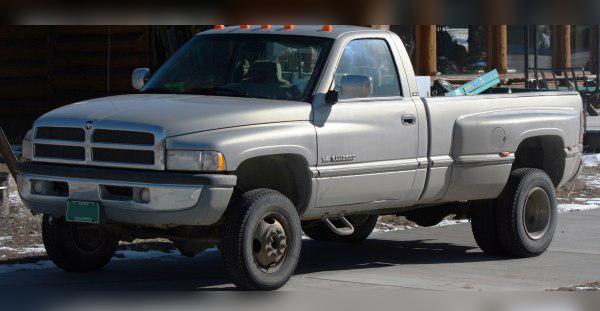
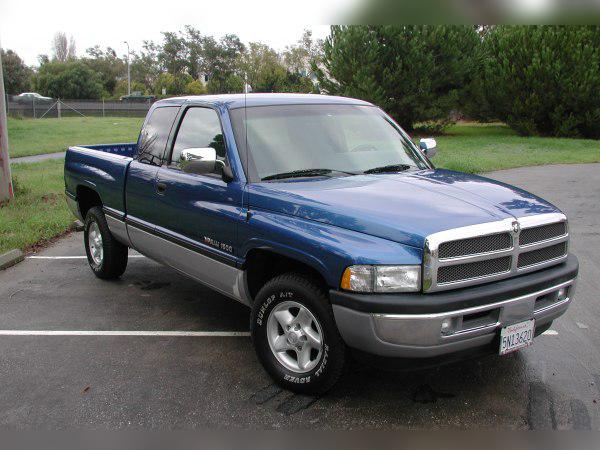
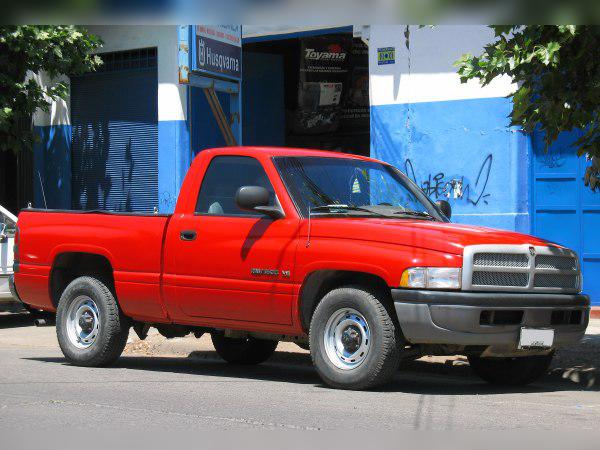
When we talk about legendary workhorses, the 5.9-liter V8 360 Magnum is a name spoken with respect. This engine was the backbone of Dodge Ram pickups (1500, 2500 and 3500 series, BR/BE generation) throughout the nineties and early 2000s. The Magnum series brought much-needed modernization to the old LA block, introducing multi-point electronic fuel injection (MPI) and improved cylinder head flow.
This is not an engine for racing or for showing off in the city. It is a work mule designed to endure torture, tow huge trailers and survive conditions in which modern engines would give up. Its architecture is simple: cam-in-block (OHV), two valves per cylinder and a massive cast-iron block.
Technical Specifications
| Specification | Data |
|---|---|
| Engine displacement | 5899 cc (5.9 L) |
| Power | 169 kW (230 hp) |
| Torque | 447 Nm |
| Engine type (Code) | V8 OHV (360 Magnum / EML) |
| Injection type | MPI (Multi-Port Injection) |
| Aspiration | Naturally aspirated |
| Fuel type | Petrol (Gasoline) |
Reliability and Maintenance
The good news is that this engine uses a timing chain, not a belt. Moreover, the chain is so massive and short (given that the camshaft is in the block) that it almost never needs to be replaced, unless you are doing a full engine rebuild. Because of that, the classic “major service” at a prescribed mileage practically does not exist. Maintenance boils down to checking the accessory belt (serpentine belt), tensioner, idler pulleys and water pump.
Most common failures
Although it is mechanically extremely durable, the 360 Magnum has its Achilles’ heel: the plenum (belly pan) gasket on the intake manifold. The factory made the intake manifold from aluminum and the bottom plate from steel. Because of the different thermal expansion rates of these materials, the gasket between them fails. The symptoms are clear: the engine starts drawing unmetered air, loses power, idle becomes unstable, and the engine sucks oil vapors from the crankcase straight into the cylinders, which results in massive oil consumption and detonation (pinging). The solution is to install an aftermarket aluminum plate (not too expensive, depending on the market, but it does require a lot of labor hours).
The second potential problem is the cylinder heads. They are prone to cracking between the valve seats if the engine overheats even once seriously. That’s why the condition of the cooling system (viscous fan and water pump) is of absolutely crucial importance.
Oil and spark plugs
The sump holds just under 5 liters of oil (around 4.7 L with the filter). The factory recommended 10W-30 (or 5W-30 for colder climates). Does the engine burn oil? A healthy engine consumes a negligible amount (up to 0.5 liters between changes at 8,000–10,000 km). However, if the aforementioned plenum gasket is damaged, it can burn more than a liter per 1,000 km.
Since this is a classic gasoline engine with a fairly strong spark but an old-style ignition system (distributor cap and rotor), it is recommended to replace the standard copper spark plugs every 40,000 to 50,000 km. Replacing the plug wires, cap and rotor is advised at every second plug change to avoid misfires.
Specific Parts and Costs
This is an engine from an era when cars were built to last, so you won’t be facing the nightmares of modern diesels and turbocharged gasoline engines here.
- Dual-mass flywheel: It doesn’t exist. Versions with a manual gearbox use a massive solid flywheel, while automatics use a so-called flexplate (a thin steel plate). Replacing the clutch kit on a manual is not expensive by itself, but due to the size of the gearbox, labor can be a significant cost (depends on the market).
- Fuel injection system: The MPI injectors are extremely reliable. They very rarely fail, and if they do get clogged due to dirty fuel, they are usually easy and cheap to clean in an ultrasonic bath. There are no high-pressure pumps that grind themselves to pieces.
- Turbocharger: The engine is naturally aspirated, so there is no turbo. One less thing to worry about.
- Emissions equipment (EGR, DPF, AdBlue): DPF and AdBlue, of course, are not present. Some versions of this engine, depending on the model year and emissions standards, are equipped with an EGR valve. Over time it can accumulate soot and get stuck, which causes rough idle, but it is easy to clean or fairly cheap to replace.
Fuel Consumption and Performance
This is where we come to the sorest point. Fuel consumption is astronomical. In city driving, with a heavy body (often over 2.5 tons on 2500/3500 models) and an old automatic transmission, real-world consumption is between 20 and 25 L/100 km. On the open road you will struggle to get below 14–15 liters.
Although 230 hp on paper doesn’t sound impressive today for an engine that’s almost six liters, the magic of this engine lies in its 447 Nm of torque available very low in the rev range. The engine is absolutely not lazy when taking off or towing, it responds to throttle instantly and pushes the mass like a tractor. However, at high revs it runs out of breath quite quickly – this is not an engine for drag racing from traffic light to traffic light.
On the highway, the situation largely depends on the rear differential ratio. The body of this vehicle has the aerodynamics of an average brick. At 130 km/h in fourth gear (overdrive), the revs are usually around 2200–2500 rpm. The engine is not strained, but it is fighting a huge air resistance, so at these speeds you can literally watch the fuel gauge drop. The most comfortable cruising speed is around 100–110 km/h.
Additional Options and Modifications (LPG and Tuning)
Because of the fuel consumption, every potential buyer’s first question is: Can it run on LPG?
The answer is: Absolutely yes. This engine handles LPG (autogas) very well. Installing a quality sequential system is mandatory, and since the intake manifold is large, it is advisable to use a vaporizer strong enough to support more than 160 kW. The valves and valve seats on Magnum engines are sufficiently hard, so additional valve lubrication systems are usually not necessary, although they don’t hurt.
As for ECU tuning (Stage 1), forget about it. This is a classic, old-school, naturally aspirated V8. A software remap might give you at best 10–15 hp and maybe a slight change in throttle response. It is absolutely not worth it and the difference in driving is negligible. To really extract more power from this engine, you need mechanical upgrades: a more aggressive camshaft, better exhaust headers and ported heads.
Transmissions: Manual vs Automatic
The 360 Magnum was offered with both automatic and manual transmissions, and they drastically change what it’s like to own this vehicle.
Automatic transmissions (Most commonly 46RE)
This four-speed automatic is the weakest point of the whole vehicle. Although it is not catastrophic by itself, in combination with the heavy mass of the pickup and frequent towing, it is prone to overheating. Symptoms of failure include delayed shifting, slipping (revs rise but the vehicle doesn’t accelerate) and loss of fourth gear (overdrive) or reverse.
Most common issues: Failure of the governor pressure sensor and solenoid, burnt clutches due to overheating, and broken bands.
Maintenance: It requires strict oil and filter changes every 40,000 to 50,000 km. You must use only ATF+4 fluid! Also, during service, the mechanic must adjust the bands, which many inexperienced shops skip.
Manual transmissions (Most commonly NV4500)
This is a five-speed manual gearbox for heavy-duty use. A true truck transmission. It is extremely reliable, robust and almost indestructible. Its downside is that it is not very slick to shift (long and imprecise shifter throw compared to European cars). Failures are rare and mostly come down to clutch replacement at high mileage or synchro issues if it has been driven for years with bad oil.
Buying Used and Conclusion
Buying a vehicle with the 5.9 V8 Magnum engine requires a cool head and a thorough inspection. These vehicles were widely used as work tools. Before buying, make sure to check the following:
- Listen to the engine when cold: Do you hear loud ticking from the top of the engine? Hydraulic lifters can fail if the oil was rarely changed. Light ticking that disappears when the engine warms up is acceptable, but loud knocking requires removing the heads.
- Test the plenum gasket: Remove the air filter housing and look deep into the intake manifold through the throttle body (with a flashlight). If you see puddles of oil inside, the gasket has failed.
- Check the transmission (automatic): Pull out the transmission dipstick. The fluid must be red or pinkish. If it is brown, dark and smells like burnt toast, that transmission is on its last legs and an expensive rebuild is waiting for you (depends on the market, but automatic transmission repairs are always costly).
- Condition of the cooling system: Check if there are traces of rust or oil mixing in the radiator (cracked head). A V8 must run at operating temperature without overheating even under full throttle.
Who is this engine for?
A Dodge Ram 1500/2500/3500 with the 360 Magnum engine is definitely not for someone looking for a daily city car for traffic jams and quick runs to the supermarket. It will burn a small fortune at the gas station, while parking in tight spots will drive you crazy.
However, it is an ideal engine for someone who lives outside the city, often needs to tow heavy trailers (campers, boat trailers, construction materials) and wants robustness, while also installing a good LPG system. With regular oil changes in the engine and transmission, and once the plenum gasket issue is properly fixed, this is a machine that can easily cover more than 500,000 kilometers and remain loyal to its owner until the very end.