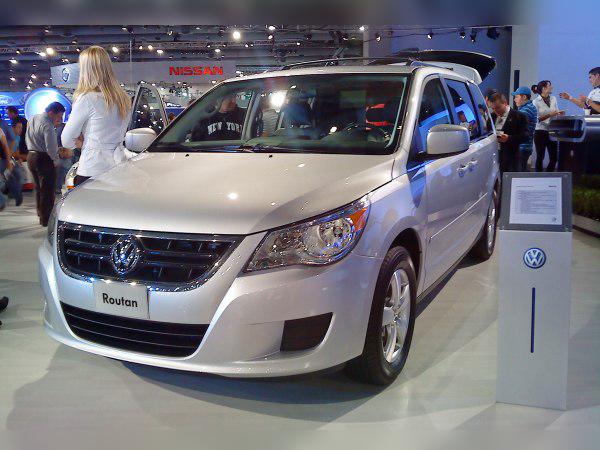
VW Routan 3.8 V6 (EGH) – Experiences, problems, fuel consumption and buying used
Key points (TL;DR)
- Origin: This is not a Volkswagen engine. The EGH 3.8L is an old, proven Chrysler V6 engine (pushrod technology), installed in the Routan because it is essentially a rebadged Dodge Grand Caravan.
- Timing drive: Uses a timing chain, which reduces major service costs.
- Fuel consumption: Very high in city driving. Expect figures that can exceed 15 l/100 km.
- LPG: An ideal candidate for LPG conversion due to its port (indirect) fuel injection.
- Transmission: The automatic transmission (62TE) is the weakest point of this powertrain and requires regular maintenance.
- Maintenance: Engine parts are relatively cheap and widely available (Chrysler/Dodge parts), while electronics and interior are a mix of VW and US standards.
Contents
Introduction and applications
The engine with the code EGH is actually a veteran of the American auto industry. Although it sits under the hood of a vehicle with a VW badge (Volkswagen Routan), it is important to clarify one thing right away: this is not German engineering. The Routan was created through a cooperation between Chrysler and VW, so this 3.8 V6 is a classic American “mileage eater”.
It is an OHV (Overhead Valve) design, which means it is technologically outdated compared to modern European engines, but that simplicity gives it a certain robustness. There are no complex overhead camshafts, no sophisticated electronics typical of TSI/FSI engines. This engine was built to haul a heavy minivan for hundreds of thousands of kilometers, provided you accept its drawbacks.
Technical specifications
| Specification | Value |
|---|---|
| Displacement | 3778 cc (3.8 L) |
| Configuration | V6, OHV (12 valves) |
| Power | 147 kW (197 hp) @ 5200 rpm |
| Torque | 312 Nm @ 4000 rpm |
| Engine code | EGH |
| Injection type | MPI (Multi-Point Injection) – port injection |
| Induction | Naturally aspirated |
| Camshaft drive | Chain |
Reliability and maintenance
Does this engine have a timing belt or a chain?
The EGH engine uses a timing chain to drive the camshaft. Since this is an OHV engine (the camshaft is in the block, not in the head), the chain is short and very robust. It is not prone to stretching or breaking like on some modern European engines. In general, the chain is considered to last as long as the engine itself, unless the oil is extremely neglected.
What are the most common issues with this engine?
Although simple, the EGH engine has its “bugs”:
- Oil consumption: At higher mileage (over 150,000 km), piston rings can wear or valve stem seals can harden, which leads to blue smoke and increased oil consumption.
- Intake manifold leaks: The lower intake manifold gasket is a known weak point. Symptoms include rough idle (vacuum leak) or coolant loss, as coolant passages run through the manifold.
- Cracked exhaust manifolds: Due to thermal stress, the cast-iron exhaust manifolds often crack. The symptom is a “ticking” sound when the engine is cold, which disappears as it warms up and the metal expands.
- EGR valve: It often clogs or sticks, which triggers the Check Engine light and causes poor idle quality.
At what mileage is a major service required?
Since it has a chain that does not require regular replacement, a “major service” in the classic sense (belt replacement) does not exist. However, at around 100,000–120,000 km it is recommended to replace the serpentine belt, tensioner, idler pulleys and water pump. The water pump is external and easy to replace, which keeps maintenance costs down.
Oil: capacity and consumption
This engine takes approximately 4.7 to 5.0 liters of oil. The recommended viscosity is strictly 5W-20 (or 5W-30 if you live in a very hot climate, but the manufacturer insists on 5W-20).
Oil consumption: These engines are known to “like” a bit of oil. Consumption of 0.5 to 0.8 liters per 10,000 km is considered perfectly normal. However, if it uses a liter every 2,000 km, it is time to inspect the piston rings or the PCV valve (a common cause of increased consumption).
Spark plugs and ignition system
The manufacturer recommends replacing spark plugs at around 50,000 km if you use standard copper plugs, or up to 100,000 km if you use platinum/iridium plugs.
Tip: Replacing the rear three cylinders (towards the cabin) is quite difficult due to the transverse engine layout and requires removal of the upper intake manifold (plenum). That’s why it is recommended to install higher-quality plugs so you do this job as rarely as possible.
Specific parts (costs)
Does this engine have a dual-mass flywheel?
No. Since this engine is paired exclusively with a traditional automatic transmission (torque converter), it does not have a dual-mass flywheel. Instead, it uses a flexplate (automatic flywheel), which is a solid piece of metal and almost never fails. This is a big saving compared to European diesels.
Fuel injection system and injectors
It uses a classic MPI (Multi-Point Injection) system. The injectors are simple, inexpensive (market-dependent: generally not expensive) and very tolerant of lower fuel quality. They are not problematic and rarely need replacement before 200,000+ km.
Turbo, DPF, EGR, AdBlue
- Turbo: None. This is a naturally aspirated engine. Fewer parts to fail.
- DPF / AdBlue: None. As a gasoline engine, it is free of these expensive emission systems.
- EGR valve: It does have one. As mentioned, it is prone to soot build-up. Cleaning is possible, and replacement is not too expensive (market-dependent: mid-range cost).
Fuel consumption and performance
What is the real-world city fuel consumption?
This is where we come to its biggest drawback. The Routan is a heavy vehicle (over 2 tons with passengers), and the 3.8L engine is old-school.
City: Expect 14 to 18 l/100 km. In heavy stop-and-go traffic in winter, it can go up to 20 liters. This is not a car for short city trips if fuel economy matters to you.
Is this engine “lazy”?
With 197 hp and 312 Nm, the engine is not weak on paper, but in practice it feels somewhat sluggish by today’s standards. It has enough power to pull, but it needs to rev high, at which point it becomes noisy. For relaxed family driving it is perfectly adequate, but overtaking on country roads requires planning and a firm push on the accelerator.
Behavior on the highway
This is the natural habitat of this model. On the highway the engine is under little stress. At 130 km/h, thanks to the 6-speed transmission, the engine spins at about 2,200–2,400 rpm. At that point it is quiet and comfortable. Fuel consumption on the open road drops to around 10–12 l/100 km.
Additional options and modifications
Is it suitable for LPG?
Absolutely yes. This is one of the best engines for LPG conversion. It has port injection, a metal (lower) intake manifold and a durable cylinder head. Due to the high gasoline consumption, LPG installation pays off very quickly. You only need a properly tuned map and, as a precaution, a valve lubrication system (flash lube), although many people drive hundreds of thousands of kilometers without it.
Chip tuning (Stage 1)
It doesn’t make much sense. Naturally aspirated gasoline engines gain a negligible power increase (maybe 5–8 hp) from a remap. It is better to invest that money in proper transmission or cooling system maintenance.
Transmission
Which transmission is used?
The 3.8 V6 in the VW Routan comes exclusively with the 62TE 6-speed automatic transmission (made by Chrysler). There is no manual option with this engine.
Most common transmission issues and maintenance
The 62TE transmission is known as the “Achilles’ heel” of this vehicle if not maintained properly.
- Solenoid pack: The solenoid block often fails, which leads to harsh shifts or the transmission getting stuck in gear.
- “Clunk” noise: When decelerating (downshifting), the transmission can “bang” into gear. This is often a software issue or a sign of worn-out fluid.
- Fluid leaks: The transmission oil cooler can develop leaks.
Service: Transmission fluid (ATF+4 specification is MANDATORY) and the filter should be changed every 60,000 km. If the fluid is not changed, this transmission rarely reaches 200,000 km without a rebuild. Rebuild costs are very high (market-dependent: €1500–€2500).
Buying used and conclusion
When buying a VW Routan with this engine, focus on the following:
- Test drive the transmission: The transmission must shift smoothly, both when cold and hot. Any jerking, hesitation or thump when coming to a stop is a red flag.
- Leaks: Look under the car. Oil leaks between the engine and transmission, as well as traces of coolant around the thermostat housing, are common.
- Engine noise: On a cold start there should be no loud metallic knocking (crankshaft bearings are sensitive if the engine has been run low on oil). A light ticking can be a cracked exhaust manifold.
- Interior and electrics: Check all electric sliding doors and window regulators; these are expensive to repair.
Conclusion: The VW Routan 3.8 V6 is an excellent choice for large families who want comfort and space at a lower price than European competitors. The engine is a “mule” – it’s not fast, it uses a lot of fuel, but it is mechanically simple and cheap to repair (parts are shared with Chrysler Voyager/Town & Country).
If you are planning to buy one, immediately factor in the cost of an LPG conversion and a budget for servicing the automatic transmission. Then you get a very capable long-distance cruiser.