Engine 3NR-VE 1.2 (88 hp): Real-world experience, issues, fuel consumption and used-buying tips
- Reliability first: A classic naturally aspirated petrol engine with a timing chain, without complicated modern emissions systems and turbochargers.
- Low maintenance costs: The absence of a dual-mass flywheel and sensitive direct-injection nozzles makes it extremely cheap to own.
- Excellent for LPG: Thanks to MPI injection, LPG installation is simple and cost-effective.
- Performance suited to its purpose: In lighter models (Daihatsu Ayla) it is perfectly adequate, while in larger MPVs (Toyota Calya, Daihatsu Sigra) it struggles quite a bit under full load.
- Transmissions: Reliable 5-speed manual and an old but indestructible 4-speed automatic.
Contents
- Introduction: A workhorse from Toyota and Daihatsu’s workshop
- Technical specifications
- Reliability and maintenance: Chain, oil and servicing
- Specific parts and potential costs
- Fuel consumption and performance: City vs highway
- Extras: LPG conversion and chiptuning
- Transmission and drivetrain: Manual or automatic?
- Buying used and conclusion
Introduction: A workhorse from Toyota and Daihatsu’s workshop
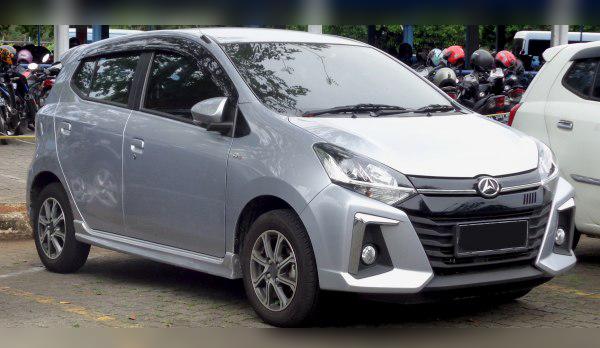
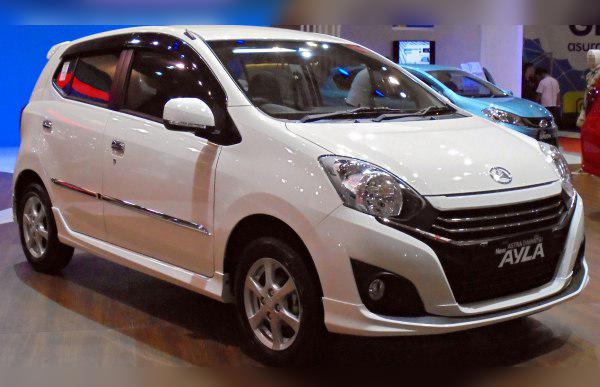
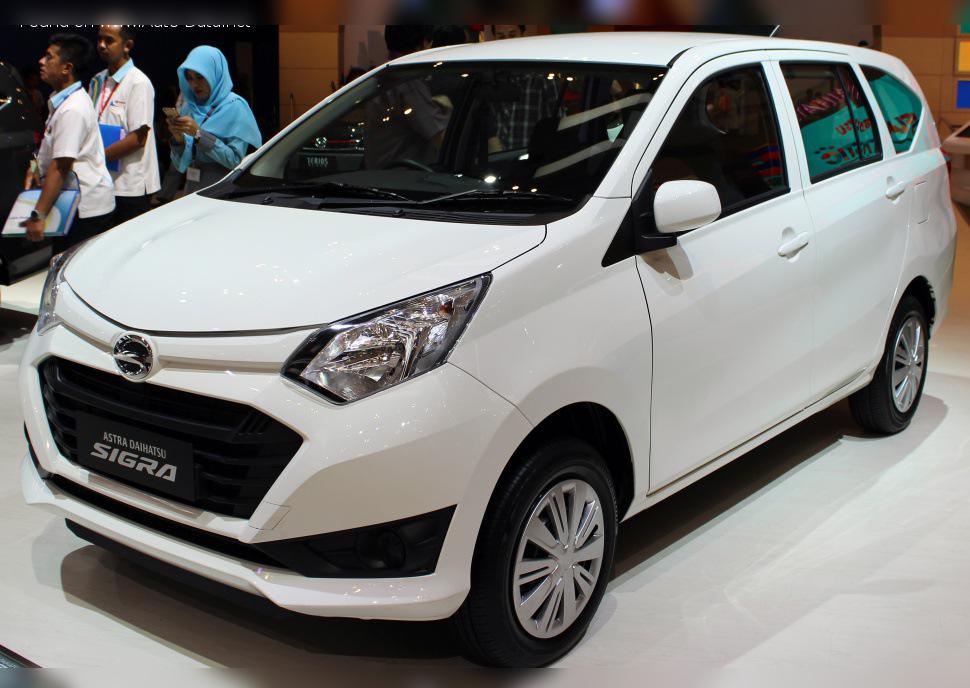
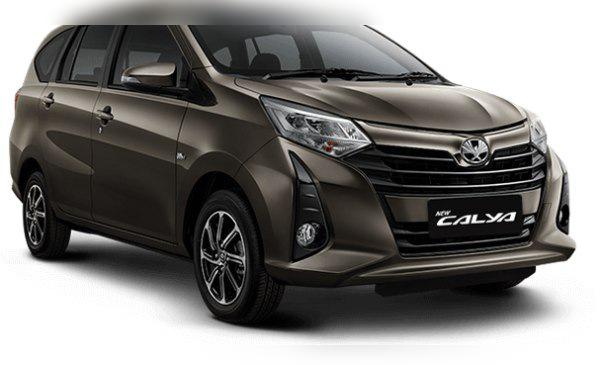
The engine with the code 3NR-VE is the result of cooperation between Toyota and Daihatsu, designed primarily for compact cars and affordable MPV models on global markets. It is a four-cylinder naturally aspirated petrol engine with a displacement of 1.2 litres, producing 88 hp. This unit is installed in models such as the Daihatsu Ayla, Daihatsu Sigra and Toyota Calya (including facelift versions from 2017 to 2020). Its main strength is not speed, but durability, simplicity, and the ability to withstand harsh operating conditions with minimal demands on the owner.
Technical specifications
| Parameter | Data |
|---|---|
| Engine displacement | 1197 cc (1.2L) |
| Engine power | 65 kW (88 hp) |
| Torque | 108 Nm |
| Engine code | 3NR-VE |
| Injection type | MPI (Multi-Point Injection – port injection) |
| Induction | Naturally aspirated |
Reliability and maintenance: Chain, oil and servicing
What interests buyers most is the camshaft drive. The 3NR-VE engine uses a timing chain, which means there is no classic “major service” in the sense of replacing a timing belt. The chain is designed to last as long as the engine itself, but in practice it should be inspected at around 200,000 km. Symptoms of a stretched chain are a metallic rattling noise on cold start and, in extreme cases, the “Check Engine” light coming on due to mismatch between the crankshaft and camshaft sensors.
When it comes to the “major service”, it boils down to replacing the auxiliary belt (which drives the alternator, power steering and A/C compressor), the tensioner, idler pulleys and the water pump. The water pump is actually one of the few weak points – it can start leaking or become noisy after 100,000 km, so it is advisable to replace it preventively.
As for lubrication, the sump holds about 3.2 litres of engine oil. The recommended grades are 0W-20 or 5W-30, depending on climate conditions. Lower-viscosity oils (0W-20) are used to reduce internal friction and for emissions reasons. Oil consumption between services (every 10,000 to 15,000 km) is minimal. A loss of up to 0.5 litres per 10,000 km is considered completely normal. If the engine consumes significantly more (blue smoke from the exhaust), the problem usually lies in stuck piston rings or worn valve stem seals, which happens only if the previous owner did not change the oil regularly.
As a classic petrol engine, it requires regular spark plug replacement. Standard plugs are changed at around 40,000 km, while iridium plugs (often factory-fitted) can last up to 100,000 km. Symptoms of bad plugs are jerking under acceleration and rough idle.
Specific parts and potential costs
The good news for your wallet is that this engine does not have a dual-mass flywheel. It uses a conventional solid flywheel, which means clutch kit replacement is mechanically simple and falls into the “not expensive” category (depends on the market).
The injection system is the good old MPI (port injection into the intake manifold). Petrol injectors are very reliable and rarely cause problems. They are not as sensitive to poor fuel quality as injectors on direct-injection engines. Even if they do get clogged, ultrasonic cleaning usually solves the issue.
Since this is a naturally aspirated engine, there is no turbocharger, intercooler, or complex pressurised hoses that could burst. Also, being a petrol engine, it has no DPF filter or AdBlue system, sparing you the biggest headaches that come with modern diesels. An EGR valve exists in a simpler form on some variants to reduce NOx emissions, but it does not suffer from soot build-up like on diesel engines. It is enough to occasionally “blow out” the car at higher revs to clean the catalytic converter and lambda sensors.
Fuel consumption and performance: City vs highway
Fuel consumption is one of this unit’s main advantages. In city driving, the 3NR-VE uses between 6.5 and 7.5 l/100 km, depending on how heavy your right foot is and on the type of vehicle. On open roads (single carriageways), consumption easily drops to around 5 l/100 km.
However, performance is a double-edged sword and depends on the car it is installed in. In the small and light Daihatsu Ayla, 88 hp and 108 Nm of torque provide perfectly decent agility. The car feels lively in town and is easy to drive. On the other hand, the Toyota Calya and Daihatsu Sigra are extended seven-seat MPVs. Load them with five to seven passengers and turn on the A/C, and this engine becomes extremely “sluggish”. Acceleration and overtaking require careful planning and revving the engine high.
On the motorway, the 3NR-VE shows its weaknesses. At 130 km/h, due to short gear ratios, the engine spins at around 3,500 to 3,800 rpm. At those revs it becomes noisy in the cabin, and fuel consumption climbs close to 8 l/100 km due to poor aerodynamics and the engine working hard.
Extras: LPG conversion and chiptuning
Is this engine suitable for LPG conversion? Absolutely yes! Thanks to MPI injection, fitting a sequential LPG system is easy and does not require expensive components. The engine handles LPG very well, but it is important to check valve clearances at every major service, because constant LPG driving without adequate cooling (or without the so-called “valve savers” some mechanics recommend) can, in the long run, lead to valve damage.
When it comes to so-called “chipping” (Stage 1 software power increase), our advice is – don’t waste your money. On small-displacement naturally aspirated engines, map optimisation brings a negligible 3 to 5 hp gain, which you will not feel in real-world driving.
Transmission and drivetrain: Manual or automatic?
Two types of gearboxes are paired with this engine: a 5-speed manual and a 4-speed automatic.
Manual gearbox
The manual gearbox is precise and durable. The most common issue is not the gearbox itself, but accelerated wear of the clutch kit (disc, pressure plate, release bearing), especially in heavier models (Calya/Sigra) if driven in hilly areas under load. Fortunately, since the vehicle does not have a dual-mass flywheel, the cost of replacing the complete clutch kit falls into the “not expensive” category (depends on the market).
Automatic gearbox
The automatic is a classic torque-converter unit with only 4 gears. It is not quick, shifts are rather slow and it slightly increases fuel consumption (by about 1 l/100 km in town compared to the manual), but it is extremely reliable. It does not suffer from the issues of modern DSG or CVT gearboxes. Maintenance is limited to regular ATF oil and transmission filter changes every 60,000 km. If the oil is changed on time, this gearbox will outlive many other components of the car.
Buying used and conclusion
When buying a used car with the 3NR-VE engine, diagnostics usually will not show many fault codes because there is no complex electronics. It is important to focus on mechanical checks:
- Listen to the engine on cold start: If you hear rattling or scraping noises from the timing chain area for a few seconds after starting, expect the cost of a timing drive replacement.
- Look under the oil filler cap: If you see thick black sludge (“mayonnaise” or tar), it means the previous owner did not change the oil regularly. Skip that car, as the oil passages and VVT-i valves are likely clogged.
- Check the clutch: If the clutch bites very high or the car jerks when moving off (especially on Calya/Sigra models), be prepared for an imminent clutch kit replacement.
Who is this engine for?
If you are looking for a sports car or a high-speed motorway cruiser for daily 150 km/h runs, skip it. On the other hand, if you need an extremely durable, cheap and reliable means of transport from point A to point B, for city taxi work or family transport on shorter trips with LPG fitted – the 3NR-VE engine is one of the best and most rational choices on the market.